Russia outlaws protest band Pussy Riot, labels it 'extremist'
 on Google
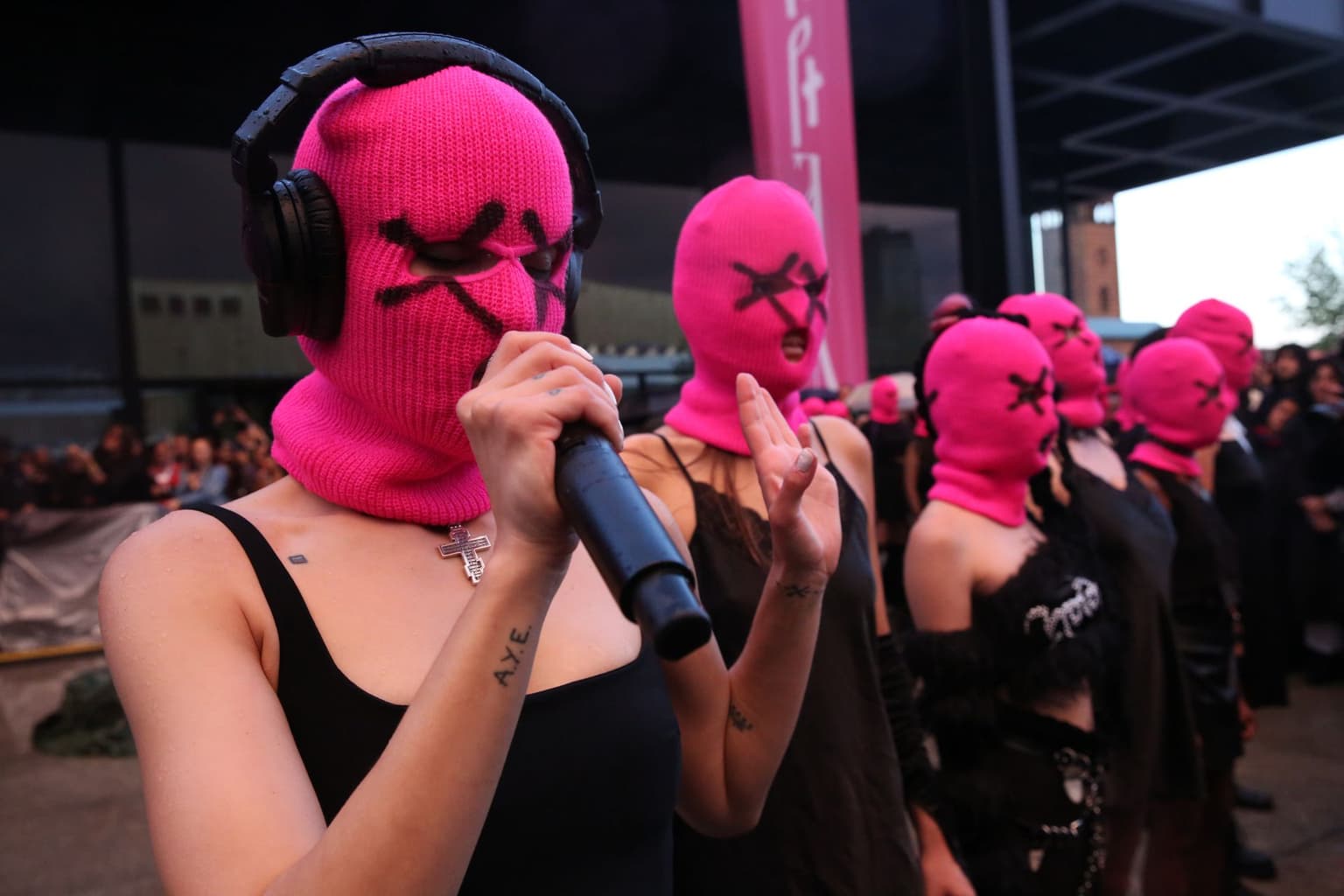
A Moscow court on Dec. 15 designated feminist protest group Pussy Riot as an "extremist organization," banning its activities inside Russia.
Pussy Riot, established in 2011 as a punk rock band, is known for its lyrics and provocative performances criticizing Russian President Vladimir Putin's regime, the suppression of human rights in Russia, and the Russian Orthodox Church.
Since their performance at the Cathedral of Christ the Saviour in Moscow in 2012, the group and its members have been subjected to a harsh government crackdown.
Most Pussy Riot members fled Russia after the launch of the full-scale invasion of Ukraine in 2022, continuing their activities in exile.
Nadya Tolokonnikova, a co-founder of the group, said the verdict aims "to erase Pussy Riot's very existence from the Russian consciousness."
"A balaclava under a pillow, our song on a computer, or a like on our post — all of this could lead to a prison sentence," Tolokonnikova told the Insider, an independent Russian media outlet.
Tolokonnikova was among the three Pussy Riot members sentenced to prison in 2012 over the performance in the Moscow cathedral, an event that brought the group into the international spotlight.
Russia has increasingly used the label of "extremism" to target both real and perceived opposition, highlighting Moscow's tightening grip on civil and political freedoms. The Russian Prosecutor's Office filed a motion to designate Pussy Riot under this label earlier this year.
Maria Alyokhina, a member of the group who fled Russia in 2022, said Russian authorities are "trying to ban a name and balaclavas in my country for exactly one reason: we didn't shut up after leaving the country."
In her Facebook post, Alyokhina shared a photo of herself wearing a blue-and-yellow colored balaclava with the inscription "Pussy Riot," which she said was embroidered by a Ukrainian refugee from a Russian-occupied city.
In September, a Russian court sentenced Alyokhina and four other Pussy Riot members to up to 13 years in prison over the song "Mama, Don't Watch TV," made in protest of Russia's full-scale invasion of Ukraine.