Russia attacking Kursk Oblast settlements with no Ukrainian troops present, Kyiv's military claims
 on Google

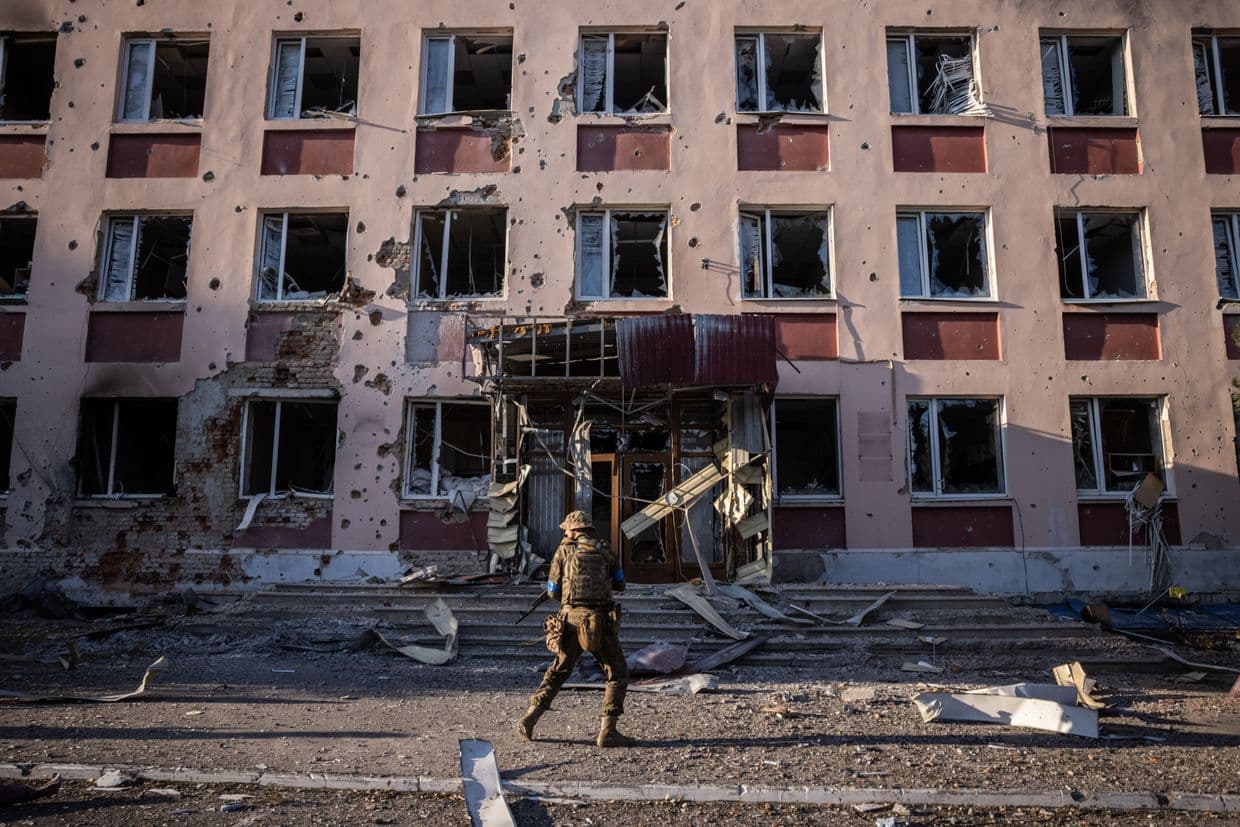
Russian forces continue striking settlements in Russia's Kursk Oblast even when there are no Ukrainian troops present, Vadym Mysnyk, a spokesperson for Ukraine's Operational Tactical Group Siversk, said on Oct. 3 on national television.
"The local population doesn't understand why they are being hit (by Russian forces) because the (Ukrainian) military is not even nearby. But the locals are suffering, they are forced to hide in basements for several hours and sometimes spend half a day there," Mysnyk said.
Ukraine's General Staff has been consistently reporting Russian attacks with missiles and aerial bombs on Kursk Oblast since the start of the Ukrainian offensive into Russian territory in early August.
Ukraine previously invited the U.N. and the International Committee of Red Cross (ICRC) to "join humanitarian efforts" in the Kyiv-held parts of Russia's Kursk Oblast. Moscow has denounced the move as provocation.
The Ukrainian military is reportedly providing water, food, and medicine to residents of Kursk Oblast areas controlled by Ukraine. Ukrainian forces are also trying to restore water and electricity, including using generators, according to Mysnyk.
"All this falls on the shoulders of the (Ukrainian) military because we comply with all the requirements of international humanitarian law and provide the local population with everything they need," he added.
Ukraine launched its cross-border incursion into Russia's Kursk Oblast on Aug. 6, claiming to have seized around 100 settlements and over 1,300 square kilometers (500 square miles).
Russia appeared to have been taken by surprise by the attack, which allowed Ukrainian forces to quickly fan out across the border and move deep into Russian territory.