Putin releases 2 Hungarians captured fighting for Ukraine after Szijjarto talks
 on Google
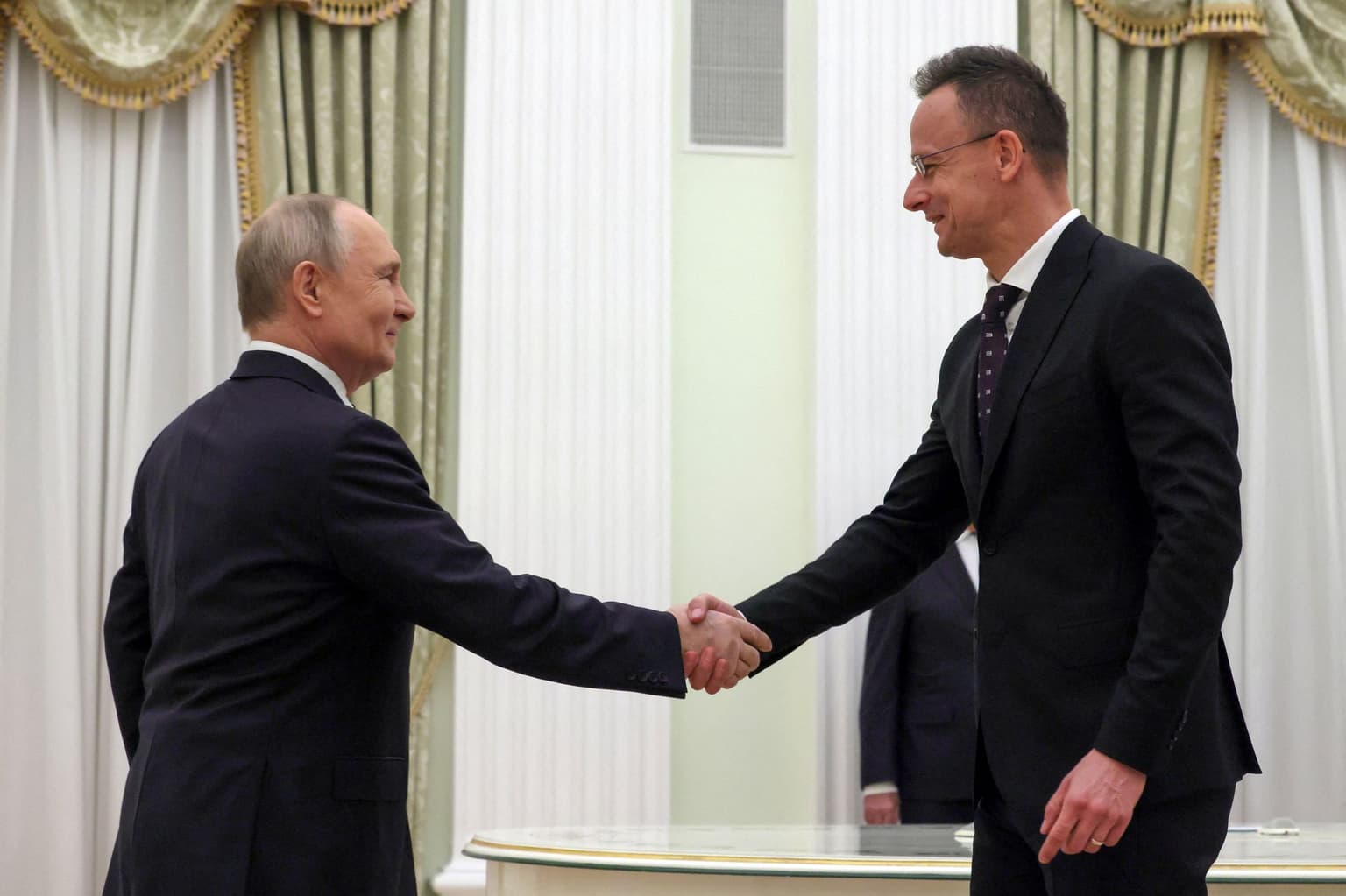
Russian President Vladimir Putin said on March 4 that two Hungarian nationals who had been serving in Ukraine's military and captured by Russia were released following talks with Hungarian Foreign Minister Peter Szijjarto.
"I have decided to release two people," Putin said. "As requested by (Hungarian Prime Minister Viktor Orban), you may take them with you directly onto the plane that brought you here."
"These are citizens who have dual citizenship, both Ukrainian and Hungarian."
The release comes after a March 3 phone call between Orban and Putin and amid Hungary's dispute with Ukraine over Russian oil transit. Only men holding Ukrainian citizenship are subject to mobilization, and Ukraine does not recognize dual Ukrainian-Hungarian citizenship.
Ukraine's Foreign Ministry has summoned the Hungarian charge d'affaires in response to the incident, which it characterized as a "cynical" PR stunt in a statement to multiple Ukrainian news outlets on March 4.
"The real humanitarian efforts made by those countries of the world that sincerely help Ukraine release people from captivity and protect life are never accompanied by such cynical PR and politicization. It is important that life has the highest value," the statement read.
The Foreign Ministry will invite the charge d'affaires to provide additional information on the prisoners as well as "access to the persons who were returned."
Returning prisoners from Russian captivity — notorious for brutal conditions, including torture — is the utmost priority for Kyiv, the ministry said.
"The Ukrainian side is working on it constantly, on all platforms and with all parties that can contribute to the release of our people from captivity. At the same time, we are forced to state that this is not the first time that Moscow and Budapest have been manipulating the sensitive issue of prisoners of war," the ministry said.
The prisoner release comes amid a deepening rift between Ukraine and Hungary. Szijjarto and Putin also discussed energy tensions tied to the suspension of the Druzhba pipeline, which supplies Russian crude to Hungary and Slovakia and has been offline since late January.
Kyiv has said the disruption followed a Russian strike on energy infrastructure in western Ukraine. Budapest and Bratislava, however, accuse Ukraine of deliberately halting transit.
Ahead of the talks, Kremlin spokesperson Dmitry Peskov voiced support for the two states whose governments are widely seen as the most Kremlin-friendly in the EU — accusing Ukraine of "blackmail."
Hungary and Slovakia, both landlocked countries, were the only two EU members still receiving Russian crude via the southern branch of the Druzhba pipeline prior to the suspension. The route accounts for roughly 86–92% of Hungary's crude oil imports and almost the entirety of Slovakia's supply.
Orban's government has deepened energy ties with Moscow throughout the war while repeatedly obstructing EU sanctions on Russia or aid to Ukraine.
Governments of the two countries demanded a joint inspection of the damaged pipeline together with the EU, a request that Kyiv has yet to publicly respond to.
In the meantime, Hungary and Slovakia halted diesel fuel supplies to Ukraine and blocked the 20th package of EU sanctions against Russia. Orban is also blocking a 90-billion-euro ($106 billion) loan to Kyiv, a crucial financial lifeline amid the war.
Experts have linked Orban's increasingly confrontational rhetoric toward Ukraine to the upcoming April parliamentary elections, as the ruling party Fidesz trails the opposition Tisza Party in polls.
"Orban is putting this whole topic (of Ukraine) in the center of his campaign," Peter Kreko, the director of the Political Capital think tank in Budapest, told the Kyiv Independent.
But as the Hungarian public focuses on other issues — namely, living standards, high prices, healthcare, and corruption — "Orban is using more and more drastic tools to raise interest in this topic," the expert added.
Peter Magyar, the leader of Tisza, suggested that he and Orban personally inspect the pipeline together.
"If (Orban) possesses credible information about a real threat, he should stop spreading incitement and panic," and instead brief Magyar and NATO partners on the situation, the opposition leader said on X.
The Tisza Party has condemned Russia's aggression against Ukraine and signaled plans to curb Hungary's reliance on Russian energy. However, it opposes supplying Hungarian weapons to Kyiv and rejects fast-tracking Ukraine's accession to the European Union.