Over 206,000 Russian soldiers killed in Ukraine identified by media investigation
 on Google
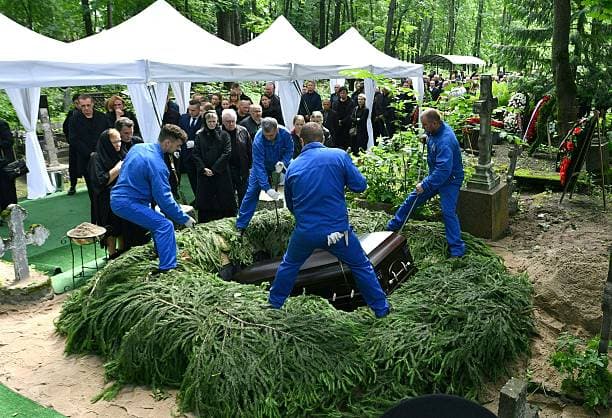
Russian independent media outlet Mediazona, in collaboration with the BBC Russian service, has confirmed the identities of 206,202 Russian military personnel killed in Ukraine.
Since the media outlets' last update in mid March, the names of 2,896 Russian soldiers have been added to the list of casualties.
The journalists note that the actual figures are likely significantly higher, as their verified information comes from public sources such as obituaries, posts by relatives, regional media reports, and statements from local authorities.
The confirmed death toll now includes over 75,300 volunteers, 23,100 recruited prisoners, and 18,200 mobilized soldiers, according to the media outlets. A total of 6,948 officers have also been confirmed to have been killed.
While Moscow does not disclose its casualty figures at all, President Volodymyr Zelensky told France TV in an interview on Feb. 4 that at least 55,000 Ukrainian soldiers have been killed on the battlefield since the start of Russia's full-scale war. Kyiv largely avoided commenting on its losses for the first two years of the full-scale invasion, until Zelensky announced in February 2024 that 31,000 Ukrainian troops had been killed.
Zelensky said on March 10, citing Ukrainian intelligence reports, that the Kremlin's own classified assessments estimate that 1,315,000 Russian soldiers have been killed and wounded on the battlefield.
"We have reason to believe that these figures are understated," Zelensky added.
The General Staff of Ukraine's Armed Forces estimates that as of March 28, Russia has lost around 1,294,470 troops in Ukraine since Feb. 22, 2022. The figures do not specify killed or wounded, though the overall consensus is that it includes dead, wounded, missing, and captured.
Since the start of the full-scale invasion, Russian authorities have refused to release figures on their army's losses. While some official information was initially published, it has now been over three years since the last time Russia provided any figures, even heavily downplayed ones.
Over the past year, while sustaining heavy losses, Russia has been able to make marginal advances along Ukraine's front line region as it is able to offset its casualties through fresh contract soldiers. In recent months, Ukrainian forces have launched their own limited counteroffensive, liberating about 470 square kilometers (180 square miles) of territory, and inflicting heavy losses in a short period of time.
Western analysts have repeatedly found 2025 to be the bloodiest year of the full-scale war, with Russia's battlefield losses in Ukraine, reaching no fewer than 400,000 killed, wounded, and missing that year. According to some estimates, Russia could have lost more soldiers in 2025 than it did between 2022 and 2024 combined.
A January 2026 CSIS report said Ukraine has likely suffered between 500,000 and 600,000 casualties from February 2022 to December 2025, of which between 100,000 to 140,000 are thought to be killed in action (KIA).
The Kyiv Independent cannot independently verify the reporting.