Kyiv groans a collective ‘WTF?’ to Trump’s latest Putin comments
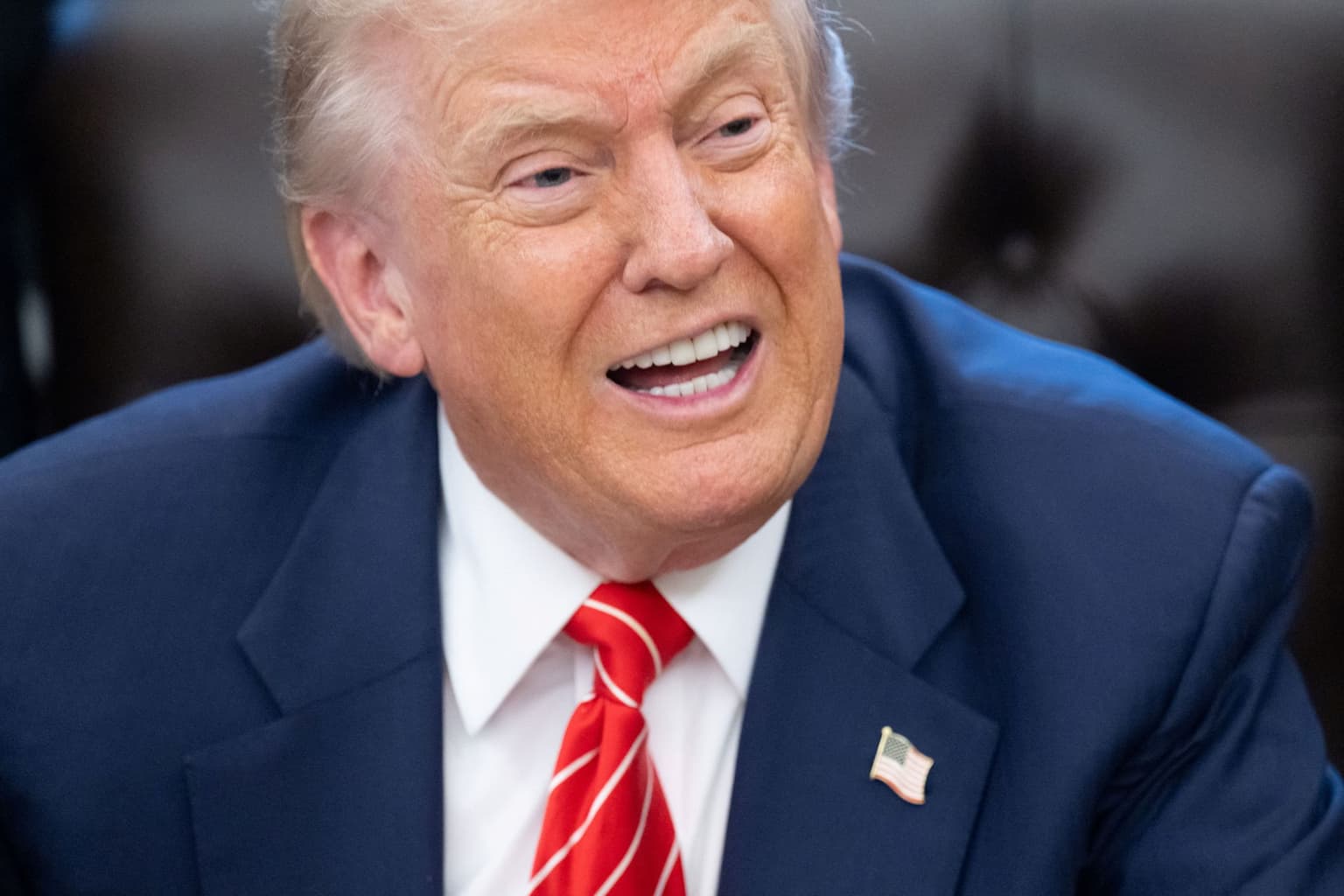
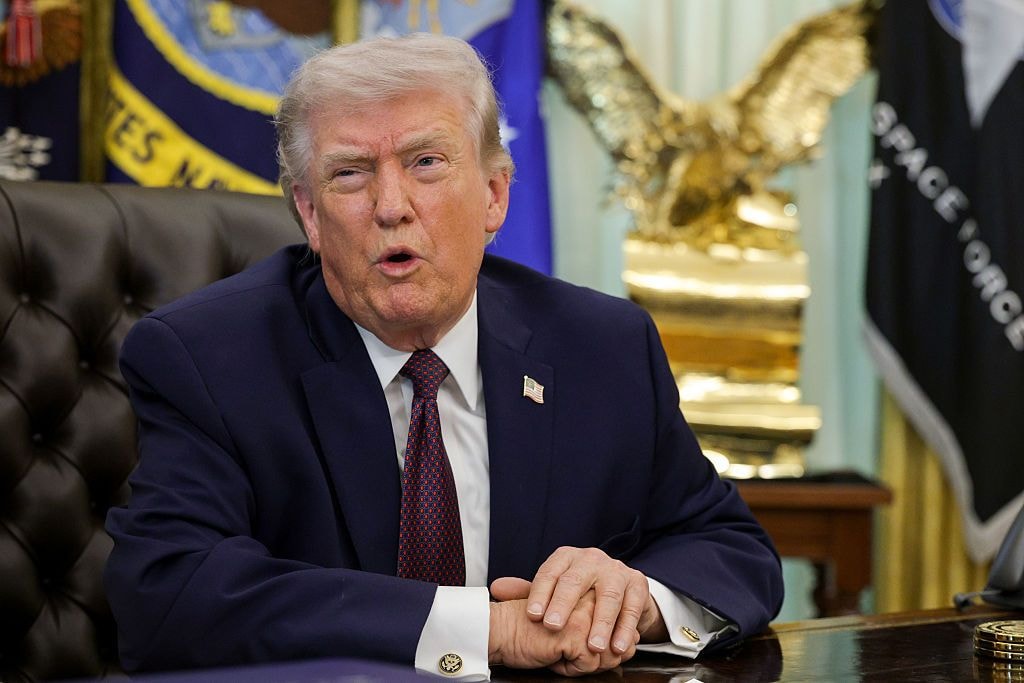
U.S. President Donald Trump in the Oval Office of the White House in Washington, D.C., U.S. on Feb. 3, 2026. (Saul Loeb / AFP via Getty Images)
 on Google
U.S. President Donald Trump's claim that his Russian counterpart "kept his word" by not launching mass missile and drone strikes against Ukraine's energy infrastructure for a week has been met with bewilderment and dismay in Kyiv.
"I believe this is either a mockery of our misfortune, a lack of understanding of the situation, or wishful thinking," Volodymyr Ariev, a lawmaker from the opposition European Solidarity party, told the Kyiv Independent.
The confusing saga of a supposed truce on striking energy infrastructure began when Trump surprisingly announced on Jan. 29 that Russian President Vladimir Putin agreed not to strike Ukrainian cities for a week.
Characteristically lacking in details, he gave no indication of when, or if, it had started, leaving plenty of gaps for the Kremlin to fill, which it promptly did, saying the truce would concern only Kyiv, and last only until Feb. 1.
Overnight on Feb. 3, Russia unleashed the biggest mass attack of the winter so far, further hammering Ukraine's energy infrastructure as temperatures plunged below -20 degrees Celsius (-4 degrees Fahrenheit).

"(The pause) was for Sunday to Sunday," Trump said the same day. "It opened up and (Putin) hit them hard... He kept his word on that. One week is a lot — we will take anything."
"This is clearly a victory for Putin," Inna Sovsun, lawmaker from the Holos party, told the Kyiv Independent. "He can claim that Russia has shown 'goodwill' while continuing to drag out the negotiation process."
"Putin only needed time to reload the missiles, refuel the planes, and lift them into the air."
In Ukraine, a week without a mass Russian missile and drone strike is not "a lot." In fact, it has been a regular occurrence since the Kremlin started bombing energy infrastructure way back in October 2022, and simply reflects the amount of time it takes for Russia to prepare such attacks.
Russia has significantly upped the frequency of mass attacks in recent weeks with some happening less than a week apart. But the slightly longer pause between strikes on Jan. 24 and Feb. 3 was reflected in the size of the attack which was the largest of the winter so far.
Russia launched 71 missiles, compared to only 4 on Jan. 18, 27 on Jan. 20, and 21 on Jan. 24.


"Putin only needed time to reload the missiles, refuel the planes, and lift them into the air," Ruslan Gorbenko, a lawmaker from the ruling Servant of the People party, told the Kyiv Independent.
"Such fake statements from both sides, from the Russians and from the United States, only weaken the trust of both Ukraine and European partners."
The timing of Trump's statement was crucial, coming the evening before Russia, Ukraine, and the United States met for the second round of trilateral talks.
Putin's apparent willingness to agree to Trump's suggestions meant the Russian side entered with some newly acquired political capital.
"It undercuts the logic of a truce," political analyst Volodymyr Fesenko told the Kyiv Independent.
"Instead of de-escalation and trust-building, which are the typical justifications given for an energy truce, what actually happened was the opposite. A truce is supposed to facilitate talks, reduce tensions, and foster trust."
Adding to the frustration in Ukraine is the seeming lack of recognition from the U.S. that Russia conducted several deadly strikes on Ukraine during the period in question, including a drone attack on a bus that killed 12 miners in Pavlohrad, Dnipropetrovsk Oblast on Feb. 1.

"How can this be called a ceasefire when Putin and Russia killed 12 miners during this period?" Oleksandr Merezhko, head of Ukraine's parliament foreign affairs committee, told the Kyiv Independent.
"What kind of ceasefire is this, even if you approach it in purely formal terms? I do not see any serious agreement. Shelling and bombings continued."
In Kyiv, the theatre of the now year-long peace process has passed well beyond the wearisome phase.
"The running in circles continues, and Ukrainians keep dying in the 'Coldomor' orchestrated by Putin," Yaroslav Yurchyshyn, lawmaker from the Holos party, referring to the massive man-made famine in Soviet Ukraine in the 1930s that killed millions.
On the front lines in Ukraine, soldiers holding the front line against Russia's invading forces also noticed what was said in the White House.
"If the West continues to be fooled by such lies, it may suddenly forget that in this war, there is actually a victim and an occupier," a 32-year-old drone operator, callsign "Architect," told the Kyiv Independent.
"And then the civilized world and the truth it should be defending will lose."