0of 5,000

Help us find 5,000 new members. Bring one friend.

Share your personal link and make us stronger in 2027.

0 found so far

Goal 5,000

News Feed

German court convicts German-Russian couple of supplying drone parts to Russia

• 1 min read
German court convicts German-Russian couple of supplying drone parts to Russia
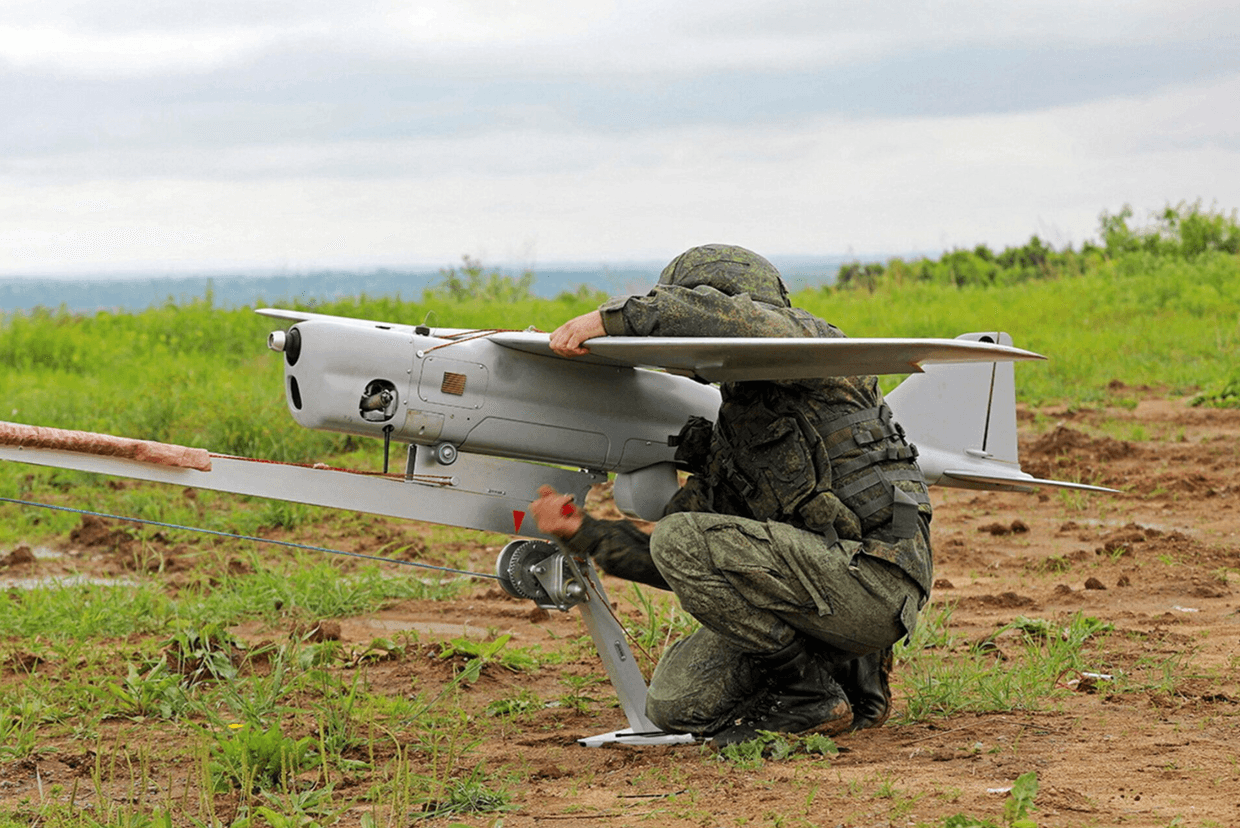
An undated photo of a Russian soldier holding an Orlan-10 drone. Photo for illustrative purposes. (Russian Defense Ministry)

A court in the German city of Stuttgart on July 17 convicted a couple, both German-Russian nationals, of supplying drone parts to Russia.

The 59-year-old man was sentenced to six years and nine months in prison, while his common-law wife received a suspended sentence of one year and nine months.

The court said that the two had sent around 120,000 spare parts and other components for Orlan-10 reconnaissance drones to Russia between 2020 and 2023 in violation of an EU embargo on the export of such goods.

The man sold the parts to Russia through front companies located around the world and reportedly earned more than 900,000 euros ($983,000) in the trade of sanctioned goods.  

Both partially admitted their guilt to the court.

Despite wide-reaching Western sanctions on the export of arms, military equipment, and dual-use technologies to Russia, determined individuals and companies have continued to circumvent the measures.


Avatar
Nate Ostiller

News Editor

Nate Ostiller is a former News Editor at the Kyiv Independent. He works on special projects as a researcher and writer for The Red Line Podcast, covering Eastern Europe and Eurasia, and focused primarily on digital misinformation, memory politics, and ethnic conflict. Nate has a Master’s degree in Russian and Eurasian Studies from the University of Glasgow, and spent two years studying abroad at Kyiv-Mohyla Academy in Ukraine. Originally from the USA, he is currently based in Tbilisi, Georgia.

Read more
News Feed

The alleged criminal network allegedly protected scam call centers, trafficked drugs, produced counterfeit currency, and used violence to intimidate critics. Recordings released by investigators suggest that members of the group maintained contact with Russia's Federal Security Service (FSB).

Show More