Export hurdles and visa waits for Ukrainian companies force Pentagon to slow its drone contest
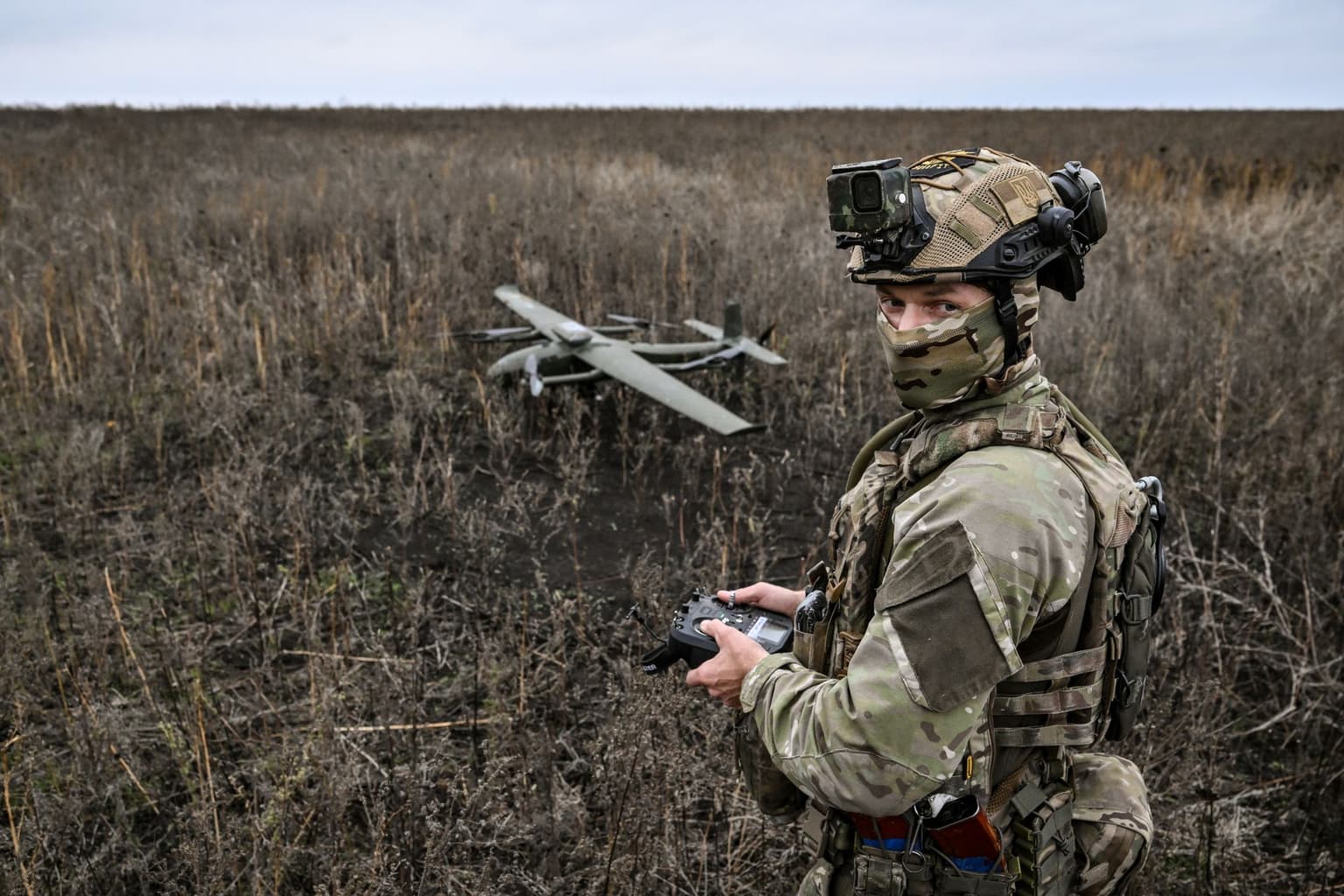
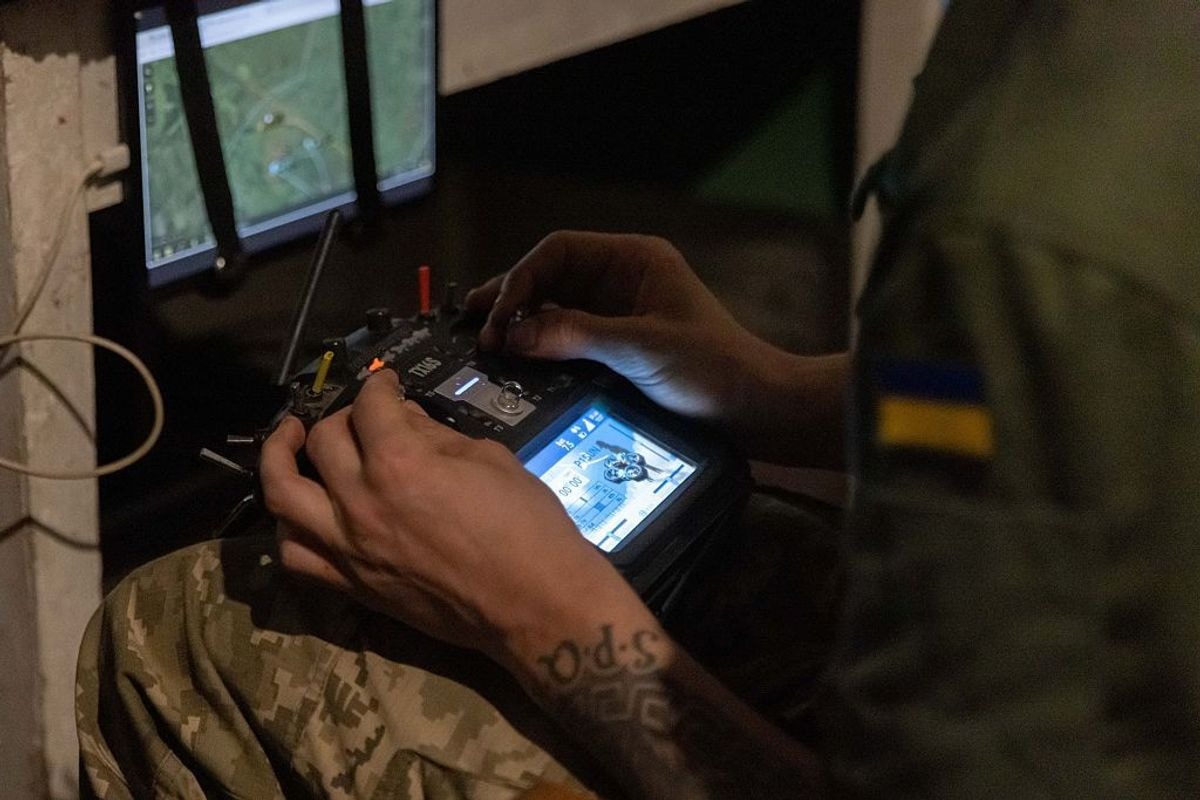
A soldier holds a remote controller near a GARA unmanned aerial vehicle (UAV) at an unnamed location in Donetsk Oblast, Ukraine, on Oct. 16, 2026. (Dmytro Smolienko/Ukrinform/Future Publishing via Getty Images)
 on Google
One morning in June, the head of export at Ukrainian drone company Stellarion found himself unexpectedly in need of a U-Haul outside the Detroit Metro Airport in Michigan.
Stellarion was set to test its drones in front of American soldiers at a competition organized by the Pentagon at Camp Grayling, a military base three hours away. But while many of its 48 invited competitors were American companies that had had weeks to modify, prepare, and fit warheads onto their drones, Stellarion was facing a last-minute scramble.
The company's drones had landed that very morning, slowed by Ukrainian export controls and lengthy shipping times, Stellarion's head of exports, who requested anonymity for security reasons, told the Kyiv Independent.
Stellarion performed strongly enough to advance in the competition, but the Ukrainian company's ordeal reflects a broader problem.
Interviews with Ukrainian manufacturers competing in the Pentagon's Drone Dominance Program (DDP), a contest to procure drones for U.S. defense, revealed the companies’ struggles with export controls, shipping times, and visa approvals, sometimes resulting in late product arrivals and rapid turnarounds before competition.
The obstacles to Ukrainian companies are serious enough that, in early October, the Pentagon announced it was pushing back the next phase of the competition, Phase 2.5, which focuses on bomber drones, to November. About half of the 17 companies invited to participate are Ukrainian, a sign of how much the U.S. procurement strategy now depends on drones made in Ukraine.
It is the first time the program has been so visibly forced to accommodate its rules and timeline to meet the needs of Ukrainian companies.
In a statement to the Kyiv Independent, the Pentagon said that "Ukrainian companies have the most battlefield-tested Small Unmanned Aircraft Systems products in the world, and have scaled. We have a responsibility to give American soldiers and Marines the benefit of the best materiel."
The DDP, initiated by Defense Secretary Pete Hegseth in a July 2025 memorandum, is the U.S.’ flagship effort to procure drones at a time when Russia and Ukraine each plan to produce 7 million in 2026 for their respective war efforts. The program is funded to the tune of $1.1 billion and initially aimed to procure 340,000 drones, according to the Request for Solutions released in December 2025.
The Pentagon has prized speed, stating in February in a press release: "We are buying what works — fast, at scale, and without bureaucratic delay."
In the spring, Phase I tested classic one-way attack first-person view (FPV) drones. Over the summer, Phase II tested long-range strike drones and those that operate in close quarters. Other than the U.S. itself, no country sent more competitors to those initial phases than Ukraine. Other competing countries included Israel. Croatia, the U.K., among others.
In July, the Pentagon announced the names of the 17 companies that would be invited to compete in Phase 2.5, spending $30 million to acquire up to 1,200 bombers, according to the Request for Solutions released in July.

Unmanned bombers, which can carry heavier payloads, have played a crucial role in Russia's war against Ukraine. These drones have increasingly been used for logistical, resupply, and rescue missions, with one drone airlifting a 42-kg E-bike to a wounded soldier in July of 2025.
Eight or nine of the companies invited to Phase 2.5, according to the Inside Unmanned Systems blog, have Ukrainian origins: UFORCE, Gurzuf Defence, Skycutter-Skyfall, Meta Bureau, Grim Tech, and F-Drones are publicly Ukraine-based. Two other companies, listed as Achiever UA and UA Defense Tech, have no public presence, nor does the Areya corporation. Ukrainian companies need a registered legal entity in the U.S. to enter the competition.
Ukrainian companies have long struggled with the DDP’s tight turnarounds. In late July, the DDP put out a "Request for Solutions," or an invitation for companies to pitch the Pentagon on participating in Phase 2.5. Responses were due by Aug. 10. Invitees were announced publicly on Sept. 21, and given until mid-October to ship six ready-to-test bomber drones — which can cost up to $20,000 per unit to produce — to Camp Grayling.
But the export obstacles that Shtylyk faced in June are still present.
Ukraine has worked to streamline its export approvals, aiming in July to shorten the approval process to 30 days, but it can still take weeks to approve drone exports. Phase II of the DDP required a special deal to get Ukrainian drones out fast.
But shipping the drones to the U.S. can add another two or three weeks, leaving Ukrainian companies with practically no time to make needed modifications or prepare in an on-base testing environment.

A number of Ukrainian companies therefore considered or decided to withdraw from the competition. One is Skycutter-Skyfall, a partnership between a British defense tech startup that works closely with SkyFall, which produces drone hardware in Ukraine.
Skycutter-Skyfall placed first in Phase I of the DDP in March, earning an order of 2,560 of its one-way-attack FPV drones, according to the DDP’s online leaderboard. Yet, Skycutter was the last of 11 companies to deliver its drone contract, the leaderboard shows.
Gurzuf Defence told the Kyiv Independent that it had notified the Pentagon of its withdrawal from Phase 2.5, while another Ukrainian company told the Kyiv Independent, on condition of anonymity, that it considered pulling out of the competition before ultimately deciding to attend.
As of Oct. 13, at least four companies — a quarter of all those invited — declined to audition their drones at Camp Grayling, according to the DDP website. Two of the four were Ukrainian companies.

Now, the Pentagon is postponing Phase 2.5 to November "to best position all participants for success," according to the Drone Dominance website. The Pentagon reached out to companies that had withdrawn to ask them back to the competition. Gurzuf, for its part, still declined, telling the Kyiv Independent it would take them until December to be fully ready.
The Pentagon told the Kyiv Independent that Ukrainian export controls and shipping times were not "in themselves a factor" in the decision to postpone Phase 2.5. Instead, they emphasized that the decision "included a recognition of the time-consuming U.S. visa processes."
The U.S. Embassy in Kyiv does not process traditional business visa applications, meaning Ukrainian applicants need to travel elsewhere to complete the process, which can take weeks or months, depending on the location.
The Pentagon maintains that it holds Ukrainian companies to the same standards as all competitors. In the first two phases of the program, run between February and August, multiple Ukrainian companies, on condition of anonymity, said the Defense Department’s attitude to supply chain challenges could be boiled down to: "These are the rules. You knew them in advance."
The Pentagon’s decision to postpone signals a shift in approach, suggesting the DDP cares more about encouraging Ukrainian participation than preserving its initial, rapid timelines.

The DDP is the largest drone procurement initiative in the world outside Russia and Ukraine. It is a central part of the U.S. defense modernization effort.
A Grim Tech representative, who spoke on condition of anonymity, told the Kyiv Independent: "If you want to access the American market, you need to be there." In its request for Fiscal Year 2027, the Pentagon has asked for $54 billion for drone warfare and procurement. Companies that succeed now stand to benefit from large future American contracts.
Ukrainian companies also know domestic wartime demand will not last forever. Some have begun to modify their products and form new partnerships to make themselves attractive to foreign governments, the Pentagon most of all.
In March, Ukrainian drone producer General Cherry announced a partnership with American military producer Wilcox Industries to produce hardware in New Hampshire. F-Drones, another Ukrainian company, announced in June a major production project in Ohio. Both General Cherry and F-Drones advanced in earlier phases of the DDP.
But these partnerships don't come cheap. As Grim Tech’s representative put it, "We are finding reliable partners in the U.S., but we're still thinking about what we can do. Because it's a high cost. It's a big investment to set up."
Stellarion’s head of exports put it similarly: "Companies that already have some strong representation in the U.S., some U.S. partners, are in a much better position."
"We had to navigate challenges on our own."