Russia slams Ukrainian cities in mass missile attack overnight — at least 17 dead, 98 injured
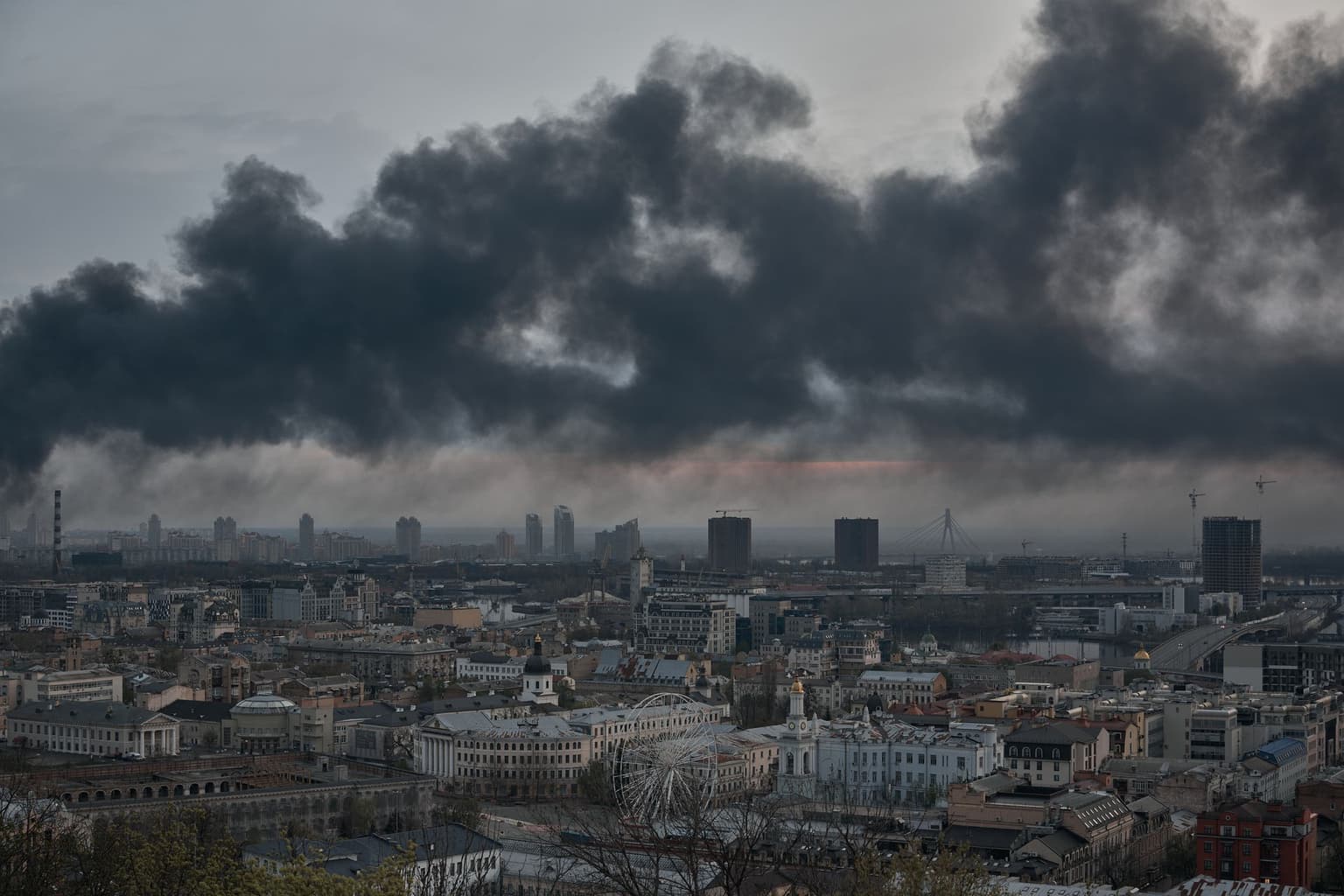
A view of Kyiv as smoke rises following an overnight Russian missile strike in which at least five people, including a child, were killed and 21 others injured, while damage was reported in the Podilskyi, Obolonskyi, Shevchenkivskyi and Desnianskyi districts, on April 16, 2026 in Kyiv, Ukraine. (Photo by Kostiantyn Liberov/Libkos/Getty Images)
 on Google
Editor's note: This is a developing story and is being updated.
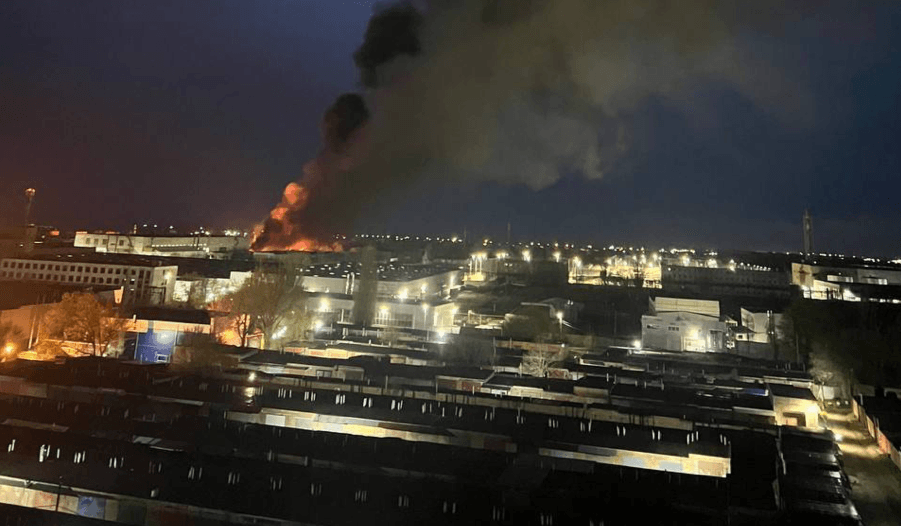
Russian missiles and drones destroyed homes, burned buildings, and killed civilians in Ukraine's major cities in a mass overnight strike on April 16, killing at least 17 and injuring over 100 in Kyiv, Dnipro, and Odesa.
The overnight assault marks one of the deadliest Russian attacks on Ukrainian civilians of 2026.
The Air Force later said Russia launched a total of 19 ballistic missiles, 25 cruise missiles, and 659 drones during the attack.
Twelve missiles and 20 drones hit 26 locations across Ukraine, and debris from interceptions hit 25 locations.
In the first attack on Kyiv in over a month, at least four people — including a 12-year-old child — were killed and 48 others injured overnight in Kyiv, Ukraine's State Emergency Service reported. Kyiv Mayor Vitali Klitschko said 26 of the wounded were hospitalized, and that among the victims are emergency medics and children.
Elsewhere in Ukraine, the overnight Russian attack killed at least nine people in the southern port city of Odesa and killed at least four people in the central-eastern city of Dnipro, the local authorities and the State Emergency Service reported.


Ukraine's Air Force issued a ballistic missile alert at around 2:35 a.m. local time. Minutes later, Kyiv Independent journalists in the capital reported loud explosions as the missiles struck the city.
Russia's attacks didn't end when the sun rose: Early in the morning, as emergency crews were still clearing the wreckage of the overnight assault, air raid alarms sounded over Kyiv again, and a Russian drone struck an apartment building.
In Kyiv, the attacks caused damage to multiple neighborhoods, Klitschko said. In the Podilskyi district, a non-residential building sustained a direct hit, while other places were struck by debris. These included a residential building, where a fire broke out, a three-story hotel, and the sixth floor of an apartment building.
Missile debris also partially destroyed a local home, where a mother and child were rescued from the rubble by first responders.


At the scene, the home was mangled beyond recognition, with plasterboard walls and wooden frames mixing with clothes and personal items, as a large crater opened up before the building.
Nineteen-year-old resident Yeva — who declined to give her last name — was woken together with her sister by a nearby explosion around 2:45 a.m., and got out of bed to make sure a prized family mirror wouldn't break.
"I ran to take down the mirror to fix it so it would not fall, and at that moment there was a second explosion, and the roof fell down," she told the Kyiv Independent while searching through the debris.
"It fell exactly on the place where my sister was, and what saved her from something much worse than current injuries was that she stood up to pick up things together with me."
The area, with a mix of residential homes and summer homes, was considered a very safe part of the city before the attack, far from anything that could be a military target, said Yeva.
"People always believe that this will not happen to us," she said, "our shelter was the basement, but we used it only the first year of the war.
"It was hard to believe, especially when there are no major government facilities nearby."


Residents said the strike came with little warning.
Serhii, 65, who lives in the area and also declined to give his last name because of the nature of his job, said he and his wife moved into the corridor after the air raid siren sounded, but had only seconds before the blast hit.
"Everything flew straight at us – windows, doors, and everything else," he said. "There was no time even to think or do anything."
Shortly after 7 a.m. local time, Klitschko reported that a low-flying Russian drone crashed into an 18-story building in the Podilskyi district.
In the Obolonskyi district, an office building was damaged, along with cars parked nearby. A fire broke out at a two-story residential building in the Desnyanskyi district as a result of falling missile debris.
Explosions were also reported in Odesa shortly after a ballistic missile warning. Serhii Lysak, head of the Odesa City Military Administration, later reported that several waves of missile and drone strikes targeted the southern port city overnight.
Nine people in Odesa were killed and 23 others injured, the State Emergency Service said. The attacks damaged infrastructure facilities, a residential building, and a city park.

In Dnipro, fires blazed in residential neighborhoods as a deadly Russian missile attack hit the city for the second time this week.
At least four civilians were killed and 34 others injured in the attacks, Dnipropetrovsk Oblast Governor Oleksandr Hanzha reported. Fourteen victims were hospitalized, with five in critical condition.
The attack — which Hanzha described as "a massive strike" — damaged apartments, offices, administrative buildings, a factory, and vehicles in Dnipro.
The latest mass attack on Ukraine comes shortly after President Volodymyr Zelensky sounded the alarm on the country's critical shortage of air defense missiles, particularly U.S.-made Patriots, which are capable of intercepting ballistic missiles.
"The situation is in such a deficit, it could not be any worse," Zelensky said in an interview published on April 4.
Global demand for Patriot interceptors among operators of the U.S.-made system has increased dramatically since the start of the war on Iran in March.
A few hours after the attack, Zelensky reported to have tasked the commander of the Air Force to contact those of Ukraine's partners who had promised more interceptor missiles, including for the Patriot system.
"It is important to fulfill every promise of aid to Ukraine on time," Zelensky wrote.
"There are many political commitments of partners that have already been announced, but have not yet been implemented."
Despite the Patriot shortage, eight of the ballistic missiles were successfully shot down, according to the Air Force.
Foreign Minister Andrii Sybiha called on the international community to take "immediate actions," including measures to increase pressure on Russia through sanctions and providing aid to Ukraine.
Missile and drone alerts were also declared in regions across the country, including Kharkiv and Cherkasy. Information regarding casualties and damage is still being updated.
The Air Force said eight of the 19 ballistic missiles were downed, 23 of 25 cruise missiles, and 636 drones.
"Russia is once again confirming its true nature by launching nighttime strikes on Ukrainian cities, where ordinary people live," Ombudsman Dmytro Lubinets said the morning after the mass attack.
"These are attacks on civilians. And every time there is no accountability, such tragedies repeat themselves," he added, vowing that Russia would be held accountable for "every life taken."