European lawmakers call for rules to flush out the Russian spies among them
 on Google
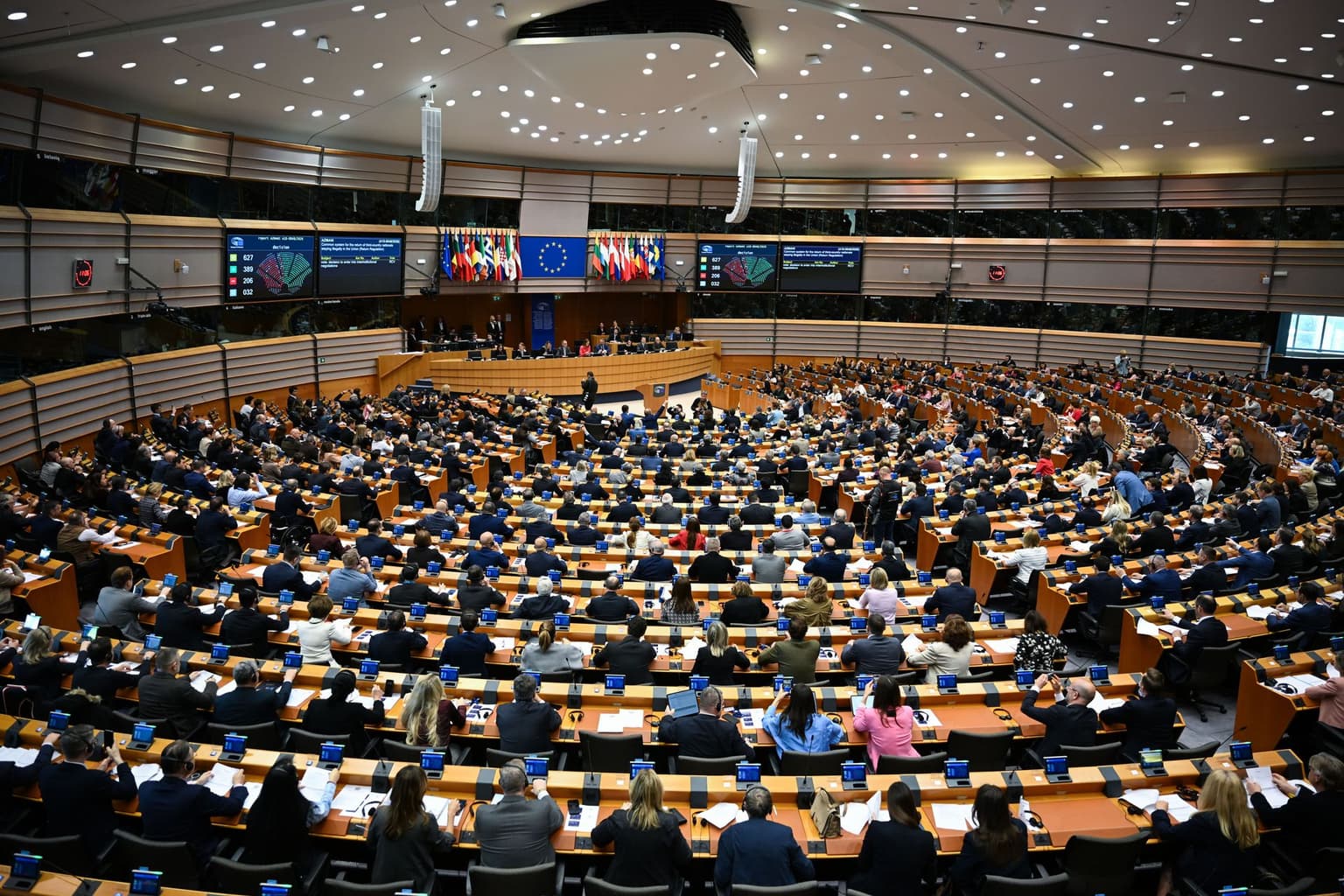
A group of members of the European Parliament called for the urgent implementation of reforms to expose and limit espionage activities carried out by pro-Russian colleagues in an open letter made public on April 9.
The group of MEPs, led by Lithuanian liberal Petras Austrevicius, wrote that their request was motivated by news that the Hungarian government was "deliberately sharing confidential information obtained during EU Council meetings with the Putin regime."
A journalistic investigation, just days ahead of Hungary's April 12 national election, exposed that Hungarian Foreign Minister Peter Szijarto coordinated with his Russian counterpart Sergey Lavrov to update him on work to stall Ukraine's bid for EU membership.
The MEPs call on Roberta Metsola, president of the European Parliament, to implement the recommendations of a 2023 report which proposes ways to improve transparency and security in the parliament, including by banning access to any entity "with direct or indirect relations" with Russia, and increased vetting of organisations that can lobby in the EU for how they are financed and the interests they represent.
One parliamentary assistant said that enacting those changes would be difficult but is "the only way if the parliament wants to be taken seriously," likening the current situation to a "brothel" in comments made to the Kyiv Independent.
Concerns about Russian access to the European Parliament are not new. As far back as 2019, MEPs criticized the hiring by a French far-right colleague of Elizaveta Peskova, the daughter of Kremlin spokesperson Dmitry Peskov.
Last year, an assistant to far-right German MEP Maximilian Krah was jailed for spying for China.
And meetings between MEPs and Russia continue unabated. As recently as March, Luxembourgish far-right MEP Fernand Kartheiser met Russia's representatives in Brussels to discuss "EU-Russia relations."
Kartheiser's entanglements with Russia go especially deep, as far as the 1980s Soviet Union.
When asked for comment, a spokesperson for the European Parliament Press Service told the Kyiv Independent that the parliament "remains vigilant for security and cybersecurity threats, with all necessary measures for prevention set in place."
They added that there are measures in place to "empower members and staff through enhanced guidance and training," and that the parliament is in regular contact and is cooperative with national authorities.