EU leaders agree on $105 billion loan to buffer Ukraine’s finances, fail on Russian assets plan
 on Google

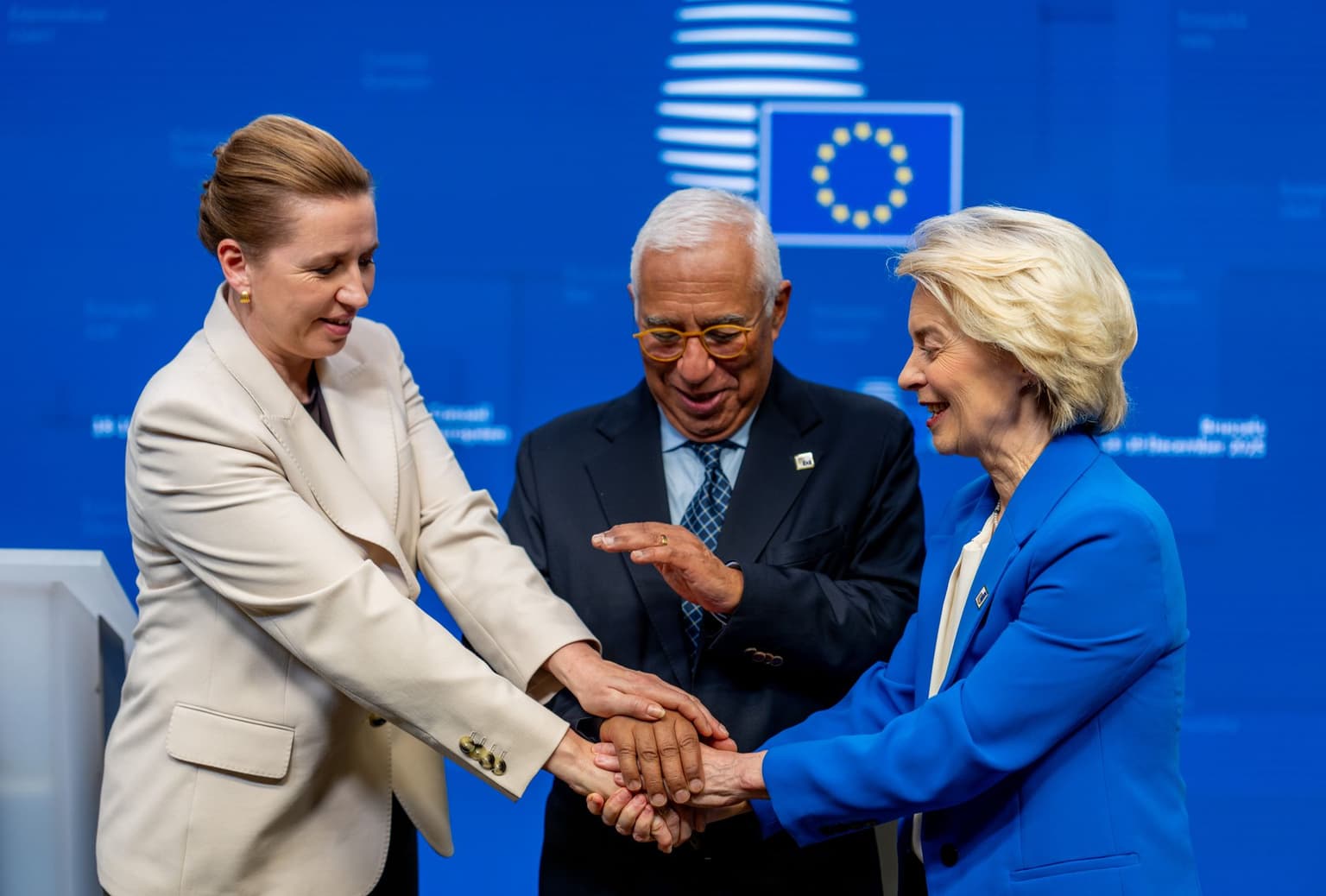
Editor's note: This article has been updated to include comments from President Volodymyr Zelensky, European Council President Antonio Costa, Finance Minister Serhii Marchenko, and further details about the loan.
European leaders on Dec. 19 approved an interest-free loan for Ukraine, providing a financial lifeline and securing a large portion of the cash-strapped country's financing needs for the next two years.
"Today we approved a decision to provide 90 billion euros ($105.5 billion) to Ukraine for the next two years," Antonio Costa, the president of the European Council, said in a press conference.
EU officials had initially sought to underpin a large loan to Ukraine with immobilized Russian central bank reserves, but after failing to secure a consensus, they opted for an alternative financing approach.
The frozen-assets proposal fell apart at the eleventh hour amid divisions among EU leaders in Brussels. The approved loan will be backed instead by the EU budget, according to Costa.
The agreement will lend the funds to Ukraine in 2026 and 2027, securing two-thirds of the country's financing needs. Kyiv was set to run out of cash by mid-2026.
"This (agreement) sends a clear signal from Europe to Putin: This war will not be worth it," German Chancellor Friedrich Merz said on X.
Costa said Ukraine will only repay the loan once Russia pays reparations, and that the immobilized assets could still be used to repay the loan.
"This is significant support that truly strengthens our resilience," President Zelensky said in a post on social media.
"Thank you for the result and unity. Together, we are protecting the future of our continent," he added.
Ukraine's finance minister, Serhii Marchenko, also welcomed the decision in a post on social media, adding that the funds "will be directed toward budgetary and defense needs."
In November, European estimates put Ukraine's unfunded military and budgetary needs at 135 billion euros ($160 billion). The agreement means that Kyiv still needs to secure roughly 45 billion euros ($50 billion) from its allies.
Costa also left the door open to the reparations loan initiative, saying that the bloc would continue working on the plan.
Later on Dec. 19 in a social media post following a meeting with G7 finance ministers, Marchenko called the $105 billion loan an "interim measure," and urged the EU to keep working towards the reparations loan.
"The risks to Europe from a potential defeat of Ukraine far exceed the risks of introducing the reparations mechanism,” Marchenko said in a press release.
The decision came down to the wire on Dec. 18 after a last sprint of preparatory meetings between EU envoys this week failed to reach consensus in the lead-up to the summit.
Advisers met on the sidelines of the summit throughout the entire day to try to get Belgium on board, Politico reported.
Belgium, which hosts the vast majority of the frozen assets, had been the most vocal opponent to the reparations loan plan. The country feared that it could be on the hook for one-third of its gross domestic product should Russia claw back the assets through legal action.
EU leaders spent hours discussing the technical and legal feasibility of structuring a loan backed by frozen Russian assets. Diplomats said the plan proved too complex and politically sensitive to resolve at this stage, prompting leaders to move forward with an alternative interest-free loan instead.
German Chancellor Friedrich Merz and the EU's top diplomat Kaja Kallas had both said ahead of the meeting that the odds were "50/50" that the reparations loan succeeded.
In the leadup to the summit, the reparations loan had been seen as the most politically viable option, since the Commission had said that joint borrowing would require unanimity — widely expected to be blocked by Hungary and Slovakia.
But the leaders found a workaround which "will not have an impact on the financial obligations of the Czech Republic, Hungary and Slovakia," according to the conclusions of the summit posted by the European Council.
As momentum built for the reparations loan ahead the summit, European countries voted to indefinitely immobilize the Russian assets on Dec. 12, using a provision in the EU treaties known as Article 122, usually reserved to help its members to deal with economic emergencies
By framing Russia's war in Ukraine as a source of significant economic difficulties, the EU leveraged the emergency clause as the legal basis of the indefinite freeze. Article 122 only requires a "qualified majority," to vote in favor, meaning a minimum of 15 countries representing 55% of the bloc's population.
Usually, matters of foreign policy must be decided by unanimity.
The indefinite immobilization of the assets removed the risk that Hungary or Slovakia would veto the continued immobilization of the assets — which was previously subject to a bi-annual unanimous vote.