'Ready to fight' — Baltics face NATO fragility fears in the age of Trump
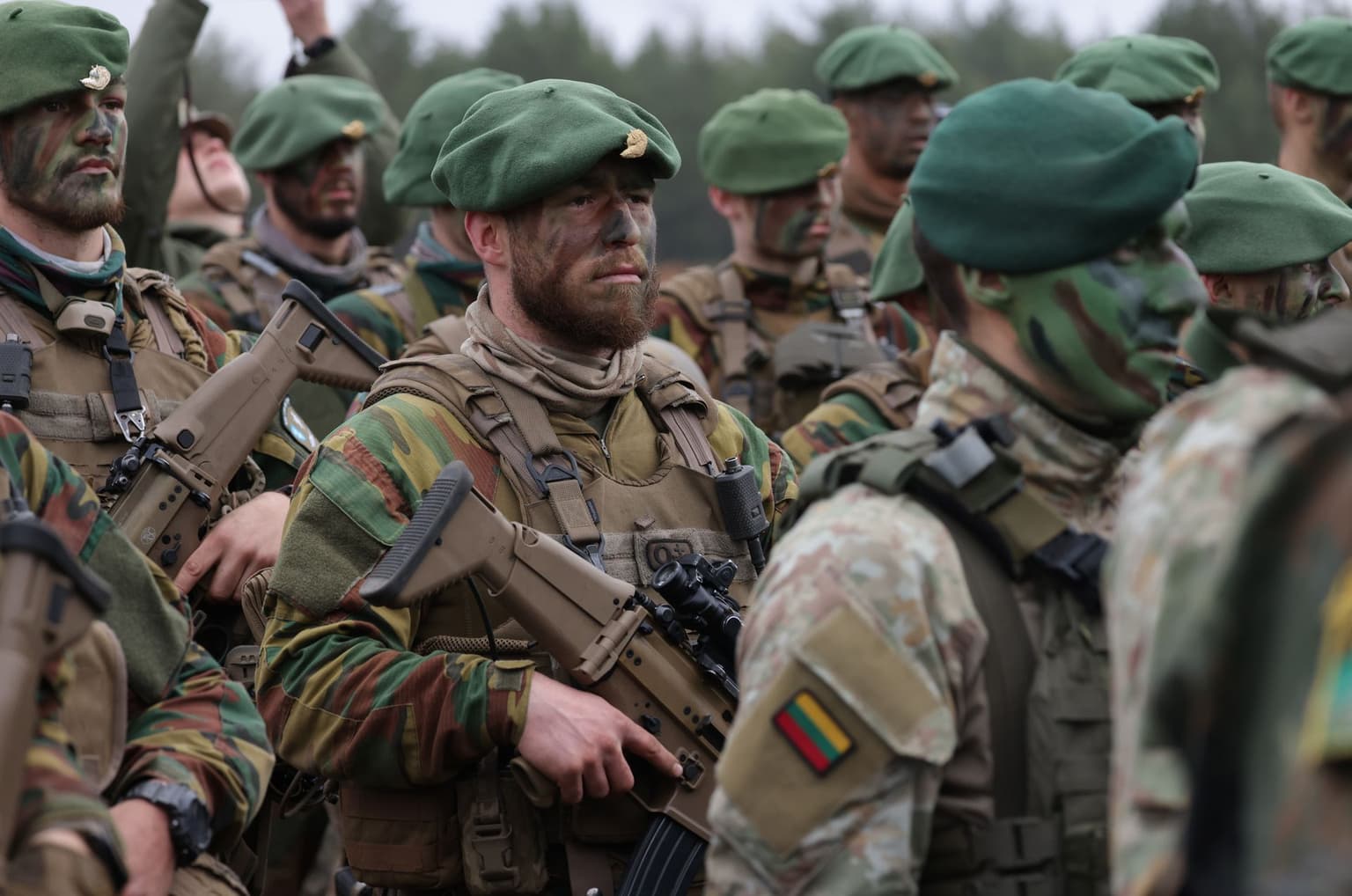
Belgian and Lithuanian troops during the NATO Iron Wolf military exercises in Pabrade, Lithuania, on Oct. 26, 2022. (Sean Gallup / Getty Images)
 on Google
As the crisis in Washington’s relations with its European allies escalated in recent months, it raised a stark question: how secure are the U.S. guarantees for countries bordering Russia?
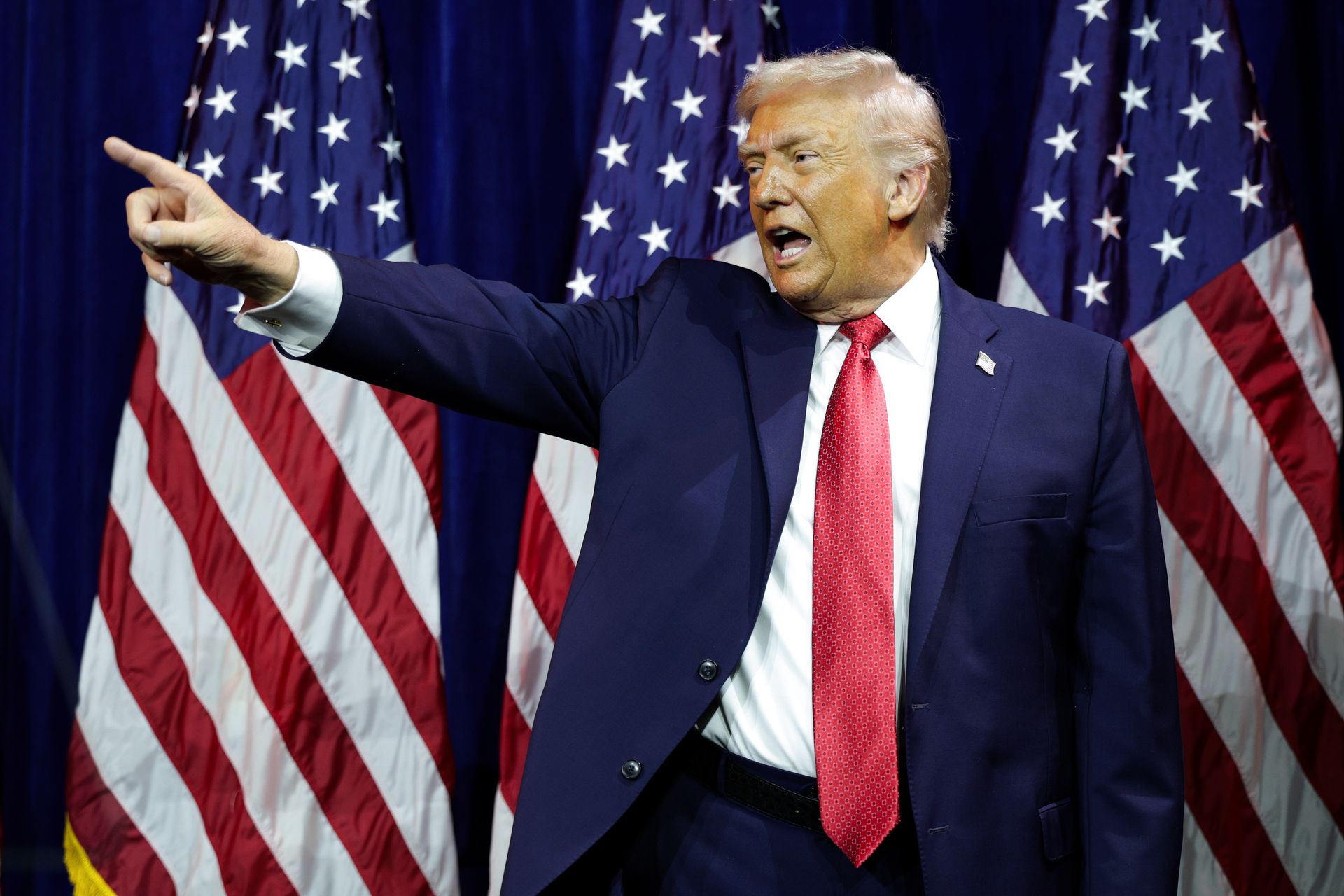
U.S. President Donald Trump has not just antagonized NATO allies but even threatened to annex one of their autonomous territories — Denmark's Greenland. The tensions subsided as Trump pledged not to use force against Greenland in January but concerns remain.
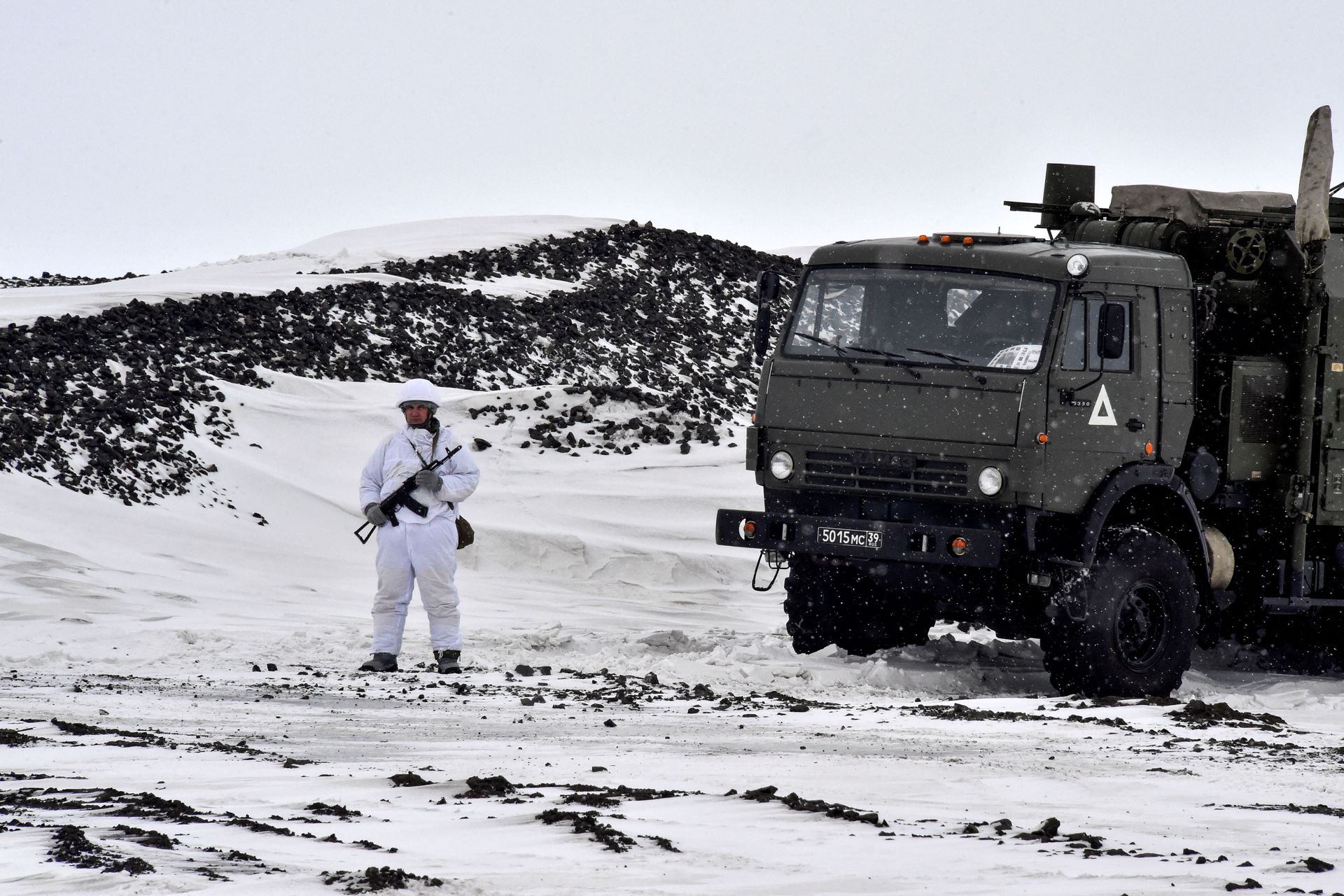
Among the U.S. allies in Europe, Estonia, Lithuania, and Latvia are especially vulnerable. The three countries, which have a total population of 6 million, are flanked by Russia's heavily armed exclave of Kaliningrad, Belarus, and mainland Russia.
Narva, a predominantly Russian-speaking Estonian border city, and the Suwalki Gap — a narrow corridor connecting Lithuania to Poland — are frequently cited by analysts as potential flashpoints or entry points for a Russian military offensive.
Nevertheless, ministers from the three countries interviewed by the Kyiv Independent were unequivocal – NATO remains ironclad, despite temporary ruptures.
The officials spoke to the Kyiv Independent on the sidelines of the Munich Security Conference on Feb. 13 and 14.

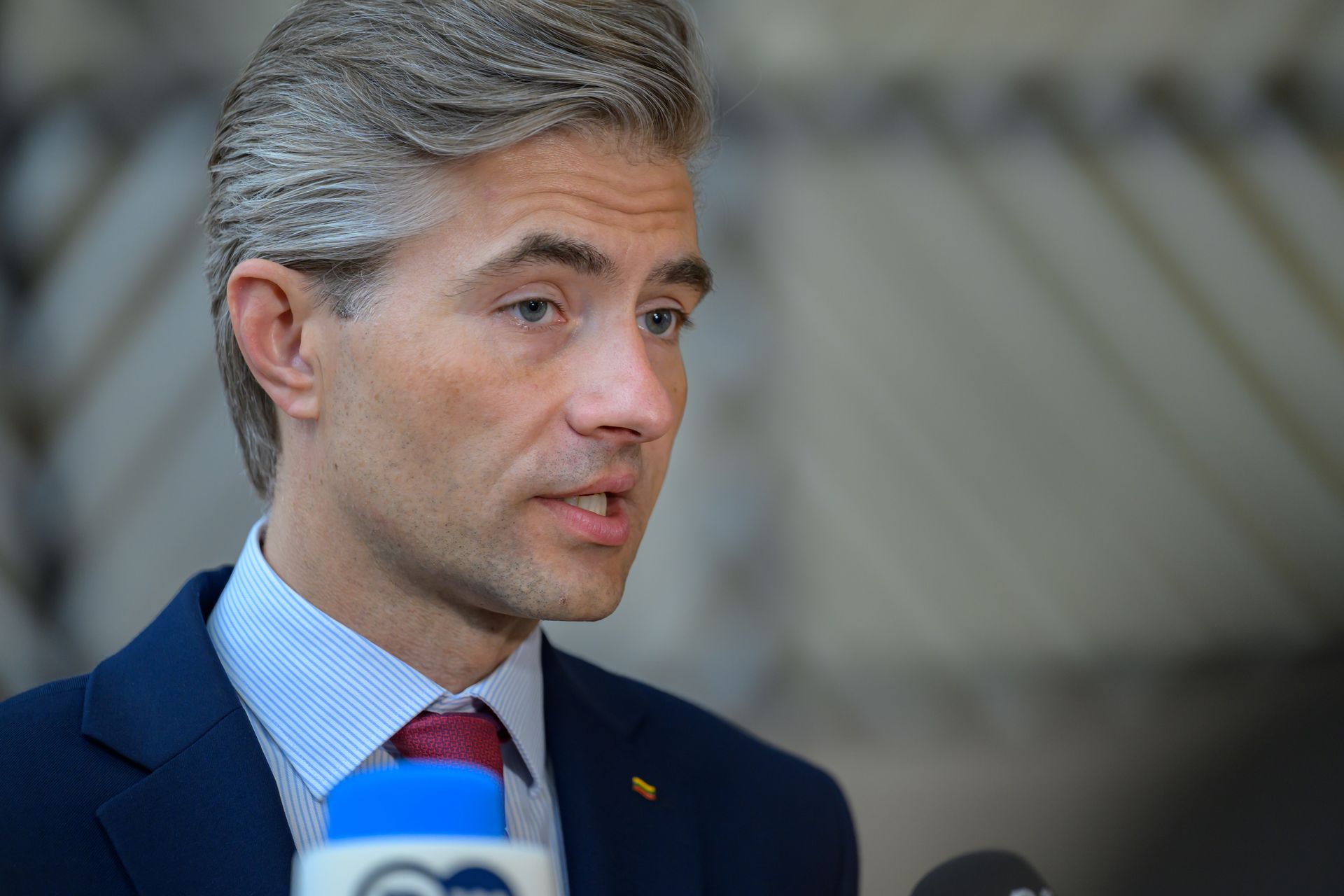
'Ready to fight tonight'
The three Baltic countries have about 40,000 active-duty troops combined, backed by a sizeable force of reservists, territorial defense forces, and paramilitaries, with plans for rapid expansion.
According to Latvian Defense Minister Andris Spruds, Latvia alone aims to have 60,000 troops ready in the event of conflict.

In addition, about 10,000 NATO troops are deployed in the region as part of the Enhanced Forward Presence, while Germany has permanently stationed an armored brigade in Lithuania.
NATO also provides air and maritime policing, an added layer of defense reinforced by Operation Eastern Sentry, launched in September 2025 in response to Russian aerial incursions.
Yet, the region's vulnerability has come into the spotlight recently after a war game scenario suggested that Russia would be able to seize the Suwalki Gap in a matter of days, while NATO would struggle to respond in time.
The Latvian defense chief is not alarmed by the results. He acknowledges the need to keep strengthening defenses but insists: “We are ready to fight tonight.”
"If there is a 'little green man' on Latvian soil, he will be eliminated immediately."
Lithuanian Foreign Minister Kestutis Budrys notes that such scenarios are important for preparing decision-makers to respond quickly in times of crisis.
"(Russia) will do exactly what they did in 2022 when we supported Ukraine," he said.
"They will threaten with the strategic, tactical, and whatever nuclear capabilities that they have. And we will have to… overcome this fear. How to get prepared for it? Through war games and exercises."
Spruds also commented on the Kremlin's tactic of using Russian soldiers wearing unmarked uniforms to seize Ukraine's Crimea and parts of the Donbas in 2014. Russia initially denied any links to the militants, who were colloquially known as "little green men."
"If there is a 'little green man' on Latvian soil, he will be eliminated immediately," Spruds said, adding that an immediate response by NATO will follow.
Both ministers also underscore that the Baltic region is not only NATO's frontier – it is also Russia's vulnerability.
"Kaliningrad is a vulnerability of Russia, which would be very difficult to protect in the case of a conflict," Spruds says.
If anybody believes that a war "would be somehow localized on NATO territory without huge destruction in Kaliningrad and deep in Russia, think twice," Budrys notes. "This is not the scenario of how we are going to fight."
From shadow war to drone war
The Baltic region has been the focal point of Russia’s hybrid warfare, which in recent months has begun to turn kinetic.
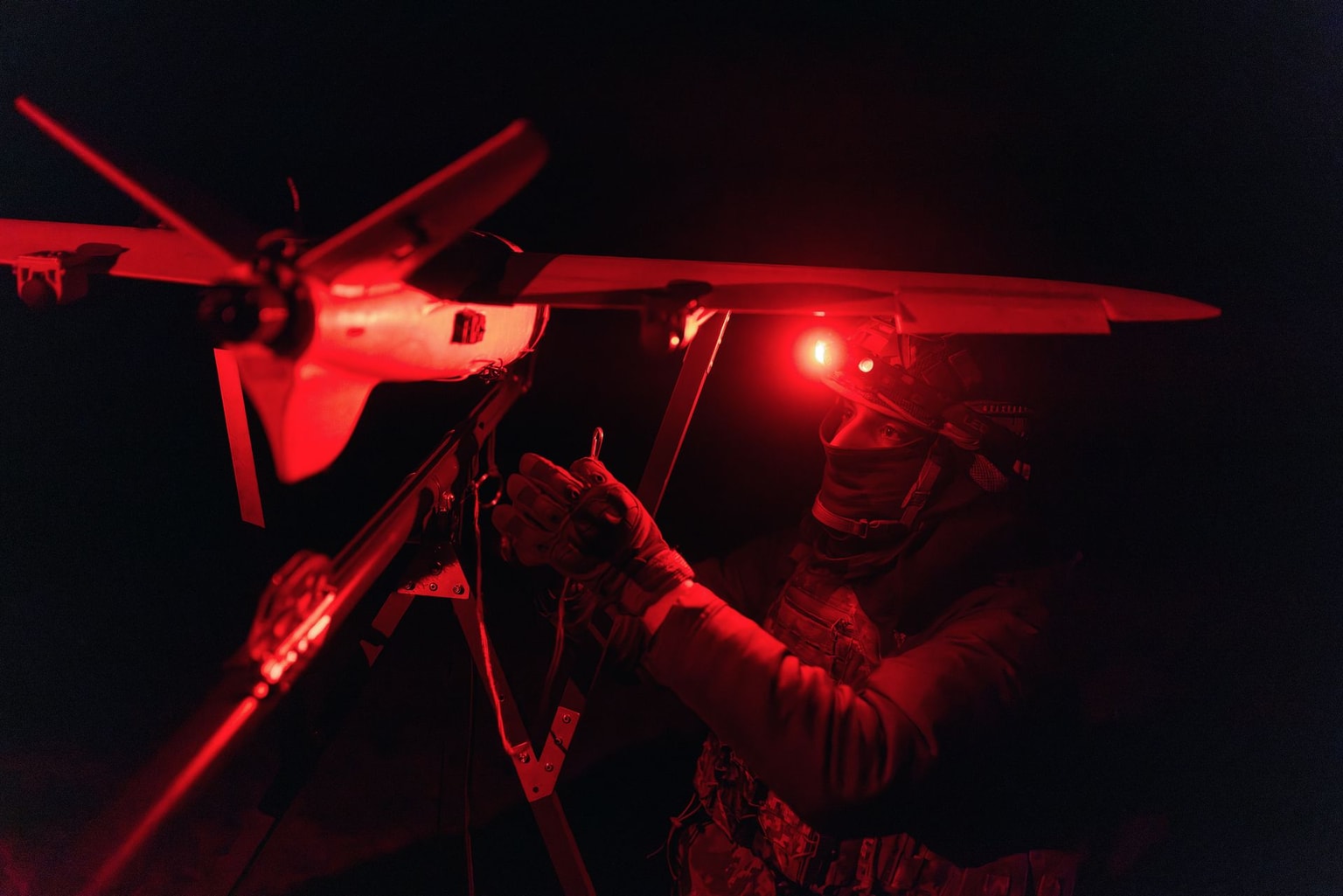
Several Shahed drones crashed on the territory of the Baltic countries, and others were shot down over Poland. Russian warplanes also violated Estonian and Lithuanian airspace in the fall of 2025.
The incidents have cast doubt on NATO’s readiness for a forceful response — as well as its capability to intercept even a handful of drones, as Russia pounds Ukraine with hundreds of UAVs each night.
"Ukraine is directly at war. As for NATO countries, we are not at war, but we are not at peace," Spruds says.


The solution is not simply "putting a soldier in every square meter and waiting for a drone to potentially fly over," but about building anti-drone capabilities in a systemic way while also learning lessons from Ukraine, he adds.
An adequate response, the Latvian defense chief notes, would be to increase NATO’s presence after each provocation and, if there is a direct threat to territory or people, to shoot down the intruding aircraft.
But the Lithuanian foreign minister says that the continued sabotage and provocations are, in themselves, evidence that the current response is insufficient.
"We shouldn't miss the opportunity to respond asymmetrically in other areas to Russia," he says.
While Russia keeps its operations below what it considers the threshold for triggering Article 5, it is up to NATO's members to decide where that threshold lies, Budrys adds.
NATO stands firm, Baltics say
Though acknowledging a rift with the U.S. over Greenland, the Baltic ministers described the episode as a temporary disagreement rather than an existential threat to NATO.
The United States "is an indispensable partner within NATO, and NATO is a cornerstone of Latvia's security," Spruds said.
"If the United States were not interested in NATO, most likely it would not advocate for Europeans to take a more active role in terms of investing capabilities, and making, as the U.S. has underlined, a more lethal alliance."
"Yes, there were differences when talking about the High North security in the Arctic and in Greenland," Budrys commented.
"But in all these cases, we managed to find the solution on how to proceed further without escalating our relations and restored trust."

Estonian Foreign Minister Margus Tsahkna, who spoke to the Kyiv Independent on the sidelines of the Munich Security Conference, said he even sometimes likes "this pressure and brutal communication from President Trump towards Europe, because we need to stand up (for ourselves)."
"I have no doubts that (NATO) is working," he added. "But it is not unconditional as it has been somehow before… We must do our part."
Yet, the officials were not coy about what a lack of response to Article 5's activation would mean.
"If (NATO) doesn't respond in the way that it is written down in our defense plans, it means that it is the end for the alliance. That's an absolutely new phase in our history," Budrys warned.

Security through Ukraine
The Baltic nations are among the most vocal advocates of increasing support for Ukraine, whose struggle they frame through the lens of their own security.
They have the numbers to back it up, ranking among the top military donors relative to GDP and pledging to commit at least 0.25% of their national output to support Ukraine.
The four-year "brave resistance of Ukrainian people against the Russian aggressor… shows that we cannot get tired; the Ukrainian people are not getting tired (either)," Spruds said.
Speaking about possible diplomatic engagement with Russia – as proposed by France – to help end the war in Ukraine, Budrys comments: "You have to have a big stick and some leverage."
"We saw so many counterproductive efforts to talk to Putin that led me to the current assessment that it won't be good for anyone to have these discussions. It will weaken the isolation of the Russian regime," he added.

The Baltic countries have also committed to post-war security guarantees to Kyiv, both through direct funding for Ukraine's military and defense and through the Coalition of the Willing.
"The primary security guarantee is strong Ukrainian armed forces," Spruds emphasized, adding that European support for Ukraine's military should continue even after a potential peace deal.
Yet Budrys warned against offering "hollow" promises, such as the "Article 5-like security guarantees" Ukraine seeks. Instead, he underscored financial support for Ukraine's Armed Forces or Ukraine's future EU membership as more realistic guarantees.
"There can be nothing similar to Article 5… Because Article 5 means that if you are in trouble, I promise you that I will come and if it is needed, I will die for you," he added.
"It's like pregnancy, whether a lady is pregnant or not. So she cannot be almost pregnant or something in between."
Note from the author:
Hi, this is Martin, the author of this article.
If you want to read more in-depth interviews with interesting speakers and figures shaping today's world, please support our work by joining our community of paying members. Your support helps us keep delivering independent, high-quality reporting.
Thank you!