Zelensky's new inner circle: The power shift behind Ukraine's latest reset
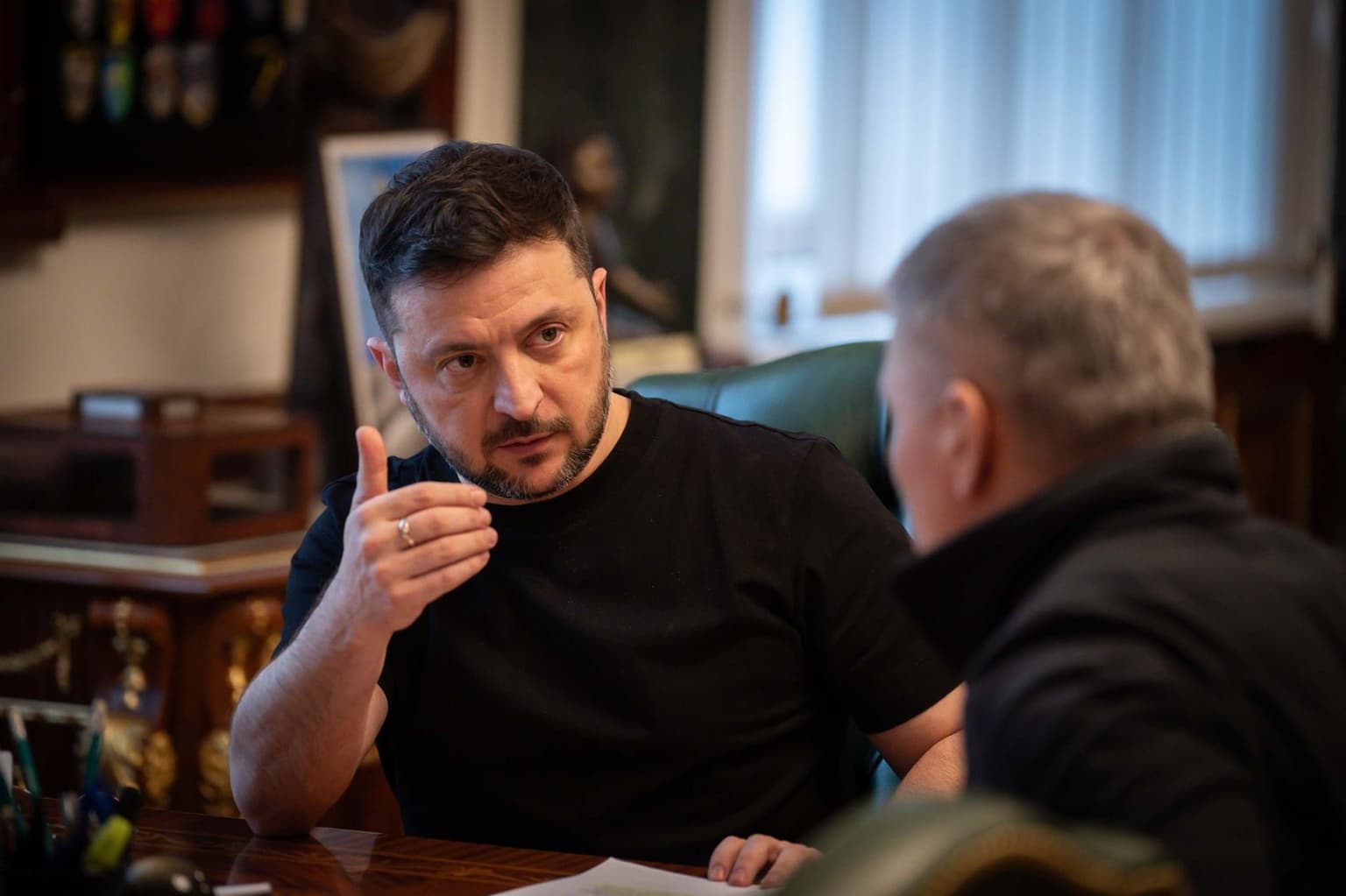
President Volodymyr Zelensky speaks with Lieutenant General Oleh Ivashchenko, former head of the Foreign Intelligence Service, who was appointed head of Military Intelligence on Jan. 2. (Volodymyr Zelensky)
 on Google
The new round of peace negotiations felt different. Not because of the substance of the talks, rather due to the people leading them.
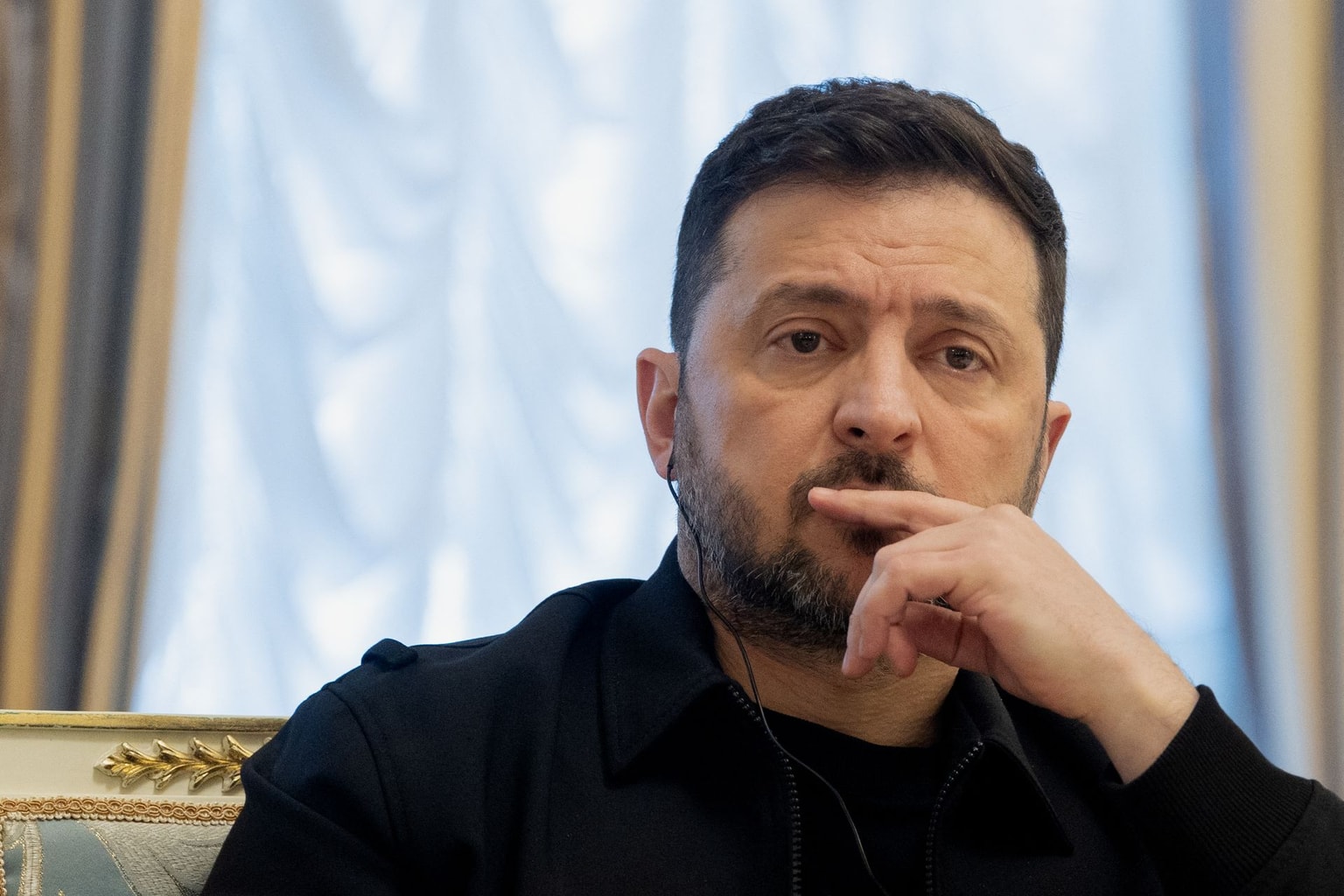
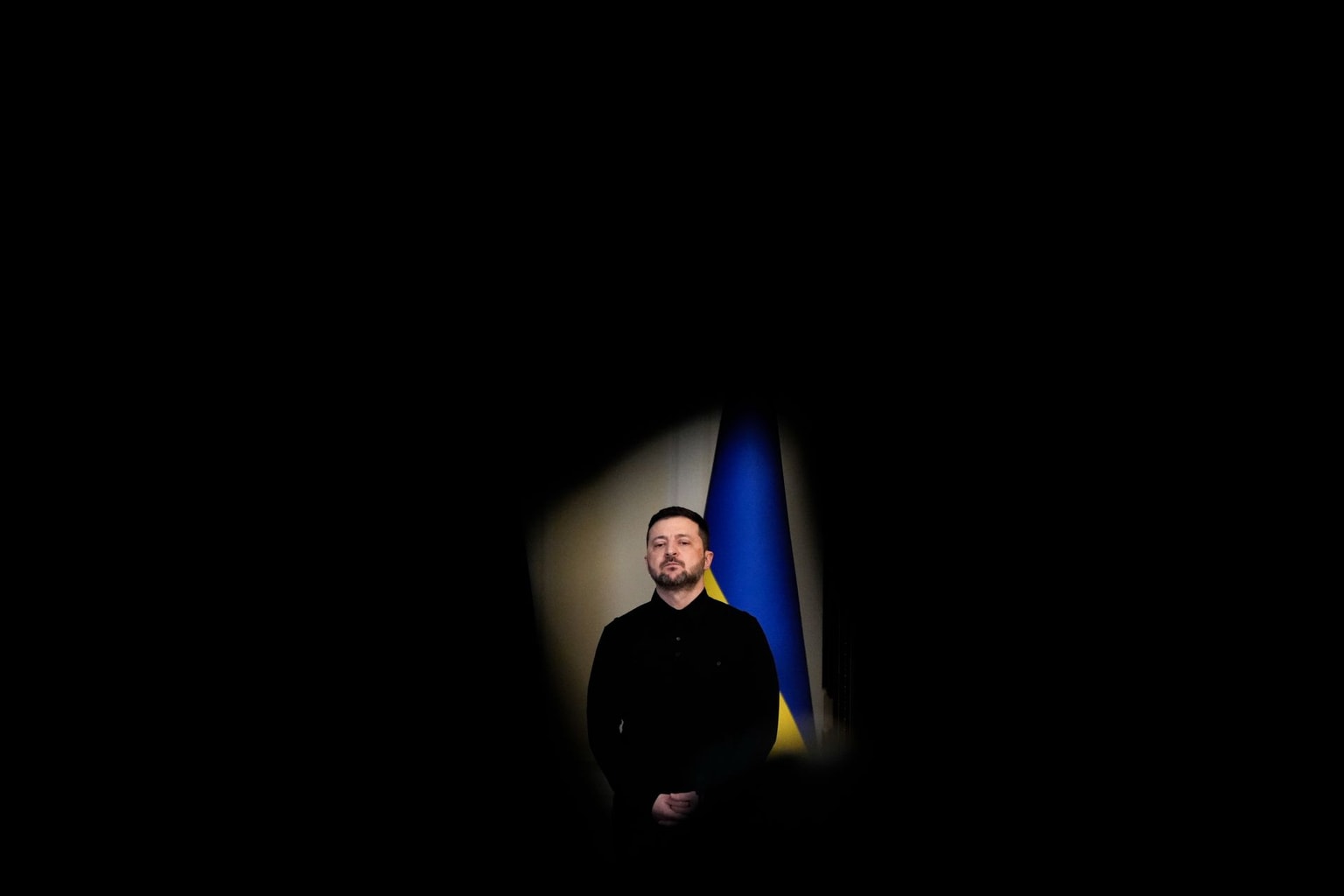
In early January, President Volodymyr Zelensky conducted a major reshuffle of Ukraine's leadership, signaling a new approach to governing the country going forward.
For key positions, Zelensky picked popular officials and military figures, many of whom had previously been sidelined by former President’s Office Head Andriy Yermak.
The negotiations team now features Yermak's successor and former Military Intelligence Head Kyrylo Budanov and lawmaker David Arakhamia, head of the president's parliament faction and key negotiator during the Ukraine-Russia talks at the beginning of the full-scale war. Both had a longstanding conflict with Yermak.
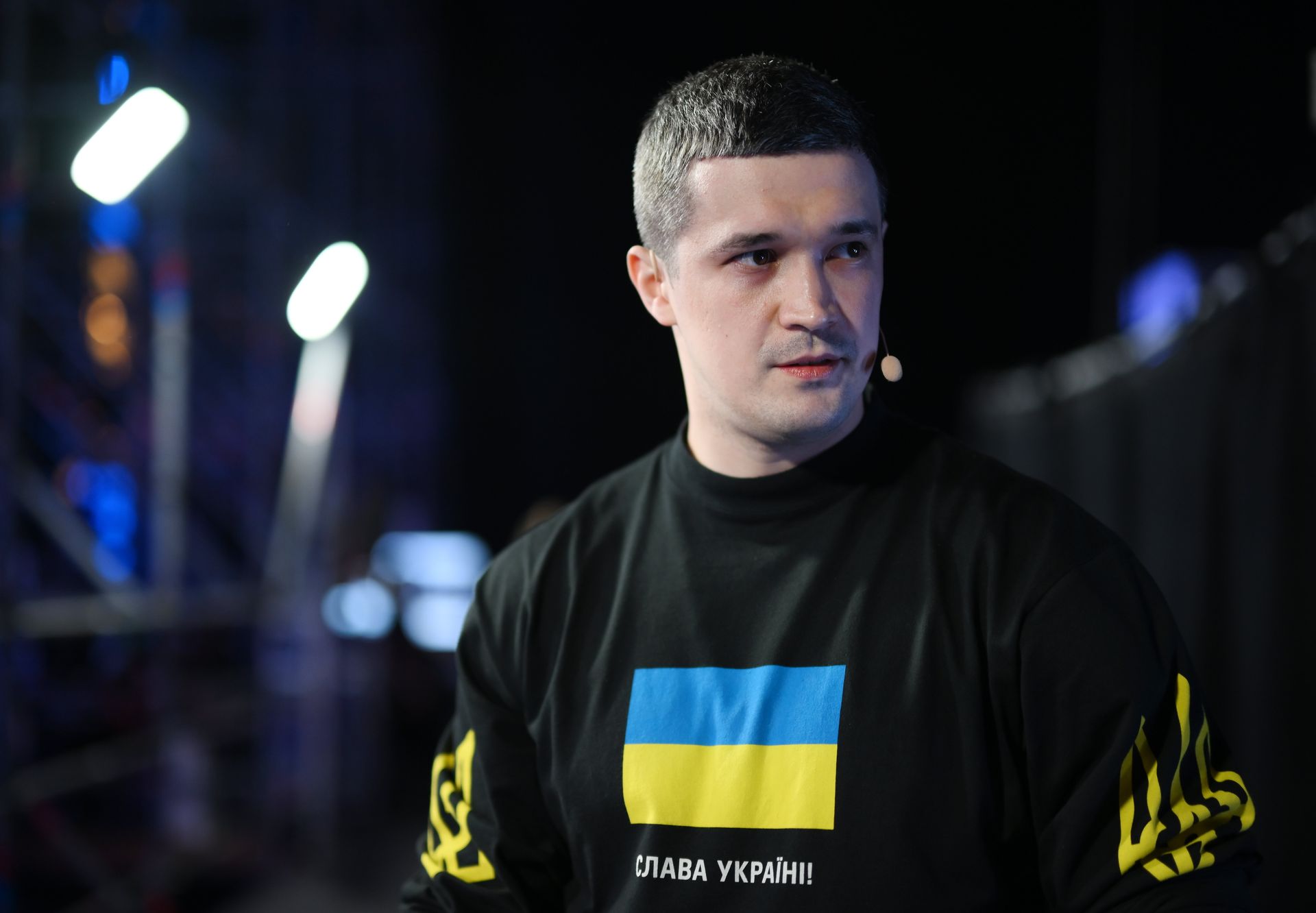
Zelensky's pick to run the defense ministry is Mykhailo Fedorov, another official with a complicated relationship with Zelensky's former second-in-command.
According to political analyst Oleh Saakian, the reboot is happening at a time when Ukraine needs an "alternative model" of governance following the dismissal of Yermak, who had been granted unprecedented influence over all branches of power.
"Second, there's the accumulation of tension within the system and dissatisfaction with some personnel. Third, there are needs related to negotiations and war," he told the Kyiv Independent. "These three factors converged at this moment, which is why we are seeing such diverse personnel changes."
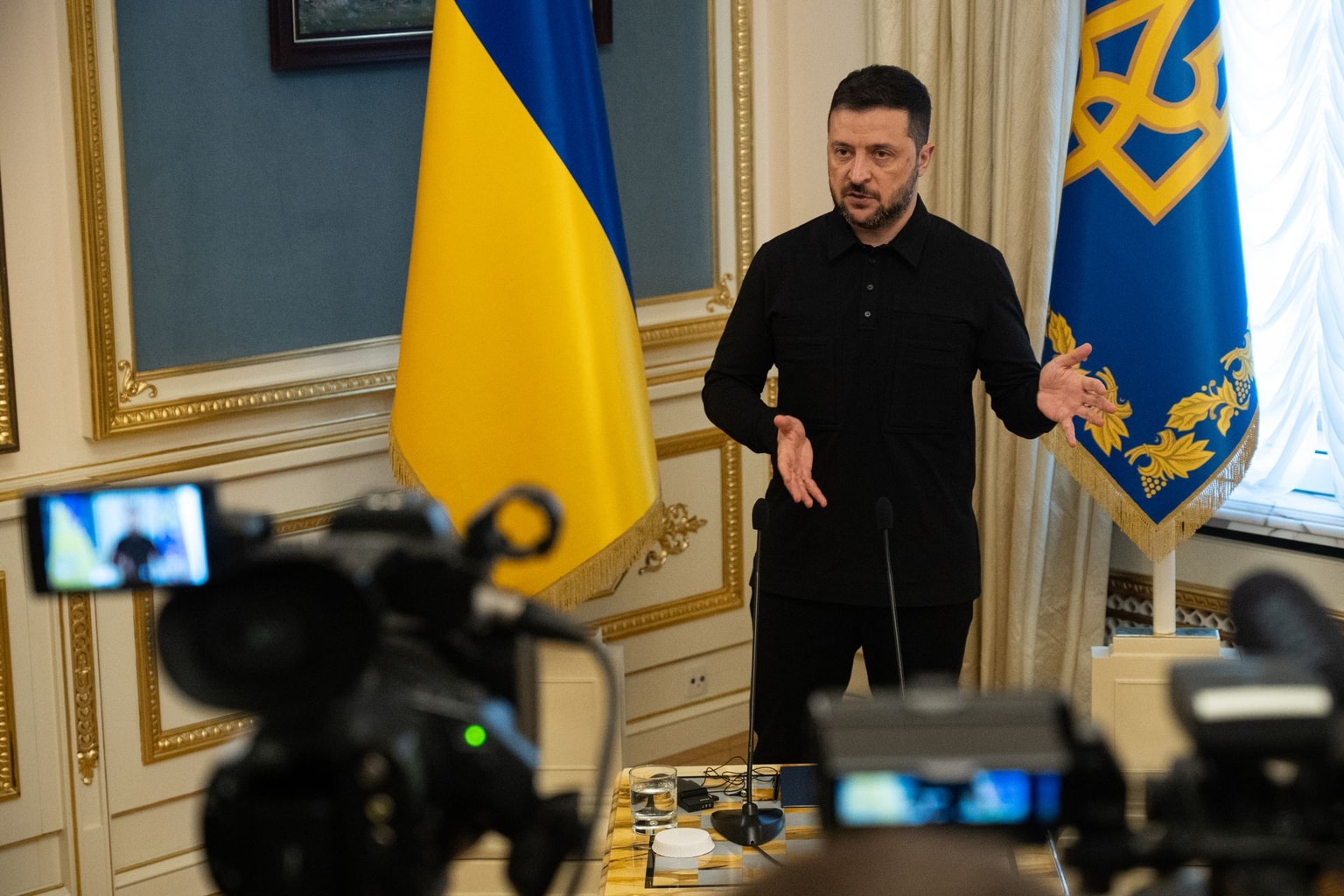
In the wake of the reshuffle, Zelensky spoke candidly about Ukraine's preparation for two possible scenarios: a diplomatic end to the war, or a continued fight and a more active defense.
"If our partners don't force Russia to stop the war, then there will be another path — to defend ourselves," Zelensky said on Jan. 3. "And at that moment, new forces will be needed."
"That's why I'm doing a parallel reboot of all structures. Just in case."
Zelensky’s men
Observers believe that Budanov's appointment as head of the President's Office is aimed at maintaining the diplomatic track, given ongoing talks with the U.S. to end Russia's war.
Just a few days after taking office, he joined the Ukrainian delegation and Zelensky in Paris for talks with U.S. Special Envoy Steve Witkoff and U.S. President Donald Trump's adviser Jared Kushner.

Budanov’s appointment quickly sparked speculation about his political future, due to his popularity and frequent appearances in political ratings.
Saakian doesn't rule out the idea that Budanov might be seen as a possible successor to the current president.
"This logic could also apply when making the decision to appoint Budanov, as he, being a key negotiator, effectively combines both the role of a potential successor and the guarantor of implementing any agreements that may be reached," the expert said.
Negotiations are not new to Budanov. In recent months, he held secret talks with U.S. and Russian delegations in Abu Dhabi. Budanov has a better standing with U.S. officials than his predecessor, who had a strained relationship with the new administration.
"Military Intelligence predicted a full-scale invasion. Others didn't see it coming. And throughout the war, Budanov has proven many times that he has a very clear-eyed and realistic view of the situation," a lawmaker from Zelensky's party told the Kyiv Independent on condition of anonymity.

Almost a year ago, independent media outlet Ukrainska Pravda claimed that during a closed-door parliamentary meeting, Budanov warned of an existential threat to Ukraine if negotiations didn't begin by summer. Military Intelligence later denied the reports.
At some point, Budanov may find himself tasked with selling a peace deal to Ukrainians, even if it fails to meet public expectations — a role that experts say could further erode his reputation.
"These reshuffles seem to be driven by a short-term or shortsighted perspective that the president and his closest circle have defined for themselves."
Sergiy Kyslytsya, a career diplomat and one of Ukraine's key negotiators, was appointed as the President's Office's first deputy head.
Former Canadian Deputy Prime Minister and current Canadian Member of Parliament Chrystia Freeland was appointed as an economic advisor to the president, while Oksana Markarova, Ukraine's former ambassador to Washington, was appointed a presidential advisor on reconstruction and investment, a month prior.
Major changes have happened in government as well. Zelensky proposed to appoint Fedorov, the current digital transformation minister and first deputy prime minister, to lead the Defense Ministry.
Fedorov, the prodigy minister who has survived all government reshuffles since Zelensky took office in 2019, will now take on a ministry often viewed as overly bureaucratic, difficult to manage, and marred by corruption scandals.

"Since the beginning of this war, the Digital Transformation Ministry has been — and remains — an active source of innovation for Ukraine's defense sector. This includes the development of the weapons manufacturers' market, the use of drones, and modern communications," Zelensky said.
"Ukraine is fully committed to diplomacy and seeks to end this war as soon as possible. But Russia is not demonstrating a similar approach and prolongs its aggression. We will counter this through greater technological capacity and the transformation of the defense sector."
Current Defense Minister Denys Shmyhal agreed to move to the position of energy minister, a post that has remained vacant for two months following Ukraine's largest corruption scandal centered around the state nuclear power company Energoatom. Zelensky also proposed him for the position of first deputy prime minister.
While parliament must support these changes for them to become official, the president has been acting as if these changes have already been made.
Some lawmakers and experts note that ex-Prime Minister Shmyhal was defense minister for less than six months, suggesting the choice was driven by a short list of backup candidates. The parliament didn't offer any alternatives, and potential replacements were hesitant to take on the role given the ongoing corruption probe in the energy sector, they said.
It’s still unclear who will replace Fedorov as the digital transformation minister, with the justice minister role also remaining unfilled.
"(The outcome of the reshuffle) depends on the mandate (newly appointed officials) receive from the president,” said Yaroslav Yurchyshyn, a lawmaker from the Holos party.
“If they are granted enough trust and the freedom to take the necessary steps, they can stabilize the system of power. But whether the president will grant them such authority is the question."
Special services and law enforcement
The recent reshuffle has also shaken Ukraine's special services, which have become key players in Russia's ongoing war.
Budanov was replaced by Lieutenant General Oleh Ivashchenko, the former head of the Foreign Intelligence Service. Ivashchenko's successor has not yet been named.
Ukraine’s State Border Guard Service also received a new head. Serhii Deineko was replaced by Valerii Vavryniuk, with Deineko moving to a role as an advisor to the interior minister.
Vasyl Maliuk, head of Ukraine's Security Service (SBU), will be dismissed in favor of Yevhen Khmara, head of the SBU's Alpha special operations unit. It's up to parliament to approve Maliuk's resignation, yet that is all but certain to take place next week.
The rumor of Maliuk's dismissal as head of the SBU prompted intense reaction, with respected commanders urging Zelensky against the move. Nonetheless, Maliuk agreed to step down from the position. Zelensky said that he will focus on special operations against Russia.

"I believe the dismissal of Vasyl Maliuk was a huge mistake, and it should not have been done. It demoralizes part of society and many servicemen," said prominent volunteer and activist Serhiy Sternenko while also praising Khmara as "a highly respectable, honorable person," who could replace Maliuk.
A source in the President's Office, granted anonymity to speak freely, said there are big plans for Maliuk going forward.
Separately, Zelensky announced plans to reform the State Bureau of Investigation (SBI) and tasked his administration with preparing a draft law. The reform of the SBI is among the priorities outlined by Kyiv and the European Union for 2026, as part of Ukraine's path to EU membership.
The agency, labeled as Ukraine's FBI, is tasked with investigating crimes involving top officials, law enforcement personnel, police, and prosecutors. It has been seen by many as loyal to the President's Office and is often embroiled in scandals.
More changes to come
Zelensky has shuffled familiar faces into new roles, with those who spoke with the Kyiv Independent are split on the outcome.
Ivanna Klympush-Tsintsadze, a lawmaker from the opposition European Solidarity party, argues that despite personnel changes, the system remains largely the same. She pointed out that Zelensky continues to pick the same people, just for different positions, sticking to his old approach.
"This is not about some fresh blood,” she told the Kyiv Independent. "To me, these reshuffles seem to be driven by a short-term or shortsighted perspective that the president and his closest circle have defined for themselves."
"The true test will be how well the new team can perform."
Yurchyshyn believes that such sweeping changes were made to "maintain control" after Yermak's dismissal.
"Yes, the president has a very limited pool of reserves because he is reluctant to bring in people from outside his inner circle. But in the current situation, spreading out strong players across different areas is definitely better than having Yermak's monopoly," he said.
Zelensky approved the appointment of new regional governors in Dnipropetrovsk, Poltava, Vinnytsia, and Chernivtsi oblasts on Jan. 8. More changes are expected, with additional governors potentially dismissed in other Ukrainian regions — a step that could also remove some officials associated with Yermak from power.
Zelensky has also seemingly opened the door for officials whom Yermak successfully ousted.
In a surprising move, the president met with former Foreign Minister Dmytro Kuleba, calling him "part of Ukraine’s team" and making clear they would continue to work together. Whether Kuleba will be reappointed to a government role has not been revealed.

Kuleba, one of the most prominent ministers in the government, was removed from his post in 2024, as Yermak expanded his influence on foreign policy, effectively assuming the role of Ukraine's lead diplomat.
"The true test will be how well the new team can perform," Saakian said.
"Changing a few ministers is one thing, but reforming the entire state apparatus is another. This could become a stress test for the entire system."
Note from the author:
Hello there! This is Kateryna Denisova, the author of this piece. I hope you found this article informative. Despite Russia's ongoing full-scale war, Ukraine's domestic politics has been back in the spotlight.
Please consider supporting our reporting. We promise to deliver more stories on this topic going forward.
Thank you.
read also
 Sonya Bandouil
 Kateryna Denisova
 Kateryna Denisova