Zelensky announces Air Force personnel changes amid regional air defense concerns
 on Google
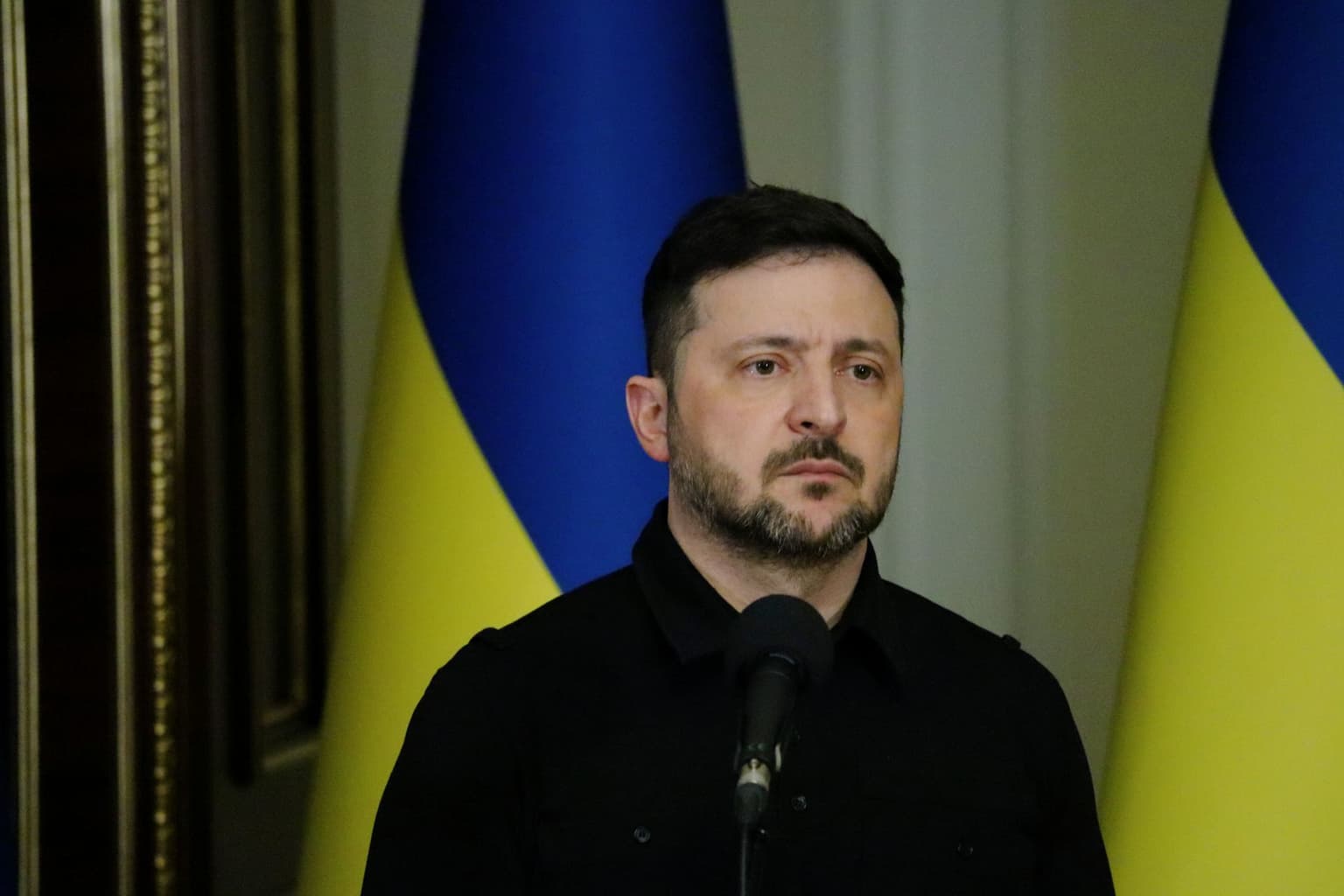
President Volodymyr Zelensky announced personnel changes in the Air Force on Feb. 6, following criticism of regional air defense capabilities.
The announcement comes after Zelensky earlier described air defense in some regions as "unsatisfactory." The president also said on Jan. 20 that the organization of the Air Force "should be different" in the wake of Russian attacks on energy facilities.
According to Zelensky, the changes will target units that are responsible for intercepting Russian unmanned aerial vehicles, particularly Shahed-type drones.
The president added that this part of the air defense system must work "much stronger and prevent the problems that are now present."
Zelensky said in some regions the defense lines are better organized, while in others "there is still a lot of work to be done."
Defense Minister Mykhailo Fedorov is addressing the issue, and the Air Force commander has received additional instructions, according to the president.
"Everything that works in one direction or another, at one level or another, should be applied wherever there are fewer (positive) results. And every day matters. All decisions should be implemented as quickly as possible," Zelensky said.
The recent Russian attacks in mid- and late January caused severe damage to Ukraine's energy infrastructure, leading to emergency power cuts across many regions. At the same time, the strikes have disrupted water supply and heating, with outdoor temperatures dropping below −20 °C (−4 °F).
Kyiv and the surrounding region are among the hardest hit. Some residential buildings in the capital have been without heating for about three weeks.
A major accident in Ukraine's energy system also occurred on Jan. 31 following disruptions to transmission lines between Romania and Moldova, as well as between western and central Ukraine.
Yurii Ihnat, head of the Air Force's communications department, said a shortage of air defense missiles has left some Ukrainian air defense systems empty at times amid the threat of further Russian attacks.
"Sometimes our anti-aircraft missile systems, such as NASAMS or IRIS-T, simply do not have time to reload during such massive attacks," Ihnat said.
At the same time, Russian attacks are so massive that shooting down all aerial targets is a difficult challenge for Ukraine's strained air defenses.
"Even if 80% of the total is shot down, the remaining 20% causes great damage," he added.