With his right-hand man gone, Zelensky learns to rule Ukraine alone
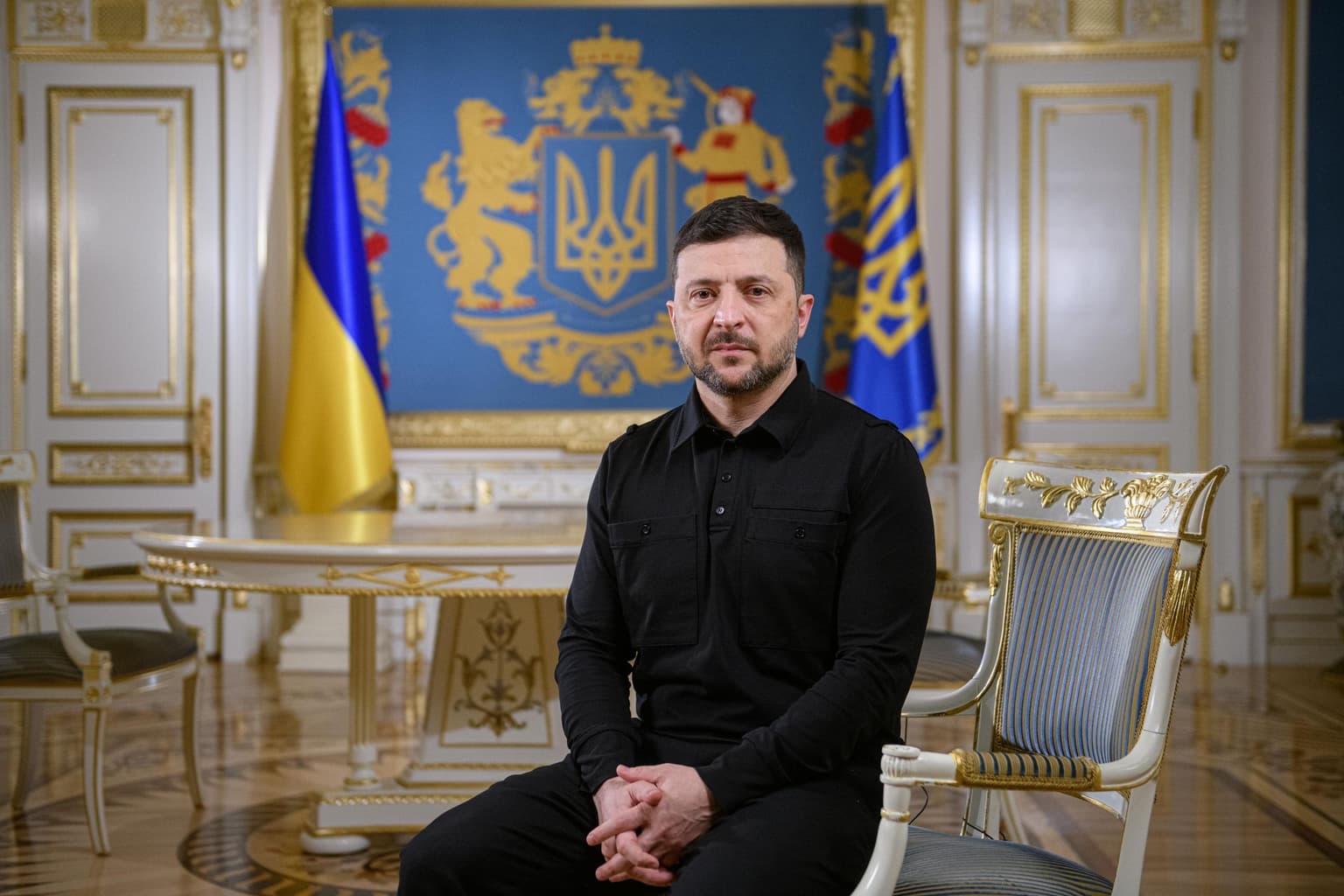
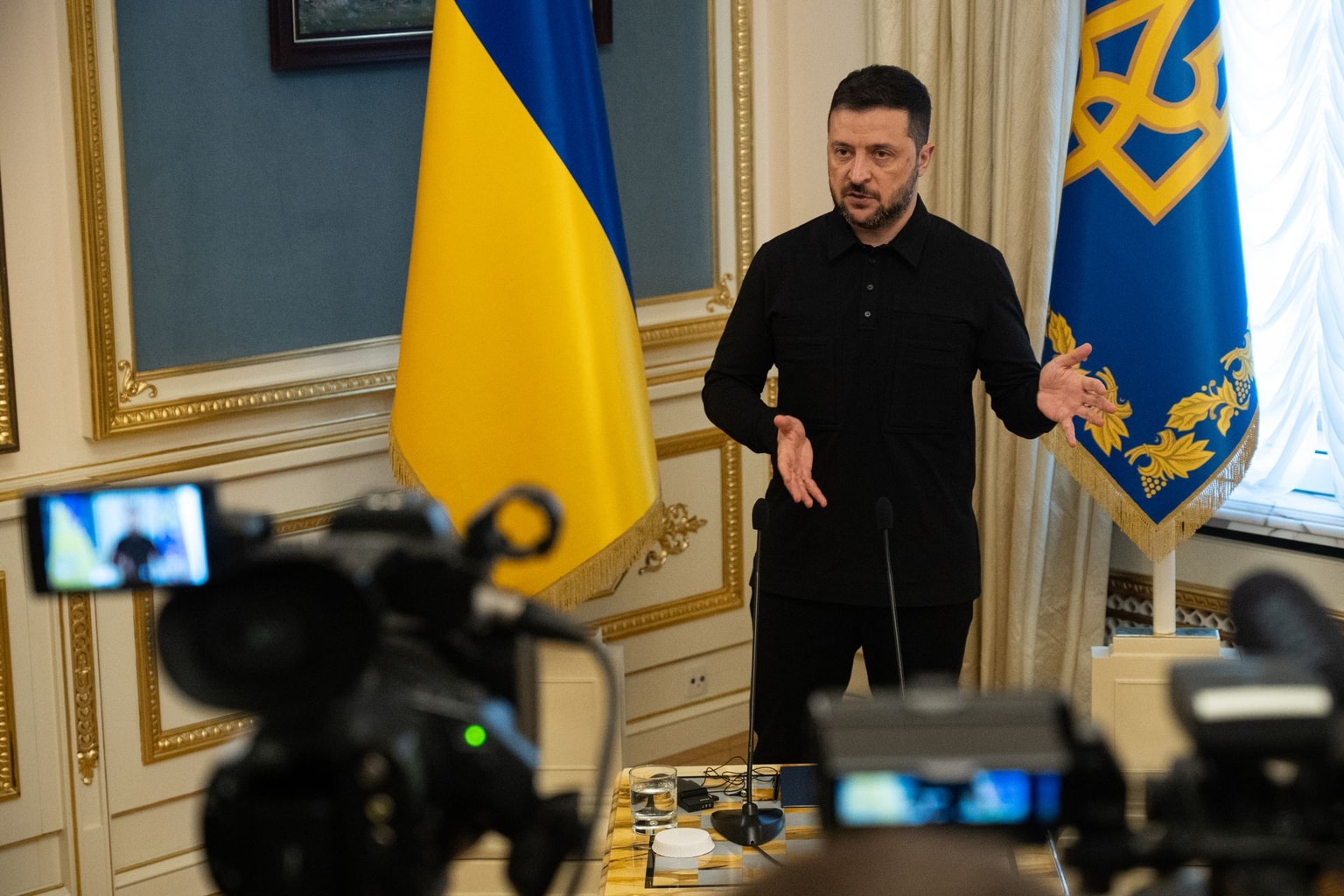
President Volodymyr Zelensky in Kyiv, Ukraine, on Nov. 12, 2025. (Olga Ivashchenko / Bloomberg via Getty Images)
 on Google
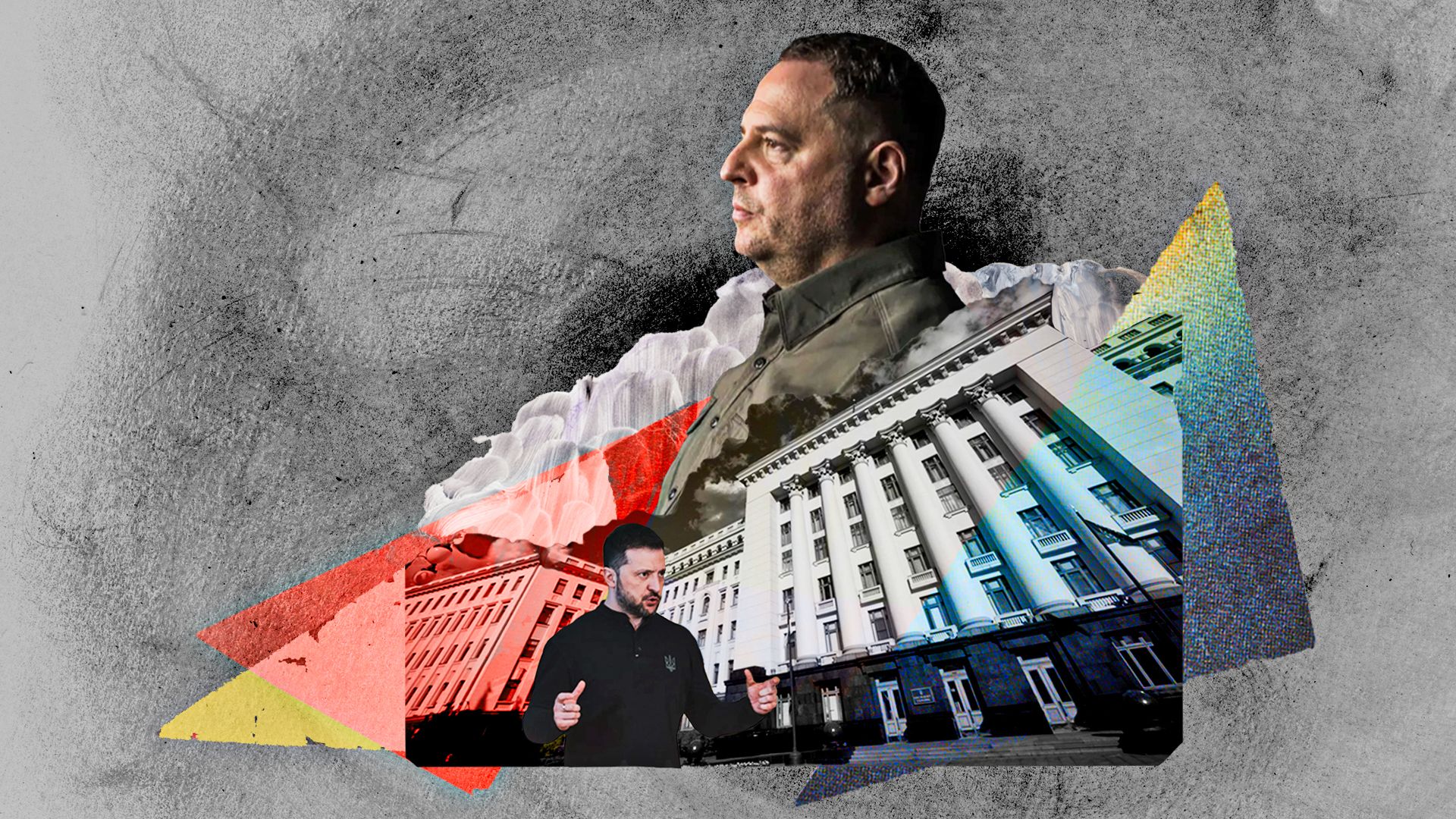
It’s been nearly a month since President Volodymyr Zelensky was forced to oust his right-hand man. Unable to immediately find a due successor, the president is now running the country alone.
Being second only to the president, former President's Office Head Andriy Yermak has gathered unprecedented powers over the years, having a say in who becomes the country's prime minister and general prosecutor, and heading Ukraine's delegation in the U.S.-led peace talks.
According to a source in the President's Office, who spoke on condition of anonymity, Zelensky hasn't yet delegated these powers to anyone else.
"Right now, many issues are directly tied personally to the president," they said.
"Yermak used to work on the (peace plan) drafts, and the president would approve them. Now, however, the president is more involved, spending more time in (peace) talks with the negotiation team and working with partners."
"He has less time for domestic matters."
Despite promises to reboot his office, Zelensky has yet to implement any changes to the system Yermak spent years building. He also continues to rely on his ousted chief of staff, with rumors circulating of their frequent communication.
"The fact that there has been no head of the President's Office for nearly (a month) indicates that effectively Zelensky himself is running the office," political expert Volodymyr Fesenko told the Kyiv Independent.

Life without Yermak
Yermak's removal eased tension with people on the streets and in high cabinets.
Following his dismissal, former allies of Zelensky, whom Yermak had once pushed out of power, began speaking out against him, while those he had elevated to their place haven’t stepped forward to defend him.
"Earlier, the image of an all-powerful office headed by Yermak terrified members of parliament," a lawmaker from Zelensky’s party told the Kyiv Independent on condition of anonymity.
"Now, everyone is breathing a sigh of relief."
Yaroslav Yurchyshyn, a lawmaker from the opposition Holos party, thinks that the political landscape is no longer as monopolized.
According to lawmakers, it is still too early to talk about the government or parliament acting independently, as Zelensky remains firmly in control. The president holds a majority in parliament, and the ministers in the Cabinet are also aligned with him.
"We can only say that the dependence on the office is not as total as it was under Yermak," Yurchyshyn told the Kyiv Independent.
Following Yermak's farewell, two National Anti-Corruption Bureau (NABU) detectives — Ruslan Mahamedrasulov and Viktor Husarov — were released from custody. They were arrested in July, with their detainment serving as a launchpad for the president's attempt to strip the country's anti-corruption institutions of their independence.

Both were accused of working for Russia, but the detectives and critics viewed the allegations as politically motivated. The searches, charges, and detentions were carried out by the Security Service of Ukraine (SBU) and the Prosecutor General's Office, both seen as loyal to the President's Office.
Yermak's influence within the Ukrainian government and his control over staffing decisions had cornered Zelensky, creating an illusion that the entire system might collapse without the omnipresent chief of staff.
Little personnel changes happened after Yermak's dismissal. Some of his aides and advisors were reassigned to other positions within the President's Office. The energy and justice ministers have yet to be appointed, following the sacking of those implicated in the corruption scandal. New local government appointments are also expected later this week.
Yermak's deputy, Oleh Tatarov, the most controversial official at the President's Office, remains untouched.
Political experts believe it's only a matter of time.
"Tatarov understands the changing political landscape and the potential risks for himself. He may leave on his own, but with the president’s approval and by suggesting some alternative option," Fesenko said.
He doesn't rule out that Tatarov, who has overseen the law enforcement, may join Ukraine’s military intelligence.
"I think that Tatarov could be useful in establishing and strengthening (Military Intelligence Chief Kyrylo) Budanov's influence over various law enforcement agencies in Ukraine," Fesenko said.

Filling the void
When asked about Yermak's successor, Zelensky has downplayed the significance of the role he needs to fill, saying that "the war is much more important" now than a personnel change.
Zelensky is still considering the future format of the President's Office, according to a source familiar with the president’s thinking. One possibility is scaling back its functions to focus solely on "technical tasks."
"I think the future format of the office will depend on the results of the negotiations with the Americans, as well as the subsequent political strategy," they said.
Five candidates were mentioned by the president as he continued to seek a replacement for Yermak.
The candidates mentioned by the president are Denys Shmyhal, Ukraine's defense minister and previously the country’s longest-serving prime minister; Digital Transformation Minister Mykhailo Fedorov; Military Intelligence Chief Budanov; Deputy President’s Office Head Colonel Pavlo Palisa; and Sergiy Kyslytsya, deputy foreign minister and one of Ukraine's key peace negotiators.

A source in the President's Office told the Kyiv Independent that Zelensky is still to determine whether the new chief of staff will focus more on military affairs, in case of Palisa, or on domestic issues, if Fedorov takes on the job.
Mykola Kniazhytskyi, a lawmaker from the opposition European Solidarity party, says that Zelensky himself granted Yermak such influence, and now it depends on whether he wants to keep someone with that level of power or change his approach.
“Yermak was the main toxic element.”
"The president hasn't decided who exactly he needs there," he said. "Whether it's someone who will take on all the negativity depending on his decisions, or someone who will be just an invisible secretary."
A lawmaker from the ruling party, who was granted anonymity to speak freely, argues that while it's difficult for Zelensky to find a replacement for Yermak, it's not due to a lack of qualified people to handle the areas previously managed by the powerful head of the President's Office.
"The thing is, who does he trust as much as he trusted Yermak? I don’t see anyone like that," the lawmaker said.

Yermak was dismissed amid growing pressure from the U.S. in what the latter calls peace negotiations. He had been leading the Ukrainian delegation.
Ousting Yermak and not backing down under external pressure, Zelensky restored his public trust — now at 61% — following a drop due to the recent corruption scandal, according to a recent survey conducted by the Kyiv International Institute of Sociology (KIIS).
Fesenko believes that although the political landscape in Ukraine hasn’t shifted much, "the climate has changed significantly."
"Yermak was the main toxic element," he said.
The effect may be short-lived, however, as anti-corruption agencies continue their investigations more revelations and charges are expected to follow.
At the Ukraine-U.S. talks in Berlin earlier this month, Rustem Umerov, secretary of the National Security and Defense Council, headed the delegation in place of Yermak. Yet, Zelensky himself participated in a two-day meeting with U.S. Special Envoy Steve Witkoff and Donald Trump’s son-in-law, Jared Kushner.
"Zelensky delegated his authority to Yermak, he was the president's alter ego in all these negotiations. But now, he has to do it himself," the lawmaker from the president’s party said. "This is a sign that he (still) doesn’t trust any of these negotiators as much as he trusted Yermak."
Staying in the shadows
After his ousting, Yermak has withdrawn from the public eye.
At first, the 54-year-old former head of the President’s Office reacted emotionally, saying he was planning to join the army.
As of the time of publication, Yermak hasn't joined the Armed Forces.
The Kyiv Independent reached out for comment to Yermak's spokesperson for comment but had not received a response.
The lawmaker from Zelensky's party doesn’t rule out that the president might still be in touch with Yermak, seeking his advice. The source in the President's Office claims that Yermak "doesn’t make decisions and does not influence processes."
"They were friends (with Zelensky) for a long time. So they can probably talk someday as friends," the source said.

"Maybe they’re trying to find a way for Yermak to remain in the background, without holding an official position, but still set up his own ‘back-office,’ so to speak," the lawmaker suggested.
As Fesenko pointed out, for officials, it’s now risky to follow Yermak’s behind-the-scenes advice, and even those who were once loyal to him will begin to distance themselves.
"If the Yermak-style approach continues to influence the president's decisions, it will reignite tension around Zelensky himself," the expert said. "The problem that was resolved will resurface."
Deputy chief editor Oleksiy Sorokin contributed reporting.
Note from the author:
Hello there! This is Kateryna Denisova, the author of this piece. I hope you found this article informative. Despite Russia's ongoing full-scale war, Ukraine's domestic politics has been back in the spotlight this year.
Please consider supporting our reporting. We promise to deliver more stories on this topic going forward.
Thank you.