‘Still looking for my place’ — Ukrainian author Kateryna Zarembo on joining the military
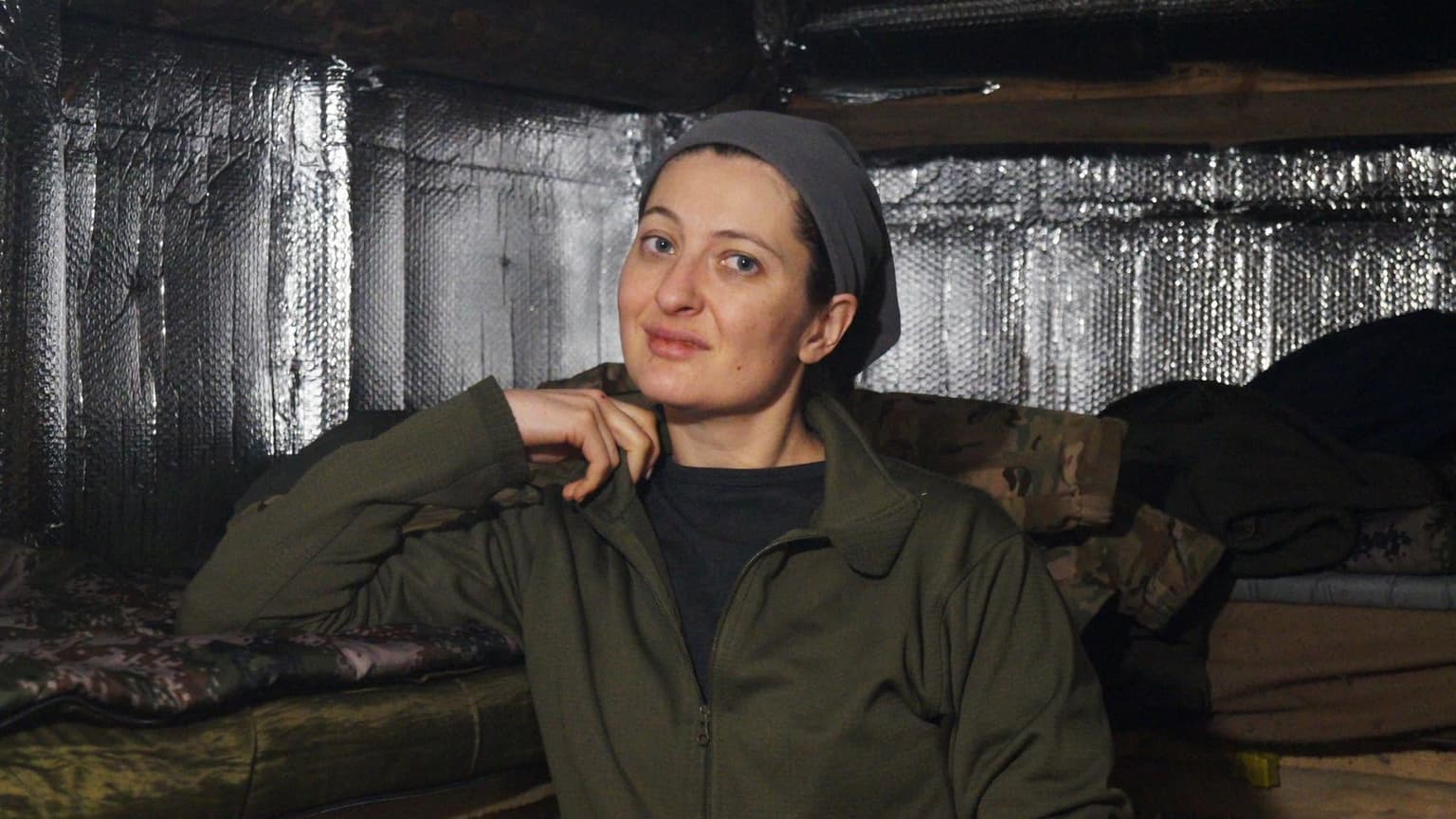
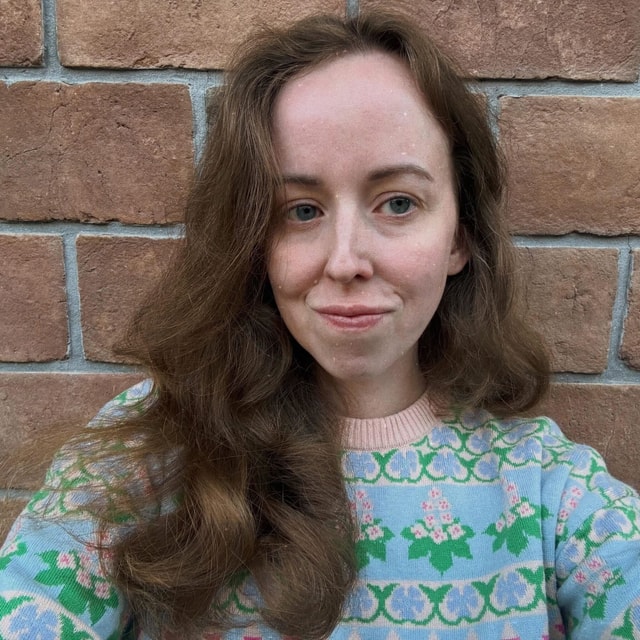
Kateryna Zarembo, a Ukrainian researcher, writer and combat medic in an undisclosed location in a photo posted on April 27, 2025. (Kateryna Zarembo / Facebook)
 on Google
Kateryna Zarembo has spent years researching and telling important stories from Ukraine. As a researcher and writer, she famously captured the cultural and linguistic richness of eastern Ukraine through field work while Russian propaganda tried to erase it. Her book "Ukrainian Sunrise" stands as evidence that Donbas was never, as the Kremlin claimed, a "Russian" region but one with deep Ukrainian roots.
Then the full-scale invasion came, and the need to tell stories stopped.
Today, Zarembo is a combat medic in an assault battalion, training soldiers in life-saving skills to better prepare them for dangerous missions.
In this conversation with the Kyiv Independent, which took place during Book Arsenal — one of the largest cultural events in Ukraine — Zarembo reflects on why she decided to enlist, why there should be no differences between talking about women's capabilities in the military versus men's, and why she doesn't miss writing.
This interview has been edited for length and clarity.
The Kyiv Independent: Ukrainian women, unlike Ukrainian men, are not required to serve in the military — it's a choice. What inspired you to join the military?
Kateryna Zarembo: There are many reasons — I could name more than one, maybe even more than two. But to sum it up, I just couldn't stay away. My other, previous jobs felt meaningless — or maybe not meaningless, just less useful. I wanted to join right away, but my daughter was very young. So as soon as she got a little older and things settled down at home, I joined.
The Kyiv Independent: What has your experience been, overall, transitioning from civilian to military life?
Kateryna Zarembo: It's a very interesting question to me, interesting to reply, because I don't feel like I belong neither to civilian life nor to the military, actually, fully. And it's a kind of identity challenge, because I definitely feel I'm kind of not a civilian anymore, but I also am very different from many people in the army. Very different, in many respects.
So I guess I'm still looking for my place — still waiting for the moment when I can say I truly belong, though I'm not sure if that will be entirely a good thing. In any case, the army is a huge melting pot. I'd heard people talk about it before, but until I experienced it myself, I didn't really understand what that meant.
The transition has actually been ongoing — I think it still is. I used to serve as a combat medic in a drone unit, which was one kind of work. Now I'm a chief medic for the whole unit in an assault battalion. That's very different — infantry work is completely new to me, and almost everything I do now is different. So I'm still learning, still adjusting, still trying to do my job as well as I can. It's only been a month since I transferred to the new unit, and I still find it challenging.
The Kyiv Independent: What are some common misconceptions about women serving in the military that need to be challenged in public opinion?
Kateryna Zarembo: My experience has really varied. If you'd asked me a month ago, I would have given a completely different answer. In my previous unit, and even when I was trying to enlist, I faced a lot of misogyny. I was rejected many times and looked down on more than once. Basically, I encountered every stereotype about women you can imagine. But in my current unit, it's totally different — it's very women-friendly.
Honestly, I'd say it's a very people-friendly environment. There's really no difference in how men and women are treated — it all comes down to the job you do. For example, I'd love to go out with the infantry one day, but they tell me they need me here in this role. If a man were in my position, they'd say the same to him. So I think a lot depends on the specific unit.
It's also been eye-opening for me to see how different things can be. Respect and trust here can be unconditional — of course, within professional boundaries. And we have really strict physical requirements that are gender-neutral. You either meet the standard or you don't, and women compete alongside men on equal footing.
The Kyiv Independent: I find the debate about whether women should be required to serve in the military really interesting, and I'd love to hear from women who are actually serving. What do you think? Should Ukrainian women also be required to serve in the military?
Kateryna Zarembo: I definitely think that combat training should be mandatory — and high quality — for both men and women, maybe starting in universities, or really, regardless of age. Civilian training and a sense of duty to be prepared just make a lot of sense to me. Honestly, there's nothing in the army that women can't do. It all comes down to competence. Whenever people bring up physical strength, I have to laugh, because I've seen men in the army who are weak, exhausted, or in poor health.
So it's really not about gender — it's about preparation and physical condition. What can't a woman do? She can shoot, she can operate drones — there's nothing she can't do. In terms of competence, it's the same for everyone, and everyone should be ready. But before we talk about mandatory conscription for women, I think we need to review our mobilization and demobilization policies first. Once that's sorted out, then we can have a conversation about women's roles and responsibilities.
The Kyiv Independent: Shifting gears to your writing — do you still find time to write these days?
Kateryna Zarembo: Finding enough time to call my family is difficult, let alone to write. I don't get enough sleep, and we don't really have days off. Or if we do, they're not really days off. In my current unit, the attitude toward work is very strict — it's the hardest-working team I've ever been part of. And I've always considered myself a hard worker, but this team takes it to another level. You really need a lot of stamina.
It's the kind of environment where you put everything else aside for the sake of service. So no, I absolutely don't have time to write. Not at all.
The Kyiv Independent: Do you miss writing? I've heard from some writers serving in the military that they do.
Kateryna Zarembo: I don't miss writing. I don't feel like I have any stories to tell that haven't already been told. Right now, I feel like I have a lot to learn because of what I'm doing. I'm training soldiers and preparing them for their missions. Even though it's technically safer for me, I realize that so much depends on what I teach and provide them — it really is a matter of life and death.
No sentence, no paragraph, no novel can compare to that. So I'm completely invested in my work. What I do miss is having time for my medical studies — I'm a medical college student, and I used to have some time for that, but not anymore. That's something I do feel bad about, because if I fall behind there, it makes me less effective as a combat medic, too. Otherwise, I feel like my source for writing is closed for now — and that's okay.
The challenge for me as a writer was to depict each character as sincere, and then let readers decide for themselves what they can accept, what they can't, what they think can be understood or forgiven, and what crosses a line.

The Kyiv Independent: For our readers, I want to highlight some of your work, because it's so important for the conversation around Ukrainian culture — especially your book, "Ukrainian Sunrise", which was published in English. Could you talk about it briefly? I'd love for you to share why it was so important to counter Russian propaganda claiming that Donbas is historically and culturally Russian.
Kateryna Zarembo: Thank you. Yes, this topic is still really relevant — especially since, when Russia first began its aggression in the east, a lot of people saw eastern Ukraine as either pro-Russian or even as an actual Russian region. There was this idea that people there were waiting for Russia, and the narrative of a 'civil war' was surprisingly common — not just abroad, but even among some people in Ukraine. I really wanted to challenge that, because it's such a far-fetched idea. Of course, there can be traitors in the east — but they can also be in the west or the center of the country.
When it comes to the region itself, as a cultural space, there's so much more to talk about and show. The East is truly a continuation of Ukrainian history, culture, traditions, and language. Take Slobozhanshchyna, for example, which includes Kharkiv Oblast and part of Luhansk Oblast. Whenever I'm there, I'm struck by the architecture. It's incredible, especially those red-brick industrial plants built by Western entrepreneurs — you can spot them everywhere. And the language, especially in the villages, is so rich and distinctively Ukrainian.
For me, all of this feels so self-evident and so obvious. But it turns out that books like mine, and others on this topic, were really needed. The myth of a uniformly pro-Russian population was heavily fueled by the (former President Viktor Yanukovych's) Party of Regions, which not only shaped the public image of people from the region but also suppressed grassroots activism by controlling the media. I often point out that my book covers a time when social networks were either underdeveloped or didn't exist. If platforms like Instagram, Facebook, or TikTok had been around, we might have seen a completely different picture — if local bloggers could have shown what was really happening on the ground. But since that wasn't the case, I collected stories and shared them in my book.
The Kyiv Independent: I wanted to wrap up by talking about your novel. It is not available in English yet, but hopefully that will change soon. It's also connected to the war, and I know there's an ongoing debate in Ukrainian society about how best to write about these events — whether through poetry, non-fiction, or fiction. There have already been some really interesting novels set during the war, including yours. I'm curious how you approach writing about such a current, ongoing topic, and what things a writer needs to keep in mind when tackling such a sensitive subject that's still unfolding.
Kateryna Zarembo: That's another really interesting question. My novel — called "Yevshan" in Ukrainian, though we'll see what the English title ends up being — was actually a pretty risky project for me. (Editor's note: 'Yevshan' is a fragrant Ukrainian steppe herb that is associated with the memory of one's homeland, roots, and identity.) I wrote about topics that are very controversial, like leaving the country during wartime and how that's perceived. Even when there's a good reason, people judge and people talk. I didn't see it as an 'emigrant novel' per se, but it definitely deals with the theme of emigration.
I made a conscious decision to portray almost every character in a controversial light, to some degree. The challenge for me as a writer was to depict each character as sincere, and then let readers decide for themselves what they can accept, what they can't, what they think can be understood or forgiven, and what crosses a line.
My main goal was sincerity. I gathered the images and the words people use to express themselves and asked myself, 'Can I empathize with them?' If I could, I tried to portray them that way, so readers could also empathize and make up their own minds about what's acceptable and what isn't. I really tried not to be ideological or to push my own views about what's right. I'm not sure if I succeeded, but that was the approach I took while writing the novel.
Note from the author:
Hi, this is Kate Tsurkan, thanks for reading this interview. It was really important for me, as a woman and a mother, to speak to incredible Kateryna Zarembo who defends this country. I am really inspired to see how she and other Ukrainian authors have stepped up to help their country in its greatest time of need, and I hope you come away feeling the same after reading this.
If you like reading about this sort of thing, please consider supporting The Kyiv Independent.