Another Ukrainian athlete says IOC barred helmet honoring 'Ukrainian bravery' at Olympics
 on Google
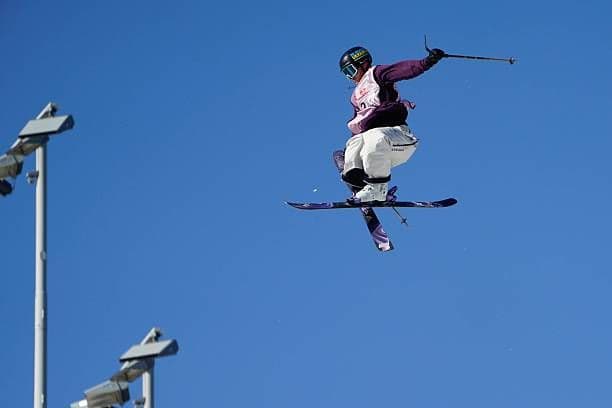
Kateryna Kotsar, a Ukrainian freestyle skier, said on Feb. 10 that the International Olympic Committee (IOC) barred her from using a custom helmet with the inscription "Be Brave like Ukrainians" at the 2026 Winter Olympics.
The prohibition, which was communicated to Kotsar ahead of the Olympics, marks the second such notice provided to a Ukrainian athlete at the Games.
Ukrainian skeleton racer Vladyslav Heraskevych also said on Feb. 10 that he has been barred from using a custom helmet at the 2026 Winter Olympics that honors Ukrainian athletes killed in Russia’s war.
"About a week before the Olympic Games, I received an email saying that the International Olympic Committee considers this helmet to be propaganda, which means I cannot compete in it at the Games," Kotsar said on Ukrainian television.
"Due to a lack of certain experience, knowledge, and probably confidence, I simply changed the helmet, and now it just has a small Ukrainian flag on it," Kotsar, who is competing at her first Olympic Games, added.
While the IOC contends that the Olympic Charter bars the "politicisation of sport," questions have been raised over what is considered a politically motivated gesture.
Kotsar's comment emerged after the IOC's decision to bar fellow athlete Vladyslav Heraskevych's helmet drew widespread scrutiny in Ukraine.
President Volodymyr Zelensky posted in support of Heraskevych, noting that the helmet features portraits of Ukrainian athletes killed by Russia, including figure skater Dmytro Sharpar, who died in battle near Bakhmut, and 19-year-old biathlete Yevhen Malyshev, who was killed near Kharkiv.
"This truth cannot be inconvenient, inappropriate, or called a 'political action at sporting events,'" Zelensky said, describing the helmet as a reminder of the price of Ukraine’s struggle and of the Olympic movement’s mission to stand for peace and life.
Kotsar stressed that the ban on the helmet's use in competition was handed down by the IOC, not the International Ski Federation. "I’ve been competing in this helmet since 2022, and it has always had this inscription. I try to carry it with me all over the world," she said.
While the Russian and Belarusian national teams are banned from the Games, their athletes are allowed to compete in individual events under a “neutral” status.
The 2026 Winter Olympics kicked off on Feb. 6 and are ongoing in Milan.