Ukraine makes limited gains on key bills as billions in aid still at stake
 on Google

Editor's note: This article was updated to include the results of the plenary session.
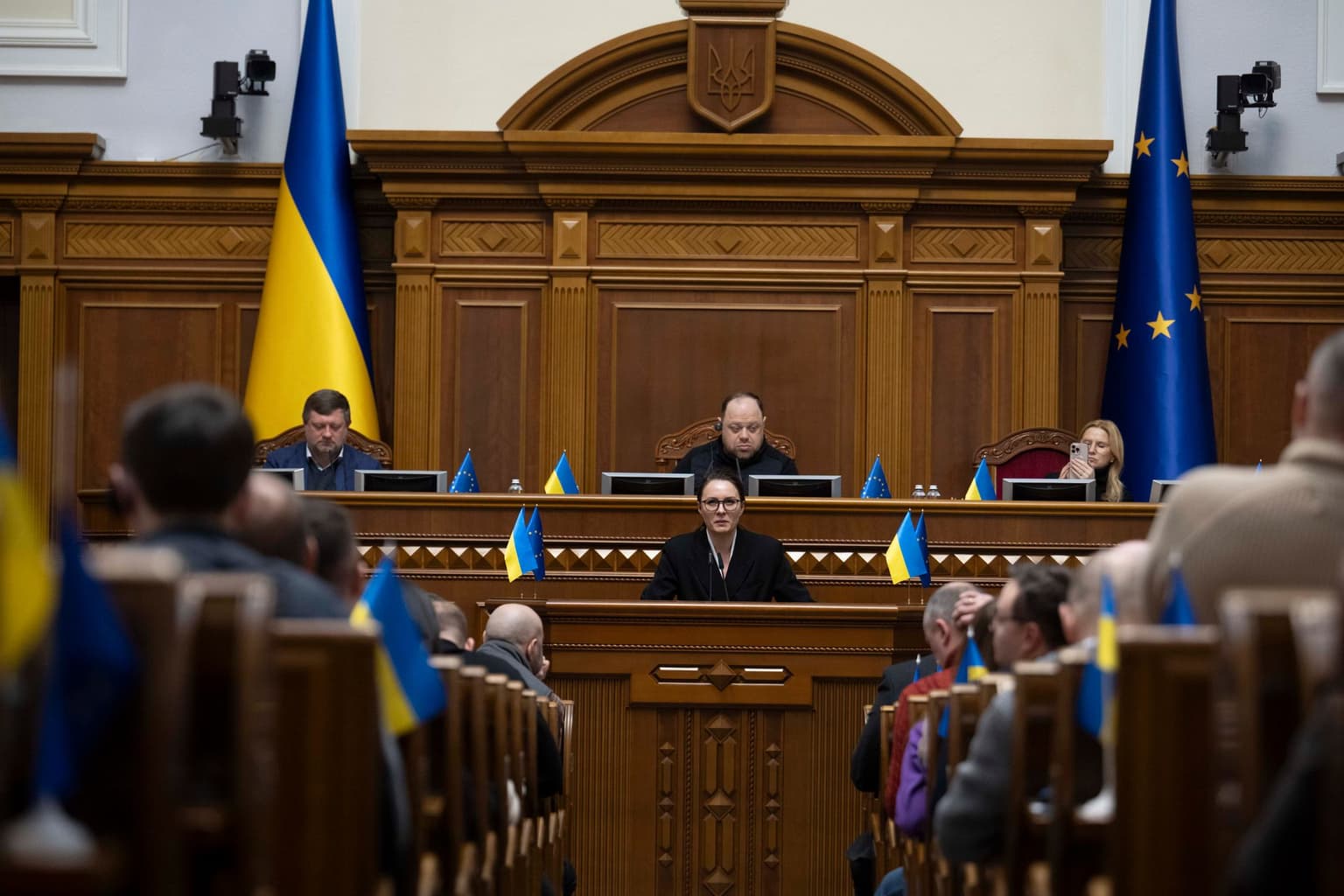
Ukraine's parliament approved on April 7 one of several key tax bills tied to International Monetary Fund (IMF) funding, in a packed legislative push that also includes measures to align the country with the EU.
The vote comes after weeks of political tensions and friction between the parliament, the government, and President Volodymyr Zelensky over the stalled legislation.
After missing the official IMF deadline of March 31, the parliament was set to vote on bills to extend a military tax for three years after martial law is lifted, introduce taxes on income from digital platforms, and impose levies on parcels — three of the four measures required to unlock the next IMF tranche, scheduled for June.
Yet, only the military tax bill was brought forward and approved — with the parliament failing to gather enough votes to bring forward the other two.
"This bill is extremely important," said Finance Minister Serhii Marchenko on April 7 while addressing parliament. "There is hope that it will help us successfully conduct negotiations with the International Monetary Fund."
Lawmakers also didn't consider a fourth IMF demand, a new tax on self-employed entrepreneurs — the most contentious element of the IMF program due to its widespread unpopularity.
Failure to adopt all the conditions of the $8.1 billion IMF program could jeopardize the next tranche of the program, worth almost $700 million and scheduled for June. Ukraine will send a large delegation to the IMF Spring Meetings in Washington D.C. next week, where top Ukrainian officials will meet with representatives from the Fund.
In a separate move, parliament gave the green light to three bills tied to funding under the $58 billion Ukraine Facility — an EU financial assistance program launched in 2024 — potentially unlocking over 1 billion euros ($1.2 billion) in much-needed cash. More bills under the Facility are expected to be introduced in a plenary session on April 8.
Lawmakers are also expected to consider three of the four conditions for a $3.35 billion loan from the World Bank on April 8. The deadline for meeting all four criteria is April 20, according to the World Bank.
But billions of dollars of sorely needed financing are still on hold or at risk of expiring, as Kyiv fails to move forward on reforms required to unlock cash from the EU.
While three were passed today, Kyiv has missed the deadline on 18 other requirements worth roughly $7 billion under the Ukraine Facility as of April 1, according to RRR4U, a consortium of Ukrainian think tanks.
The wide-ranging reforms are designed to more closely align Ukraine with European and international standards, and to de-shadow the economy and improve Ukraine's capacity to raise revenue.
Brussels cranked up pressure on Kyiv in recent weeks in anticipation of this week's plenary session. EU Commissioner for Enlargement Marta Kos said that the parliamentary sitting offered "an opportunity to move forward" on a list of 11 reforms required under the Ukraine Facility, in a letter last week addressed to Ruslan Stefanchuk, the speaker of Ukraine's parliament.
Officials, including Prime Minister Yulia Svyrydenko, held a number of talks with members of Zelensky's party as the situation unfolded.
Ahead of the vote, the heads of parliamentary committees met on April 6 for the first time with the new head of the President's Office, Kyrylo Budanov. While Budanov's primary focus is on U.S.-led peace talks, his predecessor, Andriy Yermak, had wielded control over parliament, though unofficially, ensuring votes for certain bills.
Parliament's dysfunction has stemmed from several factors, including Zelensky's fragile supermajority, which de facto exists only on paper. A lawmaker, who spoke to the Kyiv Independent on the condition of anonymity, attributes the recent shift in vote dynamics to the return of David Arakhamia, Servant of the People faction leader, to overseeing the vote-gathering process as peace talks with Russia are currently on pause.
Yet, Ukraine's parliament continued to stagnate over the first three months of 2026, according to RRR4U, only implementing one of eight indicators required under the pipeline of EU reforms required to unlock funding from the Ukraine Facility.
The funding unlocked by the reforms is all the more critical as Kyiv hurtles towards a cliff drop in foreign financing — on which Ukraine relies to sustain its war effort and keep the state afloat. The EU bears most of that burden.
Although Brussels had expected to finalize a 90 billion euros ($104 billion) loan for Ukraine, Hungary unexpectedly blocked the loan in February 2026 — ostensibly over a dispute related to oil transit through the Soviet-era Druzhba oil pipeline.
Hungarian Prime Minister Viktor Orban has made opposition to Ukraine the centerpiece of his campaign strategy, as he approaches national elections on April 12. Orban's party is trailing in the polls, posing a significant threat to his 16-year grip on power.