Ukraine war latest: Ukraine hits Russia' S-300 air defense radars in series of strikes
 on Google
Key developments on Feb. 28-March 1:
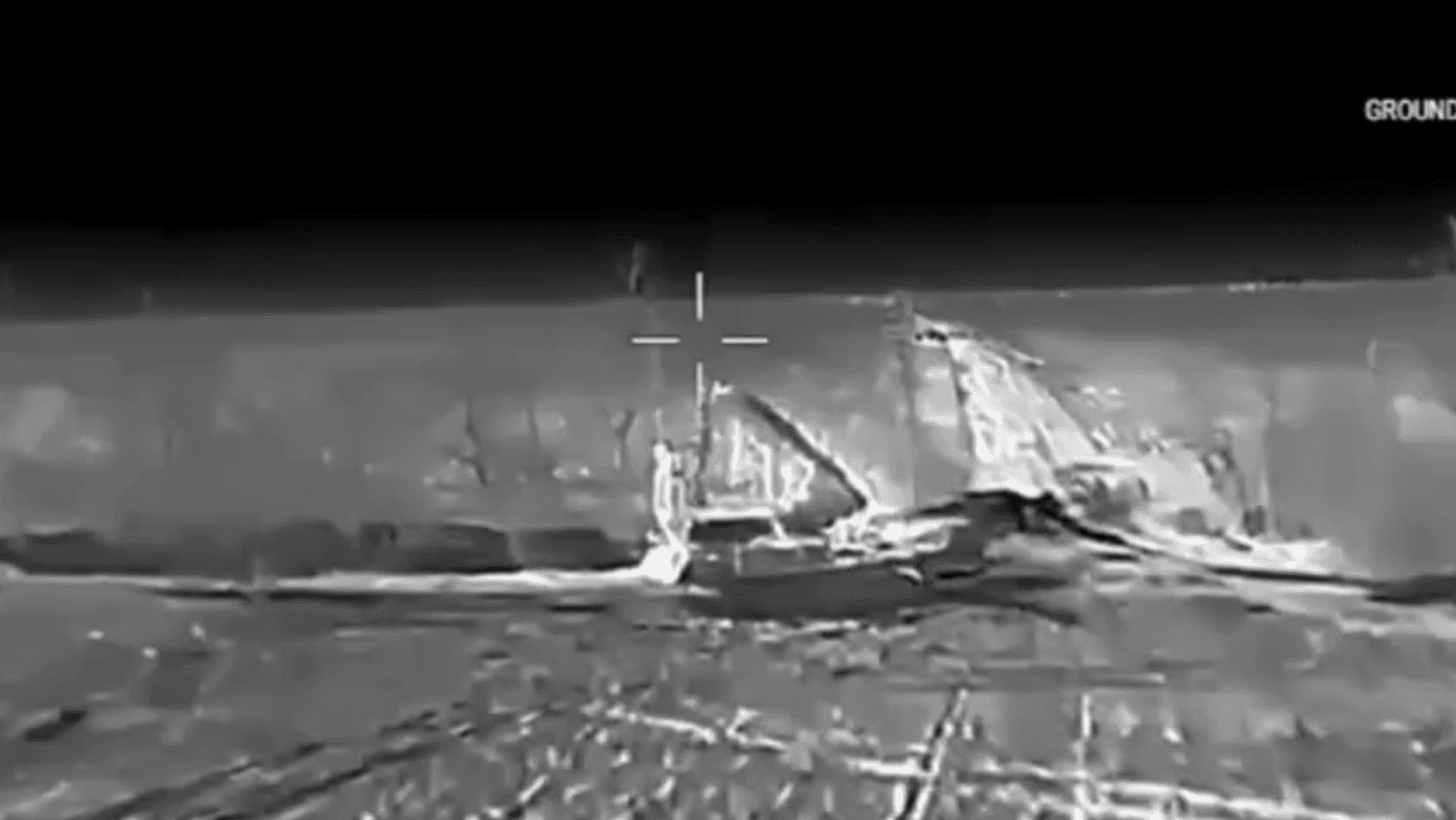
- Ukraine hits Russia' S-300 air defense radars in series of strikes, shows footage
- 'Ukrainians made it through,' Zelensky says on toughest winter of Russia's invasion
- Russia would accept security guarantees for Ukraine, Budanov says
- 'Freedom to the Iranian people' — Kyiv voices support for US-led strikes on Iran
Ukrainian forces struck radar stations of an S-300 air defense system and an S-300V4 complex in the Russian-occupied part of Donetsk Oblast overnight on March 1, among other military targets, Ukraine's General Staff said.
That same night, Ukraine struck a Russian ammunition depot and a troop position in Donetsk Oblast. In the occupied part of Zaporizhzhia Oblast, Ukrainian strikes targeted a fuel and lubricants depot, a military repair facility, and Russian troop positions, the report read.
Kyiv routinely strikes Russian military facilities, as well as oil infrastructure and other industrial targets that help Russia finance its war and supply the Russian army with weapons, fuel, and equipment.
The Ukrainian military released footage that appears to show a drone hitting a Russian radar system. The General Staff did not specify whether Ukrainian forces deployed other weaponry apart from drones in the attacks.
The General Staff did not specify whether Ukrainian forces deployed other weaponry apart from drones in the attacks.
The General Staff also confirmed that drone control centers were destroyed on Feb. 28 in Russia's Belgorod Oblast and in the Russian-occupied part of Donetsk Oblast.
Separately, Ukrainian forces struck Russian troops and a drone control center in Zaporizhzhia Oblast. The scale of Russian military losses and the full extent of the damage are still being assessed, the General Staff said.

'Ukrainians made it through,' Zelensky says on toughest winter of Russia's invasion
President Volodymyr Zelensky said on March 1 that during the final week of winter, Russia launched over 1,720 attack drones, nearly 1,300 guided aerial bombs, and more than 100 missiles of various types against Ukraine.
"But despite everything, Ukrainians made it through this difficult winter, when Russia did not even try to seek justification for its bestial strikes on civilian critical infrastructure," Zelensky said on X.
The winter of 2025-2026 has been described as Ukraine's toughest yet, as heavy Russian strikes on the energy system, combined with severe frosts, have pushed the country to the brink of a humanitarian crisis.
Over the three-month winter period, Russia launched more than 14,670 guided aerial bombs, 738 missiles, and nearly 19,000 attack drones, most of them Shahed-type models, according to Zelensky.
The president added that the same Iranian-designed drones are currently being used by Tehran against countries in the Middle East, amid a fresh conflict that broke out following Israeli-U.S. strikes on Iran.
"Evil must be confronted in every part of the world," Zelensky said.
"When the United States and other partners show enough determination, even the bloodiest dictators ultimately pay for their crimes."
A wave of massive Russian strikes in January and February, when daytime temperatures plunged to -20°C (−4°F), pushed Ukraine's energy system to the brink.
Widespread destruction and repeated attacks that hindered repairs forced many regions to shift from scheduled power cuts to emergency outages, some lasting more than eight hours at a stretch.
Russia carried out its most severe strike yet on substations linked to Ukraine's nuclear power plants on Feb. 7, cutting electricity output from the country's nuclear fleet by roughly 50%, according to Vitaliy Zaichenko, CEO of state grid operator Ukrenergo.
The assaults on energy systems are part of a broader campaign: last year, Russia launched 229 attacks on Naftogaz, Ukraine's state oil and gas company — more than in the previous three years combined, the company said in a Feb. 17 press release.
Russia would accept security guarantees for Ukraine, Budanov says
Russia would accept U.S.-backed security guarantees for Ukraine, the head of the President's Office, Kyrylo Budanov, said on Feb. 28.
Speaking to reporters during the national Yedyni Novyny (United News) telethon, Budanov said Moscow had previously indicated its willingness to accept guarantees offered by Washington.
"At past negotiations, the Russian side directly said that they would accept the security guarantees offered to Ukraine by the U.S.," Budanov said.
He added that Russia understands it may be "forced" to accept such guarantees.
Budanov's remarks came days after U.S. and Ukrainian officials met in Geneva on Feb. 26 as part of ongoing efforts to broker peace with Moscow. Russia did not participate in the talks.
The delegations reportedly discussed Ukraine's postwar recovery needs and plans for a subsequent round of negotiations that would include Russia.
As diplomatic efforts continue, Kyiv has maintained that strong, binding security guarantees from its partners — particularly the United States — are essential to any peace deal and to deterring a future Russian invasion.
It remains unclear what form those guarantees would take. Moscow has previously rejected proposals tied to Ukraine's security, including NATO membership or the deployment of European peacekeepers on Ukrainian territory — both seen as the strongest deterrents for future attacks. Russia has also sought security guarantees of its own.
Budanov said he sees "progress" on the question of security guarantees, suggesting the Kremlin may be more open to the concept than it has publicly indicated.

'Freedom to the Iranian people' — Kyiv voices support for US-led strikes on Iran
Ukraine's Foreign Ministry reaffirmed the country's support for US-led strikes against Iran, saying on Feb. 28 that "the regime in Tehran had every opportunity to prevent a violent scenario."
The U.S. and Israel launched strikes against Iran in the early hours of Feb. 28, with U.S. President Donald Trump calling for regime change in the country.
Since the initial attack, Iran has launched retaliatory strikes against neighboring countries in the region which house U.S. military bases.
Leading up to the attack, Zelensky publicly supported the idea of attacks against the Iranian regime, although he stressed that diplomatic talks were the best way forward.
"The reason for the current events is precisely the violence and arbitrariness of the Iranian regime, in particular the murders and repressions against peaceful protesters, which have become particularly large-scale in recent months," the Foreign Ministry said in its Feb. 28 statement.
The ministry made a distinction between the Iranian regime and the Iranian people, declaring that the Ukrainian government stands by "the Iranian people and their legitimate desire to live in security, freedom and prosperity."
"We wish security, prosperity, and freedom to the Iranian people, as well as stability and prosperity to the Middle East," the statement from the Foreign Minisitry reads.
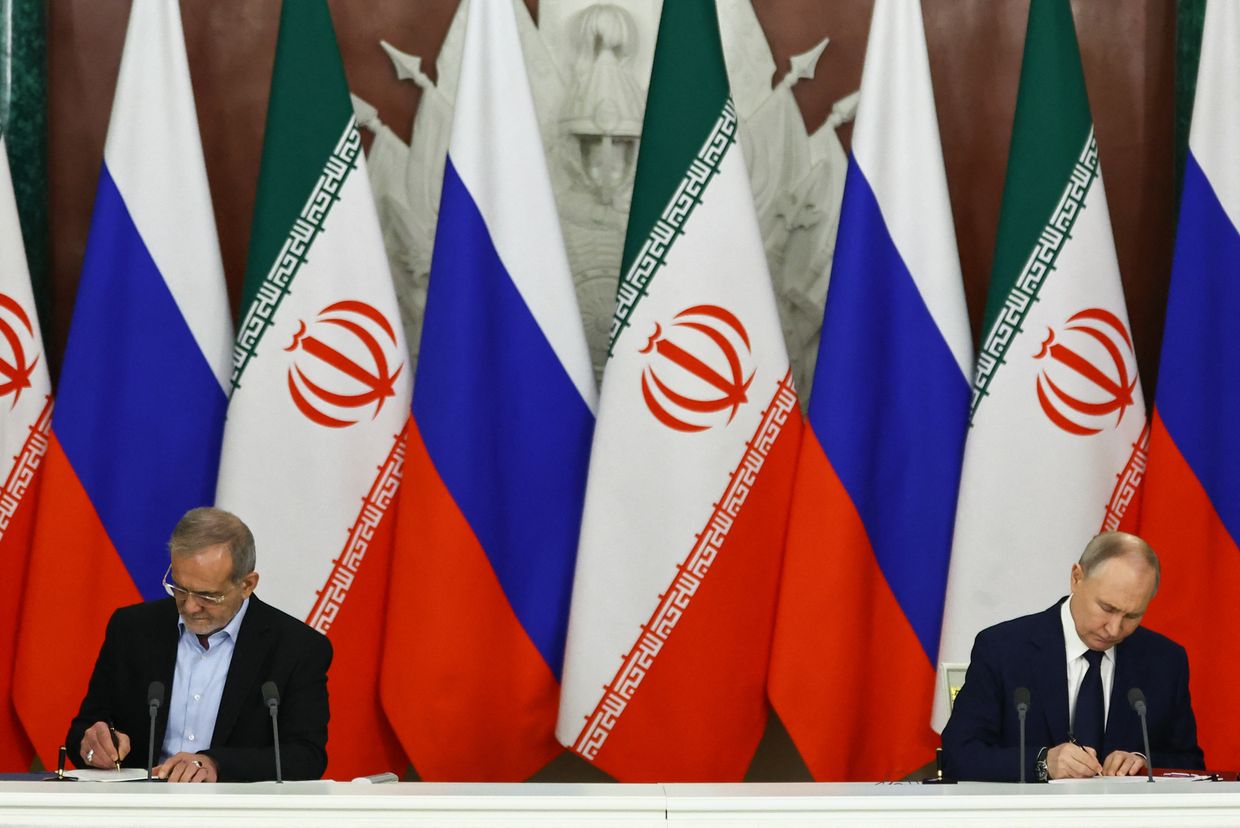
In its statement, the Foreign Ministry also invoked the Iran-supplied Shahed drones used in thousands of attacks against Ukrainian cities since the start of Russia's full-scale war against Ukraine, adding that Tehran and Moscow's wartime alliance was "a gross violation of international law."
Zelensky, in a statement released on Feb. 28, also pointed out that Russia has used more than 57,000 Shahed-type drones in its attacks against Ukraine since 2022.
"It is fair to give the Iranian people a chance to rid themselves of a terrorist regime and to guarantee security for all nations that have suffered from terror originating in Iran," Zelensky said.
However, Zelensky also cautioned against the war expanding into a wider conflict, saying that "it is important to preserve as many lives as possible" and that it is "important" that the U.S. is "acting decisively."