Ukraine war latest: Ukrainian forces target key Crimea crossing amid broader strikes on Russian military logistics
 on Google
Key developments on June 9:
- Ukraine targets key Crimea crossing in broader day of strikes on Russian military logistics;
- Russia's Starlink rival loses one of its first operational satellites, Russian media reports;
- Ukraine strikes ammo depot in Russia's Belgorod Oblast, confirms fuel tank destruction near Mariupol;
- Syrskyi approves Rocket Forces and Artillery development plan through 2030;
- No visas for Russian soldiers, no crypto, no fish — EU announces new Russia sanctions package.
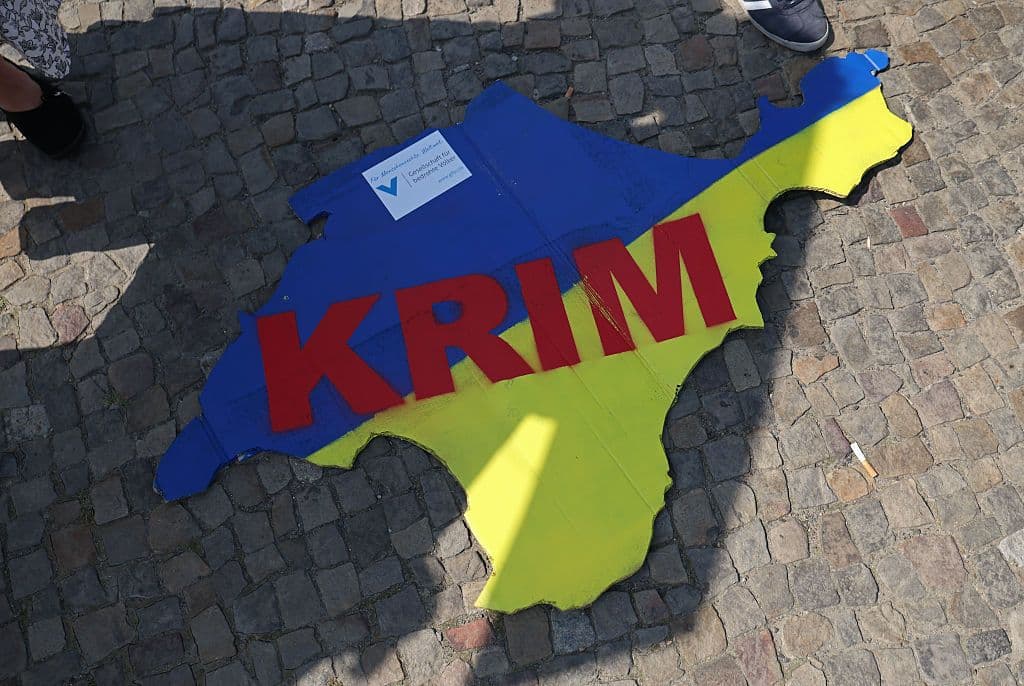
Traffic on the Chonhar Bridge in Russian-occupied Kherson Oblast was closed after a Ukrainian drone strike, Russian-installed regional head Volodymyr Saldo said on June 9.
The news comes as Ukrainian forces have intensified their strike campaign against Russian logistics, including in Crimea, disrupting fuel deliveries on the peninsula and complicating other supplies critical to the Russian army.
The R-280 "Novorossiya" highway, built by Russian-installed authorities, crosses the Chonhar Bridge in Kherson Oblast and connects Rostov-on-Don in southern Russia with Crimea via occupied parts of Donetsk Oblast, serving as an important route for Russian military logistics and supplies.
This is the second time in the past three days that the bridge has been closed, following an overnight June 7 strike involving Ukrainian FP-2 and Behemoth drones, which are used in Ukraine's middle-strike campaign typically covering distances of 30 to 300 kilometers (20–185 miles) from the front line.
The bridge was damaged and traffic was temporarily halted, with drivers redirected through the settlements of Armiansk and Perekop in Russian-occupied Crimea, Saldo said on June 9.
Saldo also claimed Russian air defenses intercepted more than 20 Ukrainian drones approaching the bridge.
The Kyiv Independent could not independently verify the claims.
The June 9 strike came as Commander of Ukraine's Unmanned Systems Forces Robert Brovdi, known by the call sign "Madyar," claimed Ukrainian drone operations had significantly disrupted another major Russian logistics route to Crimea.
According to Brovdi, Russian military cargo traffic along the R-280 "Novorossiya" highway, which connects Russia with occupied Crimea through Mariupol, Berdiansk, and Melitopol, has fallen by 71% over the past two weeks due to Ukrainian strikes.
According to figures provided by Brovdi, daily freight traffic along the route fell from roughly 3,800 vehicles per day to around 1,100.
"Traffic collapse is not a blockade," Brovdi said. "But the current 'diet' imposed on this first land corridor, the lifeline of the occupation grouping, is sensitive and effective."
"We know all your routes like the back of our hand. Try taking the back roads, as ordered. Siberia is your rear base," Brovdi added.
Ukraine is expanding its middle-strike campaign, targeting assets at the operational depth, focusing on air defense systems, command posts, fuel and ammunition depots, and logistics vehicles.
Earlier, Ukrainian drones gained control of key Russian military supply routes in occupied parts of Luhansk Oblast, the Third Army Corps said on Facebook on May 31.
Russia's Starlink rival loses one of its first operational satellites, Russian media reports
Russia's private aerospace company Bureau 1440 has lost one of the first satellites launched for its Rassvet ("Dawn") satellite internet network, Russian state-controlled newspaper Kommersant reported on June 9, citing satellite-tracking data.
Bureau 1440 is developing a low-Earth orbit satellite internet constellation designed to provide high-speed broadband communications across Russia. The project is considered Moscow's answer to Starlink.
The company confirmed the loss to Kommersant, saying that 15 of the 16 satellites launched during the constellation's first operational deployment in March remain in orbit.
According to the company, the constellation currently consists of six experimental satellites from the Rassvet-1 and Rassvet-2 missions, as well as 15 satellites from the first operational launch.
On March 24, Bureau 1440 announced that it had successfully placed the first 16 operational satellites of the Rassvet communications network into orbit, describing the launch as a transition from experimental testing to the creation of a commercial communications service.
According to company plans, the Rassvet constellation is expected to consist of 292 operational satellites by the end of 2030, with a total of 383 satellites scheduled for launch.
The project is being developed under Russia's national "Data Economy" program. Russian authorities plan to allocate 102 billion rubles ($1.3 billion) from the federal budget, while Bureau 1440 is expected to contribute an additional 329 billion rubles ($4.2 billion).
Starlink has become a key component of Ukraine's military communications infrastructure during the full-scale war. In February 2026, Ukraine announced that unauthorized Starlink terminals used by Russian forces had been deactivated following coordination with SpaceX, disrupting Russian battlefield communications and drone operations.
read also
Ukraine strikes ammo depot in Russia's Belgorod Oblast, confirms fuel tank destruction near Mariupol
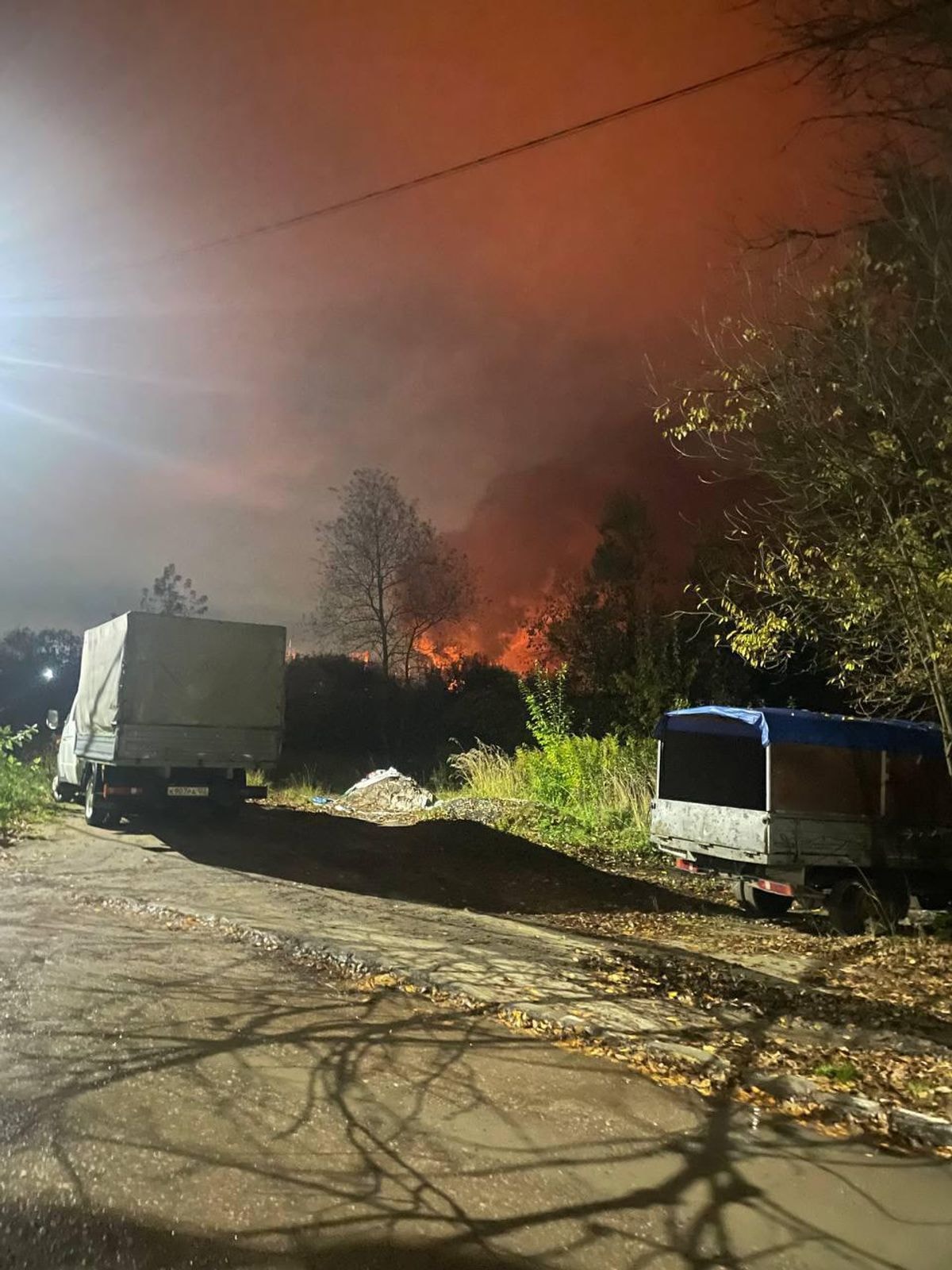
Ukraine struck an ammunition depot, command posts, drone control centers, logistics hubs, and troop concentrations across Russia and occupied Ukraine on June 8 and overnight into June 9, the General Staff of Ukraine's Armed Forces reported
Among the targets hit were an ammunition depot near Prokhorovka in Russia's Belgorod Oblast, command posts in Donetsk, Belgorod, and Kursk oblasts, as well as drone control sites in Donetsk, Zaporizhzhia, and Kherson oblasts.
The military also reported strikes on Russian logistics and supply facilities in Donetsk, Luhansk, and Zaporizhzhia oblasts, alongside attacks on troop concentrations in multiple frontline areas.
Separately, the General Staff confirmed that a strike carried out on June 5 destroyed eight fuel storage tanks and damaged nine others near the port of Mariupol in occupied Donetsk Oblast.
Ukraine's military said it would continue efforts to degrade Russia's military capabilities and logistical support for its war against Ukraine.
read also
Syrskyi approves Rocket Forces and Artillery development plan through 2030
Ukraine's Commander-in-Chief Oleksandr Syrskyi approved a new development concept for the Armed Forces' Rocket Forces and Artillery through 2030, according to a statement published on June 9.
The announcement comes after Ukrainian President Volodymyr Zelensky said that a military reform effort would begin in June, focusing primarily on service members' financial support and the introduction of clearer service terms.
Syrskyi said Ukraine's artillery forces continue to face challenges, including dependence on foreign ammunition supplies, logistical difficulties from operating multiple artillery systems, limited strike ranges for some weapons, and shortages of artillery reconnaissance assets.
The newly approved strategy calls for gradually replacing aging Soviet-caliber artillery systems with domestically produced weapons while retaining some of the most advanced foreign-made systems currently in service, according to Syrskyi.
Syrskyi added that Ukraine must build up its capability to strike across the full operational, operational-strategic, and strategic depth of Russian forces, saying this requires completing development and moving to mass production of cruise and ballistic missiles that would enable a "balanced strike system" with a range of up to 2,000 kilometers (nearly 1,240 miles).
"While fighting a difficult war today, we must simultaneously build the military of the future," the commander-in-chief said.
Developing a modern artillery reconnaissance system is among the key priorities of the new concept, Syrskyi said, adding that modern warfare has shown that artillery effectiveness depends directly on the quality of reconnaissance and the speed at which information is transmitted.
Ukraine has expanded its medium- and long-range strike campaigns since the start of 2026, targeting Russian military, industrial, and energy facilities deep behind the front line with domestically developed drones and missiles.
Amid intensified strikes deep inside Russia and against Russian military targets in occupied territories, Ukrainian forces recaptured nearly 100 square kilometers more territory than they lost along the front line in May, bringing total gains since the start of 2026 to more than 600 square kilometers, Syrskyi said on June 8.
No visas for Russian soldiers, no crypto, no fish — EU announces new Russia sanctions package
European Commission President Ursula von der Leyen unveiled the EU's forthcoming 21st sanctions package against Russia at a press conference in Brussels on June 9.
The package comes amid rising global fossil fuel prices and will freeze the current price cap for Russian oil until the end of 2026, limiting Moscow's ability to profit from rising prices resulting from the U.S. war on Iran.
The measures also expand efforts to target third countries that help sustain Russia's war machine.
"The conflict in the Middle East and disruptions to global energy supply chains have eased some pressure on Russia. So the objective of our package couldn't be clearer," von der Leyen told reporters.
EU sanctions were "not made for market shocks like the one caused by the closure of the Strait of Hormuz. So we propose to simply pause the adjustment until January next year," she added.
The package contains several other significant items beyond the energy price cap. It comes as Russia shows no sign of readiness to engage in meaningful peace negotiations with Ukraine.
The EU's diplomatic arm is "putting forward the largest set of listings in over two years, with over 170 proposals, notably on the financial sector, energy, and drones' production," the EU's top diplomat, Kaja Kallas, wrote on social media.
Russian military personnel, both current and former, would also be denied entry to the EU if the proposal is approved by member states.
"Europe's door should not be open to Russia's (ex-)combatants," Kallas wrote.
The package also introduces new restrictions on crypto and financial services, including in third countries. For the first time, the EU is proposing a full ban on crypto-asset services linked to jurisdictions that facilitate sanctions evasion.
Von der Leyen said this would serve as a deterrent for platforms enabling Russia to bypass restrictions.
And even import restrictions and bans on Russian fish have been proposed for the first time. Those latter measures, like others, will also apply to Belarus, von der Leyen said, so as to prevent sanctions evasion via the Russia ally but otherwise landlocked nation.
On top of this, there will also be new sanctions against individuals, an additional 30 ships from the Russian shadow fleet that Moscow uses to bypass restrictions on energy exports, and new measures to punish vessels that offer ship-to-ship support to the shadow fleet.
No individual names were mentioned as yet. It is EU policy not to disclose specific entities ahead of publication, so as to limit the ability of sanctions targets to take evasive measures.
Some sanctions are expected to be voted through formally at a meeting of EU Foreign Ministers in Luxembourg on June 15, while the rest could be formally adopted in July, if there is unanimity among EU countries.