Peace plan drama — Ukraine and Europe hand US revisions as Trump grows 'sick of meetings'
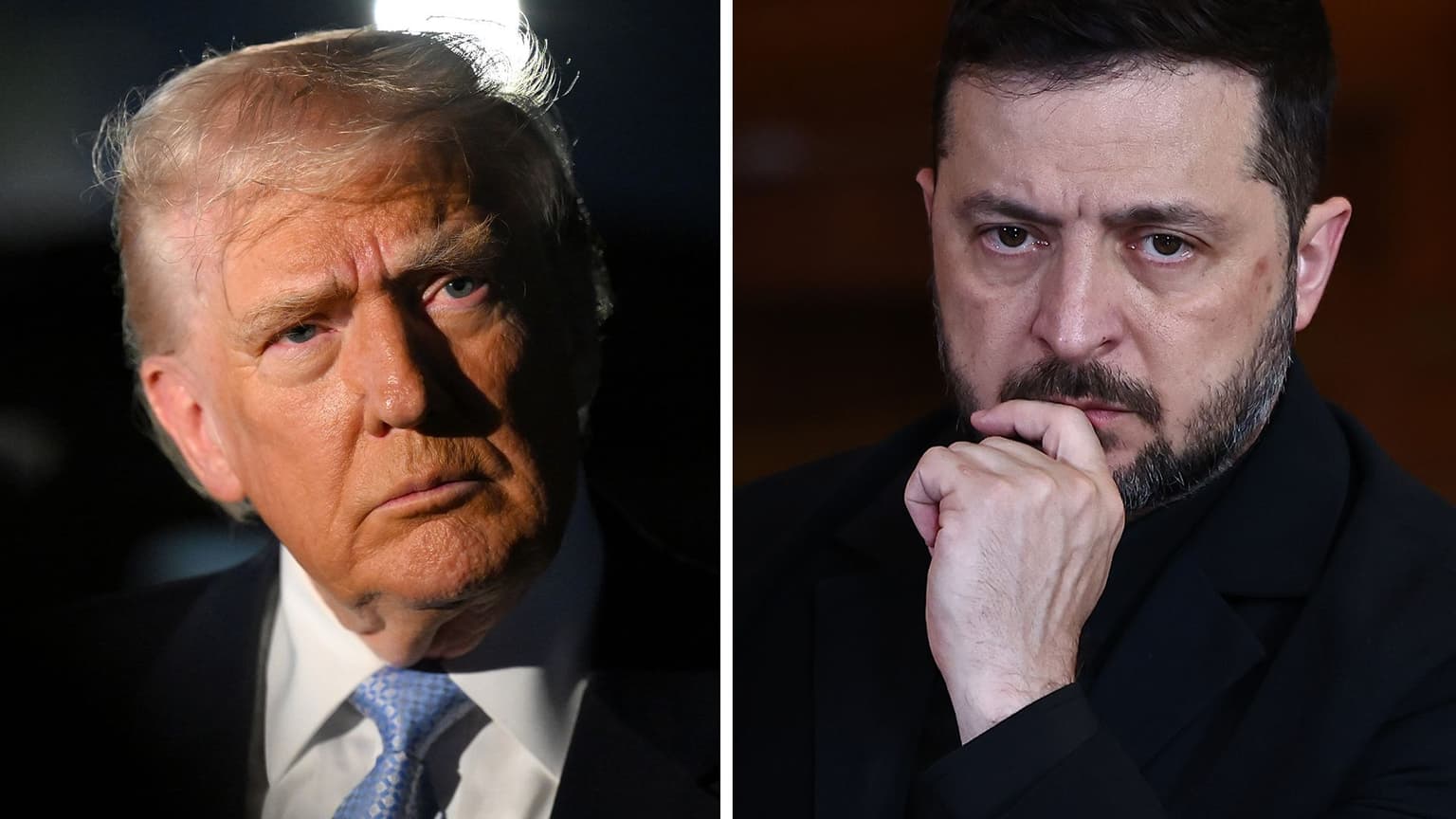
(L-R) U.S. President Donald Trump, President Volodymyr Zelensky. (Roberto Schmidt / Henry Nicholls – WPA Pool / Getty Images / Collage by the Kyiv Independent)
 on Google
Ukraine and its European partners have handed Washington their revisions to the U.S.-proposed peace framework aimed at ending Russia's war, the Kyiv Independent has learned.
The move comes amid growing U.S. pressure to advance negotiations and fresh accusations from U.S. President Donald Trump that President Volodymyr Zelensky is the one refusing to agree to the American plan.
The next round of discussions is expected on Dec. 13, though White House press secretary Karoline Leavitt signaled impatience with the diplomatic process.
Trump, she said, is "sick of meetings just for the sake of meeting."
The White House declined to comment when asked if the talks would take place.
The revisions submitted by Kyiv and European capitals focus on altering provisions that demanded sweeping concessions from Ukraine.
Zelensky has shown flexibility on some issues that both Washington and Moscow have raised — including holding an election — but core disputes remain unresolved.
The territorial trap
Territorial concessions dominate the tensions.
Speaking to reporters on Dec. 8, Zelensky said Ukraine's withdrawal from unoccupied parts of Donbas, the scope of security guarantees, and the status of the Zaporizhzhia Nuclear Power Plant remain the most sensitive elements under negotiation.
Moscow has demanded that Ukraine leave eastern Donbas region, including parts of Donetsk and Luhansk oblasts Russia has failed to seize over more than a decade of war.
Luhansk Oblast is almost entirely under Russian occupation. Ukrainian forces currently hold about 6,600 square kilometers (2,550 square miles) of Donetsk Oblast, including Sloviansk and Kramatorsk, with fighting ongoing in Pokrovsk.
Zelensky said on Dec. 11 that any territorial decisions must be made by Ukrainians themselves, either through elections or a referendum.
"I believe that the Ukrainian people will answer this question. Whether in the form of elections or a referendum, the Ukrainian people must have a say," he said.
A national referendum requires safe conditions and full voter access — conditions impossible to meet during wartime without external guarantees.
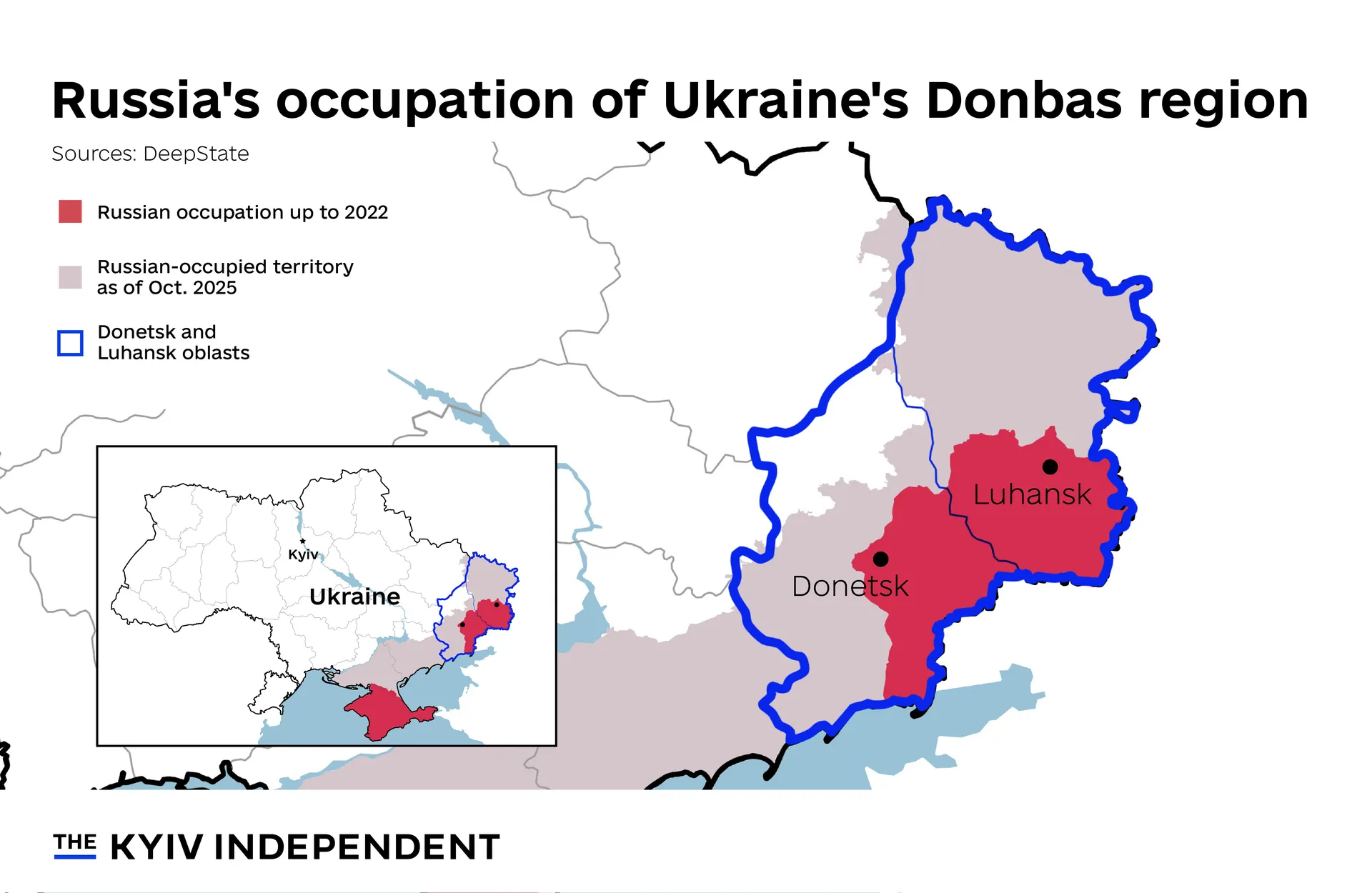
Against this backdrop, Zelensky said Washington has floated a "compromise vision" in which Ukrainian troops would withdraw from Donetsk Oblast while Russian forces would refrain from entering.
"They see that Ukrainian troops are leaving the territory of Donetsk Oblast, and the compromise seems to be that Russian troops will not enter this territory," he said.
The proposal, he added, is one of several ideas that U.S. officials are testing in an attempt to find a format acceptable to both Kyiv and Moscow. He said the sides discussed creating what Washington calls a "free economic zone" and Moscow a "demilitarized zone."
For now, Zelensky said, it remains unclear "what the final documents will look like."
Russia has rejected compromise on what it claims are non-negotiable points.
Kremlin aide Yuri Ushakov said on Dec. 12 that the whole Donbas "belongs to Russia" and again demanded a Ukrainian withdrawal — a condition Kyiv has ruled out entirely.
Trump shifts on security guarantees
These territorial disputes are closely tied to the question of security guarantees.
Trump indicated on Dec. 11 that the U.S. is ready to take part in providing security assurances for Ukraine — a notable reversal.
"Yeah, we would help. I think, a necessary factor in getting it done," he said.
The remark marks a shift in his position: earlier, he had rejected any U.S. involvement in security guarantees and insisted that Europe should take the lead instead.
But NATO membership still remains off the table.
Zelensky, responding to a question from the Kyiv Independent on Dec. 9, said Washington is "not yet ready to see Ukraine in NATO," calling it "open information."
Kyiv's current focus, he said, is on securing effective guarantees from Europe's Coalition of the Willing and, critically, from the U.S.
"The U.S. said they want Ukraine to have realistic security guarantees this time, approved by Congress, so that we can feel them, so that we have weapons," Zelensky said.
"If needed, sanctions would be applied, so that we have air defense, and it should be Article 5-like. Like the Fifth Amendment. But we haven't worked out the details yet."

Europe excluded from talks that shape its future
Kyiv has pushed to involve European partners in negotiations after the continent found itself completely shut out of a process that directly affects its security.
But a senior European diplomatic source told the Kyiv Independent that Europe lacks its own coherent peace vision.
Instead, European leaders hope the U.S. will slow its push toward a deal while maintaining intelligence sharing with Ukraine and keeping the Prioritized Ukraine Requirements List (PURL) — a mechanism through which NATO states buy U.S. weapons for Ukraine.
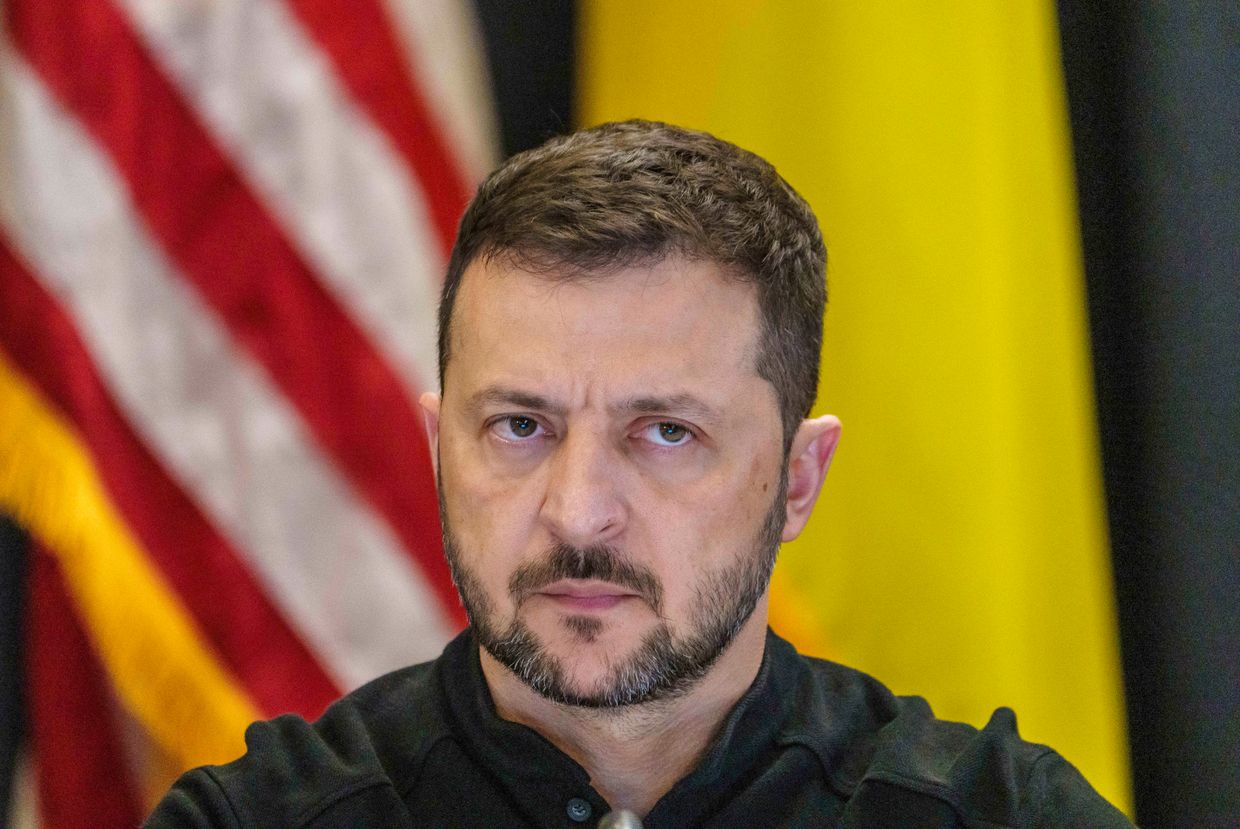
Zelensky met British Prime Minister Keir Starmer and other European leaders, then traveled to Brussels for talks with NATO Secretary General Mark Rutte and EU officials.
Behind closed doors, European officials are far more blunt about the risks. According to a senior European diplomat, leaders have told Zelensky that the U.S. can't be trusted and that Europe must prepare to act alone.
Moscow holds the line
As Washington presses and Europe struggles for influence, the peace talks are fragile.
Ukraine's National Security and Defense Council Secretary Rustem Umerov traveled to Washington last week to refine the U.S.-drafted proposal and receive updates on U.S.–Russia discussions.
On Dec. 2, U.S. Special Envoy Steve Witkoff met Russian President Vladimir Putin in Moscow as part of Washington's push to advance the peace process.
Ushakov, who participated in the meeting, described the talks as "very useful, constructive, and highly substantive," but acknowledged that no deal had been reached — a sign that negotiations remain far from a final agreement.
The main obstacle remains Russia, which continues to insist on maximalist demands.
"The President (Trump) should know that, at the moment, the talks are futile," Republican Representative Don Bacon told the Kyiv Independent.
"Russia does not want peace and thinks the Administration will concede more Ukrainian land. I say for now, stop talking and send more weapons to Ukraine and more sanctions against Russia."
The optics of Washington negotiating with Moscow — and presenting Ukraine and Europe with an almost-finished framework — continue to unsettle European capitals.
As the talks pick up pace, Zelensky is coming under growing pressure from Washington, with U.S. officials in recent days openly criticizing his handling of the negotiations.
Trump said on Dec. 10 that the White House first needs "answers" from Kyiv, before arranging his meeting with Ukrainian leadership.
Hi, this is Tim. The author of this article. Thank you for taking the time to read it.
At the Kyiv Independent, we don't have a wealthy owner or political backing. We rely on readers like you to support our work.
If you found this article interesting, consider joining our community today.