'They're testing us' — as Russian mass attack tactics evolve, Ukraine scrambles to protect civilians
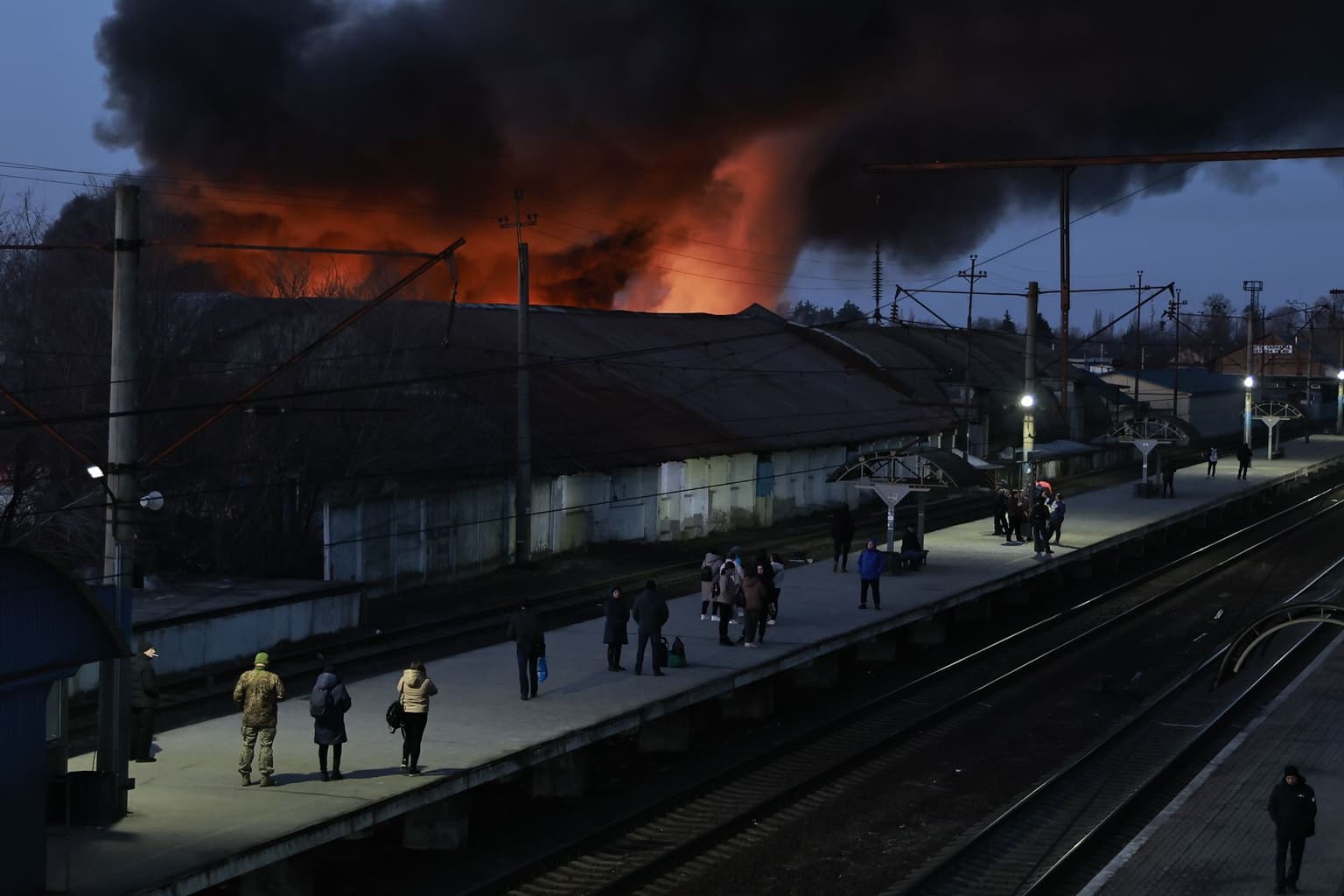
People wait for a train on a platform in front of a fire in a residential area caused by a Russian missile strike in Brovary, Kyiv Oblast, Ukraine, on March 14, 2026. (Yan Dobronosov / Global Images Ukraine via Getty Images)
 on Google
After a punishing winter, Ukraine has had no time to recover. Russia launched almost 6,500 drones in March, surpassing the total of each of the previous two months, with no sign of slowing down.
"Russia's tactics are evolving toward more sustained, flexible, and psychologically exhausting pressure," Viktor Kevliuk, a reserve colonel and analyst at the Center for Defense Strategies, told the Kyiv Independent.
Russia has steadily ramped up defense production over more than four years of full-scale invasion, and continued rolling out new weapon variants and tactics, particularly in the air.
Though Russian forces maintain a numerical and technological edge over Ukraine in aircraft, strike drones, and munitions, Ukraine's air defenses — much of it Western-supplied — have denied Russia air superiority in Ukraine, forcing it to rely on long-range drone and missile strikes.
But even with Ukrainian drone interceptors performing effectively, much of the country’s critical infrastructure remains vulnerable to ballistic missiles, with too few modern air defenses from international partners to stop them.
Ukraine has no ready-made solution, and Russia continues its relentless aerial campaign this spring, hitting civilian and critical infrastructure more often, day and night.
Deadly missiles and swarms of cheap drones
Swarm tactics — launching large numbers of drones at once to overwhelm air defenses — are not new. But in just one year, Russia has significantly expanded the number of drones it can deploy for these missions.
In the first three months of 2026, Moscow deployed over 15,800 drones, an almost 50% jump from the same period last year, according to the Kyiv Independent's calculations based on daily reports from Ukraine's Air Force.
Meanwhile, Russia launched on March 23-24 nearly 1,000 drones against Ukraine in a single day, marking the largest drone attack since the start of the full-scale invasion. Russian forces also launched 34 missiles of various types, hitting 11 regions across eastern and western Ukraine. Four people were killed, and dozens more were injured in the mass attack.

During the attack, Ukrainian forces shot down 931 Russian aerial targets, 94.8% of the total, and intercepted 25 of 34 missiles, demonstrating high effectiveness, the Air Force said. Still, missiles remain the main threat, as Ukraine's air defenses are far less capable of stopping them than drones.
Moscow fired over 150% more missiles at Ukraine in the first three months of 2026 than in the same period last year, according to the Kyiv Independent's calculations, based on publicly available Air Force data.
"They are just keeping us on edge constantly."
Anatolii Hrapchynskyi, deputy director of an electronic warfare company and a reserve Air Force officer, also called the shift in Russia's use of ballistic missiles "significant." Hrapchynskyi told the Kyiv Independent that while ballistic missiles accounted for 35% of Moscow's strikes during late 2025's mass attacks, their share had jumped to 65% by early 2026.
At the same time, this spring, unlike the winter of 2025–2026, destructive attacks like on March 23–24, are increasingly carried out during the day, when most people are at work or school, and put the civilian population at even greater danger. The most recent on April 3 saw hundreds of drones and missiles launched on a Friday morning.
"(The Russians) are testing us," said Yurii Ihnat, head of the Air Force communications department. "The question is, how many resources can they afford to use?"
"If they could launch a thousand drones a day consistently, they would. As it stands, they are just keeping us on edge constantly," Ihnat told the Kyiv Independent.
Kevliuk echoed Ihnat's view, saying the surge in daytime attacks is designed to overwhelm Ukraine's air defenses by "spreading out" strikes throughout the day. Russian forces are also constantly shifting their flight paths to probe for weak spots, while psychological pressure on civilians plays a crucial role as well, Kevliuk added.
"(Their) goal is to create a sense of constant danger," the analyst said, adding that Russia's increase in daytime attacks may signal that its nighttime strikes are failing to achieve the desired results.
"These changes are part of a broader strategy amid the spring-summer offensive on the front lines: to wear down Ukraine's air defense, force the redeployment of resources from the front lines to the rear, and create a sense of hopelessness," he said.
Where might Russia strike next?
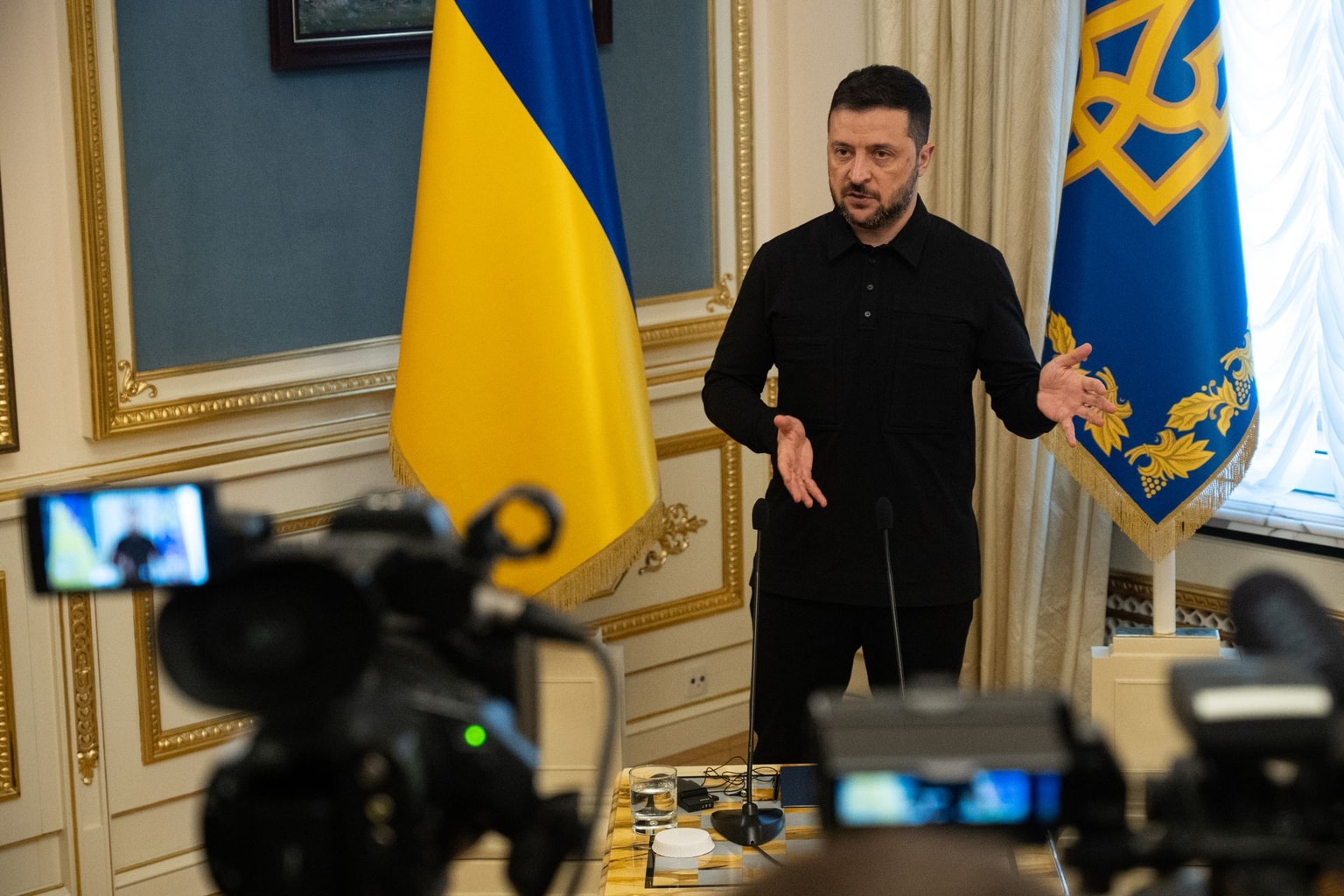
During a briefing with journalists in Kyiv on April 2, President Volodymyr Zelensky once again warned that Russia was preparing a new wave of attacks targeting water supply systems and urged Ukrainian local authorities to prepare for potential disruptions.
"This includes major infrastructure such as bridges, dams, and hydroelectric power plants, as well as pumping stations, drinking water supply systems, and more," he said.
"We must prepare for this in the same way we are currently preparing to protect the energy sector."
This spring, Russian forces have also stepped up attacks on moving trains, prompting Ukrainian Railways, also known as Ukrzaliznytsia, to impose new safety measures — stopping trains during air raid alerts or when aerial targets approach. As a result, some trips are delayed by hours, and passengers are forced to spend the night outdoors while waiting for the train to run again.

Experts interviewed by the Kyiv Independent said Russia is likely to continue targeting Ukraine’s logistics, defense, and industrial facilities, as well as energy infrastructure, in a bid to push the country toward a humanitarian catastrophe.
"Our task is to start building a step-by-step countermeasure system right now."
Russia is expected to use lessons from its winter attacks on energy infrastructure in future strikes on water systems, Jennie Olmsted, a Russia researcher at the Institute for the Study of War, told the Kyiv Independent.
Like older Soviet-era networks, these facilities have critical vulnerabilities that Russian drones can exploit even with small payloads, Olmsted added.
Hrapchynskyi stressed that Ukraine must stay "one step ahead" at all times, developing countermeasures for future air threats before they even appear on the battlefield.

"The key mistake is thinking there is a single solution, such as the Patriot (air defense system), that can protect us from everything," he said.
Hrapchynskyi added that an effective defense will require "an ecosystem" of sensors and radar systems to provide a comprehensive picture of the airspace.
Russian forces are continuing to upgrade their long-range drones, allowing them to serve as launch platforms for other unmanned aerial vehicles, and extending the range of FPV drones, which just a few years ago could not fly beyond 10–15 kilometers (6–9 miles).
In addition, operators can now issue real-time commands to long-range drones, capture high-resolution imagery, and precisely strike moving targets using thermobaric warheads and man-portable air defense systems (MANPADS) to track Ukrainian aircraft.
Threats that once seemed limited to towns and villages near the front lines could now reach settlements hundreds of kilometers from the contact line.
Hrapchynskyi recalled that on March 16, a modernized Lancet drone, primarily used on the front lines, was shot down over Kyiv. He added that a high-quality electronic warfare system operating on the drone’s frequencies could have neutralized the threat, but it did not happen.
"The kill zone will expand in any case, and our task is to start building a step-by-step countermeasure system right now," Hrapchynskyi said.
Note from the author:
Hi, this is Kateryna Hodunova, the author of this article. Thank you for taking the time to read it.
Russian attacks are exhausting — not only because of the constant fear, but also because of the pain caused by the ongoing loss of life. The news of these deaths has, in many ways, become a routine part of my workday.
It’s difficult for me, too. But what gives me strength is knowing that my work — telling the world about the war in Ukraine — matters. If you’d like to support our work, please consider joining our community so we can keep going and do even more.