Ovechkin, Malkin, Kucherov, and Russia's return to international sports
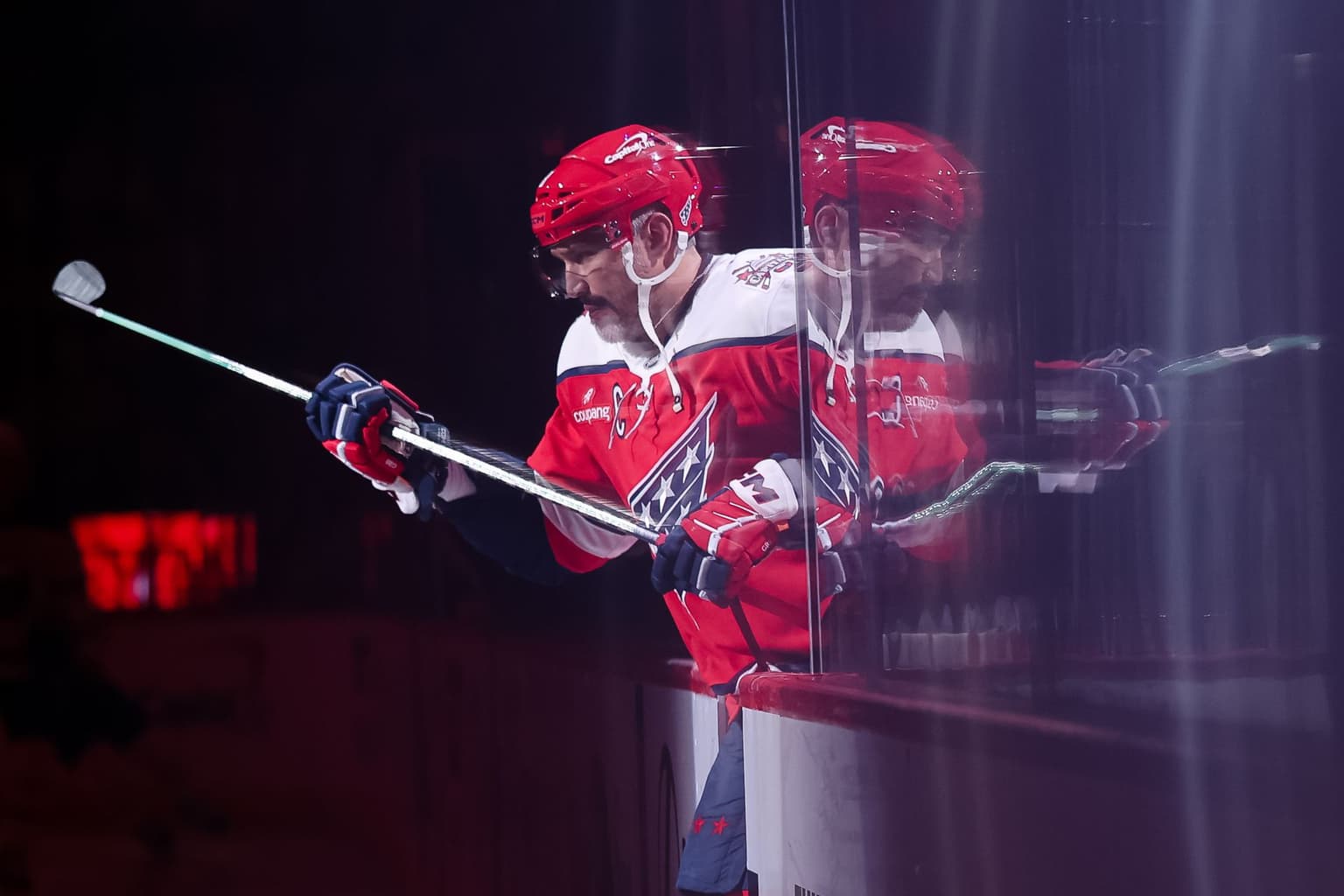
Alex Ovechkin of the Washington Capitals in Washington, D.C., U.S. on April 4, 2026. (Scott Taetsch / Getty Images)
 on Google
Adam Sybera
Senior Research Analyst at KI Insights
Since the onset of Russia's full-scale invasion of Ukraine, Russian athletes and national teams have been widely excluded from international sport.
Yet the pressure to reintegrate them never really disappeared, and Russian athletes are increasingly allowed back into international competition. First, under neutral status in selected disciplines, following a gradual easing of restrictions, to a point of growing calls for the return of Russian representation on the world stage.
Thawing the ice
Most recently, NHL commissioners Gary Bettman and Bill Daly sent shockwaves through the hockey world by announcing a revamped format for the All-Star game, seeing Canada, the U.S., Sweden, Finland, and a "World" team composed of players from other competitions, including Russia.
Sport — and hockey in particular — has a privileged place in Russia's soft-power architecture, and with Ukraine qualifying for the 2027 IIHF World Championship after 20 years, it is not surprising Moscow would seek to accelerate discussions about its return to international hockey.
What is more notable is that the recent momentum has been coming from the United States.
U.S. President Donald Trump has publicly floated the idea of a U.S. vs Russia matchup, while Robert Agee, head of the American Chamber of Commerce in Russia, has promoted the initiative at the St. Petersburg Economic Forum, an event often dubbed "Russia's Davos," suggesting that the push for Russia's sporting rehabilitation is no longer solely a Russian project.
If some of you rush to comment that these efforts mirror lust for athletic talent or sport idealism, there are reasonable arguments that prove this decision to be far from neutral.
At first, these efforts can be framed as a desire to give talent a chance, yet such an explanation overlooks the powerful ecosystem surrounding professional sports.
The MVPs in this game are TV rights, sponsorship agreements, marketing interests, business relations, and million-dollar contracts. For decades now, the NHL has been profiting on Russian superstars, who have become some of the main attractions and faces of the competition. NHL organizations have invested in their brands, media houses into their stories, and sponsors into their popularity.
It is why the environment of North American hockey is more compassionate towards Russian athletes than the European countries bordering Russia. Not because of the "politics don't belong to sports" cliche, but because in the U.S., Russia is not an immediate danger.

Russia is Alexander Ovechkin, Evgeniy Malkin, and Nikita Kucherov, and while war crimes are politically uncomfortable, hockey superstars are commercially valuable.
The result is a profoundly uneven playing field. While critics of Russian athletes returning enter the debate as individuals, often representatives of national associations with almost an activist vibe, their advocates are wealthy institutions with powerful lawyers and specialized PR teams.
What may appear to be a disagreement over eligibility rules is in reality a contest between vastly different levels of influence and resources. This brings us to the core of the question, reaching far beyond sports: how do our societies shape what is considered acceptable?

The influence game
In the shadow of its war in Ukraine, the Kremlin continues to use sporting success as an instrument of national prestige.
Achievements are presented as proof that Russia remains strong despite sanctions and international isolation. The same logic is applied to the campaign to reintegrate Russian athletes. Every return to a major sporting event and every restriction lifted is presented as a gradual defeat of the West.
Sport events serve a second, equally important function for the Kremlin: they provide access to audiences and networks that traditional diplomacy often struggles to reach.
Elite sporting events bring together politicians, business leaders, media executives, celebrities, cultural influencers, and perhaps most importantly, major fan bases in an environment that appears apolitical and uncontroversial, creating opportunities to build and restore relationships and ultimately reshape perceptions.
For Russia, participation in these events extends beyond competition, demonstrating normalcy, projecting legitimacy, and presenting Moscow as a respected member of the international community regardless of its ongoing war against Ukraine.
Moreover, sports operate as a model environment for Russian influence in democratic societies.
Today, propaganda is usually understood as a broadcast show, an alternative disinformation website, or an army of online trolls. But effective hybrid influence is far more sophisticated and best illustrated by the stories of Russian or Russian-oriented oligarchs operating in the West.

Roman Abramovich's former ownership of Chelsea FC offers a case study in how this influence operates, far beyond that of a billionaire owner. For over two decades, he symbolized the connection between Russian wealth and the British establishment, becoming a fixture of London's elite.
This phenomenon of an entire generation of Russian financial tycoons finding home in London became so visible that it even earned the city the nickname "Londongrad," reflecting the city's status as a hub for Russian wealth.
The influence generated by these networks continuously emerges from decades of economic integration and gradual normalization of Russian capital within its most prestigious institutions.
This same principle operates in sports.
It is redundant for the NHL to be receiving instructions from the Kremlin when there is an entire network of business and institutional interests that lead to the same result — normalization of relations with Russia.
This is why it's such an important topic. A few Russian hockey players are unlikely to decide on the future of war in Ukraine, but they provide an insight into how Russian influence in the 21st century operates.
The Kremlin does need to convince the world that Russia is right. It only needs to convince enough people that the war no longer matters, that politics should stay out of sport, and that it's time to return to normal.
History shows that normalization rarely arrives through a single decision; it advances through a series of seemingly harmless steps until the moment we allow our institutions to become vehicles in the normalization of Russian aggression, while the war is being fought.
Editor's note: The opinions expressed in the op-ed section are those of the authors and do not purport to reflect the views of the Kyiv Independent.