The free-market case for easing Ukraine's capital controls carefully
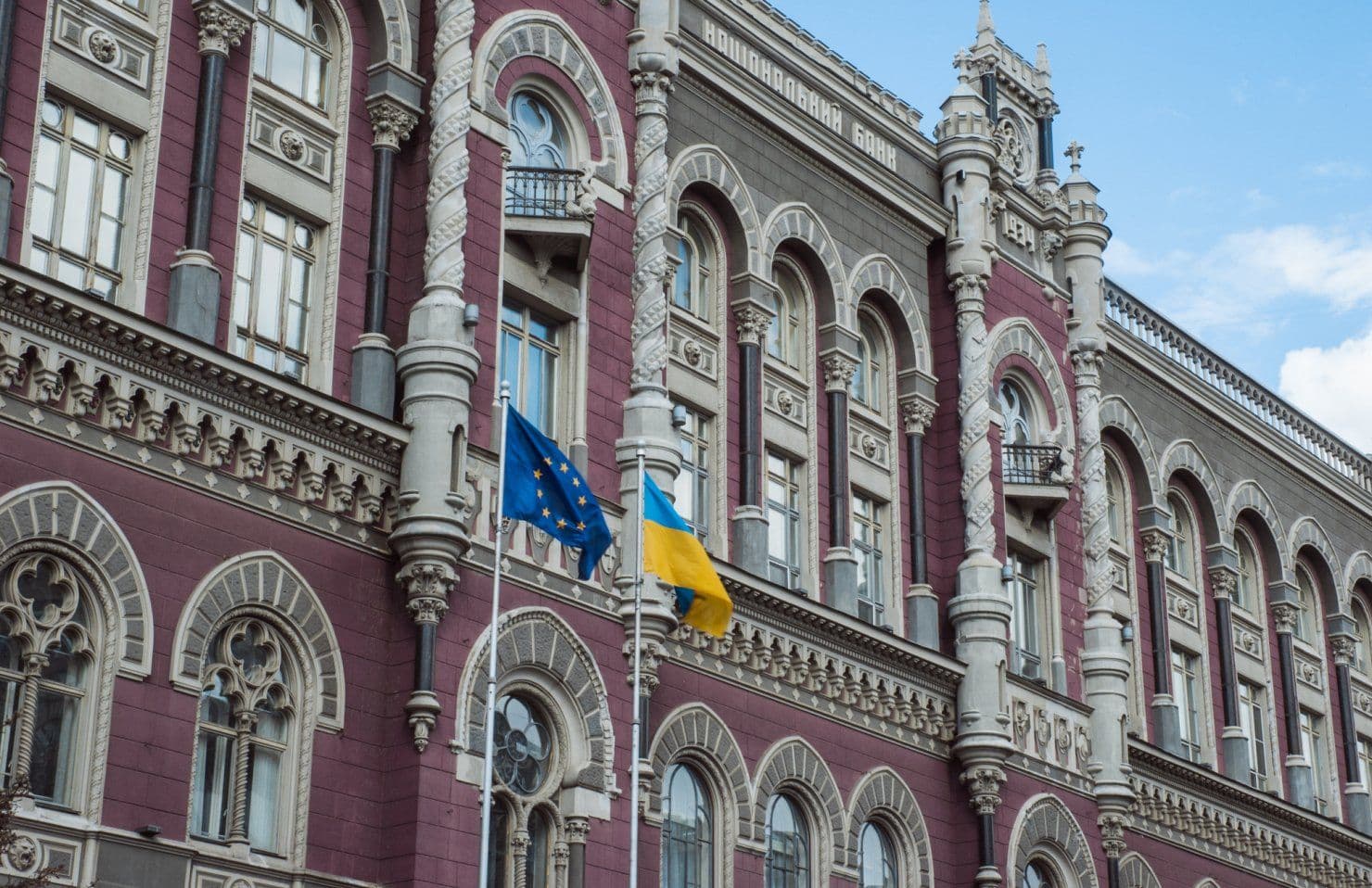
The building of the National Bank of Ukraine (NBU) in an undated photo. (czo.gov.ua)
 on Google
Hans Braunfisch
Geopolitics and strategy consultant
To free market fans, of which I consider myself, "capital controls" is something of a four-letter word.
They can be convoluted, complicated, and scary to international and domestic investors alike. Even when central banks and governments impose them for legitimate reasons, it is not just the bureaucratic hoops you need to jump through that stoke fear, but the reminder that investors' positions are at the whim of governmental entities.
In Ukraine's case, however, capital controls were both a sound policy decision and an understandable political choice after Russia's unjustified invasion.
Stability and survival were the names of the game on both the economic and military fronts. Now, as the country has been focusing more on economic growth and is, by many accounts, achieving gains on the battlefield, the National Bank of Ukraine (NBU) and the government are pivoting from a policy of stopping the bleeding to one of future-oriented growth.
As they pursue that growth, capital controls don't have to be just restrictions lifted; they can also serve as a unique policy and political tool in their toolbelt.
The NBU's record over the past four years gives it the credibility to take its time and design that tool carefully. Inflation, which spiked above 26% in late 2022, is back in single digits. The hryvnia has remained orderly, and the banking system has survived without a single deposit run.

The NBU has earned the political space to move ahead with easing capital controls in a way that's truly future-oriented, rather than just placating free-market purists by ripping the band-aid off.
Don't misunderstand: the NBU hasn't just been sitting on its hands. In addition to combating inflation, stabilizing the currency, and maintaining sufficient liquidity in the market, the NBU has also completed Stages 1 and 2 of its gradual easing of capital controls.
Looking ahead, Stage 3 is their most ambitious capital account liberalization, but there are few details on the roadmap to get to this destination. Timing-wise, there are reasonable arguments for getting there as fast as possible, and I understand the appeal.
But the economy is at an inflection point, and I see three moves the NBU could make to ease into Stage 3 rather than just go fast, each shaping Ukraine's economic and political future in a different way.
First, the NBU could sequence Stage 3 so that foreign equity inflows open ahead of foreign debt inflows. In February, Tobias Krahnke and Wenjie Li at the IMF studied capital account policy across over a hundred countries over two decades. They found that countries that made it easier for equity-based financing to flow before making it easier for debt financing ended up with significantly more equity than debt in their external liabilities years later.
Countries that opened both at once (i.e., ripping off the band-aid) did not see the same shift. As a result, when there's inevitably a downturn or market shock, equity holders behave like partners, while debt holders behave like creditors seeking to recover their money.
This distinction matters for Ukraine in a way it may not for other countries. With public debt over 100% of GDP, even with generous terms, every additional dollar of borrowed money is a future claim on a budget that will need to fund schools, hospitals, demobilization, and pensions.
Equity, on the other hand, makes no such claim. That kind of sequencing would incentivize the next dollar entering Ukraine to arrive as a shareholder rather than a creditor.
Second, the NBU could ensure that foreign investors can actually see a future path to liquidity and take their money home. Today, sale proceeds from Ukrainian assets to Ukrainian buyers cannot leave the country, which gives institutional capital heartburn.
Investors are turned off by opacity and uncertainty, but investments can get done when there's predictability, and inserting the right fiscal policy here could address just that.
For example, one workable model is to allow foreign investors to bring money home while taxing them on a sliding scale tied to the length of time they held the investment. Sell within 2 years, pay a steep price. Five-year hold, less. Ten-year hold, clean exit. Despite opening a clear route to withdraw capital, this type of scheme would be unlikely to trigger a massive "rush to the exits," as investors would feel reassured by a clear path forward.
Capital craves predictability, and that is exactly what this is.
In turn, the only capital that would be deterred is impatient capital, which, when times get tough, can do the most damage when it leaves. Alternatively, it could also make patient capital cheaper, and the government could earn budgetary revenue from the people who could not commit.
Third, the NBU could use the easing of capital controls to strengthen Ukraine's economic ties to its allies. Almost half of Ukraine's recorded inward FDI flows through Cyprus and the Netherlands, and a meaningful portion of that, according to the NBU's historical analysis, is Ukrainian capital round-tripping for tax reasons.
Under the current regime, offshore is the only structure that can move money cleanly while complying with these restrictions.
This is why the NBU can go through the alternate route. Investors from EU member states and other countries that have stood with Ukraine through this war should be incentivized to deepen their ties to the nation by providing streamlined pathways for their money to go in and out.
Coupled with strict ownership rules to prevent sanctioned capital from being routed back in, this could reward key constituencies of allied nations for their governments' ongoing support, further building goodwill and private-sector connectivity.
Just like the armed forces have on the battlefield, the NBU has earned international respect and has the rare chance to emerge from this crisis in a designed manner.
Capital regimes are simply foreign policy by other means, and Ukraine can enhance subnational, private sector foreign policy by approaching Stage 3 of capital control easing accordingly.
If done right, Ukraine can emerge from the war with an external balance sheet tilted toward allied investors who are in it for the long haul. Capital controls may still be a four-letter word to many of us, but the NBU has shown that it has the operational discipline to perform in the hardest of times. Now they need to show they can replicate that success in a more normalized capital environment.
Editor's note: The opinions expressed in the op-ed section are those of the authors and do not purport to reflect the views of the Kyiv Independent.