Russia just laid out its Ukraine war endgame — here's what Moscow actually wants
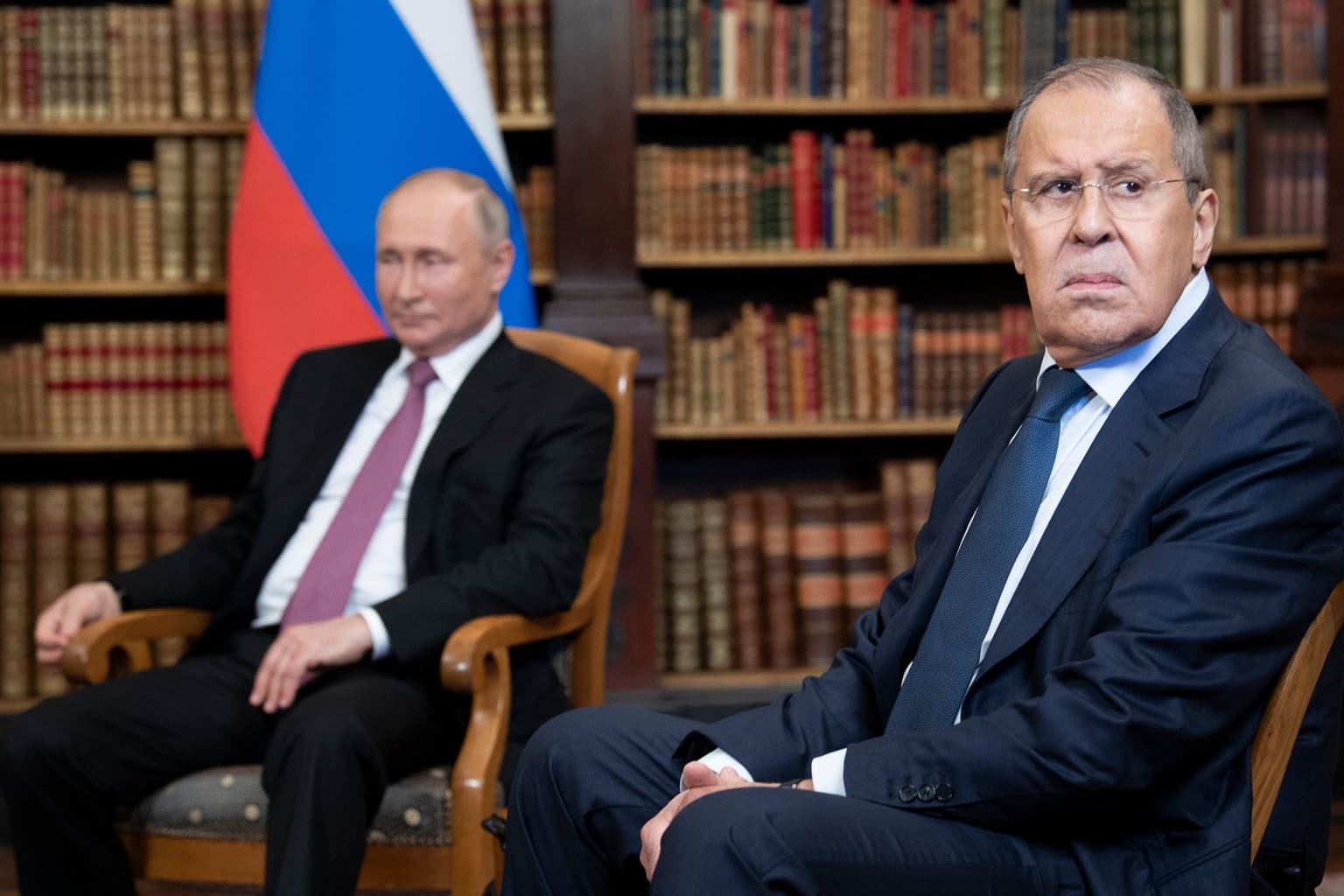
Russian Foreign Minister Sergei Lavrov and Russian President Vladimir Putin in Geneva on June 16, 2021. (Brendan Smialowski/AFP via Getty Images)
 on Google
As the United States renews its diplomatic push to end Russia's war against Ukraine, Moscow is making something clear: its position has not changed.
While U.S., Ukrainian, and Russian officials met for trilateral talks in January and again in early February — with another round expected next week — the Kremlin has used the same period to restate its position.
As Washington speaks of momentum and narrowing gaps, Russia's most senior officials have publicly dismissed key elements of the proposed framework.
Lavrov's 3-day message
For three consecutive days, from Feb. 9 to Feb. 11, Russian Foreign Minister Sergey Lavrov publicly undercut suggestions that negotiations were advancing.
His message was consistent and direct: Russia's territorial and political demands remain intact, and any serious discussion must revolve around Ukraine accepting them.
The timing was not accidental. President Volodymyr Zelensky said the next round of talks is planned for Feb. 17–18. Lavrov's remarks came just days before that meeting.
In all three speeches, Lavrov referred to what he called "Anchorage agreements" allegedly reached between Russian President Vladimir Putin and U.S. President Donald Trump during their August 2025 summit in Alaska.
Those understandings envisioned Ukraine surrendering territory without fighting.
The White House has not confirmed the existence of any such agreements and earlier declined to acknowledge them in comments to the Kyiv Independent.
But Lavrov signaled that Kremlin sees the talks not as a forum for mutual concessions, but as a way to formalize what it believes has already been informally agreed.

That framing became even clearer on Feb. 11, when Lavrov effectively dismissed a U.S.-Ukraine 20-point peace framework that had been expected to serve as the basis for the latest round of negotiations.
Lavrov said that ahead of the August summit in Alaska, U.S. Special Envoy Steve Witkoff handed Moscow a document outlining key issues "in line with realities on the ground."
He claimed the sides had identified "real approaches based on the American initiative."
"All subsequent versions are the result of an attempt by Zelensky and (Europe) to override the American initiative," Lavrov said. "Now they are waving around some kind of 'document' with 20 points, which no one has given us either officially or unofficially."
The framework, developed by U.S. and Ukrainian officials in December, replaced an earlier 28-point draft that many viewed as pushing Ukraine toward capitulation.
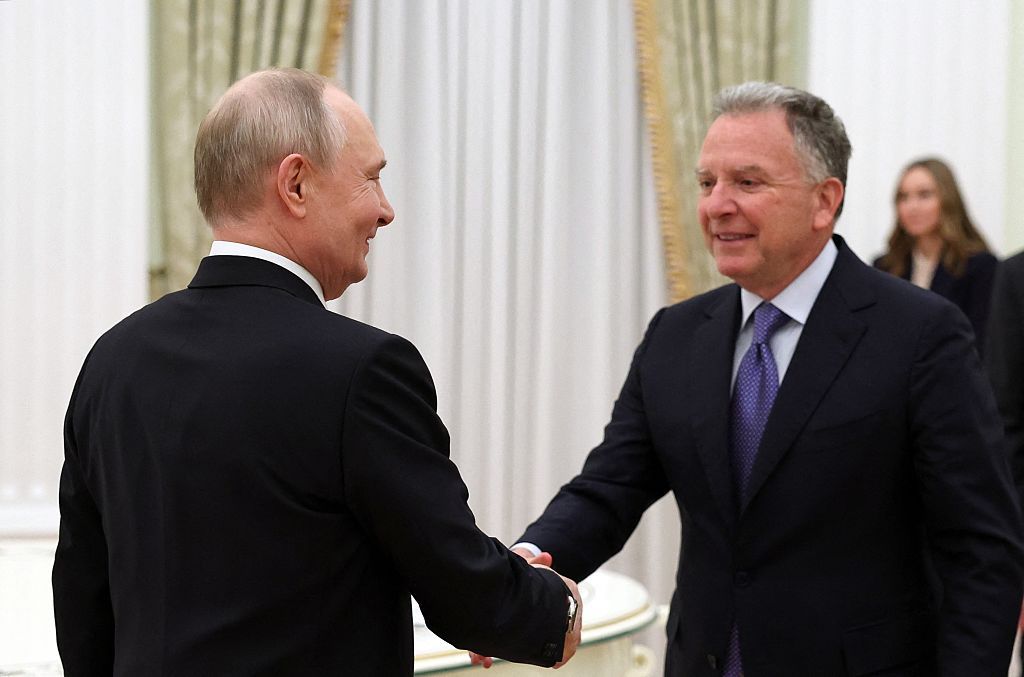
Bloomberg reported that the 20-point-plan was delivered to Putin in early January via Russian envoy Kirill Dmitriev, with Witkoff later visiting Moscow to discuss it directly with him.
The expectation had been that this document would anchor discussions among the three delegations. Lavrov's rejection instead reframed it as a unilateral deviation from what Moscow claims was previously agreed.
The Russian foreign minister also took aim on Feb. 10 at what he described as "some kind of enthusiastic perception of what is happening" around the talks.
"Negotiations are continuing… there is still a long way to go," he said.
His caution stood in sharp contrast to Trump's recent assertion that Ukraine and Russia are "closer than ever before" to a peace deal.
read also
 Martin Fornusek
 Tim Zadorozhnyy
Public hardline, private pragmatism?
The divergence between Moscow's rhetoric and Washington's optimism raises a central question: are U.S. officials hearing something different behind closed doors?
The Kyiv Independent has learned in January that some U.S. officials involved in the talks believe Russian negotiators adopt a more pragmatic tone in private than in public.
"They usually say their maximalist demands, and then they allow their private negotiating teams to work with flexibility," one U.S. official said.
A Ukrainian official familiar with the talks described a narrower U.S. interpretation of progress. Even basic civility at the table can be viewed as positive.
From Kyiv's perspective, that threshold is dangerously low.
Oleksandr Merezhko, head of Ukraine's parliamentary foreign affairs committee, dismissed Lavrov's remarks as "white noise." The real issue, he argued, lies elsewhere.
"There is no point in paying attention to Lavrov's statements. The main thing is Putin's unwillingness to agree not only to a peace deal but even to a ceasefire."
Lavrov himself appears largely sidelined from the direct negotiating track, with Dmitriev playing a more central role. Yet the Kremlin has used Lavrov before to shape narratives at critical moments.
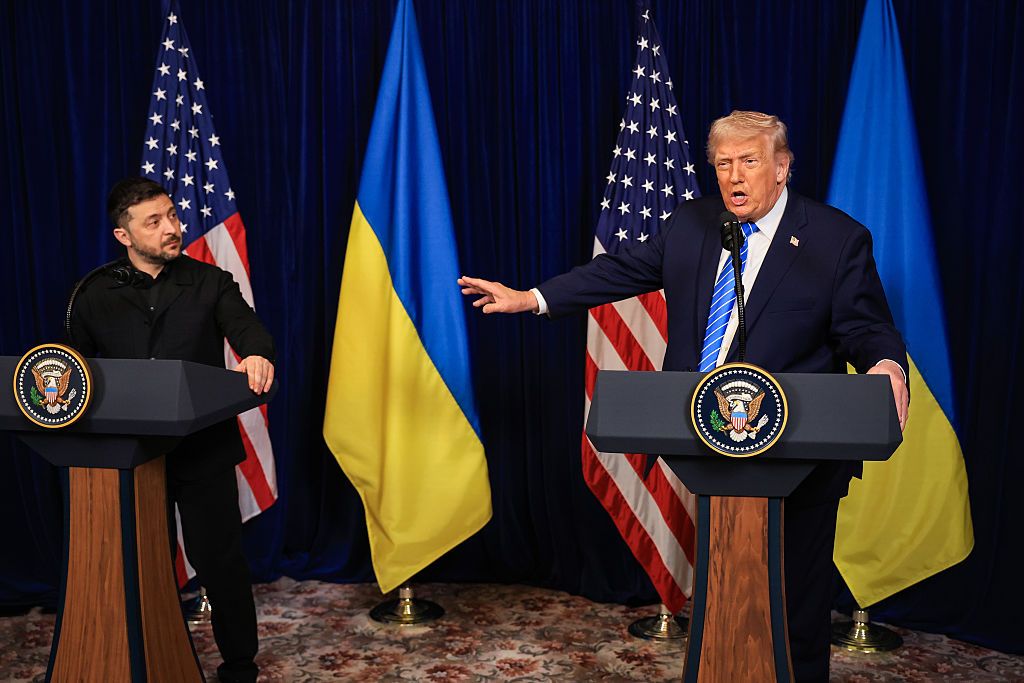
After high-stakes talks in Florida between Zelensky and Trump on Dec. 28, Lavrov accused Ukraine of attempting to strike Putin's residence in Valdai with drones. Trump later dismissed the claim.
This shows how Moscow amplifies hardline messaging when negotiations intensify.
Real Russian demands
While Lavrov manages the diplomatic messaging, other senior figures have reinforced the substance of Moscow's position.
In a Feb. 2 interview, former Russian President Dmitry Medvedev reiterated that Russia's war aims remain fundamentally unchanged.
Known for nuclear threats, Medvedev often draws attention for his tone. Formally, however, he holds roles: deputy head of Russia's Security Council, a deputy on the military-industrial committee, and longtime chair of the ruling United Russia party.
Asked about the conditions under which the Kremlin would agree to end the war, Medvedev pointed directly back to Putin.
"The objectives of the (war) were initially announced by our country's president, Vladimir Putin," he said. "They have remained virtually unchanged since then."
"People often say that 95% or 90% has been agreed upon. There can be no arithmetic calculation here."

The objectives he referenced were laid out by Putin in 2024. He said Russia would agree to a ceasefire only if Ukraine withdrew from Donetsk, Luhansk, Kherson, and Zaporizhzhia oblasts — territories Moscow claims but does not fully control. He also demanded recognition of Crimea as Russian territory.
Lavrov has repeatedly cited that speech, and Medvedev has reaffirmed it.
Some analysts in early 2026 have suggested that Putin's territorial stance may have narrowed from full control of all four regions to securing key areas in Donetsk Oblast.
Yet Putin has never formally retracted his June 2024 terms.
Merezhko believes that Moscow's main goal is Ukraine's capitulation.
"And that's (Putin's) wish, it hasn't changed," he said.
Next round of talks
Against that backdrop, Zelensky said on Feb. 11 that Ukraine accepted a U.S. invitation to hold a new round of talks. Territorial issues are expected to dominate the agenda.
"The American side has proposed a meeting in America, in Miami. And we immediately confirmed it," Zelensky said.
Moscow also confirmed on Feb. 13 that it agreed to participate.
Ukrainian officials have suggested that recent rounds of negotiations — particularly on the Russian side — appear more constructive than before.
"We can see a qualitative change in the composition," Foreign Minister Andrii Sybiha said in January. "The conversations were very focused."
Still, Merezhko said the process amounts to an attempt by Putin to create the appearance of engagement without changing his core position.
"Nothing is changing at all. On the surface, there may be small, cosmetic shifts, but the substance remains the same and will not change."
Donald Jensen, director of Russia and Europe at the United States Institute of Peace, said prospects for a breakthrough remain slim.
"There is little chance the talks will lead to a settlement, largely because the Kremlin has shown no sign it is willing to compromise on its central goal — subjugating Ukraine."
He argued that Russia continues to stretch out negotiations while escalating pressure through attacks on civilians, efforts to fracture Western unity, and a broad disinformation campaign portraying Russian victory as inevitable.
"It is not (inevitable)," he said.
Merezhko believes Trump's initial idea — demanding an unconditional ceasefire as a precondition — offered a clearer path. If Ukraine refused, talks would stop; if Russia refused, sanctions and weapons deliveries would intensify.
"With his initial logic demanding a ceasefire, there would have been some chance for negotiations, for achieving a result," Merezhko said.
"But unfortunately, Trump implicitly but essentially accepted Putin's logic."
read also
Karol Luczka Tim Zadorozhnyy
Author's Note
Hi, this is Tim. The author of this article. Thank you for taking the time to read it. At the Kyiv Independent, we speak to top experts to bring you accurate, in-depth reporting.
We don't have a wealthy owner or political backing. We rely on readers like you to support our work.
If you found this article interesting, consider joining our community today