Romania's pro-EU government falls after no-confidence vote — what happens next?
 on Google
Editor's note: The story has been updated with additional details.
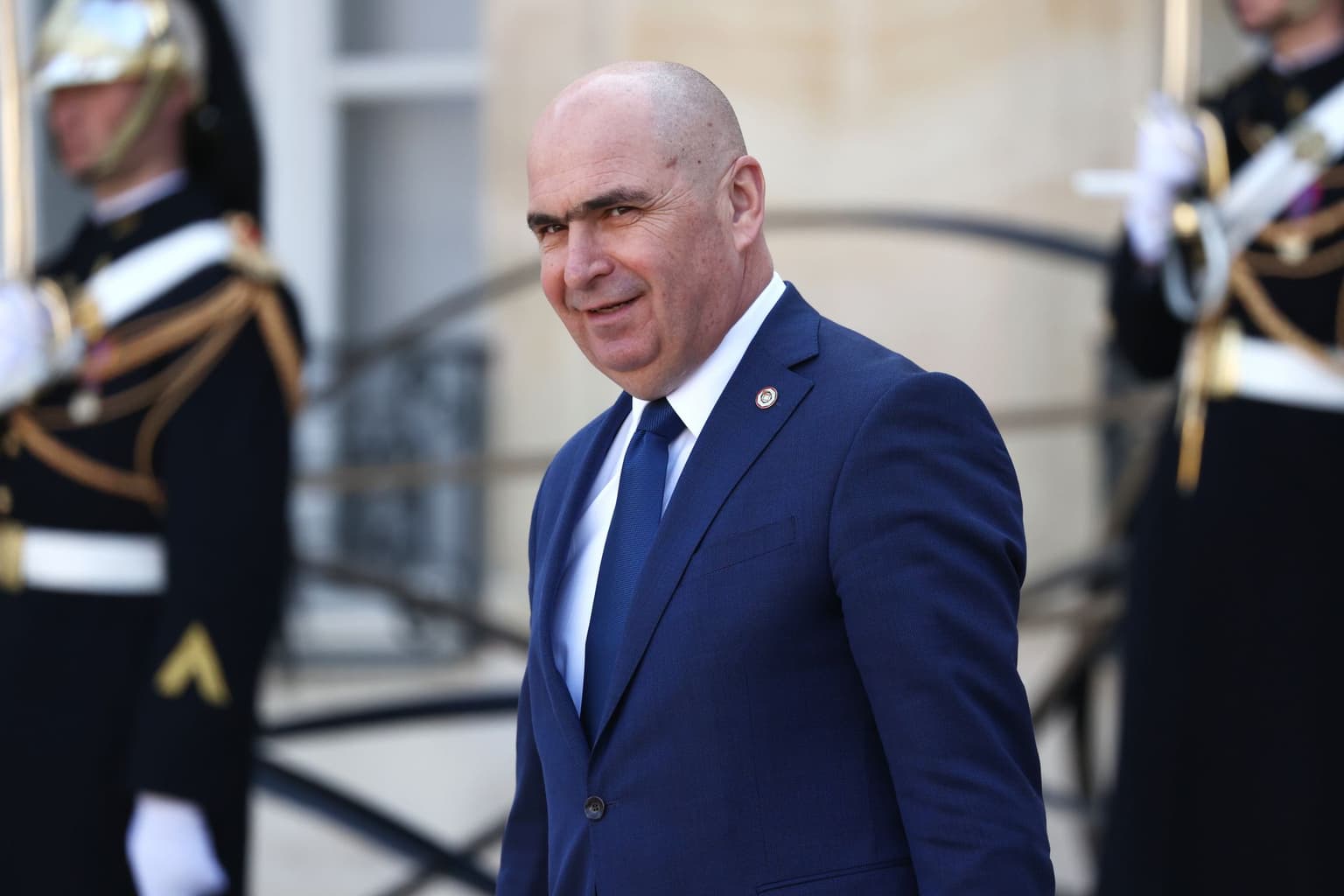
Romania's minority government led by Prime Minister Ilie Bolojan has fallen after losing a confidence vote on May 5, plunging the EU country into political uncertainty.
The motion was initiated by the Social Democrats (PSD), who left the governing coalition last month, and by the far-right Alliance for the Union of Romanians (AUR), led by George Simion, a divisive figure barred from entering Ukraine and Moldova.
The no-confidence vote was backed by 281 lawmakers in Romania's 465-member bicameral parliament. To succeed, the motion required 233 votes.
Bolojan's government will remain in an interim role until a new majority is formed. Romanian President Nicusor Dan is now expected to hold consultations to help broker a new coalition.
The outgoing head of government called the no-confidence motion "cynical and artificial."
"I took on the role of Prime Minister, fully aware that it comes with enormous pressure and that I would not receive applause from citizens. But I chose to do what was urgent and necessary for our country," Bolojan said before the vote.
"Can anyone say how Romania will function from tomorrow. Do you have a plan?"
The development comes as Romania rushes to pass reforms needed to unlock some 11 billion euros ($13 billion) in EU funds, even as the far right surges in the polls.
Simion, the nationalist leader of AUR and an admirer of U.S. President Donald Trump, is a long-time critic of Romania's support for Ukraine amid Russia's all-out invasion.
The football hooligan-turned-politician came second in the Romanian presidential elections in 2025, and his party currently polls around 35%, far ahead of its competitors.
Simion celebrated the government's fall on social media, saying that "the so-called pro-Europeans have delivered nothing but taxes, war, and poverty."
"The voice of the Romanian people was heard today," he said on X.
Bolojan, head of the National Liberal Party (PNL), formed a four-party coalition together with the Social Democrats, the liberal Save Romania Union (USR), and the Hungarian minority party UDMR in June 2025 to keep the far right from power.
The PSD left the cabinet in April due to opposition to unpopular austerity measures, before joining forces with AUR to topple the government — drawing criticism for allying with Euroskeptic nationalists.
Romania, an EU and NATO member bordering Ukraine, has supported the wartorn country since the outbreak of the full-scale invasion in 2022.
Bucharest has been helping Ukraine export agricultural goods amid the Black Sea blockade, supplying equipment such as a Patriot air defense battery, and hosting a base for training Ukrainian F-16 pilots.
Romania has also been directly impacted by Russia's war, with Russian drones repeatedly entering Romanian airspace and crashing on its territory during attacks on Ukraine's Danube ports.
What happens next?
With Bolojan's cabinet ousted, the most likely scenario is a period of "very complicated" negotiations among the four former coalition parties to assemble a majority, according to Sergiu Miscoiu, a political science professor at Babes-Bolyai University in Cluj-Napoca.
The far right will likely remain in opposition, as President Dan has ruled out a government backed by AUR, the expert adds.
The PSD has previously expressed its readiness to negotiate with the other pro-EU parties, but only without Bolojan as prime minister.
"We want to keep the same coalition in place, let's see if there will be any changes. We don't support minority governments, but all options are on the table," Sorin Grindeanu, head of PSD, told reporters.
Any talks will likely be complicated by diverging interests and past animosities — namely, because the Social Democrats joined forces with nationalists against Bolojan.
But the current seat distribution leaves pro-EU parties little room to maneuver if they want to keep nationalists out of government.
Dan's role will be crucial in the process, as the president is responsible for mediating between the factions and appointing a new prime minister.
If the coming weeks do not produce a majority, the president "could try to appoint a majority around the Social Democrats and liberals with maybe... a technocratic prime minister," Miscoiu estimates.
While snap elections cannot be ruled out, it is not a likely scenario.
Pro-EU parties would be averse to holding early elections that would likely boost the far right, and Romania's constitution imposes strict rules on dissolving the parliament, a precondition for the snap vote.
Such a scenario can happen only after two prime minister nominees are rejected by the parliament within a 60-day window — and "that this is very unlikely to happen," Miscoiu notes.