A grim record? Why more Russians are reportedly dying in Ukraine than ever before
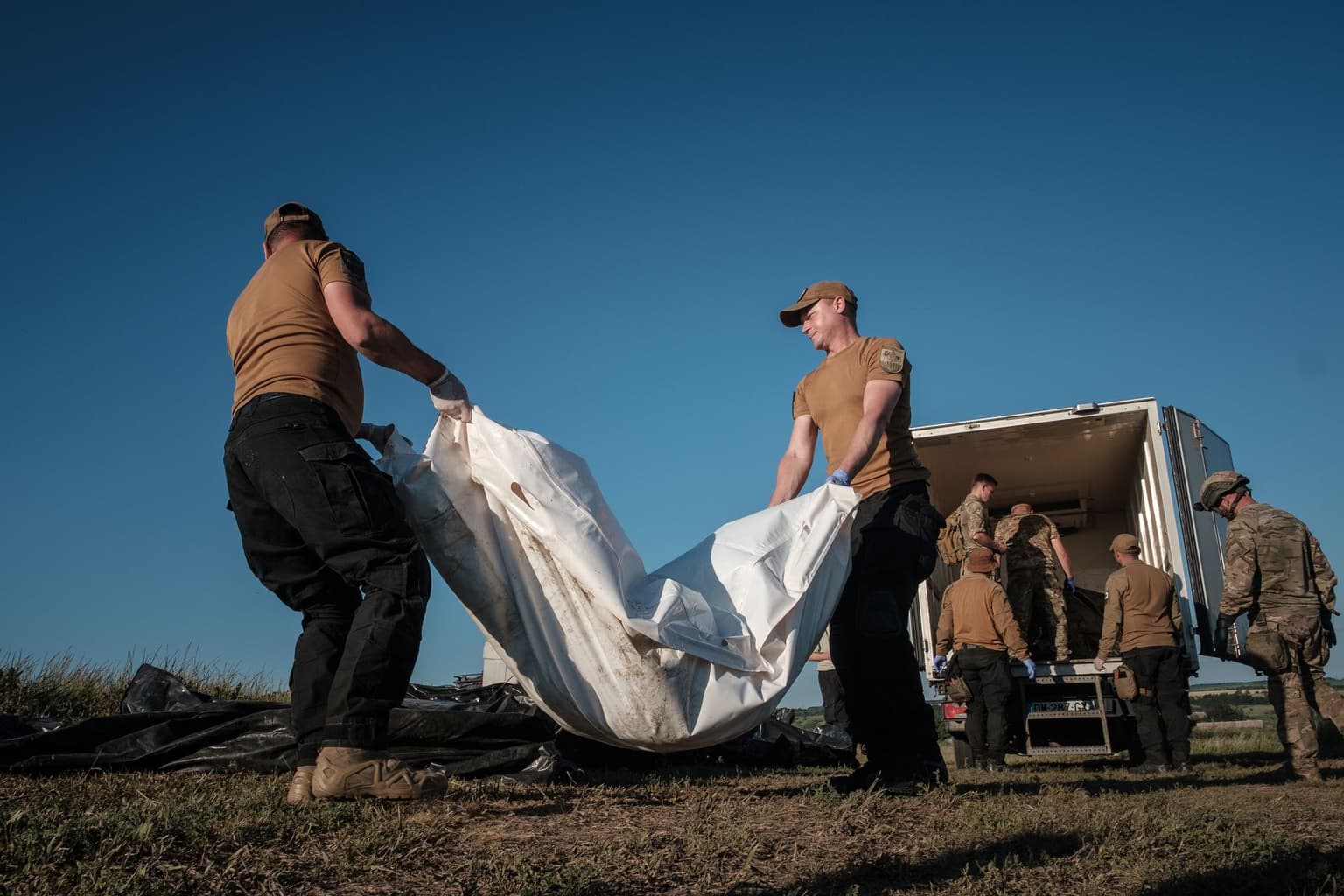
Members of the Black Tulip volunteer organization work to identify the remains of Russian soldiers in Sloviansk, Donetsk Oblast, Ukraine, on June 29, 2024. (Pablo Miranzo/Anadolu/Getty Images)
 on Google
Russian soldiers are now dying at an exceptionally high rate in Ukraine, according to Ukrainian officials, in what could mark one of the deadliest killed-to-wounded ratios seen in modern warfare.
President Volodymyr Zelensky said on March 10 that "out of 100 percent of losses, 62 percent are killed and 38 percent wounded" among Russian forces, citing intelligence assessments reviewed by Ukraine — a ratio of nearly 2:1.
A source in the President's Office familiar with the data told the Kyiv Independent that the shift represents a dramatic change from earlier stages of the war.
"Until 2025, roughly 35% of all Russian losses were lethal losses," the source said, a ratio of 1:2.
According to the source, the recent figures appeared in assessments compiled separately by both the Security Service of Ukraine (SBU) and Ukraine's military intelligence agency (HUR), the country's two largest intelligence services.
The Kyiv Independent could not independently verify the figures, and casualty estimates remain among the most politically sensitive and difficult-to-confirm data points of the war. Russian authorities have not released official casualty figures since the early months of the full-scale invasion.
Independent estimates nonetheless suggest that Russian losses have reached historic levels.
According to a report published by the independent think-tank Center for Strategic and International Studies (CSIS) in January 2026, Russian forces suffered nearly 1.2 million battlefield casualties — including killed, wounded, and missing — between February 2022 and December 2025. CSIS estimated between 275,000 and 325,000 Russian battlefield fatalities over the same period, calling the losses unparalleled for a major power since World War II.

While that gives an overall ratio of 1:3.7 to 1:4.3 throughout the full-scale invasion, it doesn't accurately represent just how much more deadly the battlefield has become in more recent months due to advances in drone technology.
In most modern wars, advances in battlefield medicine and casualty evacuation systems have meant wounded soldiers far outnumber those killed.
Retired Australian Army Major General Mick Ryan said large-scale conventional wars have traditionally produced ratios of roughly one dead soldier for every three to five wounded, or 1:3 to 1:5.
According to Phillips O'Brien, Professor of Strategic Studies and head of the School of International Relations at the University of St Andrews, the conditions on the battlefield in Ukraine may now be reversing a century-long trend, placing the war far outside the historical norms of modern warfare.

A historical precedent
The Iran-Iraq War of the 1980s was one of the closest modern comparison to Russia’s full-scale invasion of Ukraine. Despite being one of the bloodiest wars of the late 20th century, even the highest estimates generally suggest Iranian forces suffered roughly one battlefield death for every three wounded soldiers, a ratio of 1:3.
World War I, which similarly involved entrenched front lines and extensive artillery warfare, resulted in roughly 10 million military dead compared to around 20 million wounded across all theaters of the war, a ratio of 1:2.
Possibly the last major conflict in which battlefield deaths came close to the number of wounded who survived was among Soviet forces during World War II. Precise figures remain heavily disputed due to chaotic wartime record-keeping and decades of Soviet censorship, but estimates combining soldiers killed and missing in action with wounded personnel suggest the ratio may have approached 1:2.
Since then, "the trend seemed to be better military medicine meant soldiers were being saved," O'Brien said. "Now technology has caught up and changed that."
"If the Ukrainians are now killing two Russian soldiers for every one wounded, that would be notable in warfare.," he added. "It does not seem implausible to me because of the accuracy of first-person view (FPV) drones, and the fact that the battlefield makes it very difficult indeed for wounded soldiers to be evacuated."

FPV drones: Higher kill rates, lower chance of rescue
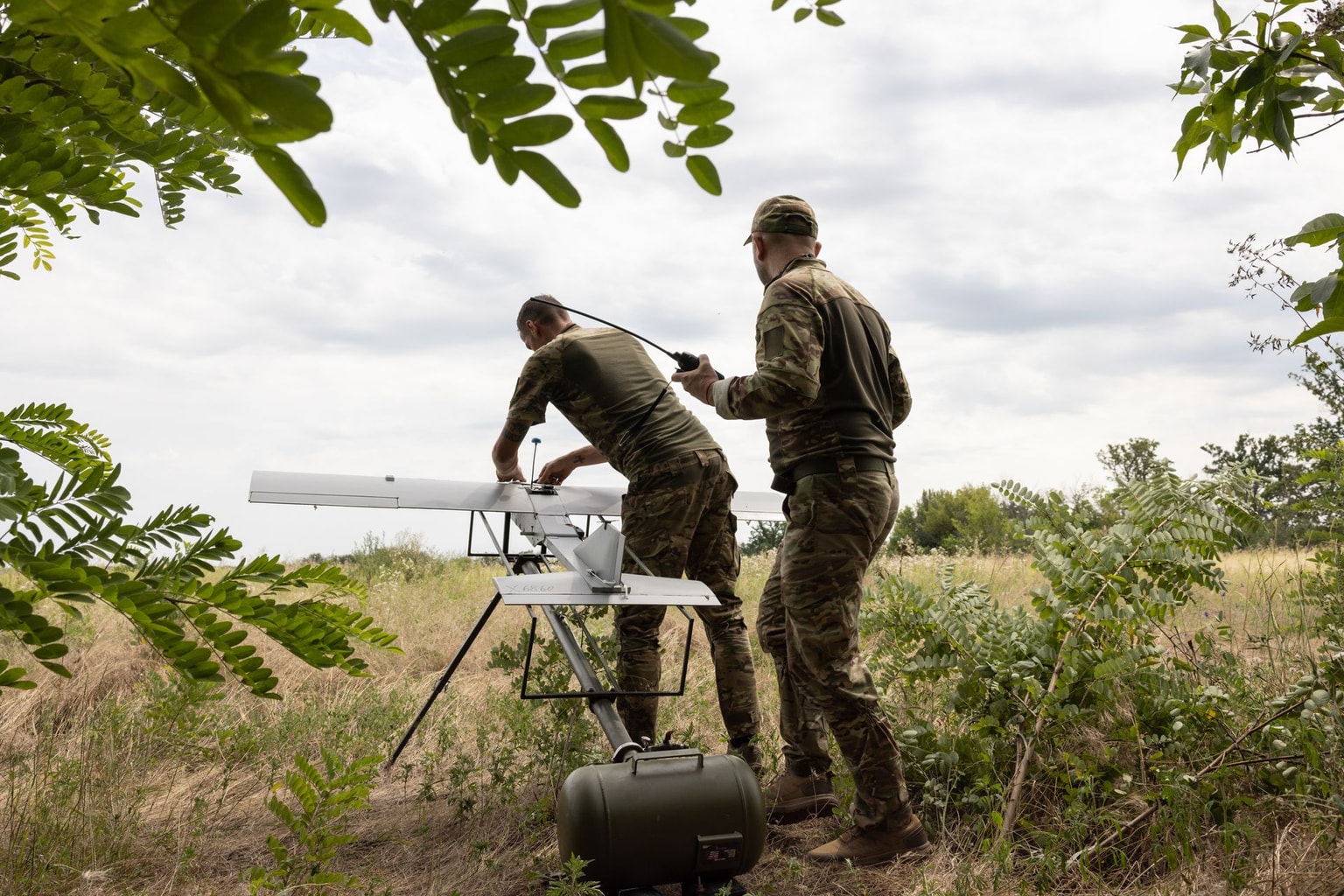
The battlefield in Ukraine is saturated with small first-person-view (FPV) drones loaded with explosives that hunt infantry, vehicles, and even evacuation teams. Wounded soldiers can remain stranded for hours before reaching treatment.
Oleksiy Melnyk, co-director of the Kyiv-based Razumkov Center and a former Ukrainian Defense Ministry official, estimates that drones now account for 70% to 80% of Russian casualties. FPV drones often carry enough explosives to kill a soldier outright, he said.
Robert "Madyar" Brovdi, commander of Ukraine's Unmanned Systems forces, said on May 4 that the Ukrainian military system recorded 156,735 Russian soldiers killed or wounded caused by drones alone between December 2025 and April 2026. According to Brovdi, the figure was verified through Delta, Ukraine's battlefield situational awareness system.
"But even if he is not killed, there is a very low possibility for him to be evacuated and get any medical treatment," Melnyk adds.
In previous wars, ratios of one dead soldier for every three to five wounded were common when evacuation systems functioned effectively. But according to Melnyk, reaching injured soldiers can become "very dangerous and sometimes even impossible", both for Russian and Ukrainian forces under constant drone surveillance.
read also
Disregard for human life and the cost of assault
Russia's continued offensive strategy may also contribute to the unusually high reported death rate.
"Russia seems desperate to take territory," O'Brien said. "There's no way they can do that without pushing human beings forward."
According to O'Brien, Ukraine has increasingly adapted its tactics around the assumption that large concentrations of troops near the front are especially vulnerable under constant drone surveillance.
"What Ukraine is doing seems to me the smart way now," he said. "They're trying to reduce the number of soldiers on the front by simply acknowledging the fact that this battlefield is very deadly."

Rather than relying primarily on large infantry assaults, Ukraine has increasingly used unmanned systems to limit its troops' exposure to enemy fire while continuing to pressure Russian forces and logistics.
Russia, by contrast, continues to conduct repeated assaults across exposed terrain, often forcing its troops to move through areas within range of drones, artillery, and mines.
Melnyk said Russia's casualty ratio may also reflect what he describes as a broader disregard among Russian commanders for the lives of wounded soldiers.
"What we see on the Russian side, again not by our eyes, but we learn from the often very patriotic pro-war military bloggers and Russian soldiers, they always complain that Russian commanders have no value for the lives of Russian soldiers," he said.
"They wouldn't risk evacuating wounded Russian soldiers like the cases we saw in the Gulf War, when Americans sacrificed aircraft and personnel just to rescue one pilot," he adds.
Melnyk explains that Russia's continued offensive posture may itself be worsening battlefield survival rates.
"If you are in a defensive position, you are better protected and have more chances to get medical treatment than someone who is continuously advancing," he explains.
For militaries planning future large-scale offensives, the war in Ukraine hopefully offers a sobering warning — on drone-saturated battlefields, not only are soldiers becoming easier to kill, but attacking forces face a significant disadvantage when evacuating their wounded.
Note from the author:
Hi, this is Polina, the author of this article.
The Kyiv Independent can only bring you analysis like this because of the support of our community of over 29,000 members. If you haven't already, please do consider becoming one and helping support independent journalism in Ukraine.
Thank you!