Meteor missile: The 'long arm' Ukraine's air force has sorely needed
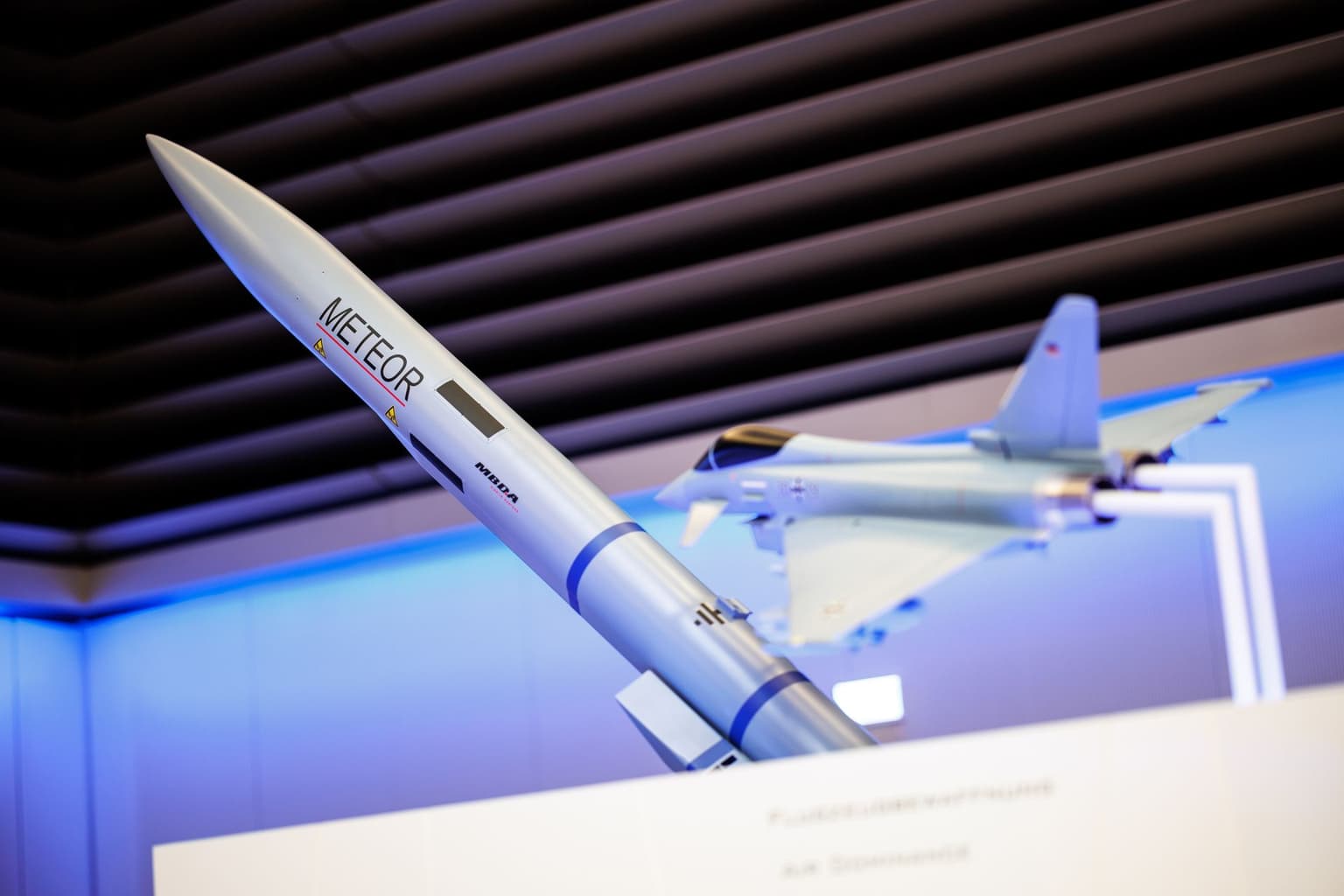
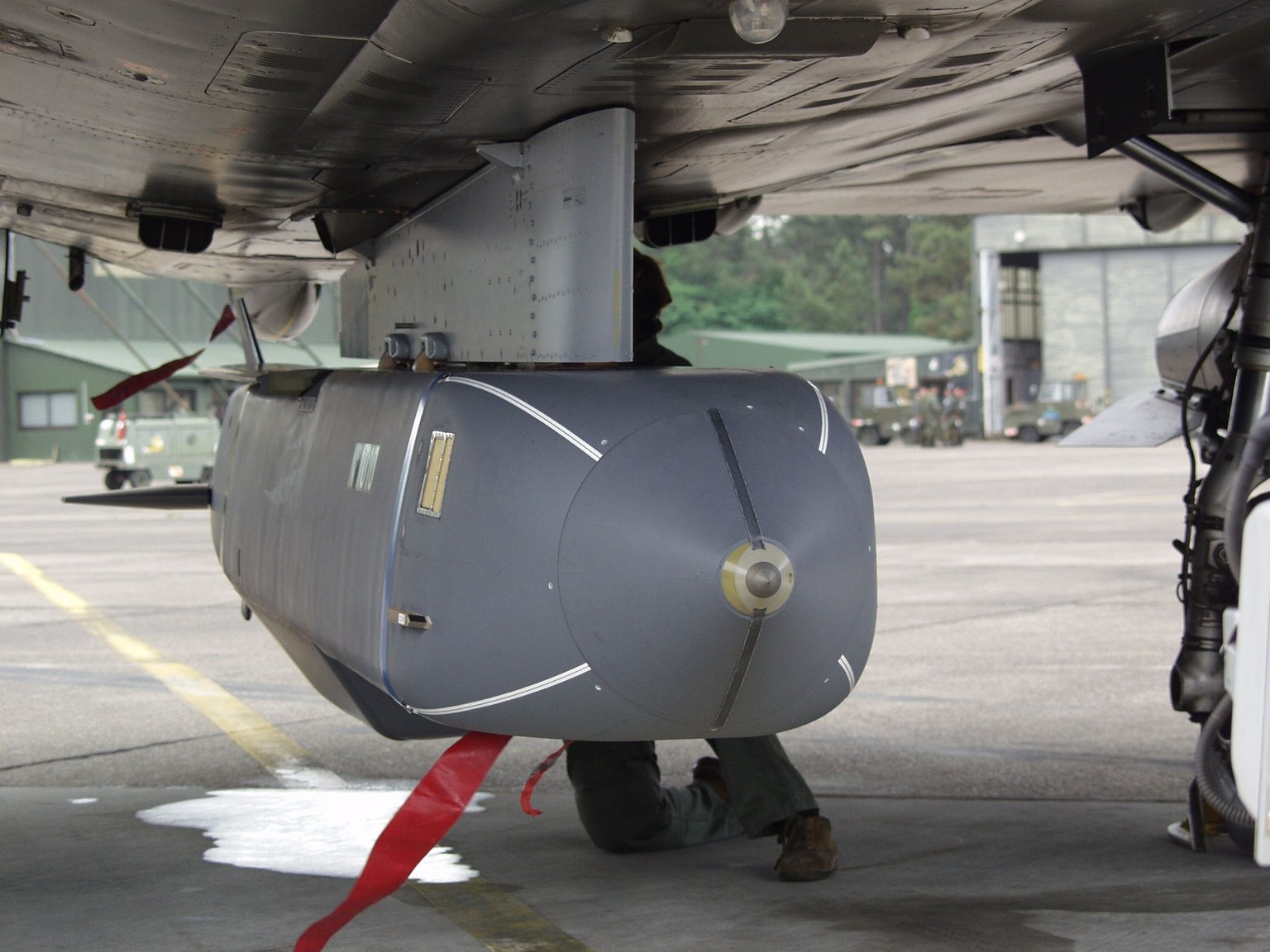
The lettering "MBDA Meteor" is seen on an air-to-air missile next to a model of a fighter jet in a showroom at the European defense company MBDA in Schrobenhausen, Bavaria, Germany, on March 5, 2024. (Matthias Balk / picture alliance / Getty Images)
 on Google
Soon, Ukraine will have a new weapon: Swedish Gripen fighter jets carrying Meteor missiles, which can hit targets farther away than any missile Ukrainian pilots have now.
That extra range could help blunt one of Russia's most destructive weapons by pushing Russian pilots to drop guided bombs from farther behind the front line — shrinking how far those bombs can reach, Ukrainian military aviation expert Andrii Kharuk told the Kyiv Independent.
"Here there are two factors: material, or physical, and psychological," Kharuk said. "The psychological factor is constraining Russian aviation because of the danger, or fear, of being hit. This would force them to move the lines from which they drop guided aerial bombs deeper into their own rear."
Russian Su-34 fighter-bombers have dropped guided aerial bombs, known as KABs, from behind the front line — 40-70 kilometers (25-43 miles) in most cases, with newer variants potentially reaching up to 90 kilometers (56 miles). After release, the bombs deploy wing kits and use satellite guidance to glide toward Ukrainian positions and front-line cities.
In part because of their size and destructive power, glide bombs have become one of Russia’s most effective weapons of the full-scale war. Depending on the model, KAB warheads can range from about 300 kilograms to 1.5 metric tons, enough to destroy multistory buildings, trenches, and dugouts used as defensive positions.
And Russia's use of them has not let up since: In March, Russia dropped 7,987 guided aerial bombs on Ukraine, the highest monthly total since the start of the full-scale invasion, according to Ukraine’s Defense Ministry.
Meteor is the product of a joint European program led by missile maker MBDA, with the U.K., Germany, Italy, France, Spain, and Sweden all part of the collaboration. It is already integrated with Sweden’s Saab JAS 39 Gripen, the French Rafale, and the Eurofighter Typhoon, but not with the F-16, Ukraine’s main Western fighter platform so far, Kharuk said.

Ukraine moved closer to receiving the Gripens this week. Fedorov said on July 1 that a Gripen agreement announced by President Volodymyr Zelensky a day earlier covers 16 newly built Gripen E fighter jets, financed through European Union loans, while Sweden is also expected to begin transferring 16 Gripen C/D aircraft to Ukraine in early 2027. Meteor missiles "could be a key tool against (aircraft that carry) Russian KABs," Fedorov said, adding that Ukraine would receive the missiles together with the Gripens but declining to disclose how many missiles would be delivered.
"The farther from the front line Russian aircraft drop bombs, the shorter the distance into Ukrainian territory those bombs can hit," Kharuk said.
In an article for Aeronaut.media, Kharuk described Meteor as the "long arm" Ukraine's air force has lacked. The missile's effectiveness is in large part due to its ramjet engine, which helps it maintain speed and maneuverability over longer distances than many traditional air-to-air missiles. That maneuverability is in turn enhanced by the missile's two-way data link, which allows it to receive updated target information after launch.
The missile’s exact range is not public, and air-to-air missile range depends on the launch aircraft’s speed, altitude, and the target’s flight path. But Saab operations adviser Jussi Halmetoja, a retired Gripen pilot, has said Meteor can fly 200 kilometers (124 miles) at high speed, Defense News reported.
Kharuk noted that long-range missiles need long-range radar, which is why for Ukraine, the Meteor will likely be most effective when paired with Sweden’s Saab 340 AEW&C aircraft. The aircraft is a flying radar and command-and-control platform that can detect aircraft at long range and help direct fighters toward targets. Sweden included two ASC 890s in its largest military aid package for Ukraine, announced in May 2024 and footage published in March appeared to show one operating over Ukraine.

"We should not forget that any modern weapon is effective only as part of a system: Meteor and Gripen alone are not enough," Kharuk said. "You also need means of detecting targets at long distances that exceed the range of the Gripen’s radar."
Kharuk said Ukraine is expected to receive an initial batch of Meteors from Swedish stocks, so they should arrive quickly, but the quantity will be important. Fedorov declined to disclose how many Meteor missiles Ukraine expects to receive.
At this point, Kharuk said it is hard to predict Russian countermeasures, though he believes they are sure to come. In his view, Russia's full-scale war has repeatedly shown that new weapons can create short-term advantages, but those advantages rarely last unchanged.
"The media always exaggerates," he said. "The Russian-Ukrainian war is characterized by two factors: its long duration and the rapid pace of change. Each new weapon has an effect only for a short period of time, after which the enemy finds countermeasures, and something new has to be invented. Example: HIMARS, which played a huge role in the offensives of 2022, but soon the Russians found a way to jam its guidance system."