Using Christianity for political power is wrong, Mr. Trump
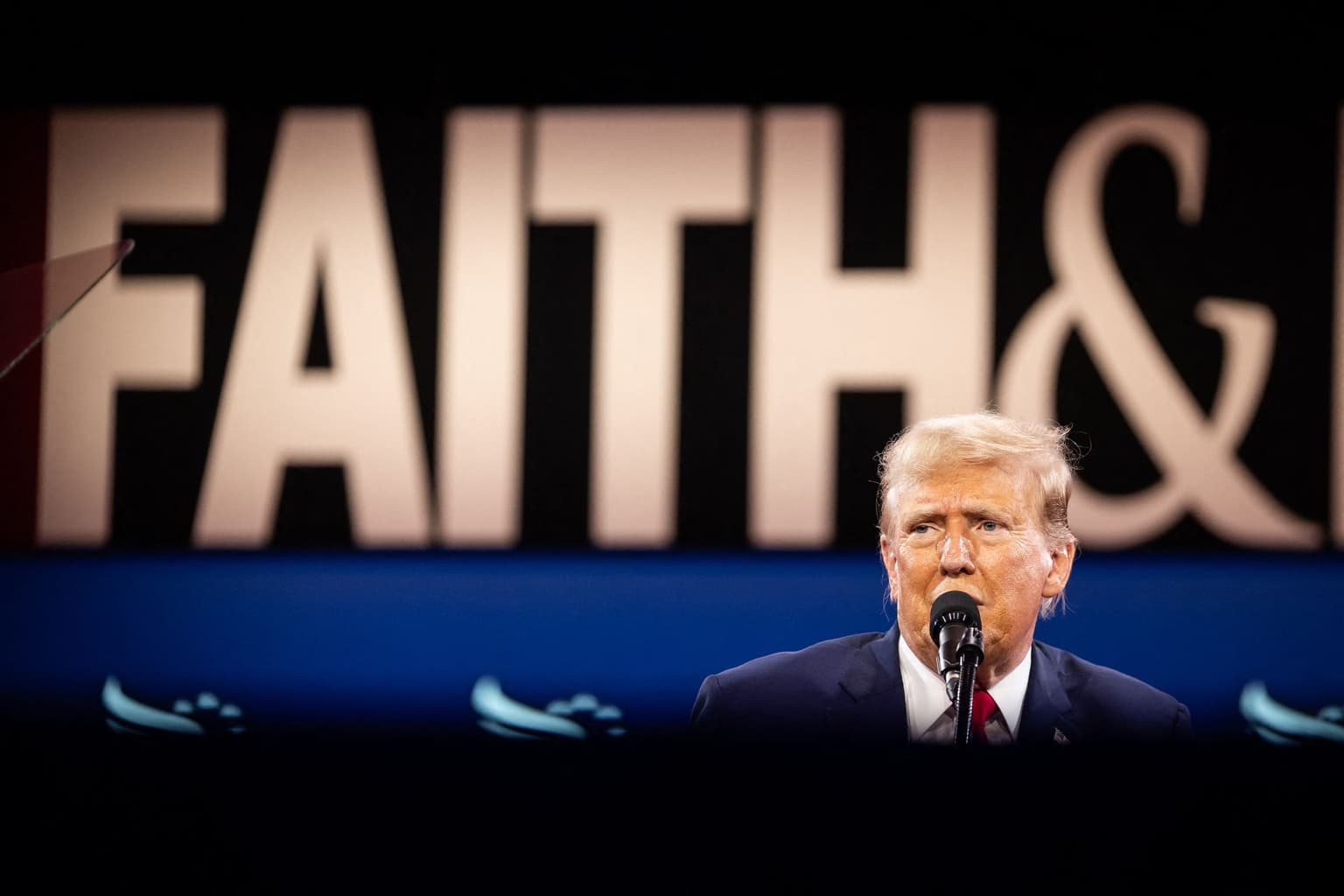
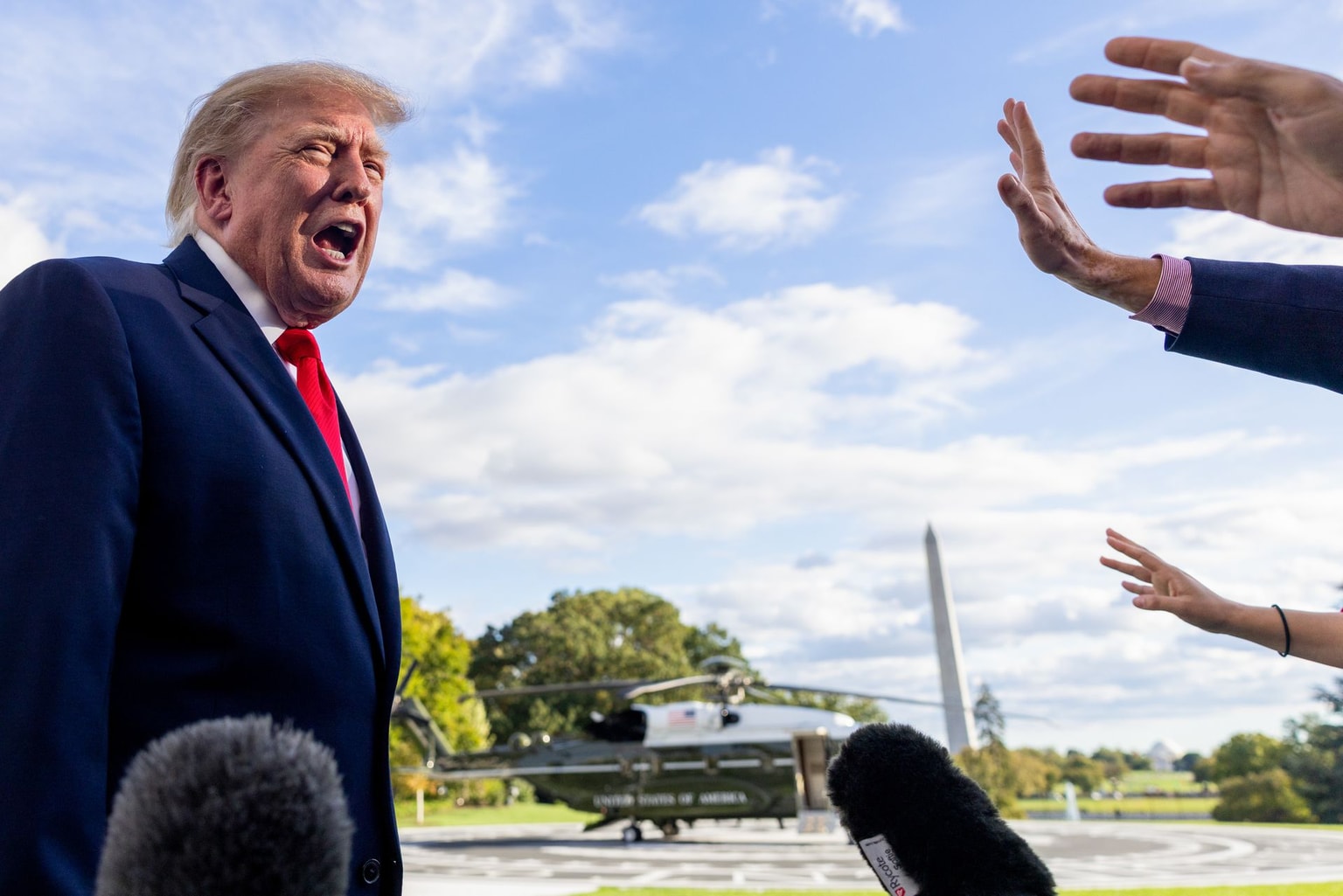
Donald Trump speaks at the annual Road to Majority conference in Washington, DC, June 22, 2024. (Allison Bailey/Middle East Images/AFP via Getty Images)
 on Google
Roman Sheremeta
Chair of the Economics Department at the Weatherhead School of Management
A person recently reached out to me and said that I am too critical of U.S. President Donald Trump and the current administration. As a Christian, they suggested, I should be more uplifting — less negative, more encouraging.
It is difficult to understand this argument. Of course, we live in a time when people are tired, overwhelmed, and often anxious, and it is natural to want words that comfort rather than confront.
But it is precisely because I follow Jesus that I cannot remain silent in the face of moral failure in leadership. Christianity, first and foremost, is a call to truth. And truth is often deeply uncomfortable.
But today, the challenge is not only silence. It is also a distortion. We are increasingly seeing moments where the language of faith is used to elevate political figures and justify the consolidation of power. This is not what Christianity is about — and it never has been.
At a recent Easter event, Donald Trump's personal spiritual adviser compared his personal struggles to the suffering of Jesus Christ, a comparison that many Christians across denominations rightly found deeply troubling. And then, just days later, Trump himself published an AI-generated image depicting himself in the likeness of Christ, only to delete it and claim he had portrayed himself as a doctor. As far as my imagination can stretch, I struggle to picture a doctor draped in white robes.
The use of faith as a political instrument is dangerous, and history gives us ample reason to understand why.
During the rise of Adolf Hitler, many Christians in Germany chose silence — some out of fear, others out of convenience, still others having convinced themselves that staying quiet was the more peaceful, more constructive path. That silence did not preserve anything, but what it did, though, is enabling one of the greatest evils in human history.
But there were also those who refused. Dietrich Bonhoeffer was a pastor who spoke out against the Nazi regime with clarity and at great personal cost, ultimately giving his life for it. He is believed to have said that "silence in the face of evil is itself evil — that not to speak is to speak, and not to act is to act."
These words have outlasted the man because the conditions that demanded them keep returning in new forms.
Some people I know, people who voted for Trump, acknowledge that he sometimes says and does things that are wrong, but they argue that we should not amplify the negativity. People are already stressed, they say, and more criticism only makes things worse.
But criticism is not the same as negativity — it depends entirely on what is being criticized, and why.
When a leader repeatedly makes statements that are demonstrably false, when he uses rhetoric that undermines trust in democratic institutions, and when he then wraps these actions in the visual language of sacred iconography, that is a question of truth. To respond to it is to refuse to look away.
I respect the perspectives of others. But there are moments when I listen to my conscience. I urge everyone to be honest with themselves about what they are actually seeing.
My conscience does not allow me to remain silent when I see actions and rhetoric that undermine truth, justice, or human dignity.
And yet, how we speak matters just as much as whether we speak. My faith calls me to stand for truth with integrity — without profanity, without dehumanizing those with whom I disagree, without forgetting that even political opponents are human beings made with dignity.
I do not always succeed at this. There are moments when I speak too harshly or react too quickly. But I am trying to grow.
Because being uplifting does not mean pretending that everything is fine when it is not. True encouragement is rooted in truth, not in the avoidance of it. Some of the most genuinely uplifting figures in history were also among the most direct. They never tried to inspire people by sparing them from hard things.
Jesus Himself did this. He spoke words of love and hope, but he also spoke hard truths, particularly to those in power and to those who misused it.
So when I am told to be less critical, I reflect. I ask whether I am being fair, whether I am being truthful, and whether I am speaking in a way that actually reflects my values. But I cannot accept that silence is the better path. History has answered that question too many times, and the answer is always the same: silence before wrongdoing only allows it to grow.
That is why I will continue to speak, especially right now.
Editor's note: The opinions expressed in the op-ed section are those of the authors and do not purport to reflect the views of the Kyiv Independent.