Is Ukraine's parliament becoming a problem for Zelensky?
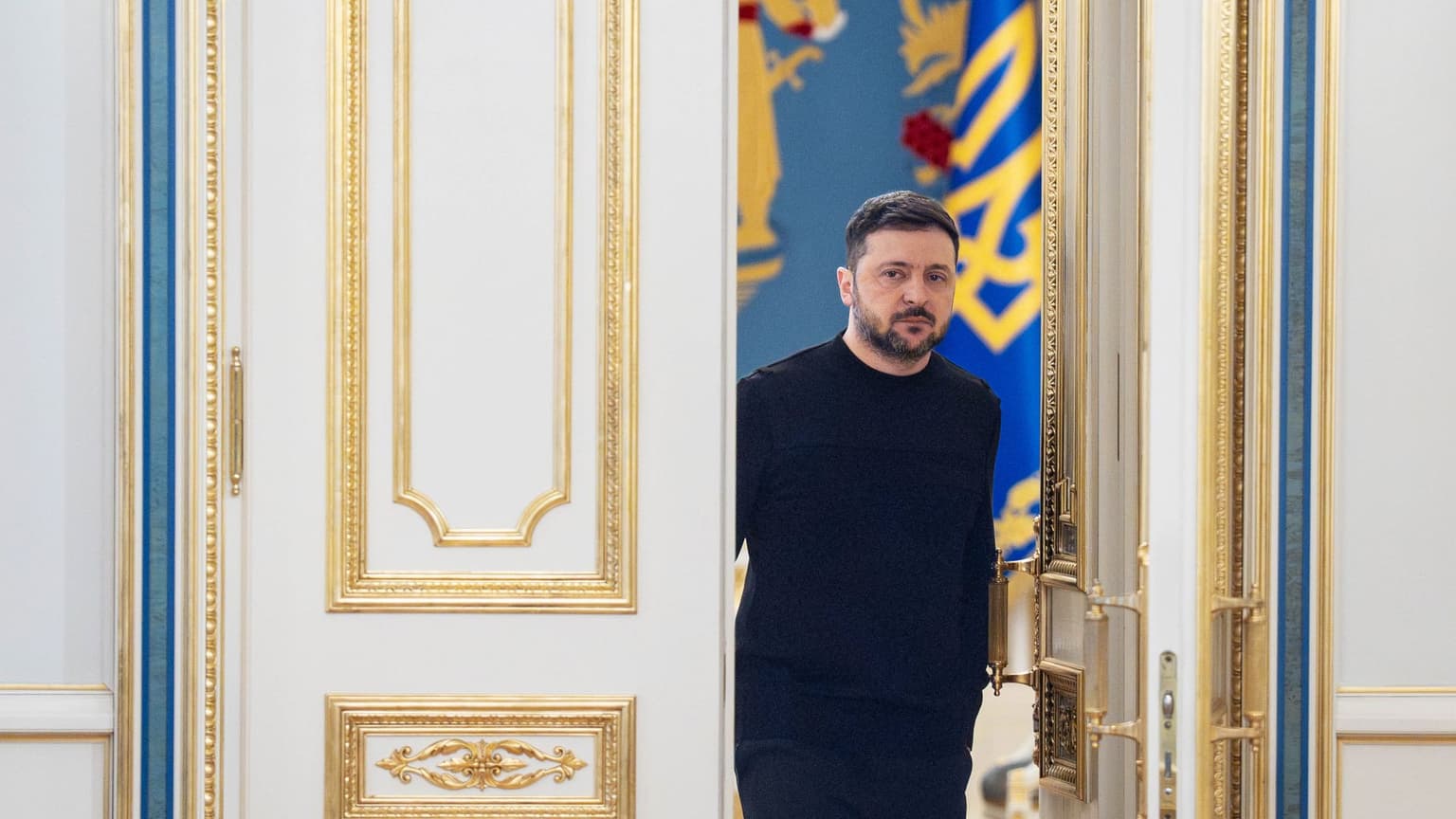
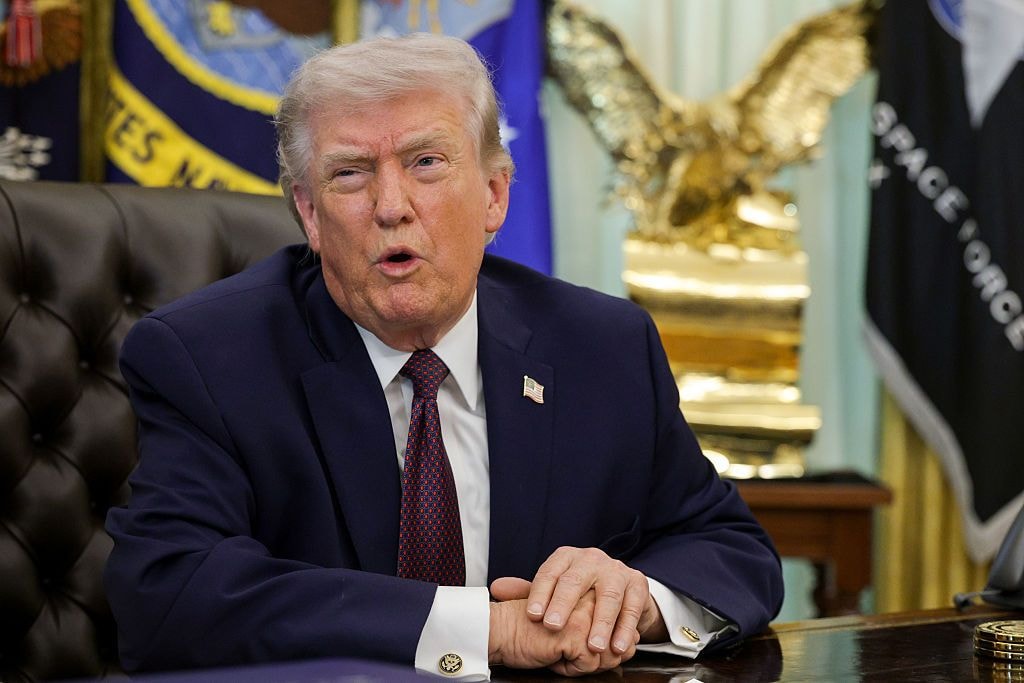
President Volodymyr Zelensky in Kyiv, Ukraine, on Jan. 9, 2026. (Stefan Rousseau / PA Images via Getty Images)
 on Google
Strong opposition and constant brawls have made Ukraine's parliament a staple of the country's thriving democracy. Since the start of the all-out war, however, the parliament has seen its independence, powers, and popularity erode.
Criminal proceedings against lawmakers became routine. Nearly 70 lawmakers have been charged since the last election, according to Oleksandr Salizhenko, editor-in-chief of the political watchdog Chesno. The latest charges have been handed to political veteran Yulia Tymoshenko, leader of the Batkivshchyna party.
Meanwhile, the government party, having a clear majority on paper, has seen lasting challenges in securing votes.
It took two days for the ruling Servant of the People party to appoint two key ministers, with the party providing only around two-thirds of the required votes.
"It’s hard to judge based on a single vote. But one decision by parliament becomes a problem for the President’s Office. (President Volodymyr) Zelensky faced pushback for the first time, and this shows that some lawmakers have grown frustrated with arbitrariness," Volodymyr Ariev, a lawmaker from the opposition European Solidarity party, told the Kyiv Independent.
"There is no crisis (in the parliament), and none is expected in the near future, but tensions are mounting."

Despite Ukraine being a parliamentary-presidential republic on paper, under Zelensky's leadership, power has been increasingly centralized within the President's Office. The ouster of Andriy Yermak, the office’s head, was seen as an opportunity to empower the parliament, granting it greater autonomy and influence.
The sweeping personnel changes in early January, the biggest since the start of the full-scale war, was a moment when the ball was in the parliament's court.
"Right now, we are more waiting for initiatives from the government and the parliamentary faction, so there has been less interference in their affairs," a source in the President's Office told Kyiv Independent days before the January reshuffle.
However, Zelensky later said that parliament failed to propose a candidate for the energy minister position. Any potential replacements were hesitant to take on the role given the ongoing corruption probe in the energy sector, the lawmakers the Kyiv Independent spoke with said.
"The biggest risk for the Servant of the People party right now is staffing issues," Salizhenko told the Kyiv Independent. "The faction's bench has long been exhausted."
Sticking to his usual approach, the president nominated his candidate for the role — Defense Minister Denys Shmyhal. He also picked Mykhailo Fedorov as defense minister.
The president has acted as if the two were appointed, despite it being up to the parliament to confirm the nominations.

To pass a decision, Ukraine's parliament needs at least 226 votes.
Following 2019 parliamentary elections, Zelensky's party held a super majority in parliament — 254 seats. Over time, the party began to struggle to secure enough votes, and after the full-scale invasion, a growing number of lawmakers resigned or left the parliamentary faction.
Despite still holding 229 seats, Servant of the People usually lacks votes to pass laws due to inconsistent attendance. The appointment of lawmaker Dmytro Natalukha as head of Ukraine's State Property Fund and the death of lawmaker Oleksandr Kabanov placed a further strain, with the party now searching for replacements.
Since the start of the all-out war, the president's party has relied on parliament groups tied together by business interests rather than policy, the remnants of the disbanded pro-Russian Opposition Platform party, and, occasionally, on the once-strong Batkivshchyna party to pass the necessary decisions.
Some lawmakers and experts suggest that the remnants of the pro-Russian groups in parliament help Zelensky's party stay afloat by voting for controversial bills in exchange for favors. Tymoshenko's party occasionally aligns with Servant of the People, but audio released by the National Anti-Corruption Bureau on Jan. 14 purported to show her instructing lawmakers not to support the recent ministerial appointments, with the long-term goal of "toppling the majority."
Tymoshenko dismissed the accusations.
Ahead of the Jan. 13 vote, a lawmaker from Zelensky's Servant of the People party expressed optimism about the reshuffles. The vote, however, didn't go as expected.
The lawmaker from the Servant of the People party said that lawmakers have been more relaxed following Yermak's ouster and are not always voting in line with the president's will.
According to them, lawmakers from the faction continue to consider Zelensky's wishes, but this support "is no longer driven by fear."
Following expressed dissatisfaction in parliament, lawmakers failed to gain enough votes on the first try to fill the open government vacancies.
Some lawmakers attributed this to the fact that a few lawmakers had already left parliament, resulting in lower attendance. Others, however, interpreted it as a sign of parliament's resistance to Zelensky.
"I suspect this was a signal that a part of the faction is unhappy about something," a lawmaker from Zelensky's party told the Kyiv Independent on condition of anonymity.
A quarrel took place among the governing lawmakers when they were expected to oust Security Service Head Vasyl Maliuk. Days before the vote, some lawmakers publicly opposed his dismissal, as Zelensky hadn't explained the reasons behind it.

"Many Servant of the People lawmakers have friendly relations with Maliuk. Seeing that he is in his position and that the SBU has performed effectively since the start of the full-scale aggression, the question arises: what is the reason for this, and where is he headed?" Oleksandr Merezhko, lawmaker from Zelensky's party, told the Kyiv Independent.
When asked about the failure to support the president's nominations from the first try, a source in the President's Office said, "We are a parliamentary-presidential republic," with a smirk.
"Let's have (faction Head) David (Arakhamia) solve it."
The appointments were made the next day, on Jan. 14.
Having only four lawmakers above the majority threshold on paper and lacking a majority in practice, the slow decay of the once-powerful legislature has been seen as a troubling sign for the president.
"For Servant of the People, the president, and the Cabinet, the situation will become more complicated, because this will no longer be a monopoly on power, and they will have to formally form a coalition with other political forces," said Salizhenko.
"This leads to a change in the government. Other political forces gain the right to delegate their representatives to the government."
Note from the author:
Hello there! This is Kateryna Denisova, the author of this piece. I hope you found this article informative. Despite Russia's ongoing full-scale war, Ukraine's domestic politics has been back in the spotlight.
Please consider supporting our reporting. We promise to deliver more stories on this topic going forward.
Thank you.