Czechia's new government faces early divisions over Ukraine
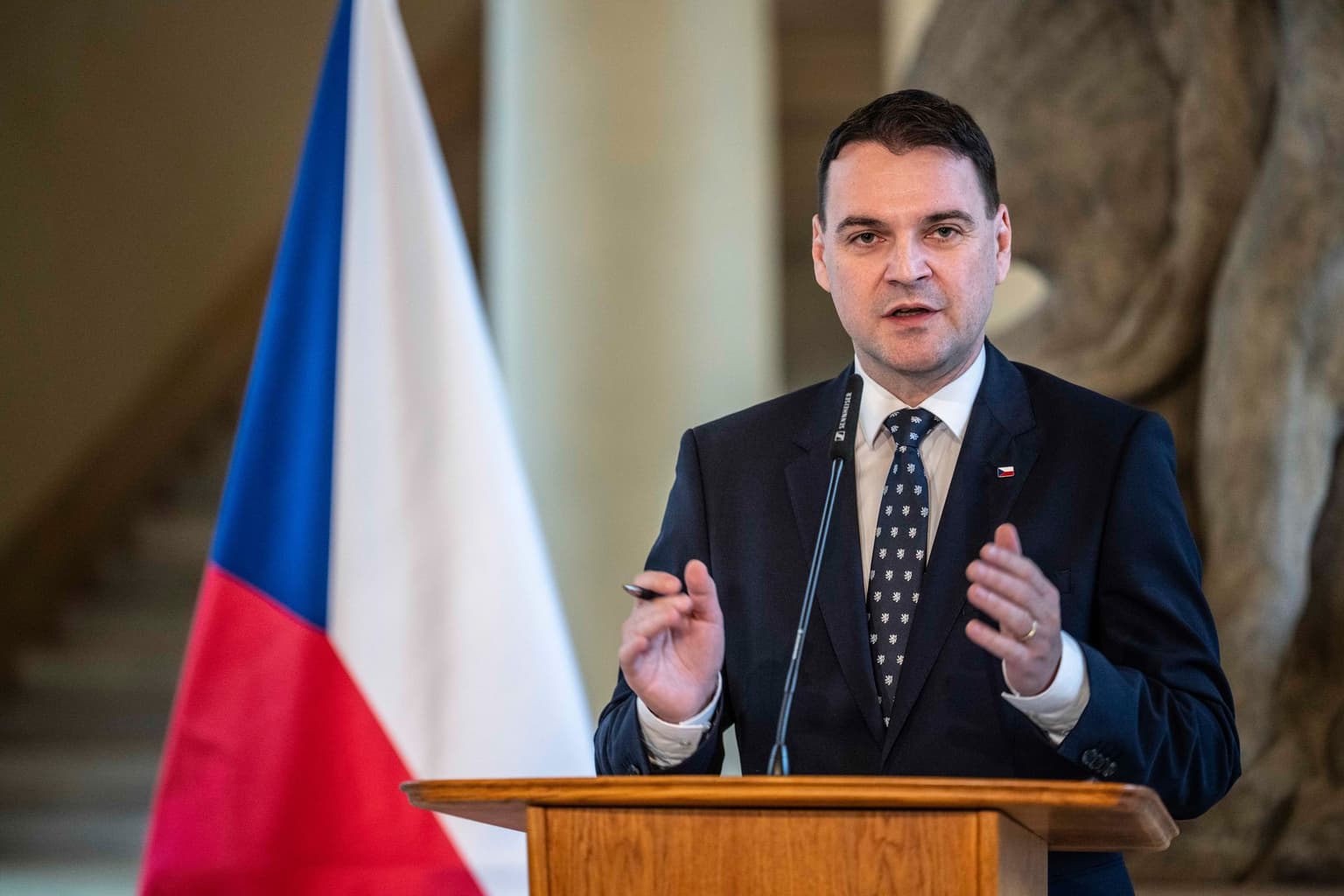
Petr Macinka, the Czech Republic’s foreign affairs minister in Prague, Czech Republic, on Dec. 15, 2025. (Milan Jaros / Bloomberg via Getty Images)
 on Google
Fears that the new Czech populist government would add another brick to the anti-Ukraine camp appear to be premature — at least, for now.
Petr Macinka, Czechia's new foreign minister, who visited Ukraine on Jan. 9 mere hours after a Russian Oreshnik strike, affirmed that the two countries remain allies and that the Czech ammunition initiative will continue.
Yet, the conciliatory messaging is being muddled by more radical members of the new ruling coalition.
The anti-Ukrainian rhetoric of Tomio Okamura, chairman of the Czech parliament's lower chamber and leader of the far-right Freedom and Direct Democracy (SPD) party, arguably surpasses even that of Hungary's Viktor Orban and Slovakia's Robert Fico.
In his New Year address, the Czech far-right politician accused "Ukrainian thieves around (President Volodymyr) Zelensky's junta, who built themselves golden toilets," of siphoning off aid flowing to the war-torn country.

Observers link this foreign policy stunt to diverging interests of the three ruling parties — Prime Minister Andrej Babis's populist ANO party, Macinka's anti-environmentalist Motorists, and the far-right SPD.
Although Czechia's new external strategy is still only taking shape, a split between pragmatists like Macinka and Babis and hardliners like Okamura is already coming into view.
"In the coming months, we can expect Prime Minister Babis, who insists that foreign policy ultimately rests in his hands, to maintain a pragmatic pro-Ukraine, pro-EU and pro-NATO line," says Mila O'Sullivan, a researcher at the Institute of International Relations in Prague.
"Yet this support will be framed through a populist and extractivist lens: what benefits Czechia first, and what aligns with his own political and business interests."
Babis the pragmatist
When Babis's ANO party ousted Petr Fiala's pro-Ukrainian coalition in the October 2025 elections, Ukraine braced for a shake-up in its once-tight partnership with Prague.
However, while Babis initially vowed to cancel Czechia's ammunition initiative for Ukraine — arguably the country's most significant contribution to Ukraine's defense — he shifted his tone closer to the elections.
Finally, during the Coalition of the Willing summit in Paris on Jan. 6, Babis confirmed that the initiative, which supplied Ukraine with 1.8 million rounds last year, would continue and that Czechia would remain its coordinator, albeit not contributing financially.

Even during Fiala's tenure, Czechia has not played a leading role in financing the initiative, as the costs have been primarily covered by European allies. In contrast, Prague's role as a coordinator is difficult to replace due to Czechia's vast contacts in the global defense industry market.
Babis took a similar strategy toward the EU's $100 billion loan to Ukraine — not blocking the vitally important package but refusing any financial obligations on Czechia's part.
With this approach, Babis is upholding his promise to his voters to curb Czech money flows to Ukraine, while quietly allowing international support to continue.
A Ukraine visit under the Oreshnik strike
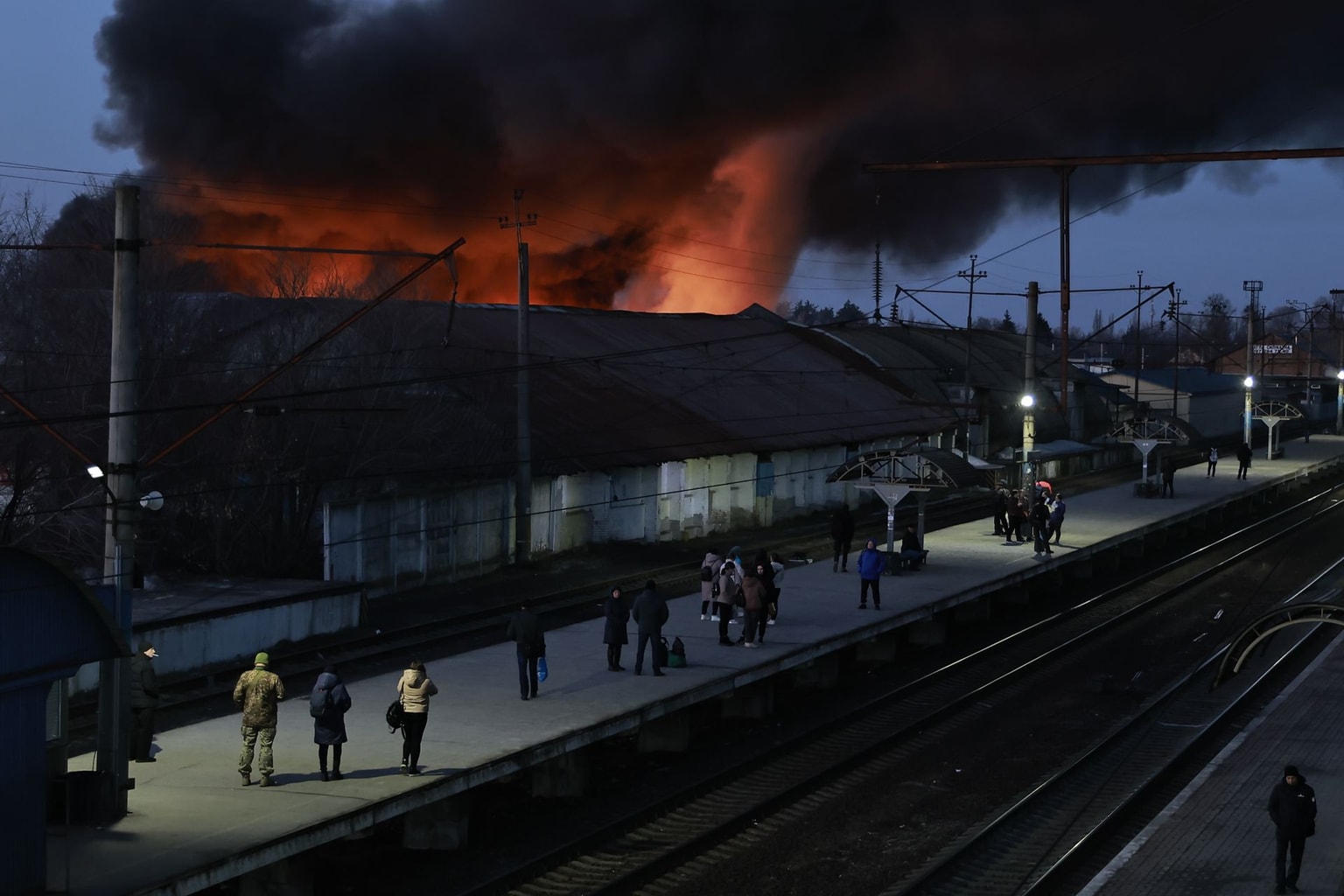
When Macinka visited Kyiv on Jan. 9 — his second foreign official trip since taking office — the capital was just hit with a barrage of Russian drones and missiles that killed at least four people.
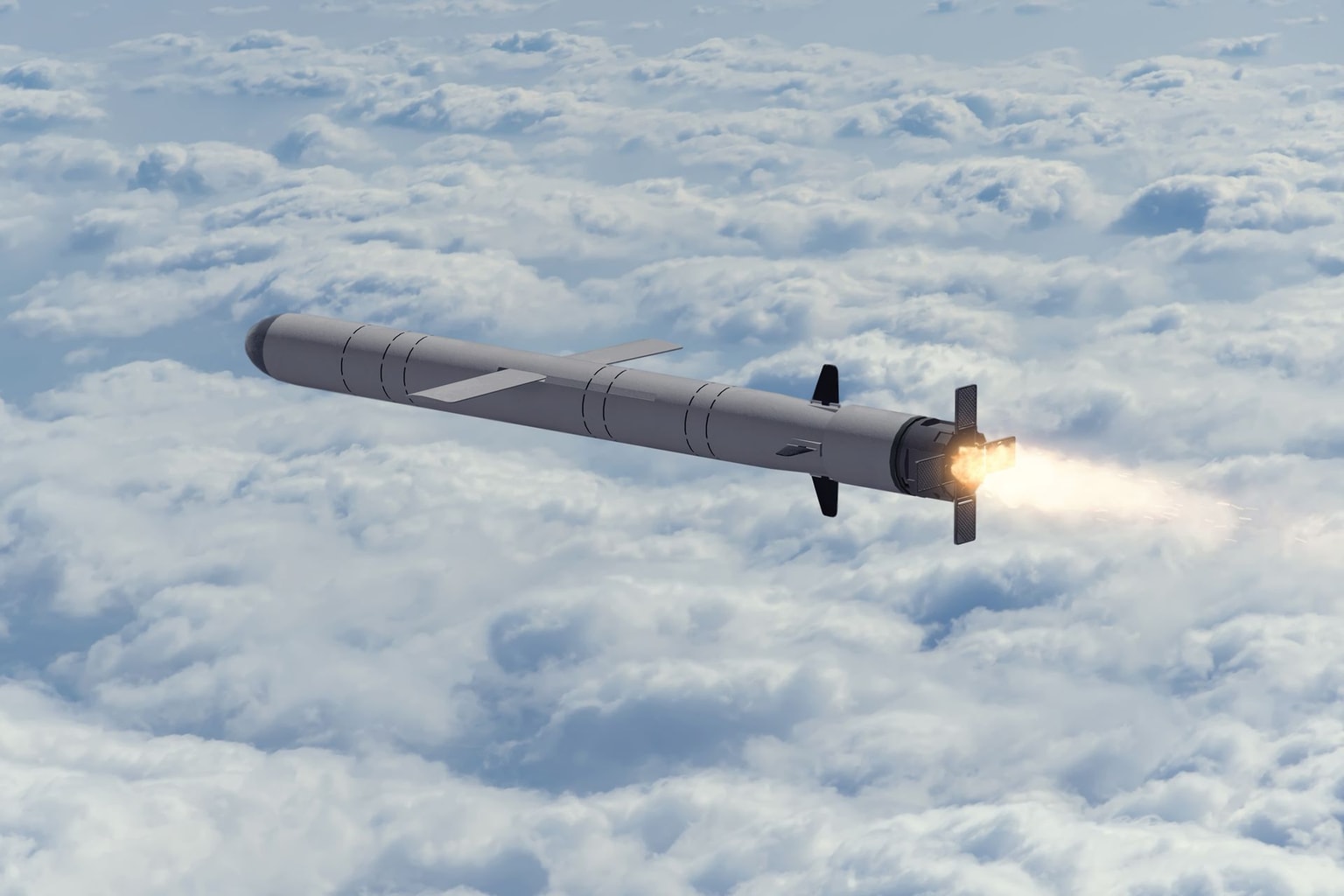
The same night, Russia struck the western city of Lviv with its Oreshnik intermediate-range ballistic missile, the second time the weapon was used against Ukraine.
"I'm absolutely shocked," Macinka said, standing beside Foreign Minister Andrii Sybiha, when shown a residential building struck by a Russian Shahed drone.
Macinka has maintained a friendly tone throughout his visit. At a press conference with his Ukrainian counterpart, he said it is "clear that Ukraine is very interested in peace" and it is "time for Russia to make concessions," while touting a possible cooperation with Ukraine in drone technology.
Furthermore, in a media interview just a few days before the trip, Macinka reaffirmed that Ukraine is Czechia's friend and ally, while only a few "weirdos" among Czechs favor Russia. The latter comment in particular has caused a stir among the far-right wing of Czechia's ruling coalition.

Pavel Havlicek, a research fellow at the Association for International Affairs in Prague, summarizes that Macinka's visit was a positive signal for Czech-Ukrainian relations.
This is despite some controversial statements by Filip Turek, a Motorist lawmaker who accompanied Macinka.
Turek, the party's original pick for foreign minister and later the subject of a scandal over past xenophobic and racist posts, said "NATO expansion" and "ethnic reasons" helped trigger the war in Ukraine, even as he stood before a residential building damaged by Russian strikes.
O'Sullivan agrees that the visit was an "important symbolic signal of continued support for Ukraine," but noted it is yet to be seen "whether Czech backing remains strong in practice" and goes beyond the ammunition initiative.
The positive rapport, she warns, may not last forever.
"We will likely see some more sharpening political rhetoric (from far-right and anti-establishment parties) in the near future, which could possibly destabilize the governing coalition itself," she told the Kyiv Independent.
Internal politics in play
Macinka's visit served as a sort of salve for the diplomatic clash sparked earlier this month by Okamura's New Year's anti-Ukrainian speech.
Vasyl Zvarych, Ukraine's ambassador in Prague, publicly protested Okamura's comments, which led to Macinka chastising the Ukrainian diplomat in turn.
According to Havlicek, these developments are largely driven by internal political concerns of the ruling parties.
"Tomio Okamura did not make the New Year speech out of the blue," the expert believes.
The far-right party has sought to reassure its "pro-Russian electorate" after surprisingly Ukraine-friendly comments of the SPD-backed defense minister, Jaromir Zuna, according to Havlicek.
Zuna, a retired general whom the SPD nominated for the cabinet as a "non-partisan expert," declared openly in December that "Russia is an aggressor" and Czechia will continue supporting Ukraine, forcing Okamura's team to walk back the comments.
Macinka and the Motorists, in turn, are seeking to break away from the Moscow-friendly messaging of the Czech far-right while fishing for a "new electorate," Havlicek concludes.
Babis, on the other hand, has mostly avoided the topic of Ukraine, focusing on EU politics instead, the expert adds.
Czech politics are likely to remain volatile as the new ruling coalition finds its footing, and these dynamics may yet spill over into the country's relations with Ukraine.
However, despite the changes in the government, O'Sullivan reminds that "bottom-up" solidarity with Ukraine persists among the Czechs, including civil society support for Ukrainian refugees and ongoing volunteer donations to Kyiv's struggle.
Note from the author:
Hi, this is Martin Fornusek.
I hope you enjoyed this article. In our team, we believe fact-based and truthful reporting should be available to all – that's why we don't use any paywall.
If you'd like to help us provide you with more in-depth coverage of Ukraine's struggle against Russian aggression, European politics, and other topics, please consider joining the Kyiv Independent community.