The many deaths of Symon Petliura
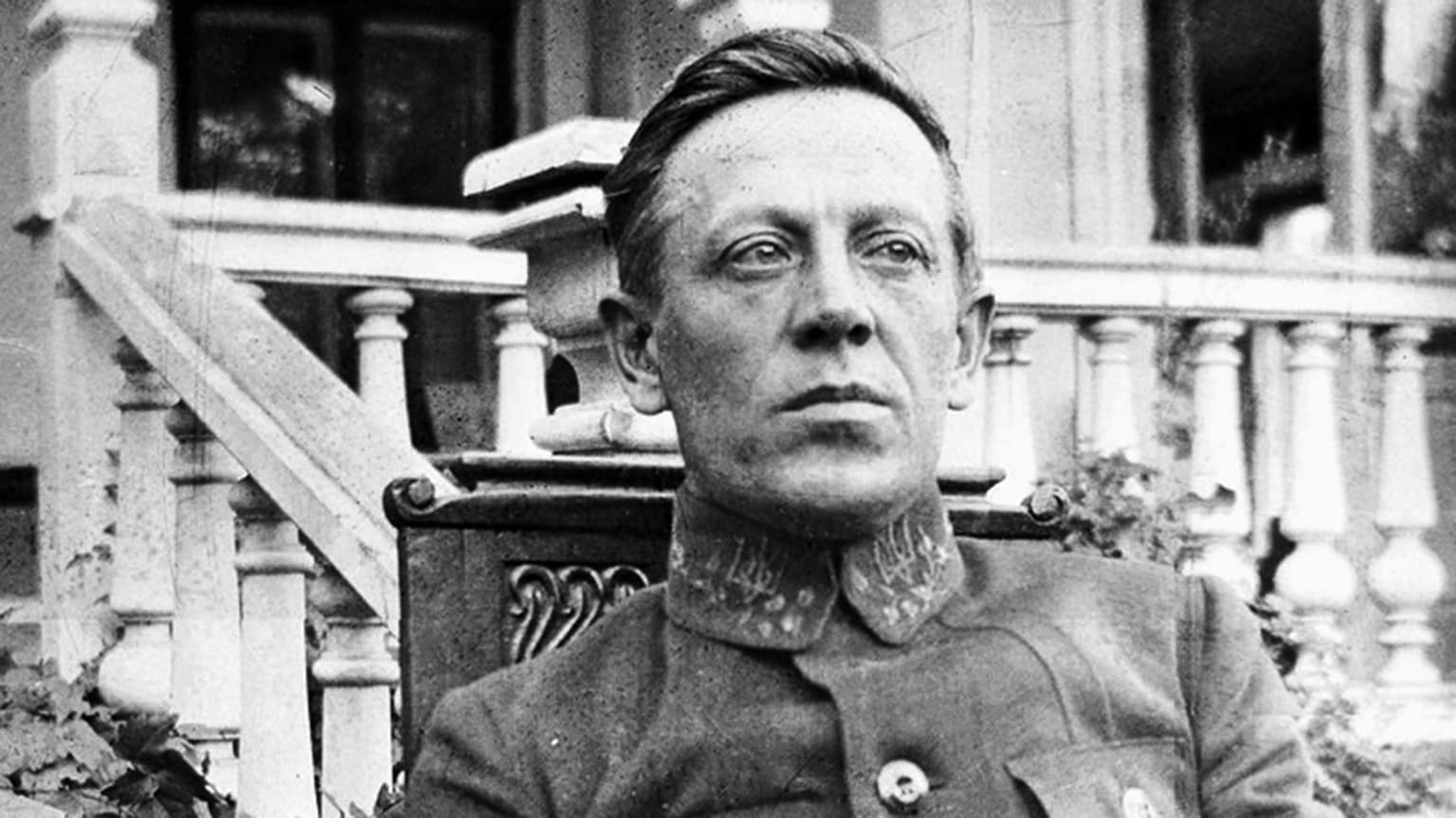
Symon Petliura, supreme commander of the Ukrainian People's Army, in 1919. (Wikimedia)
 on Google
A century ago, on May 25, 1926, an otherwise ordinary afternoon in Paris’ bohemian Latin Quarter was disrupted by a barrage of gunshots, leaving one of Ukraine’s famous military leaders dead in the street.
“I emptied my revolver,” Samuel “Scholem” Schwartzbard, the Jewish-Ukrainian man who killed Symon Petliura, told the court, as quoted by Time magazine in 1927.
“A policeman came up quietly and said: ‘Is that enough?’ I answered: ‘Yes.’ He said: ‘Then give me your revolver.’ I gave him the revolver, saying: ‘I have killed a great assassin.’”
Born in Poltava in 1879 to a family of Cossack descent, Symon Petliura would rise to command Ukraine’s military forces during the country’s war of independence, devoting his life to the cause of Ukrainian statehood. Unlike a number of his contemporaries, Petliura saw that true independence demanded a decisive break from centuries-long Russian influence.
Sign up for our newsletter

Petliura went into exile in 1921 after an alliance with Poland failed to halt a Bolshevik advance. From France, he attempted to lead a government-in-exile and champion Ukrainian culture abroad, recognizing the role of soft power in keeping the cause alive.
A mix of factors led to Petliura’s exile, including infighting within Ukraine’s leadership, as each faction pushed its own vision for the country’s future. Still, even without these internal divisions, historian Yaroslav Hrytsak told the Kyiv Independent, the odds were stacked against Petliura.

“His power was doomed mainly because of geopolitical circumstances. 1919 was virtually a war of all against all. Under such circumstances, the most violent and ruthless power — the Bolsheviks — came ahead,” Hrytsak said.
A century after his assassination, Petliura remains an enigmatic and polarizing figure in Ukraine’s history. It’s a legacy shaped in part by what Hrytsak describes as persistent misconceptions, both in Ukraine and abroad, about his life and leadership.
The label most often attached to Petliura is "antisemite," as Schwartzbard blamed Petliura for the deaths of his family members during the Jewish pogroms.

Between 1918 and 1921, a wave of anti-Jewish pogroms swept through Ukraine that resulted in the deaths of tens of thousands of people, and some of these atrocities were carried out by the Army of the Ukrainian People's Republic during the time when it was under Petliura’s leadership.
Pogroms against Ukraine’s Jewish population during this turbulent period were carried out by the Ukrainian army, the Russian Bolshevik Red Army, the pro-Tsarist White Army, and the Polish army, as well.
While there is documented evidence of Petliura’s attempts to halt the violence committed specifically by certain units of the republic’s forces, historians continue to debate how much authority he tried to wield and how effective he could have been in enforcing these orders.
"I decisively order that all those who will be inciting you to carry out pogroms be expelled from our army and tried as traitors of the Motherland."
“It is time to realize that the world Jewish population…was enslaved and deprived of its national freedom, just like we were,” Petliura wrote in a military order issued in 1919.
“I decisively order that all those who will be inciting you to carry out pogroms be expelled from our army and tried as traitors of the Motherland. Let the courts try them for their actions, without sparing the criminals the severest punishments according to the law.”
Petliura’s alliance with Poland remains another contentious chapter in his legacy. Although Ukraine and Poland also share a long and complicated history, Petliura ultimately saw Russia as the greater threat to Ukrainian statehood.
However, the alliance cost Ukraine parts of its western territory — most notably Galicia and parts of Volhynia — which were ceded to Poland in the aftermath of the failed campaign against the Bolsheviks.
“The truth is that he had a little space for choice — he had to do what he had to and not what he wanted to do. It was a very tough choice — but he did it,” Hrytsak explained.
When facing trial for assassinating Petliura, Schwartzbard’s defense argued that his act was one of personal vengeance, not politics. The defense's approach led to his acquittal. Ukrainians, however, understood that the killing had most likely been orchestrated by Russia.
The committee responsible for overseeing Petliura’s burial publicly rejected the idea that his murder was rooted in conflict between Ukrainians and Jews.
“The enemies of the Ukrainian people, the occupiers of its land, the violators of its will — not a Jewish avenger on behalf of the Jews of Ukraine — directed the murderer’s hand at Symon Petliura," the committee wrote in a public statement.
In late June 1926, the Central Committee of the Ukrainian Socialist Democratic Labor Party — Petliura’s own party — also issued a public statement blaming the Kremlin for his assassination. The committee accused Moscow of deliberately fueling tensions between Ukrainians and Jews and using Schwarzbard as a political tool.
“The Moscow Communists, who rule over the Ukrainian people with iron and blood, sent their hired executioner, who soaked the streets of the world city with the hot blood of a faithful son of Ukraine... Of course, all the killer’s statements about revenge for Jewish pogroms were invented to conceal the real reason for the murder.”
Petliura represented an undeniable threat to Russia. This threat stemmed not only from his unwavering commitment to Ukrainian sovereignty but also from his strategic leadership of the short-lived republic, which stood against adversaries with far superior numbers and resources.

In both 1919 and 1920, Petliura’s forces briefly retook Kyiv from Bolshevik control. While the Ukrainian People's Republic ultimately failed to secure a military victory that would have ensured lasting independence, Petliura’s campaigns made clear that the fight for Ukrainian sovereignty would not be stopped without fierce resistance.
While there is no direct evidence that links Russia to Petliura’s assassination, Hrytsak says that Russian involvement remains one of the most plausible scenarios.
“The relevant documents (that would confirm this) remain in Moscow, but there have been hints from former KGB officers during the Gorbachev-era perestroika that Petliura was one of three nationalist leaders, alongside (Yevhen) Konovalets and (Stepan) Bandera, targeted and killed by the Soviet security services.”