Whither Trump's peace in Ukraine?
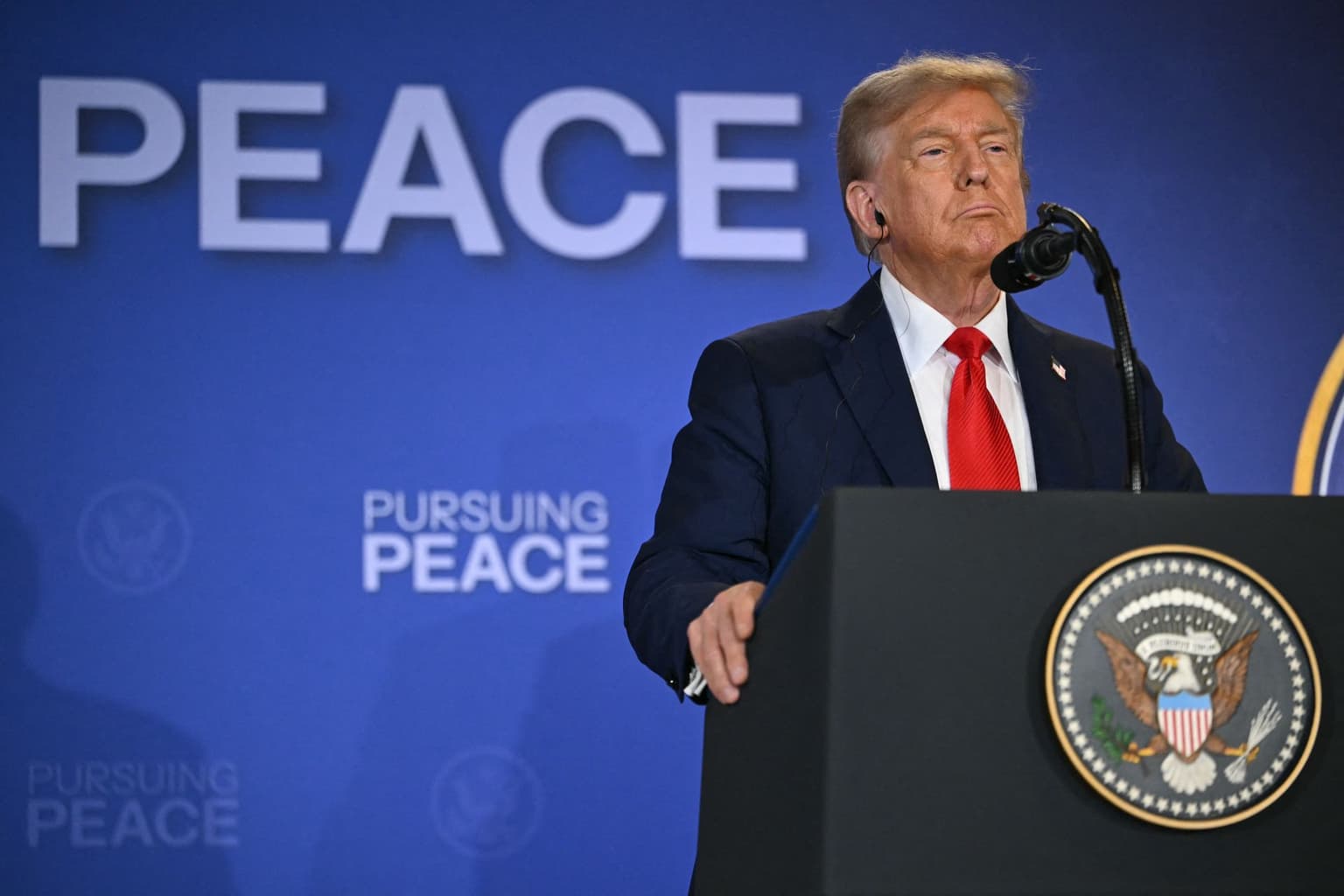
U.S. President Donald Trump listens during a joint press conference with Russian President Vladimir Putin after participating in a US-Russia summit on Ukraine at Joint Base Elmendorf-Richardson in Anchorage, Alaska, on August 15, 2025. (Andrew Caballero-Reynolds / AFP via Getty Images)
 on Google
Edward C. Chow
Non-resident senior associate at the Center for Strategic and International Studies
Since the beginning of this year, President Donald Trump has turned much of his personal attention to foreign policy, from Venezuela to Greenland to Iran. Cuba, Mexico, Canada, South Africa, Nigeria, Syria, and perhaps other countries are also in his sights.
The pace of foreign forays has been frenetic and may be linked peculiarly to the perceived snub by the Nobel Committee over the Peace Prize since Trump claims to have settled eight wars last year.
All along, for a president of the United States to win the Peace Prize again, it would not be because he arranged a temporary cessation of fighting in central Africa or on border skirmishes between Thailand and Cambodia or even between India and Pakistan. It would have to be because that president resolved the most consequential conflict of his day.
Today, that is Russia's war on Ukraine, the one that Trump claimed he would settle in 24 hours during and after the 2024 election campaign. This much more dangerous war Trump has relegated oddly to subordinates, including some with no official standing, to handle.
Another feature of Trump's foreign policy is a fixation on natural resources.
We saw this with the so-called minerals deal with Ukraine last spring, which has not amounted to anything yet. Russian President Vladimir Putin's response was to dangle Russia's own vast resource potential before Trump during their summit last summer in Anchorage, Alaska.
Putin also charges a businessman to represent Russia in negotiations with Trump’s two personal envoys, who are also businessmen with scant diplomatic credentials. Questions of sovereignty and territorial integrity are reduced seemingly to bargaining over assets or land without consideration of the people who live on the land.
This obsession with access to resources is also evidenced by actions in Venezuela and the threatened takeover of Greenland.
The irony is that resource development, by its nature, involves decades-long mega investments that require political stability to proceed. They cannot happen at scale until peace is restored and questions of ownership and a predictable legal regime are resolved.
The pressing question, therefore, is how peace can be restored. The Trump administration's answer has been to put pressure on the victim of aggression and not on the aggressor.
In the case of Ukraine, it is far easier to stimulate investments in agriculture, IT, light manufacturing, retail business, and infrastructure once fighting stops. There are no quick wins in extractive industries. At best, Venezuelan oil production may increase by 20% from its current low level before the end of Trump's term in office. Any significant natural resource development in Ukraine or Russia would take much, much longer after they become "investible."
The pressing question, therefore, is how peace can be restored. The Trump administration's answer has been to put pressure on the victim of aggression and not on the aggressor.
Despite the much-ballyhooed sanctions in October on Rosneft and Lukoil, Russia's two largest oil companies, their production has not been affected, nor has their ability to export oil. (Biden administration's previous sanctions on Russia's third and fourth largest oil companies, Gazpromneft and Surgutneftegaz, also did not impact their operations.)
The only practical result so far is Lukoil's announced sale of its international assets to an American investment firm.
Not much has been done with the Russian shadow fleet either. The U.S. has not increased the number of vessels it sanctions since early January 2025 under the Biden administration, whereas the European Union and the UK have tripled their numbers.
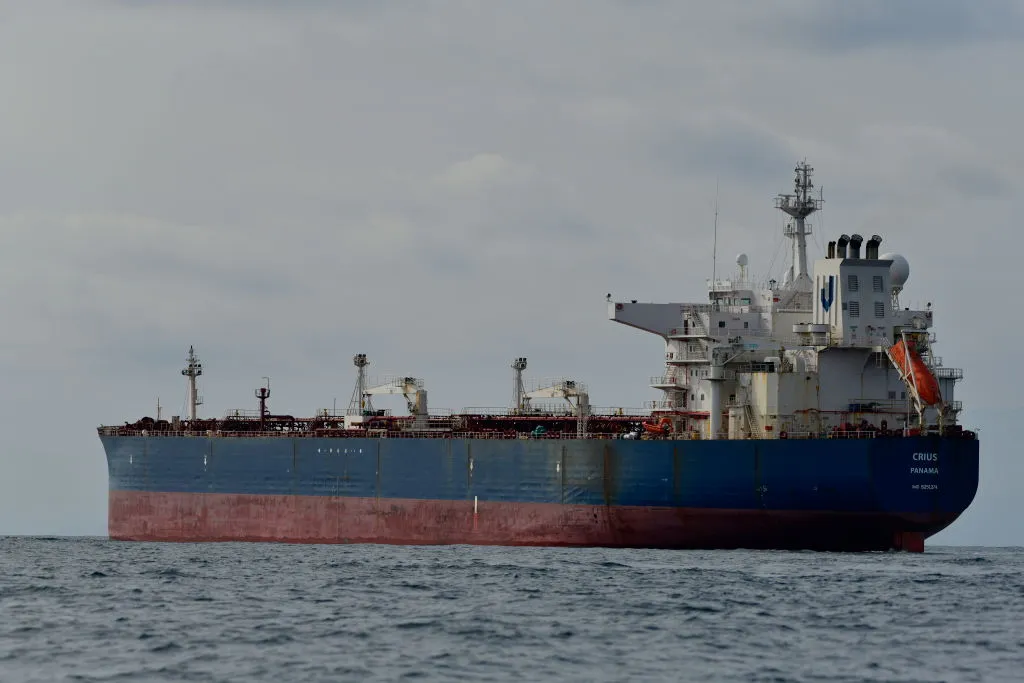
The Trump administration also refused to discuss the lowering of the U.S.-inspired price cap on Russian oil during G-7 discussions last summer. The EU and the U.K. have lowered their price caps twice and are considering a ban on providing shipping and insurance services to all Russian oil exports, regardless of price. There is no sign that the U.S. is talking to allies about doing the same.
America has become a bystander and not a leader in strengthening economic sanctions against Russia over its war on Ukraine.
It should have been clear from the beginning that the only way to end this horrible war is to stop Russia on the battlefield. Incrementally applied sanctions to signal to Russia the economic consequences of its aggression without materially affecting its warfighting capability have failed.
As President Trump said last August, Ukraine cannot just play defense. Yet his administration has paused providing urgently needed weapons directly to Ukraine, funded by billions of dollars that Congress already appropriated, unless European and other allies pay for these weapons.
On Feb. 24, President Trump will make his State of the Union Address to Congress. This date is also the fourth anniversary of Russia's all-out invasion of Ukraine. Peace talks are moving slowly, and at best, they would arrange a temporary ceasefire.
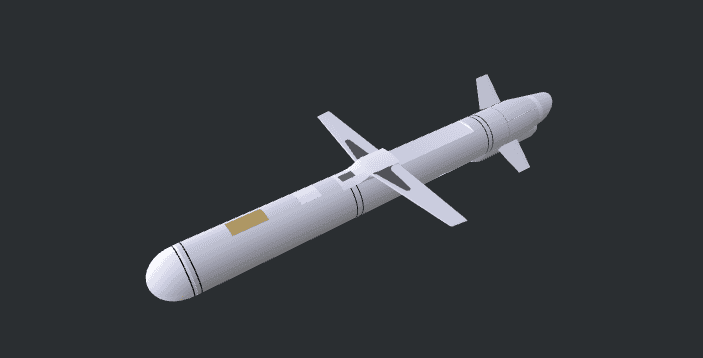
Trump boasted of providing anti-tank Javelin missiles to Ukraine in his first term. Now, he can seize the historical moment by announcing the provision of long-range Tomahawk missiles, which he openly signaled last October, for Ukraine to go on offense as he suggested
Trump can also announce that the U.S. will strictly enforce existing sanctions and persuade America’s friends in the Middle East and Southeast Asia not to serve as trading hubs for Russian oil. Recent discussions in Washington on sanctioning Russian oil, including in Congress, target curiously the buyers, not the sellers and traders.
Most consequentially, the U.S. can work with NATO allies to interdict Russian shadow fleet oil tankers transiting European coastal waters, just as Trump did to Venezuela in blockading its oil exports. So long as Russian oil flows, someone will buy it at an appropriately discounted price.
Russia will sue for peace shortly after such concrete actions by Trump, not by issuing more signals that only prolong the war. Then he would have the major foreign policy victory he covets. Otherwise, Trump's foreign policy legacy will be one of failure in Ukraine, not a peace prize.
Editor's note: The opinions expressed in the op-ed section are those of the authors and do not purport to reflect the views of the Kyiv Independent.