What 30 years in Ukraine taught one of its biggest investors
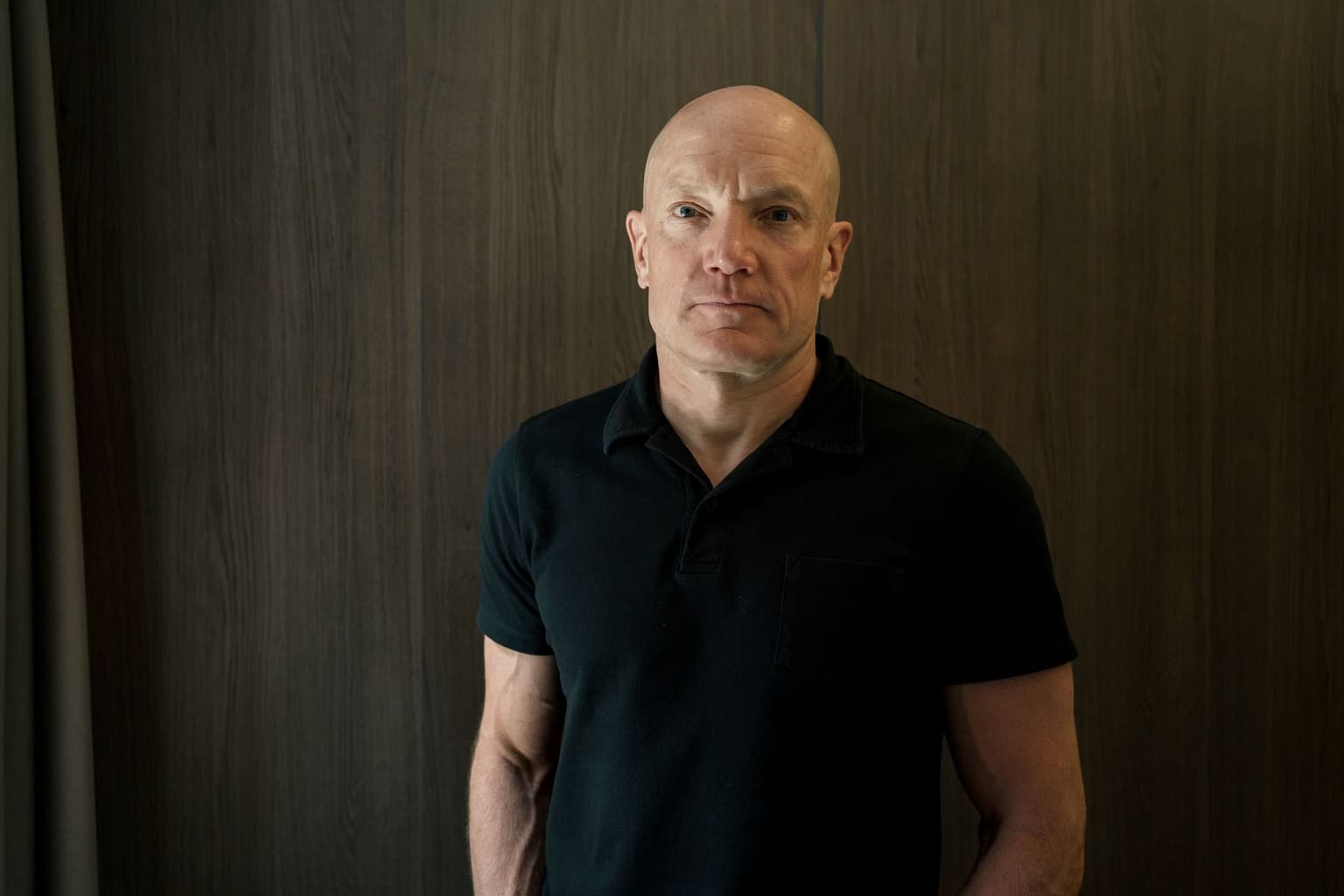
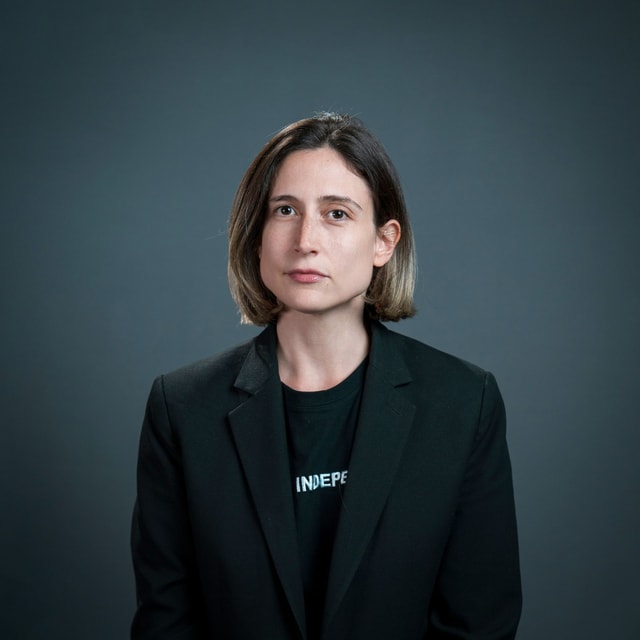
Tomas Fiala, CEO and founder of Dragon Capital, at the company's office in Kyiv, Ukraine on June 15, 2026. (Elena Kalinichenko/The Kyiv Independent)
 on Google
As the Ukrainian business community prepares for its biggest annual event — the Ukraine Recovery Conference, this year taking place in Gdansk — foreign investment in the country is once again set to be a central topic.
Russia’s full-scale invasion has brought unprecedented attention to Ukraine, not only because of the war, but also as the West, particularly Europe, has come to better understand the country and the role it can play in its economy.
That attention, however, has not translated into significant foreign direct investment inflows.
The problem predates the full-scale invasion and has only been compounded by security risks, with rule of law often cited as one of the main concerns deterring foreign investors from Ukraine, according to Tomas Fiala, CEO of Dragon Capital, one of Ukraine’s largest investment firms.
Fiala is marking 30 years of doing business in Ukraine this year. Over those three decades, he has built his business through revolutions, two wars, and periods of political pressure that have at times extended to him personally.
Despite the challenges, he says significant progress has been made in reforms and the broader business environment, with foreign investor interest increasing. While Fiala declined to comment on the specific deal, Dragon Capital recently reportedly sold stakes in seven of its companies to former Google CEO Eric Schmidt and his wife Wendy — a move described as "great news for Ukraine’s investment climate."
Ahead of the conference, the Kyiv Independent sat down with Fiala to discuss foreign investment, staying out of politics, and what needs to happen for Ukraine to become a leading investment destination.
This interview has been edited for length and clarity.
The Kyiv Independent: Many investors express interest in Ukraine, yet relatively few are prepared to commit capital. Setting aside the security situation, what, in your view, is the biggest barrier preventing them from doing so?
Tomas Fiala: Rule of law has been the main bottleneck — not just according to us, but according to annual surveys conducted by the European Business Association and Dragon Capital among international investors already active in Ukraine before the war.
It's also one reason Ukraine attracted roughly four times less foreign direct investment than Poland over the past 30 years, despite having broadly similar starting conditions.
The Kyiv Independent: What about the rule of law specifically holds them back? The judicial system, the courts?
Tomas Fiala: The courts, yes, it's difficult to get a fair judgment in a Ukrainian court. Then there are law enforcement agencies that are used to pressure businesses, whether because someone has influenced them or because they are pursuing their own interests.
The Kyiv Independent: Why do you think that system still exists in Ukraine? Why do you think it's so hard to eradicate it?
Tomas Fiala: Well, it's quite profitable for those who are in charge of the system, or who are part of it, whether it’s judges or law enforcement officers. And there is still a lot of corruption in that system that needs to be eradicated. There have been successful examples of how this can be done since 2015.
From 2015 to 2021, the country made significant progress on the rule of law. It's much safer to invest here today than it was before 2013–2014. But if you benchmark Ukraine against Central European countries like Poland or the Czech Republic, we're still quite a bit behind. The courts, unfortunately, remain a problem.
That forces us to structure as many agreements and relationships with counterparties as possible offshore, in EU jurisdictions, using English law and arbitration outside Ukraine. But you can't do that for everything, right?
"Ukraine has definitely made progress. Glass is half full, I would say."

But there are good examples, such as Prozorro in public procurement. Digitalization has helped as well, because it reduces many interactions with officials by moving them online, leaving less room for corruption.
So there have been a lot of positive developments. Ukraine has definitely made progress. Glass is half full, I would say.
The Kyiv Independent: Despite these challenges, some international investors have been very successful in Ukraine. What lessons can would-be investors learn from their experience?
Tomas Fiala: Most international investors who come here have actually been quite successful as long as they control the business or hold a majority stake. It tends to be very hands-on investors — either strategic investors with 100% control or financial investors. I'd say that's also been our lesson from the 2000s: we had some bad examples or bad experiences when we owned less than 50% of our business. We now only buy majority stakes, either on our own or together with other like-minded international investors.

The Kyiv Independent: Given your view that majority ownership and active involvement are key to success, what does it mean for Ukraine's investment climate that international financial institutions are currently the market's most prominent investors? What has Dragon Capital's experience been with IFIs since the start of the full-scale invasion and what does their growing role tell us about the state of Ukraine's investment market?
Tomas Fiala: Before the full-scale invasion, roughly 90% of the investors in our funds were private investors. Today, it's the opposite: about 90% of our investors are international financial institutions.
The Kyiv Independent: That's a big change.
Tomas Fiala: It's a huge change. We're still in touch with private investors, and they're looking at the market, but they're not ready to pull the trigger until the war is over.
International investors remain active in the Eurobond market. There are more than 100 investors in issuers like MHP, and when we placed a Eurobond with JP Morgan, about 80 funds expressed interest. Ukraine is quite popular among these investors, and the market is open for good Ukrainian issuers. We're also seeing activity on the equity side, with the Kyivstar IPO and likely more to come.

But in private equity and real estate, the picture is different. We've raised three funds since the full-scale invasion, and the investors are basically only IFIs, development finance institutions, and ourselves.
The Kyiv Independent: Right, but these IFI instruments are also meant to signal confidence and bring in private investors — but we haven’t really seen that happen.
Tomas Fiala: Actually, there is one instrument — the European Flagship Fund for the Reconstruction of Ukraine that was announced at the Ukraine Recovery Conference last year and is structured to motivate private investors to come in.
Dragon is committing capital as the first private investor. The fund has now started fundraising and is structured with anchor investor capital in junior shares. These junior shares provide a first-loss guarantee and help de-risk the investment for other investors. The fund aims to mobilize significant private capital for investments in Ukraine.
It’s an opportunity for strong returns with lower risk due to the first-loss cushion, making it attractive for private investors. We see that private investors are interested in this vehicle and are quite optimistic that it will catalyze investment despite the war.
Also, from a commercial perspective, valuations are lower now than they will be after the war, so you can deploy capital at lower valuations. There's also less competition right now.
It's an opportunity for investors to consolidate the market and support strong players increasing their market share.
The Kyiv Independent: What sectors will these IFI-backed funds invest into?
Tomas Fiala: Thirty-five percent of the funds will be allocated to private equity, while 65% will target infrastructure projects, particularly in energy, transport and digital infrastructure.
On the private equity side, we see opportunities across sectors critical to Ukraine's resilience and recovery, including consumer goods and services, healthcare, financial services, agriculture-related sectors, building materials, retail and technology. Infrastructure investments will focus on projects that will help to stabilize emergency energy supply, strengthen digital infrastructure and services, ease bottlenecks in transport and logistics, and modernize critical infrastructure.
While the funds themselves exclude military technologies, we at Dragon Capital have started looking at defense tech through a dedicated team investing from our own balance sheet.
This reflects the rapid development of the sector and the growing interest from international investors. The companies are also becoming more investment-ready, while Ukrainian-produced and battlefield-tested defense technologies are among the best in the world in terms of both performance and cost efficiency.
The Kyiv Independent: Speaking of the Ukrainian government — you’ve been here for decades, almost 30 years. It’s hard to imagine anyone operating at your level in Ukraine without coming into contact with politics in some way. How have you navigated both the political events over the years and the pressure you've experienced as the owner of two independent media outlets, Ukrainska Pravda and NV?
Tomas Fiala: We have always tried to stay away from politics and government as far as possible and invest in sectors where the government role is minimal. So until recently, we would not invest in energy, large privatizations, heavy industries, or regulated sectors. We focused on free competition sectors.
There are two exceptions. One is banking, which is regulated, but after 2015 the National Bank became a very strong institution, so we don’t have issues there — it is transparent and works well, similar to neighboring EU countries. That’s one reason we invested there.
The other is energy, where we started investing a little over a year ago because of the war. We would not have done so otherwise, but 75% of generating capacity was destroyed, and Ukraine became connected to the EU market, making it more transparent and predictable over time. The government has also done a lot of deregulation to attract private capital.
The Kyiv Independent: But despite staying out of politics and focusing on sectors less tied to the government, you’ve still become the target of attention from the current presidential administration.
Tomas Fiala: "Veronika Feng Shui." She "dispatched all her forces against me."
The Kyiv Independent: Yes — what did you think when you found out you were on (former presidential head) Andriy Yermak's list of people he had sent to this alleged psychic to put a curse on you?
Tomas Fiala: I just laughed. I found out about it when it was read in court.

The Kyiv Independent: But on a serious note, why do you think that the head of the president's office would send your name to a psychic?
Tomas Fiala: Because I own media.
The Kyiv Independent: Is it just because you own media — UP and NV — or do you think there’s a broader reason behind it?
Tomas Fiala: I think it’s 100% that. I’m not sure what else it could be. It’s really just about shutting up the media.
The Kyiv Independent: Do you still stand by your decision to buy and invest in UP and NV?
Tomas Fiala: Yes, it's what the country needs. I’ve been here for 30 years doing business, and it’s in my interest — as a person and a businessman — to help bring Ukraine westwards and make it a European country. I would never want to live in a totalitarian or non-democratic country. I was born in Czechoslovakia under a totalitarian system and lived there for the first 15 years of my life, so I’m very grateful that changed in 1989. I would never want to live in a non-democratic country again.
The Kyiv Independent: So it's worth the headaches.
Tomas Fiala: Yeah, to have a clear conscience — you can’t just stand by. I was also president of the EBA, on the board of Transparency International here for four years, and I founded the Center for Economic Strategy, where I’m still chairman. I also donated the building to the Kyiv School of Economics and serve on its board.
"Our business has always been about making Ukraine more understandable to international investors."
The idea has been to use some of the money generated by business to support freedom of speech and independent media, which is very important in a system where media was previously controlled by oligarchs or Russians. After the revolution in 2014, the goal was to expand the space for independent media and have some impact that way.
The Kyiv Independent: Did bringing in the Dutch media investor into Ukrainska Pravda last year help at all with the pressure?
Tomas Fiala: Yeah, it's also important to bring in external know-how. We now have a European fund on the board, and also the former CEO of a major Belgian media company and the former CFO of Agora, the biggest media company in Poland, so they bring a lot of experience.
It’s also important to show both the authorities and the readers and advertisers that this media is not a toy to be used the way oligarchs used media before. There have been attempts by politicians to influence the media. However, I do not have control over the editorial side, and I can’t share ownership in a way that would change that.
The Kyiv Independent: It also sounds like one of your roles is bringing in Western partners, Western money, Western know-how.
Tomas Fiala: Our business has always been about making Ukraine more understandable to international investors.
The Kyiv Independent: And for more international investors to come — for Ukraine to become the investment capital of Europe, what has to happen?
Tomas Fiala: Ukraine has to bite the bullet and push through unpopular market reforms. It's not like it has to reinvent the wheel — the European Union has laid out exactly what needs to happen, but it's about political will. From where I'm standing, you want these changes to be revolutionary, but they've been quite evolutionary.
Author's note:
Hi there, this is Liliane — thank you for reading this interview, I hope you found it interesting! Investing in Ukraine is a difficult topic, with revolutions and wars disrupting the country's economic potential and investment prospects. Despite the odds, some have taken the chance and have fascinating stories to tell. If you'd like to support our mission to help bring more stories like this to the world, you can sign up to be a member here for as little as $5 a month.