Epstein's Russia connections, explained
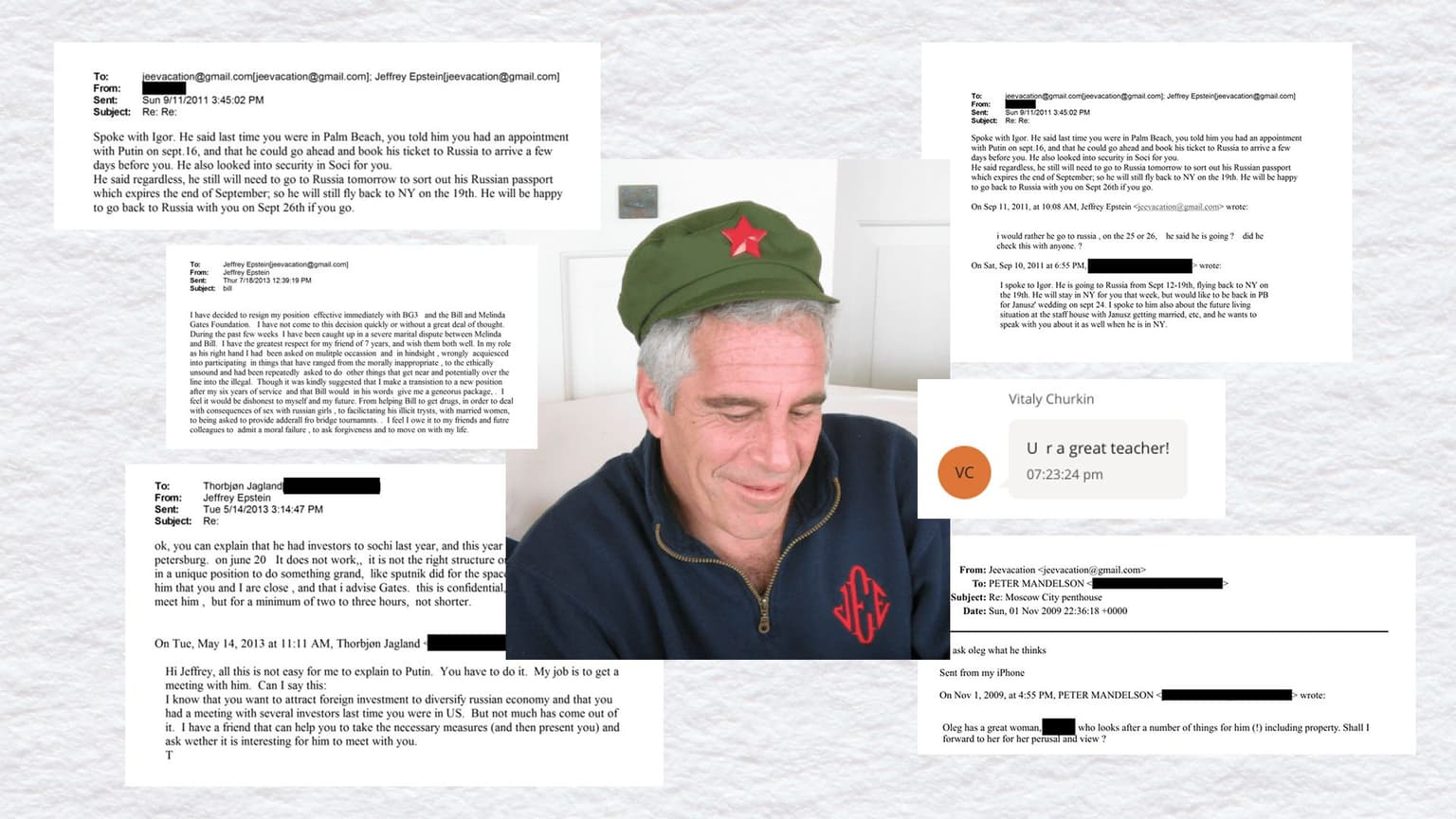
A collage shows the late financier and convicted sex offender Jeffrey Epstein alongside recently released emails. (Photo, Emails: United States Department of Justice; Collage: The Kyiv Independent)
 on Google
Polish Prime Minister Donald Tusk became the first high-ranking official to ask the question on everyone’s mind on Feb. 4 — Was convicted sex offender Jeffrey Epstein working with Russia?
He added that Poland would investigate possible links between Epstein and Russian intelligence services.
The latest batch of Epstein-related documents, released on Jan. 30, mentions Russia 5,876 times and Russian President Vladimir Putin 1,055 times.
The files show that Epstein cultivated relationships with Russian officials, repeatedly sought a meeting with Putin, and came under investigation on suspicion of acting as an alleged "wealth manager" for Putin.

Taken together, the documents depict Epstein as an unusually persistent intermediary attempting to insert himself into Moscow's political and financial orbit — marketing his access to Western elites as leverage.
None of the findings provide a conclusive answer as to whether he was successful in doing so.
Epstein's efforts to procure women for his network of associates also triggered speculation that it was a honey trap by Russian intelligence agencies, although this has not been proven.
"Russia's links with Epstein show the extent of Moscow's ways to get access to the U.S. political or business elites," Ryhor Nizhnikau, a Russia expert at the Finnish Institute of International Affairs, told the Kyiv Independent.
"Obviously, they saw in Epstein an opportunity for their operations, and Epstein saw in the Russians (an opportunity) for himself. It is likely that Moscow may have been able to co-opt or blackmail some elite members in such a manner."
The Kyiv Independent reviewed the latest release of Epstein files and compiled what they reveal about Epstein's ties to Russia so far.
Trump, Putin, and Epstein's self-appointed role
The files contain numerous references to U.S. President Donald Trump, who maintained a close relationship with Epstein before later falling out with him.
The files also refer to a Justice Department investigation into sexual misconduct allegations against Trump, although the department said on Feb. 1 that it had not found any proof.
According to the files, Epstein offered to provide the Kremlin with insight on how to deal with Trump.

"This reminds me of the famous investigation into the ties between the Trump administration and Russia after the first election," Russian columnist Sergei Parkhomenko told the Kyiv Independent.
"That investigation clearly showed how many various swindlers rushed in to create connections between Trump and Putin — building bridges, contacts, deals, and the like."
He added that "a lot of shady types have sensed that this community organized by Epstein is a door to some kind of elite political and economic upper world," and "they eagerly worm their way in."
Epstein served a year in prison after being convicted in 2008 for procuring a child for prostitution and soliciting a prostitute. He was arrested again in 2019 on charges of sex trafficking of minors and died in his jail cell the same year.
Putin's wealth manager?
One FBI document had a source reporting Epstein as an alleged "wealth manager" for Putin and former Zimbabwean President Robert Mugabe, claiming he helped political elites hide money offshore.
The document is an FD-1023 form, a standard FBI record used to log information from confidential human sources. It reflects uncorroborated claims made during a 2017 meeting with FBI agents, not verified findings.
"Do I need to get visa? I have a friend of Putin's, should I ask him?"
The files also show Epstein repeatedly discussing potential meetings with Putin, though it remains unclear whether any such meeting took place.
In a 2011 email, an unknown sender wrote to Epstein: "Spoke with Igor. He said last time you were in Palm Beach, you told him you had an appointment with Putin on Sept. 16, and that he could go ahead and book his ticket to Russia to arrive a few days before you."

In 2014, Japanese businessman Joi Ito wrote to Epstein that he had failed to persuade U.S. tech billionaire Reid Hoffman to alter his schedule to meet Putin alongside Epstein.
"I wasn't able to convince Reid to change his schedule to go meet Putin with you," Ito wrote.
Earlier, in 2010, Epstein asked another correspondent: "Do I need to get visa? I have a friend of Putin's, should I ask him?"
Pitching ideas to the Kremlin
Beyond seeking face-to-face access, Epstein attempted to channel ideas to the Russian leadership through intermediaries.
The files show him trying to convey proposals to Putin via Thorbjorn Jagland, then secretary general of the Council of Europe and a former Norwegian prime minister.
A 2013 email exchange shows Jagland cautioning Epstein about the limits of such an approach.
"All this is not easy for me to explain to Putin," Jagland wrote. "You have to do it."


Epstein responded with sweeping ambitions, arguing that Russia could "leapfrog" the West by reinventing the global financial system and claiming he could help Moscow develop a new form of global money.
"(Putin) is in a unique position to do something grand, like Sputnik did for the space race," Epstein wrote. "This is confidential. I would be happy to meet him, but for a minimum of two to three hours, not shorter."
A separate 2014 email shows Epstein urging Jagland to "explain to Putin" the idea of creating a "sophisticated Russian version of Bitcoin."

Epstein also positioned himself as an informal adviser on U.S.-Russia relations under Trump.
"I think you might suggest to Putin that (Russian Foreign Minister Sergei) Lavrov can get insight on talking to me," Epstein wrote to Jagland in 2018. "(Russian Ambassador to the UN) Vitaly Churkin used to but he died."
He added that "Churkin was great" and "understood Trump after our conversations."
"It is not complex," Epstein wrote. "(Trump) must be seen to get something. It's that simple."
Ties to Russia's UN ambassador
The files reveal Epstein's direct correspondence with senior Russian diplomats, including Churkin.
Their 2016 correspondence centers on Epstein assisting Churkin's son, Maxim, with job opportunities in the United States. Epstein repeatedly stressed confidentiality.
"Any Maxim help is confidential," Epstein wrote. "He's a great son."
Epstein later updated Churkin that Maxim's first job had been confirmed and would begin the day after Labor Day. He added that he had spoken with Maxim and that the young man simply needed to better understand "American biz habits."
Churkin thanked Epstein for helping his son and described him as "a great teacher."


The correspondence also includes social invitations. Epstein invited Churkin for coffee and to his home, noting in one message that former Israeli Prime Minister Ehud Barak would be visiting the following day and that Churkin was always welcome.
After Churkin's sudden death in New York in 2017, Epstein wrote to Jagland that the diplomat's passing had disrupted his plans and that he might return to assist the family.
"My good friend Vitaly Churkin died suddenly in New York," Epstein wrote.
The official cause of death was not publicly disclosed.
After his passing, Russian Foreign Ministry spokesperson Maria Zakharova said Churkin "devoted his entire life to protecting Russia's interests."
There is no public information about Maxim Churkin's current employment. In 2024, he attended the unveiling of a bust of his father in Moscow.
Talking to a spy academy graduate
The files also include correspondence between Epstein and Sergei Belyakov, who was a deputy economy minister from 2012 to 2014 and the head of the St. Petersburg Economic Forum Foundation from 2014 to 2015.
Belyakov is a graduate of the Academy of the Federal Security Service, which teaches Russian intelligence officers.
In 2014, Belyakov helped with Epstein's application for a Russian visa and was planning to set up meetings for him with Deputy Finance Minister Sergei Storchak and Central Bank Deputy Chairman Alexei Simanovsky.
Meanwhile, Epstein offered Belyakov a whole range of potential guests for the forum.
Epstein suggested to Belyakov that Russia create a bank that would lend "nine times its reserves." He also proposed launching a cryptocurrency known as BRIC as an alternative to Bitcoin.
Deripaska, deals, and intermediaries
Another recurring figure in the files is Russian oligarch Oleg Deripaska, whom the U.S. Treasury Department described in 2016 as someone "reportedly identified" as laundering money on behalf of Putin.
In correspondence, Deripaska appears to be referred to as "Oleg" or "OD."

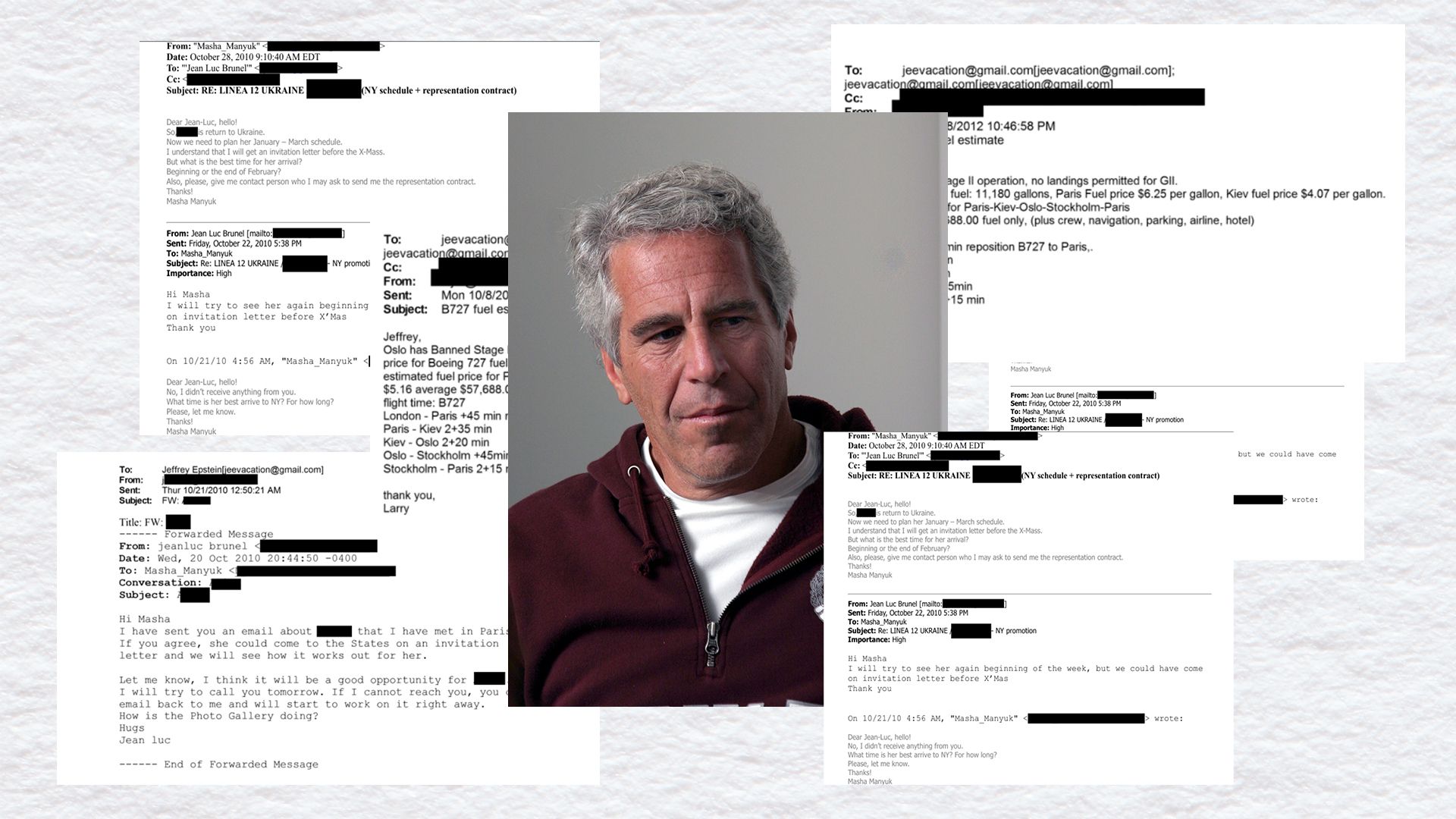
In October 2009, Epstein received a letter from Nadezhda Pobedina, head of the creative department at Capital Group, a major Russian real estate developer.
The letter included plans for an entire floor of a building and views from a Moscow property, sent "as per your request."
Epstein forwarded the message to Peter Mandelson, the former European commissioner for trade and British ambassador to the U.S.
Mandelson replied that "Oleg has a great woman, who looks after a number of things for him, including property," and asked whether to forward the materials.
Epstein suggested asking Oleg directly.

In 2010, Mandelson visited Russia and attended a lunch that reportedly led to a deal involving Deripaska's company Rusal and aluminum giant Alcoa, supporting the identification of the "Oleg" mentioned in the emails.
Subsequent correspondence shows Epstein's assistant asking about the possibility of Epstein and Oleg meeting in Moscow or Paris and noting that Epstein was in the process of obtaining Russian visas.
Other emails indicate repeated efforts by Epstein to arrange meetings with Oleg, sometimes with Mandelson's help.

In May 2014, Epstein received a letter from Melanie Spinella, then an executive at Capital Group in the United States, containing a short list that ended with a question mark: "Oleg, JPM, Goldman, foundation, Josh."
The likely subject, according to the letter, was a birthday.
Epstein's Russian circle
The files also shed light on Epstein's inner circle.
One of his public relations agents was Maria Drokova, a Russian citizen and former leader of Nashi, a pro-Kremlin youth movement. Drokova gained notoriety after kissing Putin at the 2009 Seliger Forum and moved to the U.S. in 2017.
Another assistant and also a Russian national, Svetlana Pozhidaeva, launched the WE Talks: the Women's Empowerment project in 2018. The project shared an address with the Epstein Foundation.
The correspondence also claims that Epstein offered to introduce Andrew Mountbatten-Windsor, formerly known as Prince Andrew, to a Russian woman in 2010.

A 2013 email further alleges that Epstein helped U.S. billionaire Bill Gates "get drugs in order to deal with the consequences of sex with Russian girls."
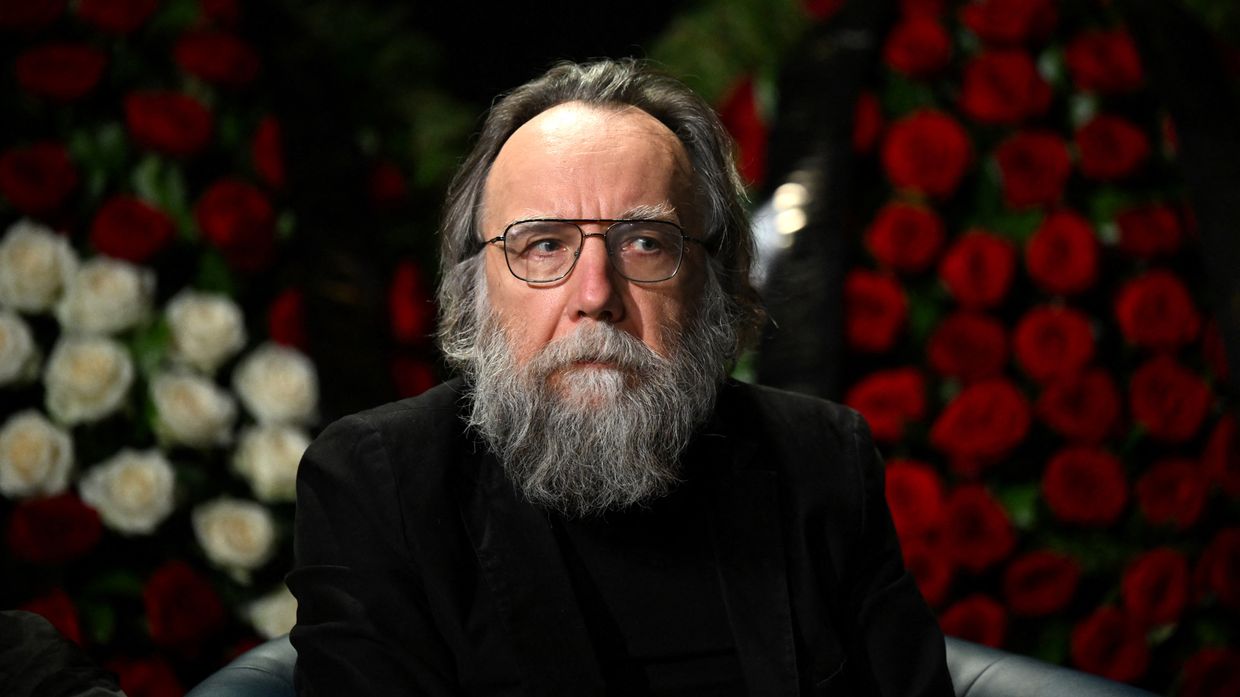
The archive also references Russian imperialist ideologue Alexander Dugin and exiled Russian opposition politician Ilya Ponomarev.

In early 2012, during the Bolotnaya protests, Epstein associate Boris Nikolic described Ponomarev as a potential future president of Russia who needed support. Nikolic warned that Ponomarev faced danger and asked Epstein whether there was any way to help.
"I am afraid (of) what will happen to (Ponomarev)," Nikolic wrote. "The stakes are huge. He might replace Putin and become the president by himself."
"It is super dangerous — any idea how to help him?" he added. "He and Alyona, his very smart and cute girlfriend, are the main organizers of the uprising against Putin."
Ponomarev was involved in the 2011–2012 protests but was not their main organizer. When asked about any connection to Epstein, the anti-Kremlin politician denied knowing him.
"I did not know him personally," Ponomarev said.

Dugin appeared in Epstein's messages with Polish model Mariana Idzkowska in 2014–2015, as well as in a chat with former White House strategist Steve Bannon.
Russian asset?
The documents do not prove that Epstein worked for Russian intelligence.
They do, however, reveal sustained, multi-year efforts by Epstein to embed himself in Russia's political, financial, and diplomatic circles — efforts marked by persistence, access-seeking, and repeated attempts to present himself as useful to the Kremlin.
The international implications of the disclosures have already prompted official responses, with Poland seeking to launch an investigation, and the U.K. potentially following suit.
Parkhomenko cautioned against viewing Russia's prominence in the files as exceptional.
"If you're looking for something specifically Russian in all this," he said, "then the only thing you'll find is that there's nothing vile or disgusting that Russian politicians, public figures, lawyers, artists, celebrities, or businessmen would find alien."
read also
 Chris York
 Martin Fornusek
 Martin Fornusek
 Kate Tsurkan