Ukraine's energy sector is open for business — if investors get the law right
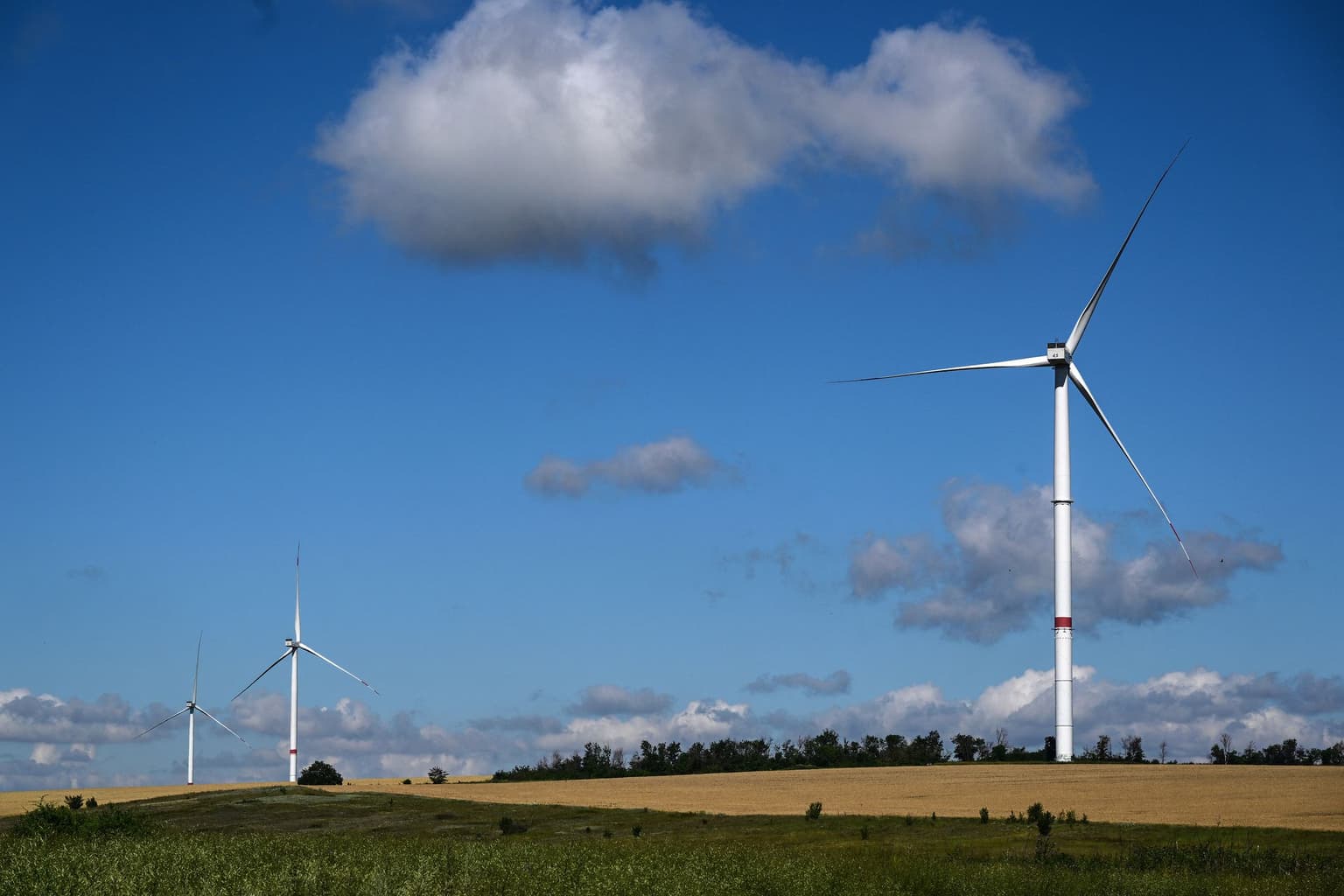
A photograph shows wind turbines in a wheat field near Kramatorsk, Donetsk Oblast, Ukraine, on July 18, 2022, amid the Russian invasion of Ukraine. (Miguel Medina / AFP / Getty Images)
 on Google
Ben Keith
Barrister at 5 St Andrew’s Hill
Investment in Ukraine is beginning to reemerge as the occupation continues; business and investment are slowly flowing back into the country.
That was the recurring theme at London International Disputes Week in June, where I joined a panel on energy investment in Ukraine. The shift in tone was interesting. Nobody is waiting for a peace deal before doing their sums. The conversation has moved from whether to invest to how to invest without getting burned. To hedge against risk and to help rebuild.
There are a number of opportunities. Ukraine's National Recovery Plan puts the total rebuilding bill at $750 billion, with $130 billion earmarked for energy independence and green energy alone.
Russia's attempts to destroy the grid have counterintuitively accelerated capital flows into renewables, battery storage, biogas, and distributed generation. Ukraine has substantial bioenergy potential and sits next door to the EU, the world's largest energy import market. When cross-border infrastructure matures, Ukraine could become a major supplier of clean power to Europe.
Yet the money flowing in remains modest. Energy M&A totaled just $23 million in 2025. That gap between need and flow is the opportunity. Energy projects run on 20-, 30-, 40-year horizons. The investors who enter now, on sensible terms, will be the ones who'll set the rules of the market for decades.
So what is holding capital back? Two risks, one physical and one legal.
The physical risk is obvious: Russia keeps hitting energy assets, and insurance is costly and scarce. The legal risk is not often discussed in as much depth. Ukraine remains under martial law, and the government holds extraordinary powers to direct the economy towards the war effort — including the power to seize private assets.
An example of this issue is when, in November 2022, Ukraine took the shares of five strategic companies "for the needs of the state", among them two of its biggest energy firms, Ukrnafta and Ukrtatnafta. The law requires the state to return the assets or pay fair compensation — but only within five budget years after martial law ends, and for Ukraine watchers, that may be a considerable period of time.

A country fighting for survival must be able to commandeer strategic assets. However, powers designed for the war effort can drift towards the state's commercial interests rather than those of the companies it deals with. So investors must price in those risks when weighing investment in the balance.
The good news is that this risk can be managed to an extent. There are three measures that can ameliorate some of the risks.
First, make sure the due diligence is careful and thorough. Know exactly who your local partners are, who stands behind them, and whether they carry sanctions exposure or political risk. Ukraine's internal politics are complex, and choosing the wrong counterparty is the fastest route to trouble. Especially where political actors may become unpopular or find themselves out of office, or worse.
Second, put international dispute clauses in contracts in the overarching agreement. Until the regulatory environment stabilizes, English law clauses and international arbitration offer protection that domestic courts cannot.
International law has teeth: Naftogaz won a $5 billion arbitration award against Russia at The Hague for the seizure of its Crimean assets. But arbitration is slow and expensive. The best dispute is the one you never have to have.
Third, remember that legal protection means little without local knowledge. The work is done on Ukrainian soil, where contracts with subcontractors are governed by Ukrainian law. Competent legal partners on the ground and the right relationships in government will do more to smooth investment than any clause drafted in London.
This is the ordinary discipline of emerging-market investing, applied to an extraordinary situation. Get it right, and there is a genuine potential on offer: the government gets much-needed capital, investors get a return, and Ukrainians get the reliable energy they deserve. Ukraine's energy sector is not closed for business. It is undervalued — and waiting for investors with the foresight and the legal frameworks, to see it.
Editor's note: The opinions expressed in the op-ed section are those of the authors and do not purport to reflect the views of the Kyiv Independent.