Ukraine war latest: Ukraine's air defense downs 97% of Russian kamikaze drones in rare mass daytime strike
 on Google
Key developments on March 25:
- Ukraine's air defense downs 97% of Russian kamikaze drones in rare mass daytime strike
- Russian military icebreaker damaged in unprecedented Baltic Sea drone strike, Ukraine claims
- Latvia, Estonia say drones that strayed into their territory overnight were Ukrainian
- Ukraine preparing 'key changes' to mobilization, AWOL policy, defense minister says after meeting infantrymen
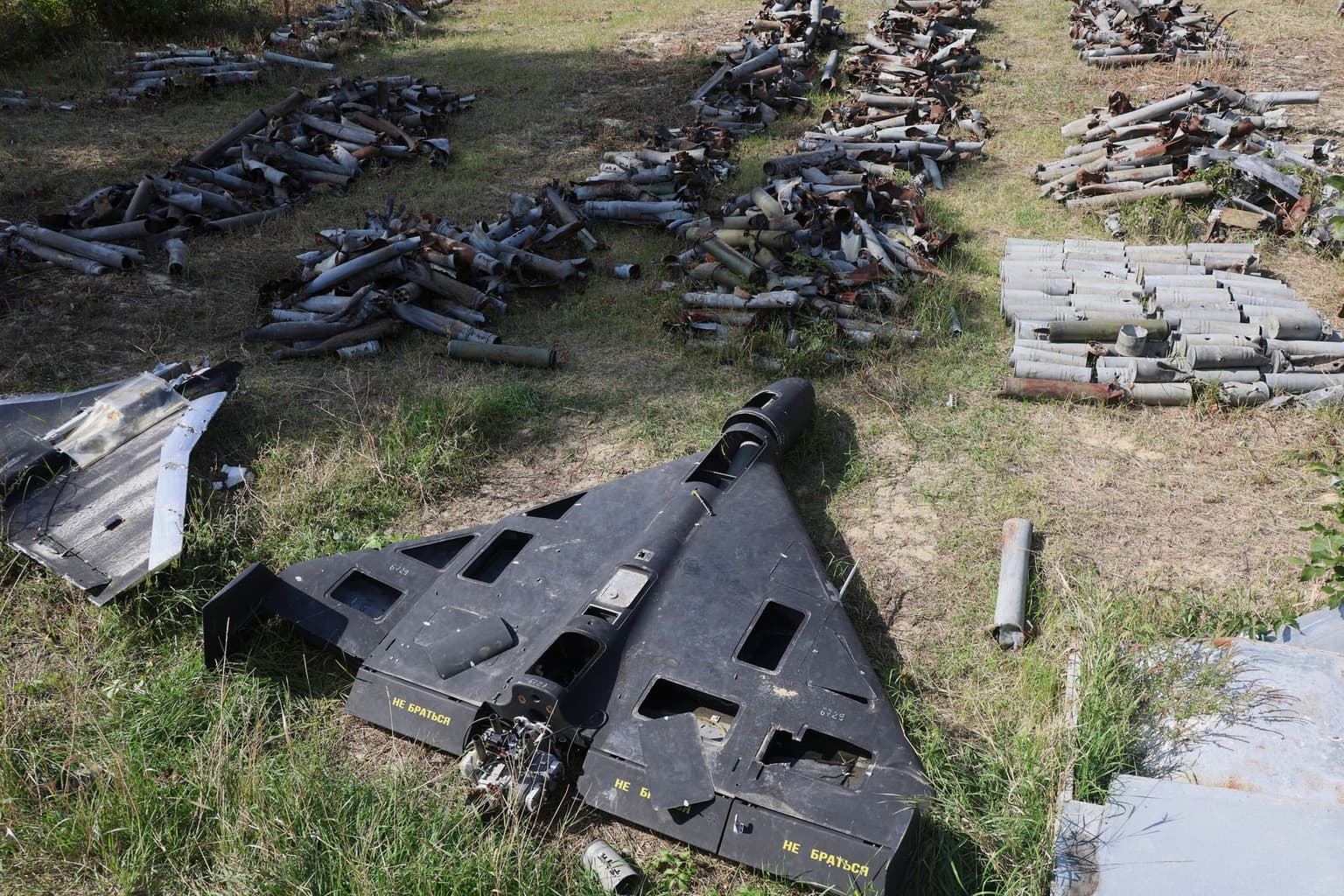
Ukrainian air defenses downed 97% of the drones launched by Russia in a rare mass daytime strike on March 24, the Air Force reported.
Of the 556 drones used in the attack, 541 were shot down or suppressed.
"All possible means of air defense were involved in repelling the air attack — manned aviation, anti-aircraft drones, electronic warfare and ground-based air defense," the Air Force said in a post on social media.
While nighttime mass Russian drone strikes are an almost nightly occurrence, daytime assaults are far less common and are unheard of in the numbers seen on March 24.
Fifteen drones struck cities across the country.

In Lviv, at least 32 people were injured after drones struck civilian areas, according to Lviv Oblast Governor Maksym Kozytskyi.
Ivano-Frankivsk, another regional capital in western Ukraine, was also targeted with Russian drones, killing two people.
Explosions were also reported in Ternopil, Vinnytsia, Zhytomyr, and Khmelnytskyi.
Russia continues to carry out large-scale drone attacks on Ukraine on a near-daily basis, with estimated averages of 150 to 200 drones launched per day. Ukrainian officials previously reported a record strike involving 728 drones and decoys in July 2025.
Kyiv has developed extensive expertise in countering Shahed-type attack drones since Russia began using them in 2022, expertise it's been keen to export to countries facing the threat of drones as a result of the U.S. war with Iran.

Russian military icebreaker damaged in unprecedented Baltic Sea drone strike, Ukraine claims
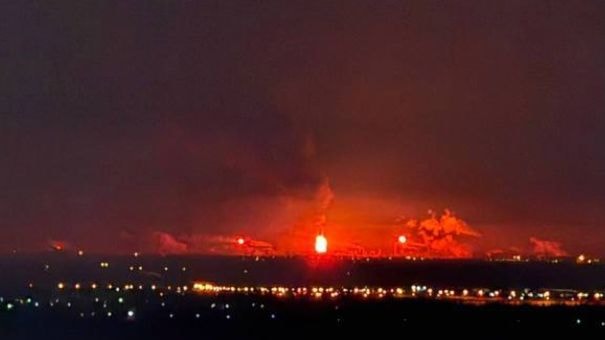
Ukrainian forces have damaged a Russian military icebreaker in the Baltic Sea port of Vyborg amid a mass overnight attack, the General Staff reported on March 25.
The attack is the first known successful strike on Russian military ship in the Baltic Sea, almost 1,000 kilometers from Ukrainian territory.
The ship, identified by the General Staff as patrol icebreaker "Pruga," operated by the border guard wing of Russia's FSB secret police, was docked at the city's shipyard when it was hit, the General Staff said.
Photos purportedly taken the following day and posted on Telegram show a white ship keeled over on its side among other larger boats docked at the port.
According to the General Staff, the Pruga, belonging to a class of ships built at the shipyard known as Project 23550, is able to work both as an icebreaker and as a regular military warship.
According to Russian maritime media outlet Paluba, one such ship costs around 18 billion rubles ($222 million).
The strike came during a broader mass Ukrainian drone attack on Russian territory, with the country's defense ministry reporting 389 Ukrainian drones shot down over 13 Russian regions, as well as occupied Crimea.
Vyborg is a historic port city located in the north of Russia's Leningrad Oblast, annexed from Finland after the Second World War.
On top of the port, a residential building in the city center was also struck, according to Leningrad Oblast governor Alexandr Drozdenko.
Further south, one of Russia's largest gas terminals was also damaged in the port city of Ust-Luga, on the other side of the Gulf of Finland.

Latvia, Estonia say drones that strayed into their territory overnight were Ukrainian
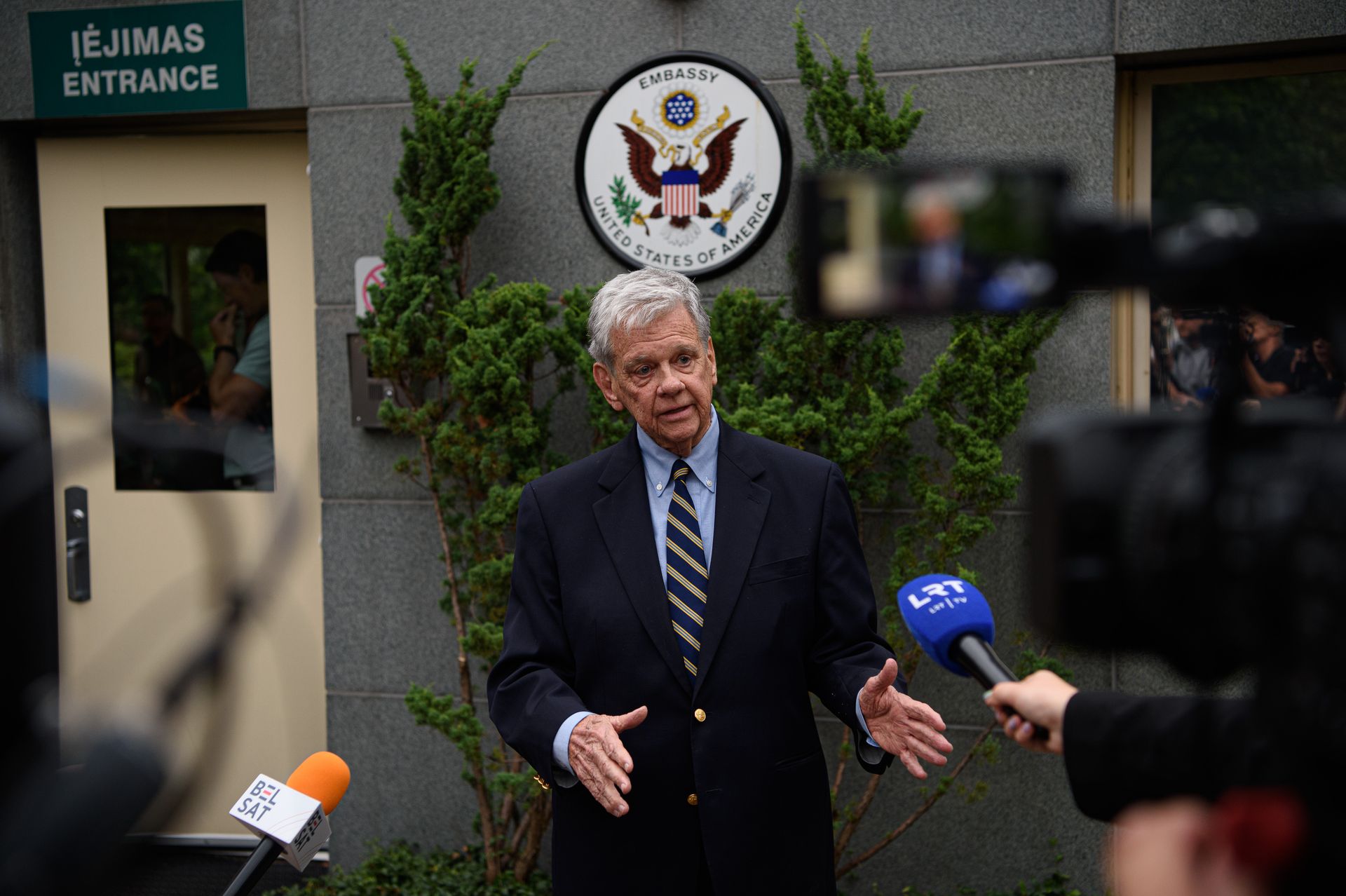
Two Ukrainian drones strayed into Latvia and Estonia respectively amid a mass overnight attack on targets inside Russia, the two countries said on March 25.
One drone was reported to have landed and exploded in a field in Latvia's Kraslava region, while another struck the chimney of the Auvere power station near the Russian border.
"Early warning systems tracked the drone's entry, and a sound resembling an explosion was recorded in the Kraslava district," the Latvian Defense Ministry said.
In the early morning, after debris at the site was analyzed, the drone was deemed by the ministry to be of Ukrainian origin.
As a result, Andris Spruds, the country's defense minister, cut short his planned visit to Ukraine and returned to Latvia.
Estonian authorities did not immediately report the origin of the drone that hit the Auvere power station, but later confirmed that it was also of Ukrainian origin.
"The drone was not directed at Estonia," commented the country's foreign minister Margus Tsahkna. "This is a concrete consequence of Russia’s full-scale war of aggression."
According to Andrus Merilo, Commander-in-Chief of the country's defense forces, the unmanned aerial vehicle was almost certainly a strike or decoy drone with a minimal warhead, rather than a reconnaissance model.
No civilian casualties were recorded in either incident, and no serious damage was done to the power station or the Estonian electricity grid as a whole.

Ukraine preparing 'key changes' to mobilization, AWOL policy, defense minister says after meeting infantrymen
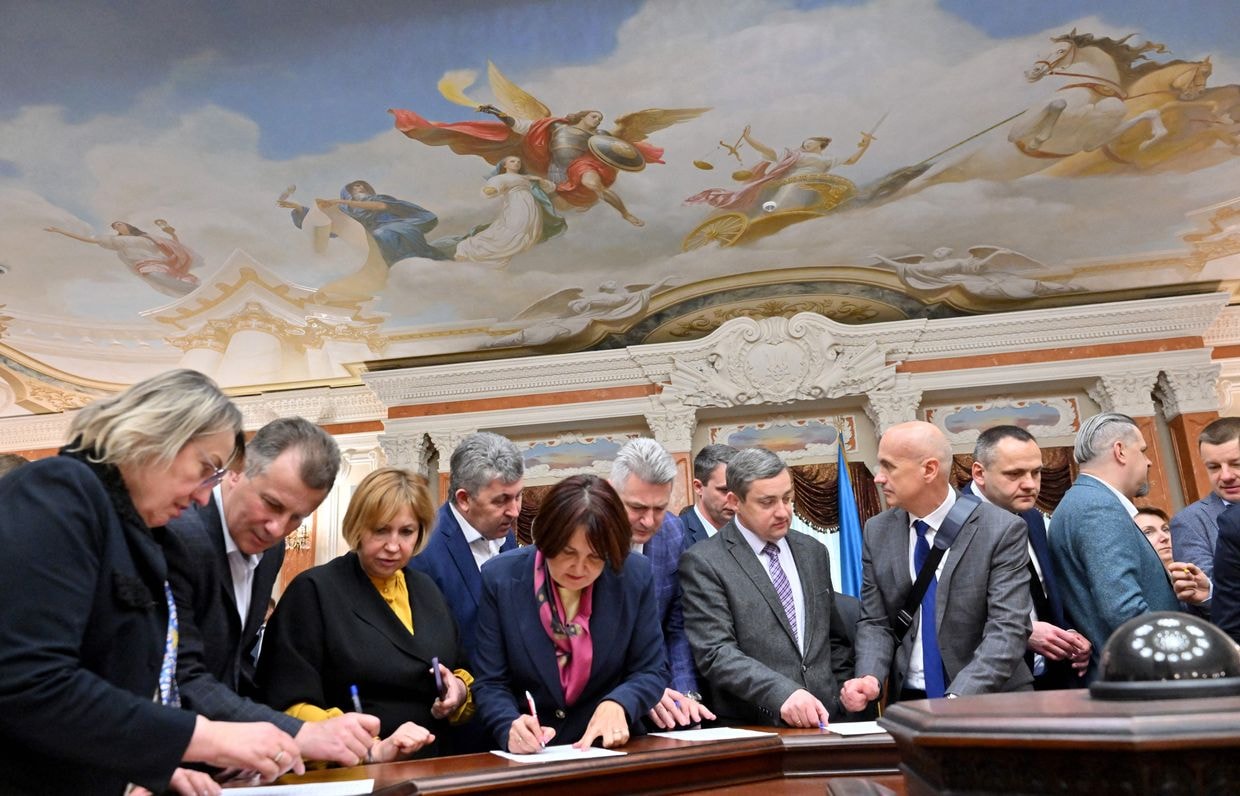
Ukraine is preparing "key changes" to both mobilization and the prevention of soldiers going AWOL in an effort to address the military's chronic manpower shortage and better resist Russia's war on the front line, Defense Minister Mykhailo Fedorov said on March 25.
The announcement came after Fedorov met with assault soldiers and infantrymen from 13 different units fighting across the front line, he wrote on Facebook.
"We discussed the real situation at the front and recorded problematic issues;" Fedorov wrote, "the duration of stay in positions, the complexity of entries and exits, complicated logistics under constant drone attacks, shortage of people, the quality of training of servicemen, provision of drones and necessary equipment, morale and communication on the front line."
The meeting represents a rare exchange between Ukraine's top defense leadership and the rank and file infantry, mostly mobilized troops who face more gruelling and deadly conditions on the front line with every passing month.
As Russia's full-scale war against Ukraine enters its fifth year, manpower continues to be the most pressing issue for Kyiv.
While Russia continues to be able to recruit tens of thousands of soldiers voluntarily through lucrative sign-up bonuses, Ukraine's ongoing forced mobilization — a necessity in an existential war — has put increased pressure on state and society internally.
Falling motivation among draftees, exacerbated by shortcomings in the mobilization and training process, as well as in the units themselves, has led to surging AWOL and desertion rates over 2025, according to figures published by the Prosecutor General's Office.
In the changing environment of the drone-saturated battlefield, soldiers serving in the infantry — almost all forcefully mobilized at this stage of the war — are often forced to spend months at a time on combat positions, as rotations are made impossible both by Russian drone control logistics routes, and by the lack of infantrymen ready to replace them.
According to Fedorov, new solutions would also be introduced specifically for infantrymen, concerning set periods of service and special financial incentives.
The problem is exacerbated by Ukraine's command culture, often described as "Soviet-style," which often pressures field commanders into holding and taking back positions at any cost, as well as cannibalizing their own unit's artillery and logistics staff to replenish empty ranks of infantry.
Fedorov's announcement comes amid a broader shift towards strategic planning and data-driven decision-making introduced since assuming the post in January.

Note from the author:
Ukraine War Latest is put together by the Kyiv Independent news desk team, who keep you informed 24 hours a day, seven days a week. If you value our work and want to ensure we have the resources to continue, join the Kyiv Independent community.