Ukraine War Latest: UK to spend $545M on hypersonic weapons after Ukraine battlefield lessons
 on Google

Key developments on Feb. 13
- Ukraine's battlefield lessons drive UK to spend over $545 million on hypersonic, long-range weapons in 2026
- Using Starlink ruse, Ukrainian cyber forces trick Russian soldiers into revealing positions, donating to armed forces
- 'Modern Ukrainian technology, battle-tested' — Zelensky unveils 1st drone produced by German-Ukrainian joint venture
- Ukraine's Unmanned Systems Forces release footage of strikes on Russian airfield in Crimea, other targets in occupied territories
- Four injured as Russian strikes target energy infrastructure in Odesa
The U.K. plans to spend 400 million pounds ($545.4 million) on hypersonic and long-range weapons in 2026, drawing on lessons from Russia's war in Ukraine, the U.K. Defense Ministry announced on Feb. 13.
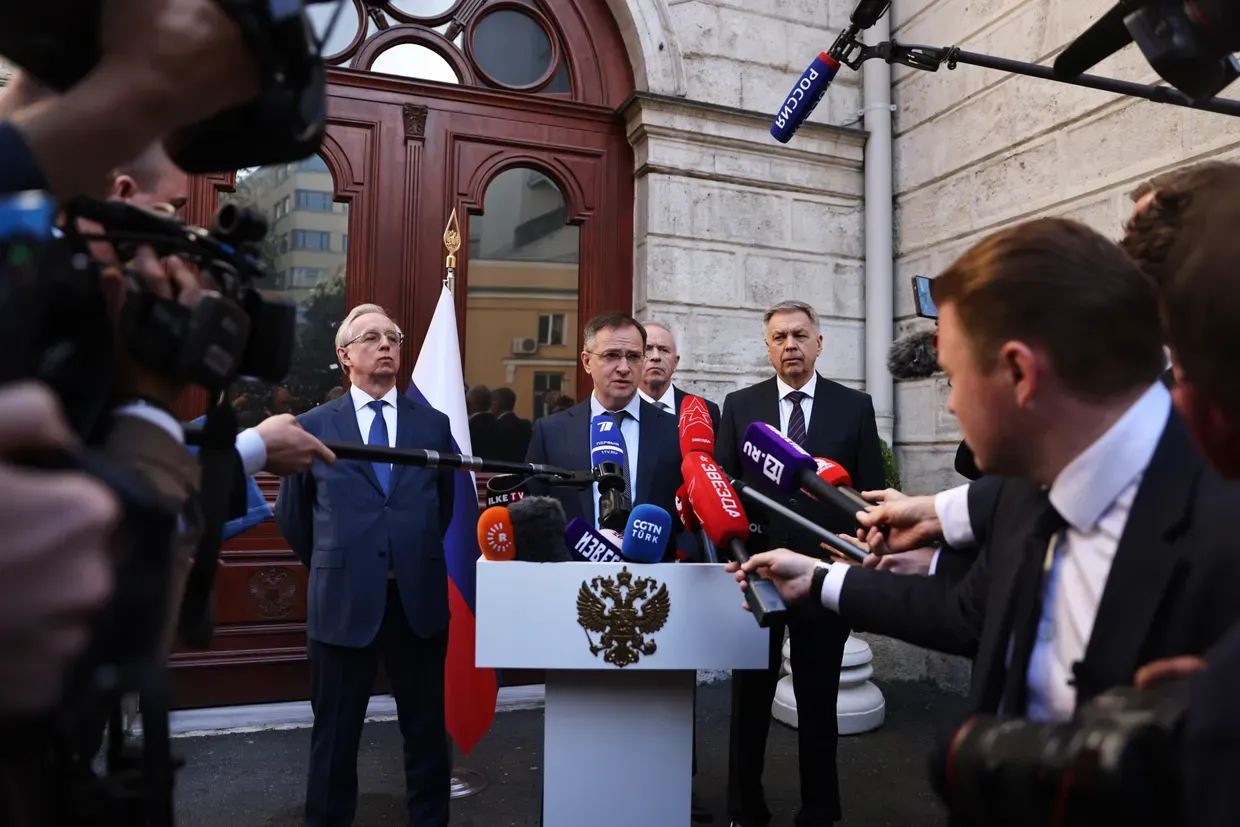
The announcement comes as the annual security conference opens in Munich, running on Feb. 13–15, with about 50 world leaders and government officials expected to attend, including President Volodymyr Zelensky.
"To meet this new era of rising threats, we need hard power, strong alliances, and sure diplomacy," U.K. Defense Secretary John Healey said.
"We can see from the war in Ukraine the decisive impact of long-range precision weapons, so the U.K. is stepping up, investing more than 400 million pounds ($545.4 million) in long-range and hypersonic weapons this year," Healey added.
The planned investments will also support joint weapons projects with France, Germany, and Italy, the statement said.
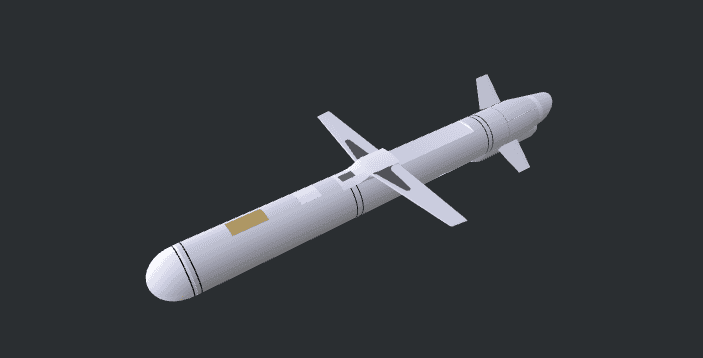
The Stratus program, a collaboration between the U.K., France, and Italy, is developing a next-generation stealth missile to replace the Storm Shadow. The new missile is designed to "defeat high-value targets, destroy enemy ships, and suppress enemy air defenses," the statement said.
Separately, a joint long-range weapons program between the U.K. and Germany is entering a study phase and will focus on future stealth and hypersonic capabilities.
"Alongside Germany, France and Italy, we will deliver the cutting-edge weapons that will keep the U.K. and NATO safe, boost deterrence, and build a new deal for European security," Healey said.
This year's investment in hypersonic weapons will also cover the development of key technologies, ground and flight testing, and support for academic training, including funding for postgraduate studies, according to the statement.
The U.K. Defense Ministry added that the new domestically produced Deep Precision Strike system, with a range of more than 2,000 kilometers (1,240 miles), is expected to enter service in the 2030s.
Earlier, the U.K. and other partners announced roughly $38 billion in aid to Ukraine following a Feb. 12 meeting of the Ukraine Defense Contact Group in the Ramstein format.
More than $2.5 billion will be allocated for Ukrainian drones, more than $500 million for the Prioritized Ukraine Requirements List (PURL) initiative, and $2 billion for air defense, according to Ukraine's Defense Minister Mykhailo Fedorov.
Ukraine has long urged its partners to boost support for air defense systems, as Russian strikes on its energy infrastructure have intensified over the past months.

Using Starlink ruse, Ukrainian cyber forces trick Russian soldiers into revealing positions, donating to armed forces
A Ukrainian cyber unit claims it tricked Russian soldiers into revealing their positions and donating money to Ukraine's Armed Forces by pretending to help them reconnect Starlink devices they were using on the battlefield.
Russian forces have long been using unauthorized Starlink access to operate drones and other military equipment in occupied areas of Ukraine, but this was effectively switched off last week after the Ukrainian government, in cooperation with SpaceX, introduced a mandatory registration and "whitelist system.
Monopolizing on Russia's desperation to regain access to a crucial battlefield technology, Ukrainian cyber forces posed as a Russian-linked activation service offering to help restore terminals that had been disconnected under the new registration rules.
The operation was carried out by the 256th Cyber Assault Division in cooperation with the InformNapalm and MILITANT, according to a statement published on social media on Feb. 12.
Russian servicemen were instructed to submit identifying information and the coordinates of their terminals under the guise that the devices would be reactivated through Ukrainian administrative service centers.
The group said they collected 2,420 data packets related to Russian-used terminals and transferred them to Ukrainian law enforcement and defense agencies. According to the statement, the data was provided to authorities "for final transfer into brick mode," referring to the disabling of the terminals.
The group claims the terminals were subsequently deactivated. The Kyiv Independent could not independently verify the claims.
The group also said it received $5,870 from Russian soldiers seeking to restore connectivity which it is donating to fundraising efforts for Ukrainian drones.
It also identified 31 Ukrainian "traitors" willing to assist Russian forces by registering terminals. According to the statement, that information has been forwarded to Ukraine’s Security Service (SBU).

'Modern Ukrainian technology, battle-tested' — Zelensky unveils 1st drone produced by German-Ukrainian joint venture
President Volodymyr Zelensky on Feb. 13 unveiled the first strike drone produced by a newly launched German-Ukrainian joint venture ahead of the Munich Security Conference, as he said in a statement published on X.
The launch marks the first Ukrainian drone production line in Germany and is part of Kyiv's broader effort to expand arms manufacturing in Europe, as the war with Russia drives sustained demand for unmanned systems.
"Today, I received the first jointly made attack drone. We saw the production line and the first flight of the drone," Zelensky wrote on X.
"This is modern Ukrainian technology. Battle-tested. Powered by AI. It will strike, it will scout, it will protect our soldiers," the president added.
Zelensky, accompanied by German Defense Minister Boris Pistorius, visited Quantum Frontline Industries (QFI), a joint venture between Germany's Quantum Systems and Ukraine's Frontline Robotics.
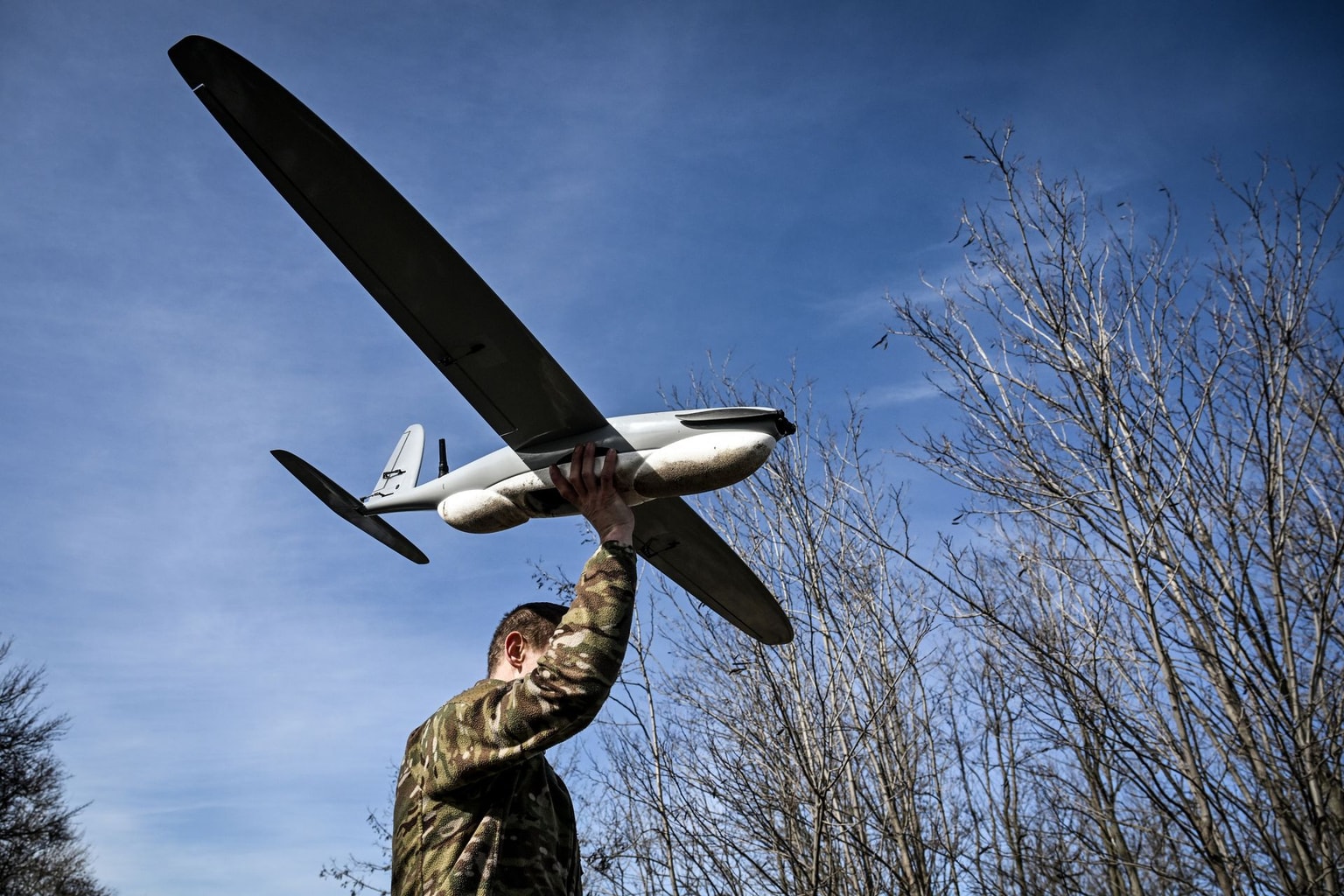
During the visit, the Ukrainian-German Linza 3.0 multi-purpose drone was demonstrated and then handed over to Zelensky.
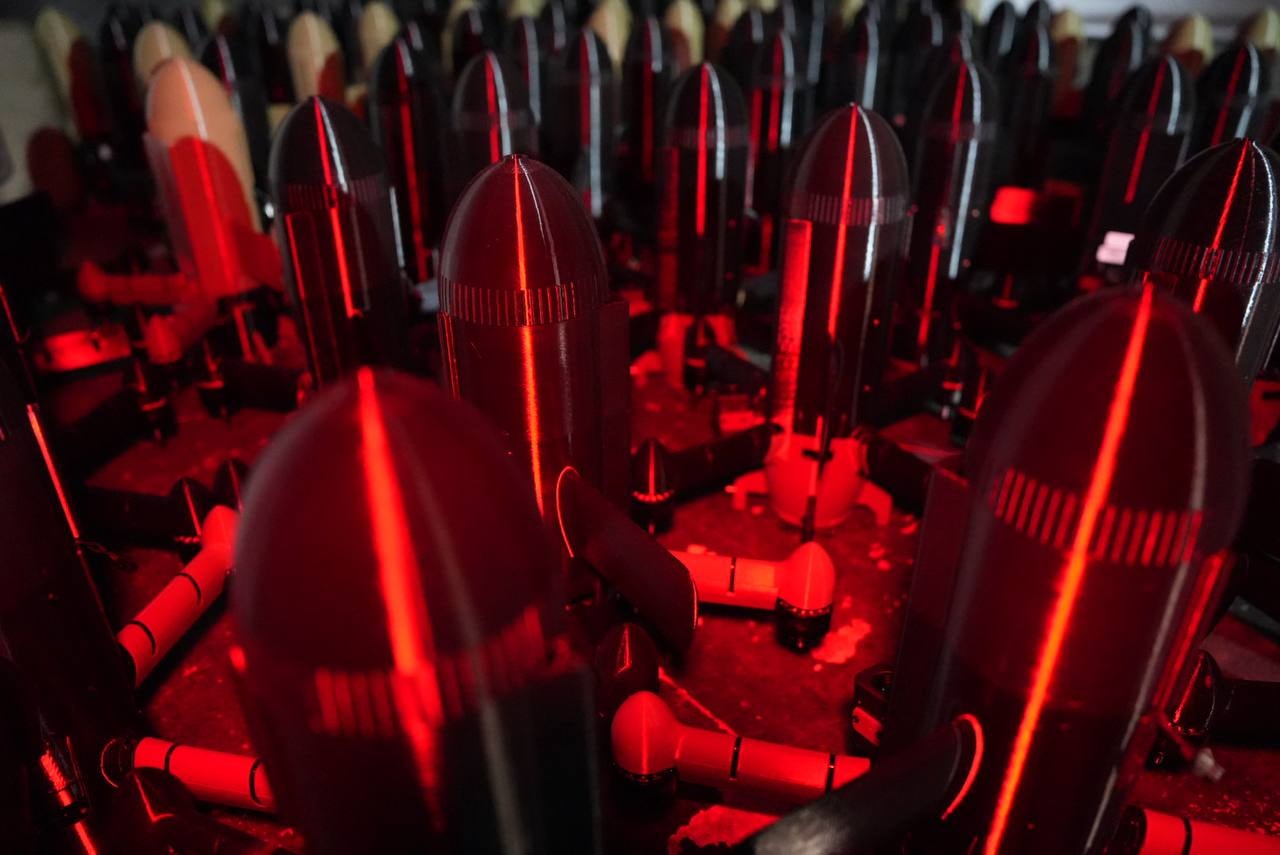
The facility is expected to produce up to 10,000 drones within a year, all of which will be delivered to the Ukrainian Armed Forces, according to the president.
The Linza 3.0 drone, developed by Frontline Robotics, is the latest version of the company's multi-purpose platform. The manufacturer said it features AI-enabled visual-inertial navigation, can carry up to 4 kilograms of payload, operate up to 15 kilometers (9 miles), and can stay in the air for up to 60 minutes.
The parties announced the start of joint production in December 2025, and Ukraine plans to open 10 more joint ventures by the end of 2026, Zelensky said. The president did not specify which countries the ventures would be located in.

Ukraine's Unmanned Systems Forces release footage of strikes on Russian airfield in Crimea, other targets in occupied territories
Ukrainian forces have struck multiple Russian military targets, including an airfield, in Russian-occupied territories over the past two days, the Unmanned System Forces (USF) said on Feb. 13.
Ukraine regularly attacks military facilities in Russian-occupied areas that supply weapons, fuel, and equipment to Russian troops.
The 1st Separate Center of the USF struck on Feb. 12 an airfield in the village of Hvardiiske in Crimea, the Kirova electrical substation in the city of Luhansk, Luhansk Oblast, and a data center in Prymorsk, Zaporizhzhia Oblast.
All targets were struck with mid-range precision weapons and were located in Russian-occupied territories, according to the USF.
Drone operators from the "Kairos" unit of the 414th Separate Brigade, also known as "Madyar's Birds", targeted an ammunition depot near the village of Rozivka in the Russian-occu[ied part of Zaporizhzhia Oblast on Feb. 11, according to the statement.
"Systematic strikes on such infrastructure disrupt command and logistics, reducing the Russian army's ability to sustain combat operations," the USF said.
Four injured as Russian strikes target energy infrastructure in Odesa
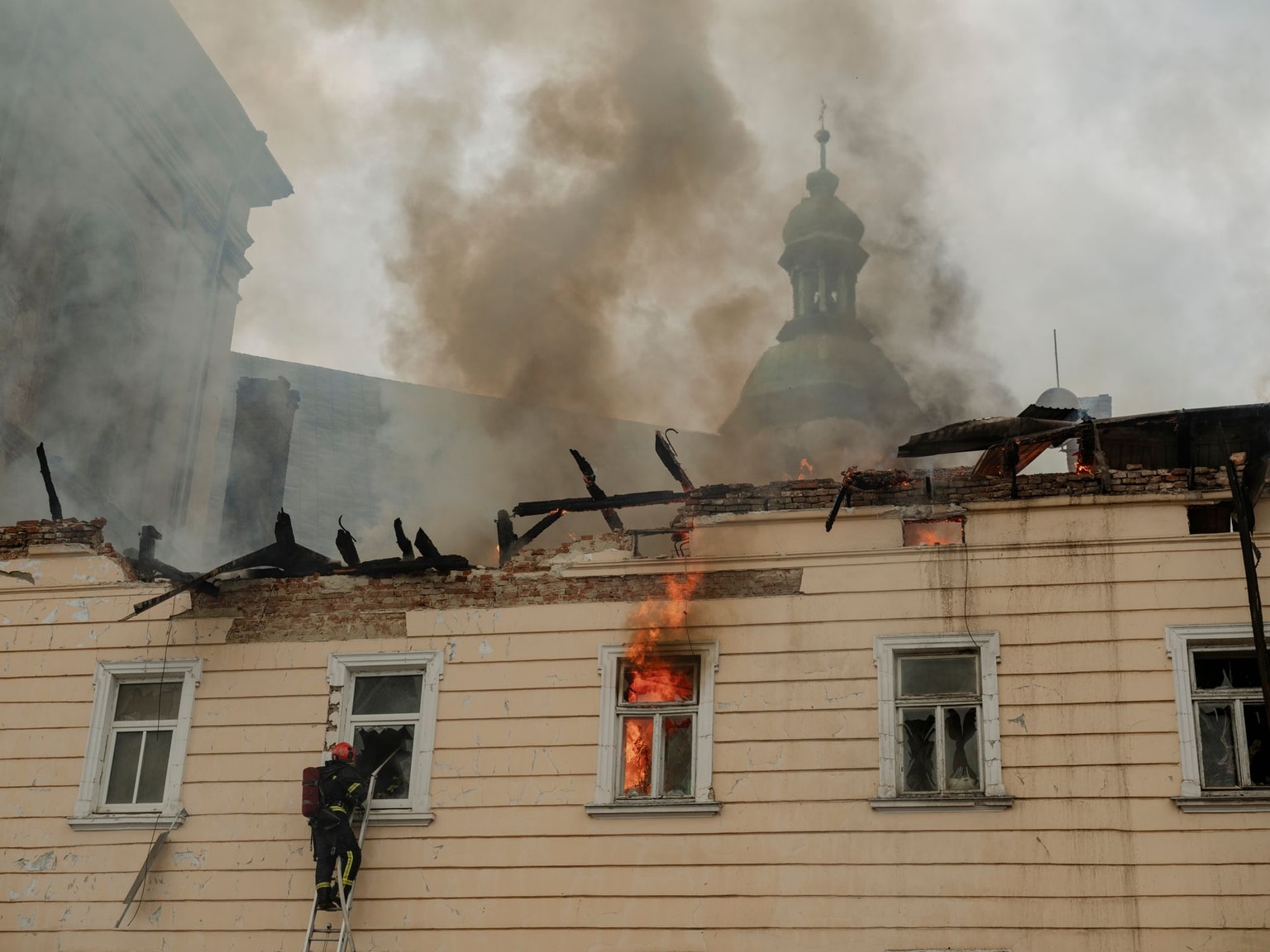
Four people were injured in an overnight attack as Russian forces struck energy facilities and other critical infrastructure in Odesa on Feb. 12-Feb. 13, regional officials said.
"The enemy continues to massively attack the Odesa region with strike drones. Despite the active work of the air defense forces, direct impacts and falling drone debris were recorded," Governor Oleh Kiper said.
One of the injured was hospitalized in serious condition, he added, as residential, industrial, energy, and port infrastructure sustained damage.
Power, heat, and water supplies were also disrupted, officials said, and restoration work is ongoing.