Ukraine war latest: Ukraine pulls back in eastern Sumy Oblast, Russia ignores Easter ceasefire
 on Google
Key developments on April 13:
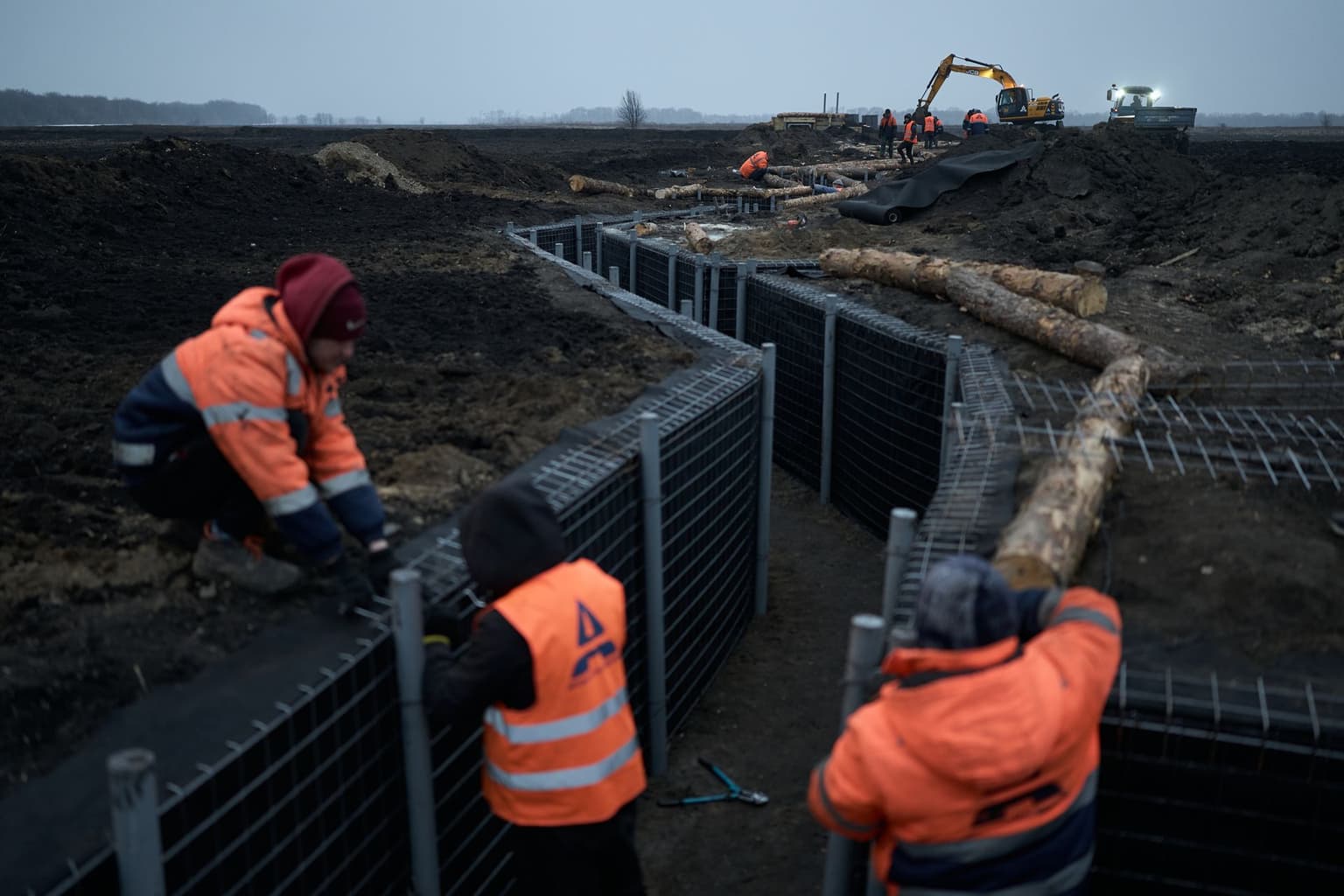
- Ukrainian forces withdraw from villages in eastern Sumy Oblast amid heavy fighting
- Russia violated Easter ceasefire almost 11,000 times, Ukraine says
- In response, Ukraine said it would also observe the ceasefire but would retaliate if it was breached.
- German arms giant Rheinmetall to build missiles with Ruta maker Destinus
- Asking Ukraine to cede land 'unworthy' of Hungary's 1956 resistance, Magyar says
Ukrainian forces have pulled back near Myropilske in Sumy Oblast, local command reports.
"As a result of intensive military operations, the opponent's advantage in force and means, the units of the Ukrainian Armed Forces, to preserve the lives of personnel, have moved to a new prepared border, where they will continue to hold the defense," Ukraine's 14th Army Corps wrote on Facebook on April 13.
Sumy Oblast sits on the border with Kursk, which Ukraine held from August 2024 through to April 2025. It was the site of a subsequent buildup of new Russian troops, which Ukrainian President Volodymyr Zelensky said last summer numbered about 50,000.
Ukrainian forces have largely stymied any major advance into the oblast, but the gray zone has grown. Russia has forcibly deported civilians from newly seized villages in the northern pockets of Sumy Oblast, while the increasing range of Russian FPV drones is bringing strikes closer to the city itself.
"The Armed Forces of Ukraine are controlling the situation, conducting surveillance and are ready for further military action," the 14th Army Corps' message continued.
Defense Ministry-linked battlefield map DeepState shows no changes to the line near Miropilske as of press time. The more conspicuous advances have pushed into towns like Yunikivka and Andriivka further north.
With prewar populations of from a few hundred to a few thousand, these towns were already largely emptied by evacuations.

Russia violates Easter ceasefire almost 11,000 times, Ukraine says
Russia violated an Orthodox Easter ceasefire 10,721 times during a 32-hour period from 4 p.m. Moscow time on April 11 through the end of April 12, Ukraine's General Staff said.
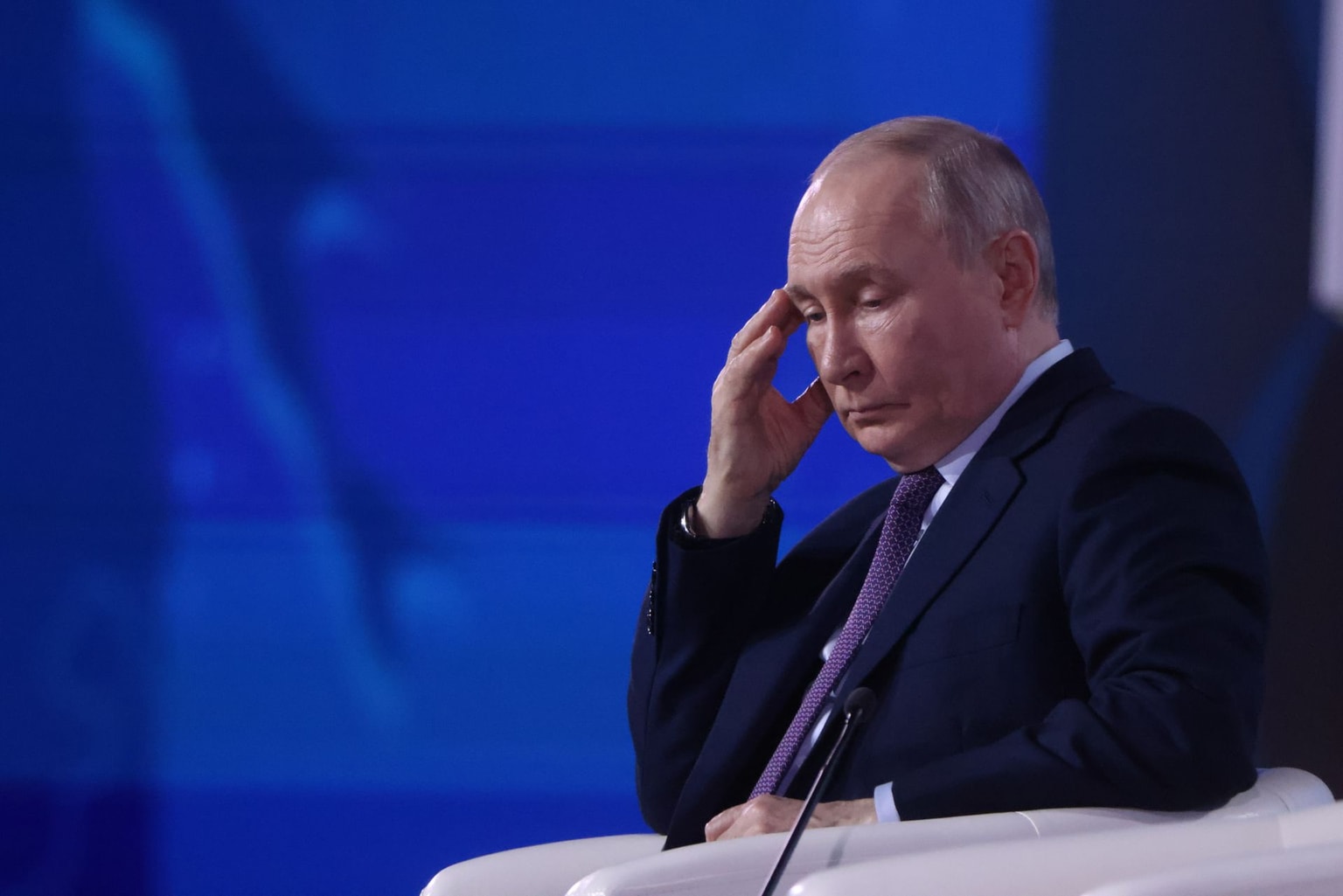
Russian President Vladimir Putin announced the ceasefire on April 9 after rejecting Kyiv's proposal for a truce put forward in late March.
In response, Ukraine said it would also observe the ceasefire but would retaliate if it was breached. Russia breached the ceasefire 469 times in the first six hours alone, according to Ukraine's military.
Stephen Hall, an assistant professor of Russian and post-Soviet politics at the University of Bath, said Putin announced the ceasefire to maintain control of the narrative in the war against Ukraine and to portray himself as a peacemaker.
"It looks good to Donald Trump that Putin does still want peace, that he is desperate to try and find peace and all of these processes. It is also a way to control the narrative, having completely ignored Zelensky," Hall told the Kyiv Independent.
"This is also a way to perhaps maintain his soft power links, as it were, to traditionalists because it is Easter — an important date in Christianity — and Putin is, of course, the most Christian man in the world," Hall added.
According to Hall, Russia's recent move does not indicate a pursuit of peace, but amounts to "smoke and mirrors" aimed at maintaining control over the narrative, something he said the Kremlin is "very good at."
According to the General Staff, no missile, aviation, or long-range drone strikes such as Shahed-type attacks were recorded during the ceasefire period. However, Russian forces carried out 1,567 artillery attacks, 119 assault actions, and 9,035 short-range kamikaze drone attacks.
Of the drone strikes, 2,205 involved tactical systems such as Italmas, Lancet, and Molniya drones, while 6,830 were FPV drone attacks, the General Staff said.
Over the past day alone, 107 combat clashes were recorded along the front line.
In the border area between Russia and Ukraine's Sumy Oblast, as well as in the Kursk sector of the front line, 20 shelling incidents and one offensive operation were recorded. In Kharkiv Oblast, Russian troops carried out nearly 20 offensive operations near populated areas, including Kupiansk, Vovchansk, and Lyman.
In Donetsk Oblast, Ukrainian forces repelled six Russian attempts to advance in the Sloviansk sector near Rai-Oleksandrivka and surrounding areas. One attack was recorded in the Kramatorsk sector, while 15 assaults took place near Kostiantynivka.
The heaviest fighting continued around Pokrovsk, where Ukrainian forces repelled 28 Russian assaults.

Russian forces carried out five attacks around Oleksandrivka, at the junction of Zaporizhzhia, Donetsk, and Dnipropetrovsk oblasts, and 12 attacks by Huliaipole of Zaporizhzhia Oblast.
The General Staff said Ukrainian forces continue to repel Russian attacks across the front line.
Russian authorities, for their part, accused Ukraine of breaching the ceasefire, alleging that Ukrainian drone strikes hit targets in Russia's Kursk and Belgorod oblasts and left five people injured.
The Kyiv Independent could not independently verify the claims.
In the April 11 evening address, President Volodymyr Zelensky said Ukraine remains open to extending the ceasefire, but warned that any Russian violations would be met with a "proportional response."

German arms giant Rheinmetall to build missiles with Ruta maker Destinus
German defense giant Rheinmetall and Netherlands-based defense manufacturer Destinus announced plans on April 13 for a joint venture to produce advanced missile systems, including cruise missiles and rocket artillery systems, according to a statement.
The joint venture comes as Europe struggles to manufacture advanced strike weapons at the scale modern warfare requires, a gap highlighted by Ukraine's reliance on cheaper, mass-producible alternatives to traditional cruise missiles, such as long-range strike drones.
As the wars in Ukraine and the Middle East continue, global demand for scalable strike systems is rising — from thousands to tens of thousands of units per year, the statement read.
"Europe is entering a new phase of scaling missile production," Mikhail Kokorich, co-founder and CEO of Destinus, said in a statement.
"Modern conflict is defined by volume and cost-per-effect. Missile systems are evolving from limited-production assets into industrial products. The real constraint in Europe today is not demand, but industrial capacity," Kokorich added.
Destinus, a manufacturer of advanced aerospace systems, has previously cooperated with Ukraine. The company began supplying Ukraine with the Ruta "missile-drone" hybrid in 2024 and, in early 2026, unveiled the Ruta Block 2 cruise missile, with a range of more than 450 kilometers (280 miles) and a warhead of approximately 250 kilograms.
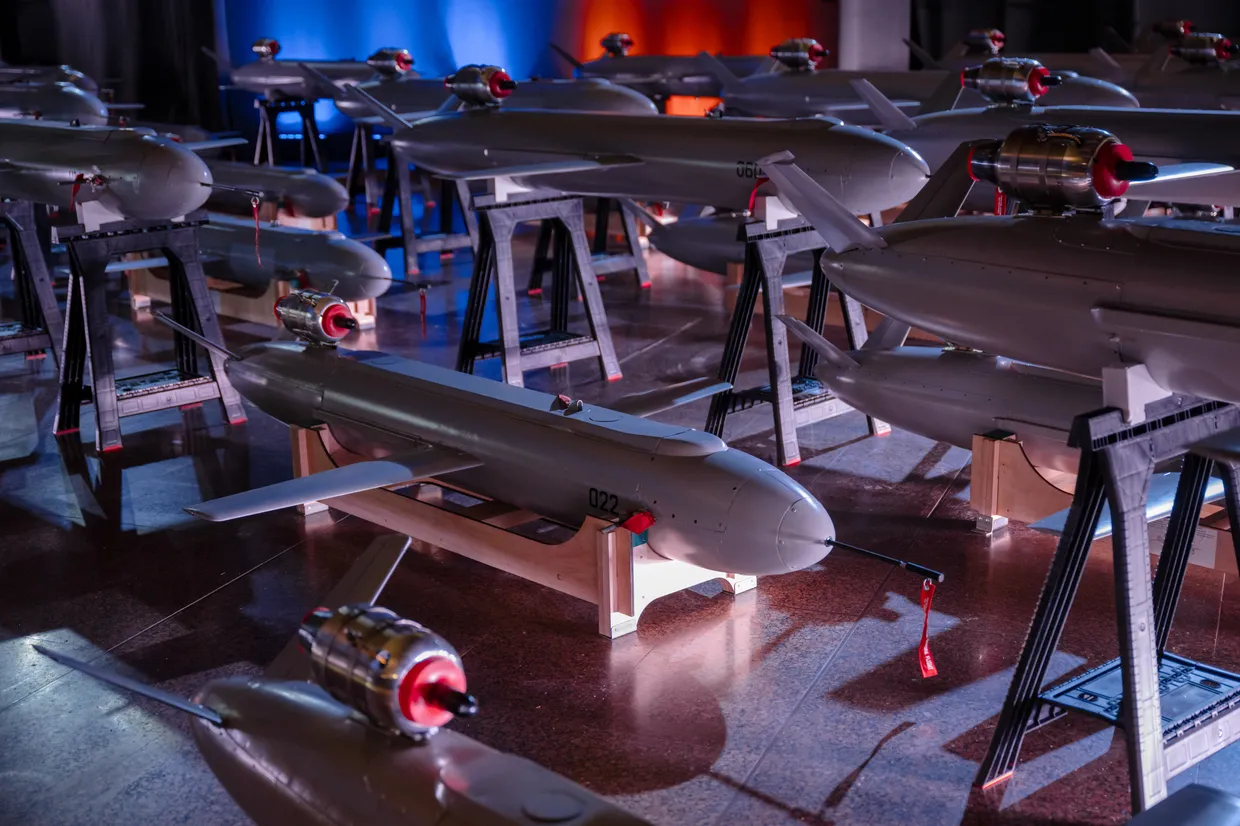
Kokorich is himself a Russian national who posted that he was renouncing his Russian citizenship at the end of 2024. In 2021, he left Momentus, the aerospace company he founded in the U.S., following Defense Department scrutiny of his citizenship.
The joint venture, expected to be launched in the second half of 2026 pending regulatory approval, will combine Rheinmetall's production capacity with Destinus' system architecture, product design, and scalable platform development, Rheinmetall CEO Armin Papperger said.
Rheinmetall, one of Europe's largest arms manufacturers, has become a key supplier for Ukraine, delivering tanks, 155-millimeter artillery rounds, mortar shells, and surveillance drones.
Rheinmetall will hold a 51% stake, with Destinus owning the remaining 49% in the venture, which will be called Rheinmetall Destinus Strike Systems, according to the statement.
The joint venture will focus on manufacturing, assembling and delivering cruise missile systems and ballistic rocket artillery, targeting European and NATO markets.
The companies said the partnership aims to expand industrial capacity and bridge the gap between battlefield demand in Ukraine and Europe's ability to deliver strike systems at scale.
Asking Ukraine to cede land 'unworthy' of Hungary's 1956 resistance, Magyar says
Ukraine has the full right to defend itself against Russian aggression and cannot be forced to cede territory, Hungary's election winner, Peter Magyar, said on April 13 in response to a question from a Kyiv Independent reporter.
"If someone says this — no matter how long Fidesz politicians have said similar things — you should ask them what would happen if Russia attacked Hungary: which Hungarian county would they give up?" Magyar said at a press conference.
"This is outrageous, cynical talk, unworthy of our 1956 heroes and freedom fighters," Hungary's incoming prime minister said, drawing comparisons to Hungary's anti-communist 1956 revolution.

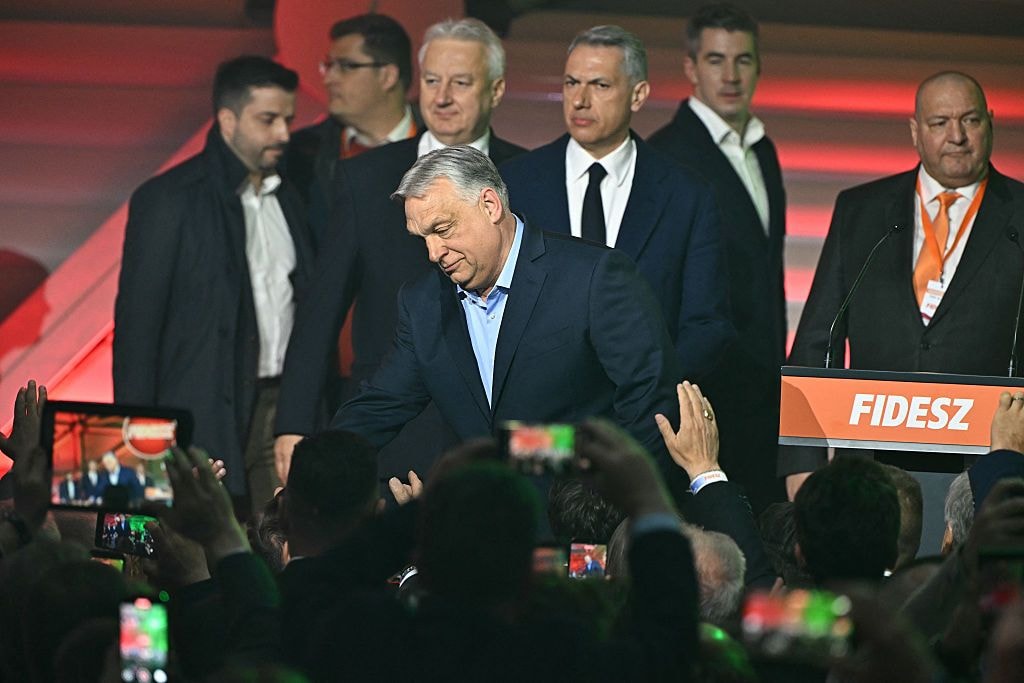
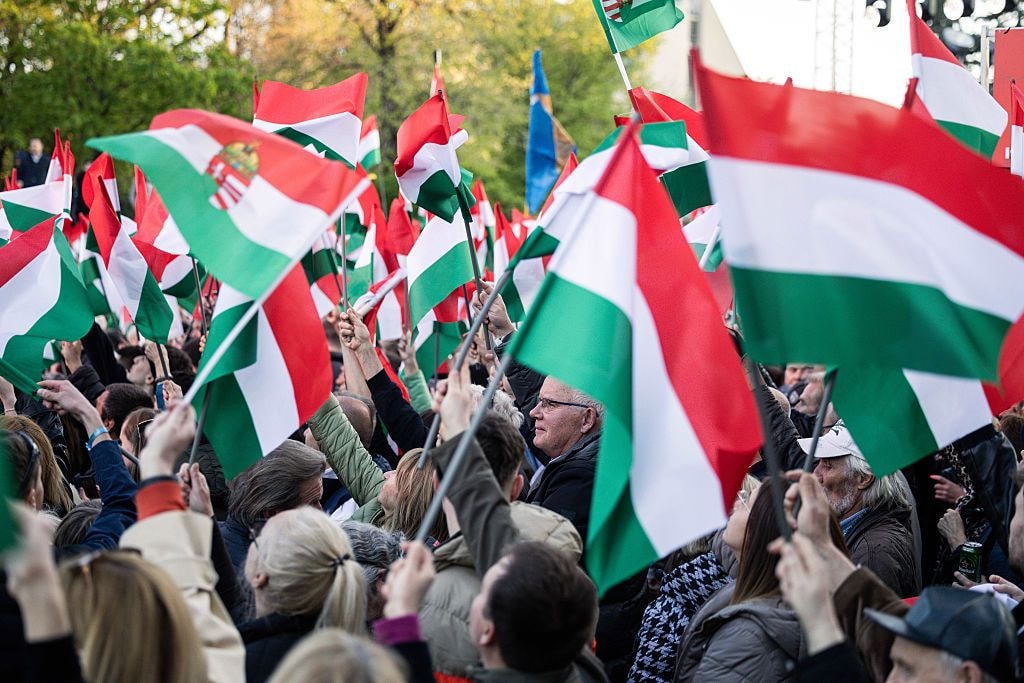
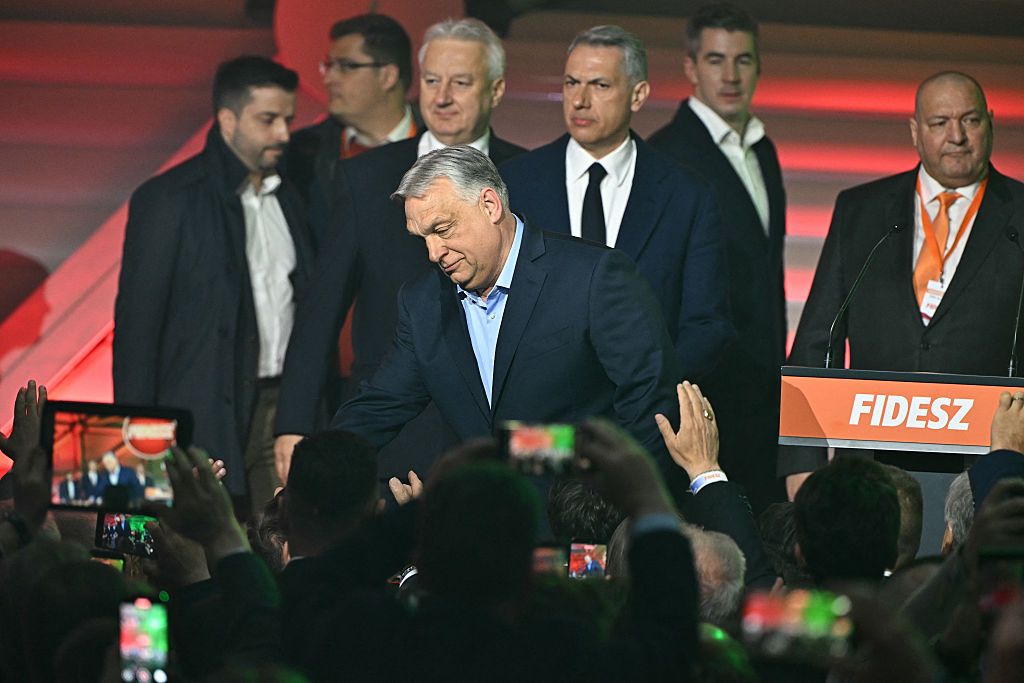
Magyar's Tisza party secured a resounding victory over Prime Minister Viktor Orban's Fidesz in the parliamentary elections on April 12, ending Orban's 16-year-long grip on power.
The election came at a pivotal time for Ukraine, as Orban — widely regarded as the EU's most Kremlin-friendly leader — blocks a 90-billion-euro ($105 billion) loan for Kyiv and the 20th package of Russia sanctions.
Magyar, a former Fidesz insider who broke with the party in 2024, promised to weed out corruption from the Orban era, mend ties with the EU, and pivot away from Fidesz's pro-Russian policies.
Asked by the Kyiv Independent about U.S. President Donald Trump's pressure on Ukraine to reach a peace deal with Russia, Magyar said that "no country has the right to tell another to give up territory after a four-year war."
The Hungarian politician stressed the need for U.S.-backed security guarantees for Ukraine and warned against repeating the mistakes of the 1994 Budapest Memorandum, under which Kyiv exchanged its Soviet-era nuclear arsenal for vague assurances.
Magyar also said his government would pursue friendly relations with all neighbors, including Kyiv — but named the "settlement of the rights of the Hungarian minority" in Ukraine as a precondition for normalizing ties.
Orban has long accused Ukraine of discriminating against its ethnic Hungarian community, primarily through language laws. Kyiv has rejected Orban's accusations but has signaled its readiness to resolve any potential disputes.
Earlier during the press conference, Magyar reiterated his party's pledge to decrease reliance on Russian energy through diversification.
At the same time, he noted that Hungary's "geography cannot be changed," stressing that ensuring cheap oil and gas for Hungarian citizens and companies remains the priority.
Hungary, a Central European landlocked country, is largely dependent on Russian pipeline oil and gas, a dynamic that has only deepened under Orban's government. Tisza has vowed to end this dependence by 2035, while the EU aims to halt Russian energy imports already by the end of 2027.
"I believe that once this war ends — and we very much hope negotiations will succeed and it will not drag on for years — at that moment Europe will lift these sanctions," Magyar said, adding that buying cheap resources is in Europe's interest.
"It is easy to say principled things, and I understand the moral arguments, and no one defends human rights more strongly than I do. But still, I ask that we do not tie our own hands completely."
Magyar said he does not intend to call Russian President Vladimir Putin, but would receive his call to urge him to end the war, which has cost "tens of thousands of Russian lives."
The incoming prime minister also noted he had already received congratulations from President Volodymyr Zelensky and that they would likely meet at the European Council once Magyar is sworn in.
read also
 Linda Hourani
 Oleg Sukhov