'This is the future' — Amid blackouts, these Ukrainian mountain villages have green solution
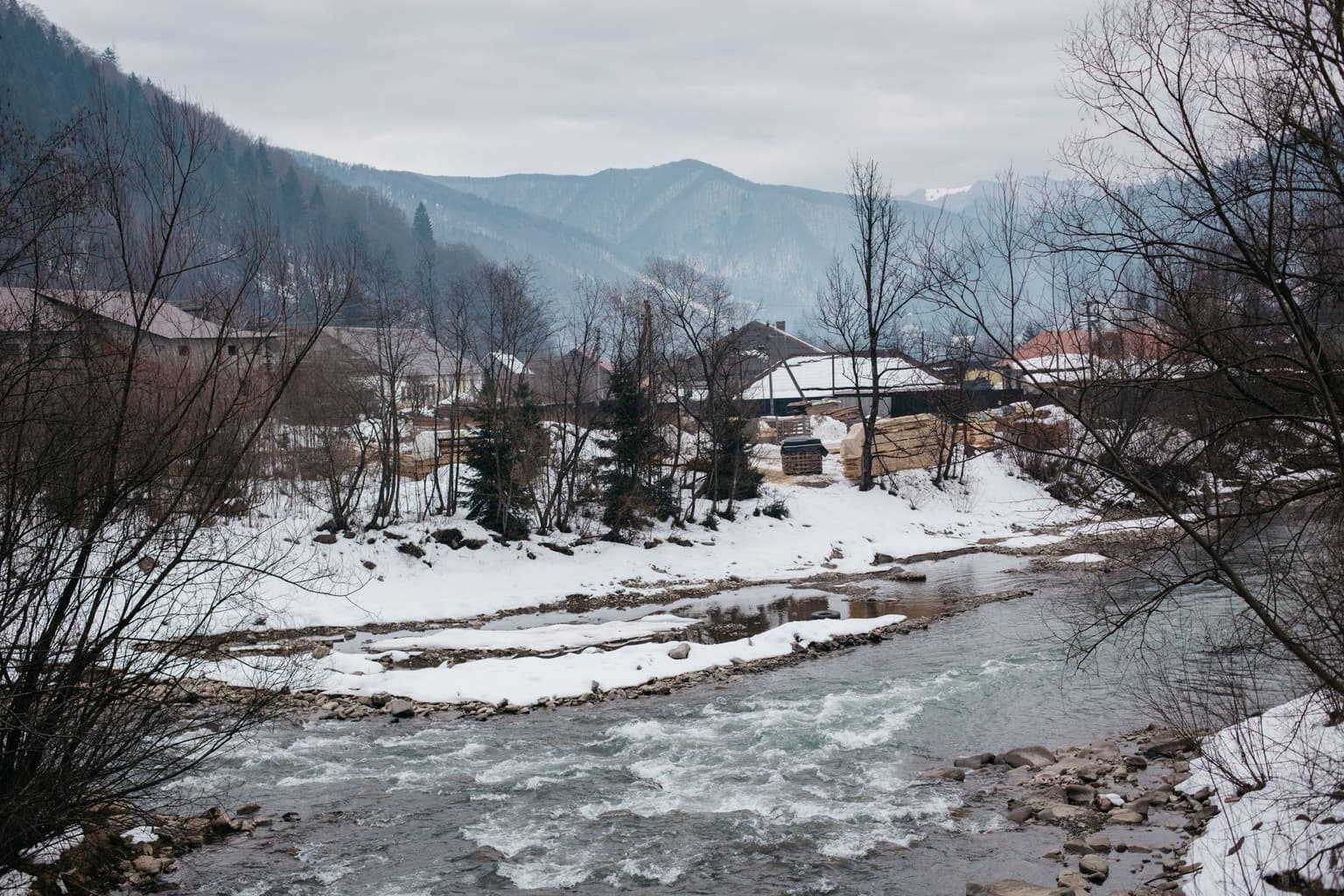
A view of the mountain village of Ust-Chorna in Zakarpattia Oblast, Ukraine, on Feb. 10, 2026. Tucked into a forest valley, this community has maintained a nearly uninterrupted power supply during winter blackouts thanks to a local network of micro-hydroelectric power stations. (Alona Malashyna / The Kyiv Independent)
 on Google
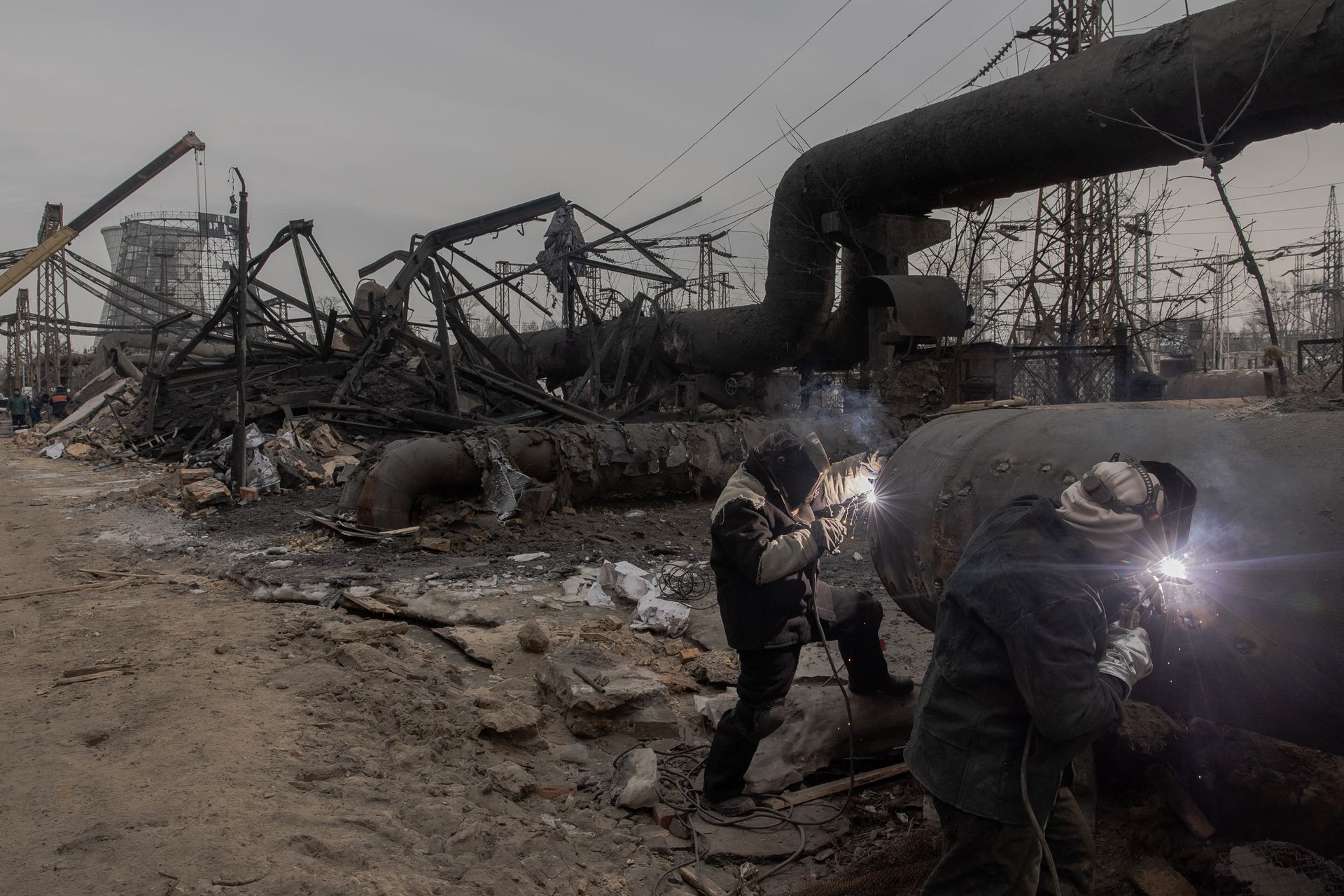
As Russian missiles and drones plunge much of Ukraine into darkness this winter, the mountain community of Ust-Chorna has largely kept the lights on — thanks to green energy.
The district, made up of four villages tucked into a forest valley of western Ukraine, relies on a small network of hydroelectric power stations that have continued operating even as Russian attacks have all but destroyed the country's centralized energy grid.
And as emergency blackouts are implemented across the country, Ust-Chorna's residents say their power supply has remained nearly uninterrupted.
"Of course, they are all envious of us," said Petro Kostyak, the head of Ust-Chorna, referring to the surrounding villages that are still subjected to scheduled blackouts caused by Russian attacks on Ukrainian energy infrastructure.
The villages can be reached by a single road that winds through tree-covered mountains, narrowing the valley until only the road and river remain. The road opens suddenly into a clearing, revealing a stylish square cement building — one of Ust-Chorna's three hydroelectric power stations, built in 2014 by Rener, a Ukrainian group of renewable energy companies.
Russian attacks have decreased Ukraine's electricity generation capacity to 33% of its prewar levels, according to government estimates. The severity of the damage and ensuing blackouts have exposed the weaknesses of centralized power infrastructure, accelerating the country's push toward decentralized and renewable energy sources. In 2020, green energy made up 9.2% of the total energy consumed in Ukraine, while in 2023 this rose to 22%.

The mountain community of Ust-Chorna offers a look into both the promise and complications of the move to renewable energy. While its hydroelectric plants have insulated the community's residents from blackouts, they have also sparked debates about electricity prices, environmental damage, and Ukraine's green energy policies.
Russia's war — now creeping into its fifth year — has drained Ust-Chorna's local economy. One particularly painful blow came when a major forestry company operating in Ust-Chorna re-registered in Kyiv, shifting its tax payments to the capital.
Kostyak wants to see his native village community develop, and says keeping it alive will require fresh sources of income. Energy, he believes, may be one of them — particularly green energy.


"These would be colossal sums of money, which would allow the community to flourish. This is the future...when there is money in the budget, you have the opportunity to work, to create transparency, openness, build projects and expertise," Kostyak explained.
Although the village avoids blackouts, the price of electricity remains one of the key issues for villagers, with some saying they are paying more for hydroelectric power.
Still, Kostyak tells the Kyiv Independent, uninterrupted power is transformative for some, especially the most vulnerable.
"There are villagers who are severely disabled and bedridden — for them, constant power is critical," Kostyak said.
The promise and pitfalls of green energy projects
Currently, each of the three power plants in Ust-Chorna produces 1 megawatt of power every year, all of which is sold back to the state. But due to Ukrainian legislation, the local government there receives nothing from the energy sale, collecting only a small tax linked to the plants' workforces.
But Kostyak believes that with Ukraine’s new legislation encouraging small energy producers, Ust-Chorna could make much more. During the war, Ukraine’s government has sought to encourage localized and green energy production through legislative changes and financial incentives to boost energy independence.


Recognizing the need to reorient its energy strategy, Ukraine vowed to ramp up its renewable energy production to 24 gigawatts by 2030. But large green energy sites, like large-scale wind farms, solar plants, or the destroyed dam of the Kakhovka hydroelectric power plant, were found to be vulnerable to Russian attacks.
In response, the government in Kyiv stepped up efforts to promote decentralized energy production. New legislation allows small-scale producers to either sell surplus electricity to the state through an aggregator at market prices or offset future energy bills through a virtual accounting system. The state has also introduced loan programs to help businesses build their own renewable energy facilities.
This has pushed various actors at every level to pursue energy self-sufficiency. Municipalities like the city of Mykolaiv have set up solar panels and batteries in order to power the city’s water infrastructure, while smaller organizations like schools, hospitals, and businesses have installed solar panels and store the energy to use during blackouts. There are even reports of individuals setting up their own watermills and windmills to generate power.
With this new legislation, any green energy infrastructure that Kostyak can secure for Ust-Chorna would mean that his community would receive 3% of the profits made from selling the energy. Kostyak currently has plans for a wind turbine farm and another hydroelectric power station to be built in Ust-Chorna — a single wind turbine could bring in Hr 1.5 million ($34,000) per year, while a hydroelectric power plant could bring in Hr 10 million ($230,000).


But his plans have their critics, who argue they risk damaging the surrounding environment. Yuri Kostyak, Petro’s uncle, who works as a guard on the grounds of the new wind turbine farm, says the hydroelectric power plant is environmentally harmful to the fish in the river.
"But our officials are pressured to support the projects because they provide Ust-Chorna with electricity and a few jobs — it’s really the only option they have," he said.
Environmental concerns halted plans to build a hydroelectric power station in the village of Kalyny, downstream from Ust-Chorna, despite the area facing frequent blackouts. Ust-Chorna’s first hydroelectric power station was built in 1961, bringing electricity to the area for the first time. The lower villages, including Kalyny, rely on other energy sources, which are now subject to outages.
When the Ukrainian company Hydroresource-Teresva LLC proposed the project to Kalyny in 2017, its residents made it clear they didn’t want anything to do with the project. Years later, the battle between the plant developers and the local residents continues. Last year, the residents of Kalyny were still protesting the construction of the hydroelectric power plant.
Kostyak says the protests were ill-informed, as the power plant in Ust-Chorna's environmental impact was temporary and has already been addressed through Rener’s investments in the community.
But environmental activists have repeatedly warned that, as well as environmental damage, hydroelectric plants carry serious flood risks for those living around the plant. Ust-Chorna, located at the confluence of two mountain rivers, is already in a flood-prone area.

Kalyny and Chorna-Ust are located in the Svydovets mountain range, part of the Emerald Network, a European-wide area which is home to critically endangered species. Ten species of fish from Ukraine’s Red Book of endangered species come to spawn in the Teresva River, where Kalyny’s hydroelectric station would have been located.
But for others in Ust-Chorna, like Elizaveta Palinkash, Rener's projects seem like a natural continuation of what the village community has always done — rely on the natural environment.
Ust-Chorna was founded during the Austro-Hungarian period, when the empire settled German foresters in the area.
"They cut and cut, but the forest always grew back," Palinkash said, comparing that renewable cycle to the river, arguing that it stands in contrast to extractive fossil fuel industries elsewhere in Ukraine, where the earth has no time to replenish itself.
Uncertain future of green energy
Another concern is whether the financial incentives the hydroelectric projects promise will materialize. Ukraine’s green energy industry boomed after Ukraine introduced the "green tariff" in 2009.
The system promised impressive profits, higher than any other European country, via a fixed price for green energy pegged to the Euro, which would be subsidized by profits from other sources on the energy market.
But many of the projects produced insignificant amounts of energy and were accused of being created purely for the financial benefits of the green tariff, and at the expense of the environment.
The initiative was accused of creating a new green energy oligarchy, with many suspicious that the initiative was a way for officials to rip off the government, with 35 of the 313 green tariff projects belonging to members of parliament.


The project was also financially unbalanced: by the end of 2019, renewable energy only provided 1.9% of the nation’s electricity, but 8.6% of the revenue brought in from electricity bills was paid out via the green tariff. The government repeatedly fell short on payments to green energy producers, meaning that many facilities had to stop functioning altogether.
By 2020, the government sought to resolve the problem and repay the debt, but the full-scale invasion started in 2022, making these financial obligations even more difficult.
Since then, the government has been discussing cancelling the green tariff altogether, undermining the confidence of investors even further and making the future of green energy in Ukraine even more uncertain.