Soros is out — Zelensky is in. Orban's party has new face for its old trick
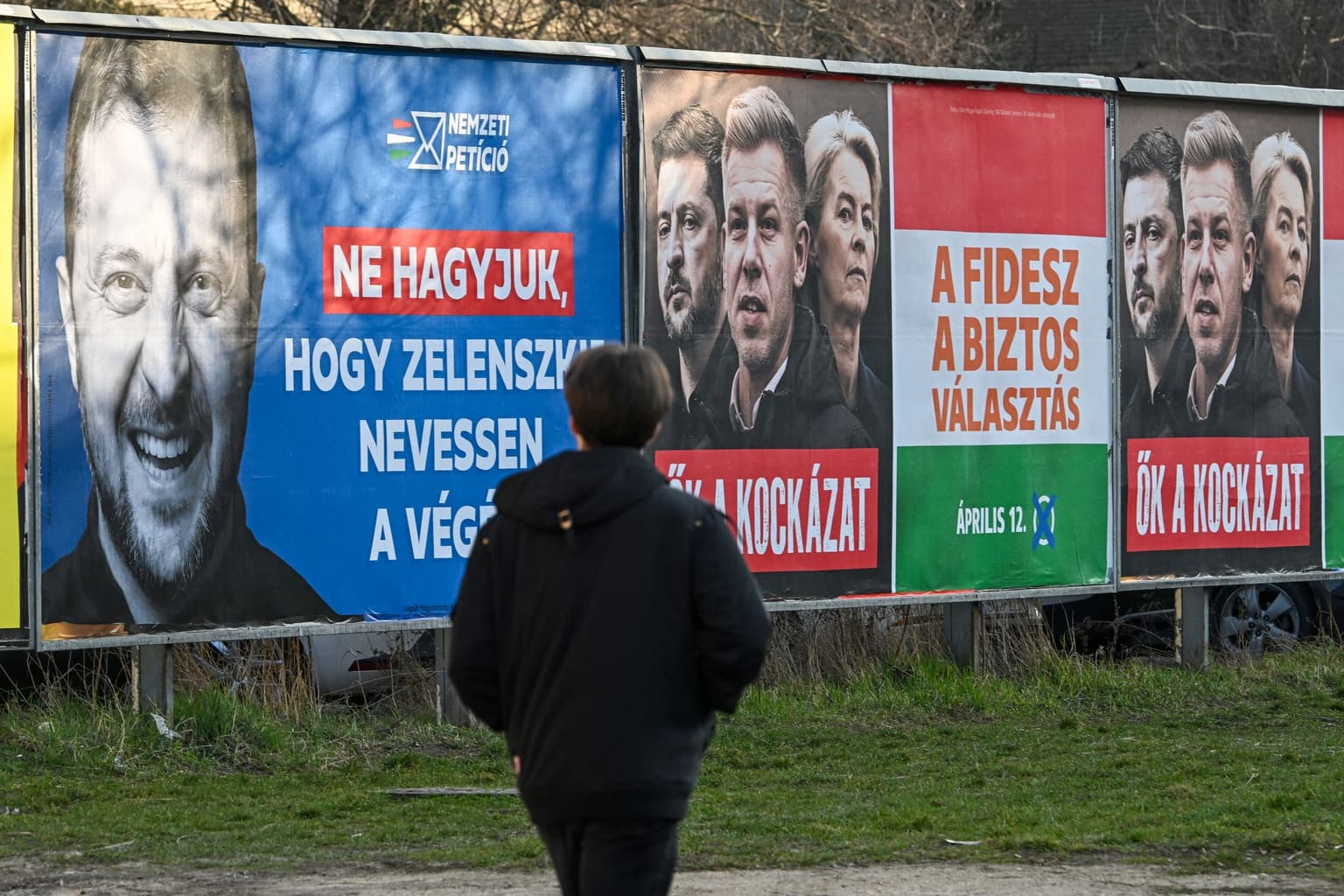
A pedestrian walks past a pro-government billboards featuring a portrait of Ukrainian President Volodymyr Zelensky (L), with the text reading, 'Let's not let Zelensky have the last laugh, and another billboard featuring European Commission President Ursula von der Leyen (R), Ukraine's President Volodymyr Zelensky (C), and Hungarian opposition leader Peter Magyar (L) with a text, 'They themselves are the risk.' in Budapest, Hungary, on March 3, 2026. (Attila Kisbenedek / AFP / Getty Images)
 on Google
Erik Uszkiewicz
Vice-chairperson of the Hungarian Europe Society
Since Hungarian Prime Minister Viktor Orban returned to power 16 years ago, we have witnessed a dramatic change in his political stance towards Russia and the strengthening of Hungary's relationship with the Putin regime.
The mouthpieces of the government and the propaganda machinery have moved from a critical position to open admiration towards the Russian strongman and the Russian Federation, which they see ready to take swift and decisive actions and describe as one of the last guardians of traditional, conservative, and national values.
When the full-scale invasion of Ukraine began in February 2022, Hungary was in the final stages of the previous parliamentary election campaign.
After a short period of embarrassment, the entire media empire of the Hungarian ruling party started to echo the propaganda of the Fidesz party, claiming that Hungary stands on the side of peace in the war of two foreign nations. Fidesz, with its dominant media, portrayed the united opposition as staunch supporters of a war, who wanted to involve Hungary in a brutal conflict if they won the elections.

One of the main Fidesz campaign narratives during the 2022 election campaign was that opposition parties would send troops to the war in Ukraine. In April 2022, Viktor Orban won a supermajority again (fourth time in a row) and, in his victory speech, he even mentioned Ukrainian President Volodymyr Zelensky as one of his adversaries.
In 2024, in preparation for the European Parliament and local municipality elections, Fidesz raised the stakes even further, framing the events as a matter of "life and death."
Its politicians stated that only Fidesz was capable and willing to prevent Hungary from getting involved in a war that had nothing to do with it, and only the ruling party could guarantee the security of Hungarian citizens.
This war psychosis has led to an unprecedented level this year: leading Fidesz politicians and members of the government shared numerous AI-generated videos with bloody-headed Hungarian soldiers, coffins everywhere, and in one of the latest videos shared by Fidesz's Budapest organisation, a Hungarian father being executed in a war scene.
In 2025, anti-Ukrainian sentiments took on a new hue: propaganda machinery has stated that Ukraine has not only been responsible for Hungary's economic difficulties and war-induced inflation but also has wanted to interfere in Hungary's internal affairs, and, by joining the EU, Ukraine would bring enormous deterioration to the European community.
Thousands of billboards showed Volodymyr Zelensky first as a puppet of Brussels, later as an ally of opposition leader Peter Magyar, whose Tisza Party is now, in 2026, ahead of Fidesz in election polls.

Moreover, Zelensky appeared lately as the face of a revamped campaign, previously associated with George Soros, that proclaims "Don't let Zelensky have the last laugh." In the government-controlled media, Ukraine has always been portrayed as a corrupt, war-torn, ruined country, also as a "nest" of human and drug traffickers, sex workers, and criminals.
The anti-Ukrainian rhetoric has brought about a change compared to all previous government campaigns aimed at creating and discrediting enemies: while previously, Hungarian-born American businessman and philanthropist, Soros, "gender ideology", "Brussels", or migrants were at the forefront of government campaigns, with Ukraine for the first time, a foreign sovereign state has been targeted.
In the minds of Fidesz decision-makers, this enemy image — among other reasons — is optimal for political reasons, because this topic can be used for a long period of time, given, for example, that Ukraine's EU or NATO membership could take years even under peaceful circumstances.
Opinions about and support for Ukraine are extremely polarizing issues about which the majority still agrees with the government. The public opinion poll VOKS2025, mainly based on votes from the pro-government camp, overwhelmingly rejected the possibility of Ukraine joining the EU.
But even in the consultation "Voice of the Nation" launched by the largest opposition force, the Tisza Party, which featured 12+1 questions, the issue of Ukraine joining the EU received the least (albeit majority) support.
Not surprisingly, according to the official program of the Tisza Party, all countries wishing to join the European Union must meet the same conditions, which Ukraine does not currently meet. The manifesto claims that Tisza would not support the fast‑tracked accession of Ukraine to the EU, and when it comes a binding referendum will be held on this question in Hungary.
As for the reality of our times, we are currently experiencing a very turbulent period in the Ukrainian-Hungarian bilateral and diplomatic relations, which most probably reached their all-time low.
Our present period is characterized by mutual exchanges of messages from both the Hungarian and Ukrainian sides — on the subject of the Druzhba pipeline, Ukrainian soldiers with dual citizenship fighting in the war, as well as blocking the 90 billion euros aid intended for Ukraine, or the hijacking of the Ukrainian money convoy.
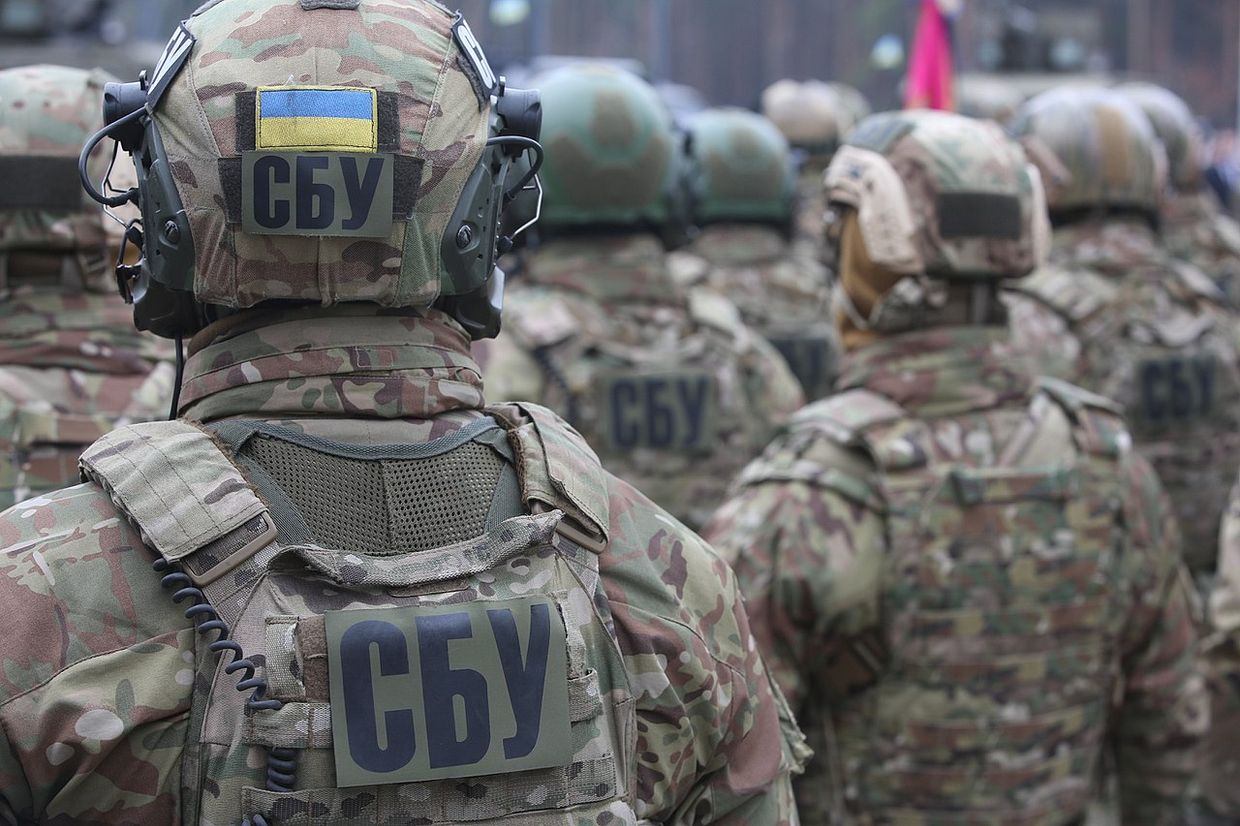
The latter most probably was a politically motivated operation carried out by the Hungarian secret service, according to sources. The goal was to provoke another conflict with Ukraine so that it could be used as a propaganda weapon ahead of the April 2026 elections.
According to Hungarian investigative journalist Szabolcs Panyi, the operation was orchestrated by Ors Farkas, the state secretary overseeing Hungary's civilian intelligence services and a senior aide to Antal Rogan, Orban's powerful minister who controls both the intelligence apparatus and the government's communications machine.
Those who commissioned the operation deemed it a success: their provocation succeeded, and they were able to provoke the Ukrainian president into making a statement that proved to be a major advantage for the Fidesz campaign.
All of these actions clearly serve domestic political and election campaign purposes in Hungary, definitely in the interest of Fidesz.
However, at the same time, we must also emphasize that Hungary is not equal to its government and its governmental actions.
A significant proportion of Hungarians still follow the terrifying events and shocking images from Ukraine with solidarity. Many Ukrainian families and people who have fled the war live, study, and work in the country, and among others, several Ukrainian children can spend part of their summer vacation in Hungary.
Small signs of solidarity, compassion, and helpfulness are evident in many ways. This is the other side of Hungary that we should also see and acknowledge.
Editor's note: The opinions expressed in the op-ed section are those of the authors and do not purport to reflect the views of the Kyiv Independent.
read also
 Tim Zadorozhnyy
 Martin Fornusek
 Tim Zadorozhnyy