Russia's mobilization arithmetic. How many can the Kremlin send to war?
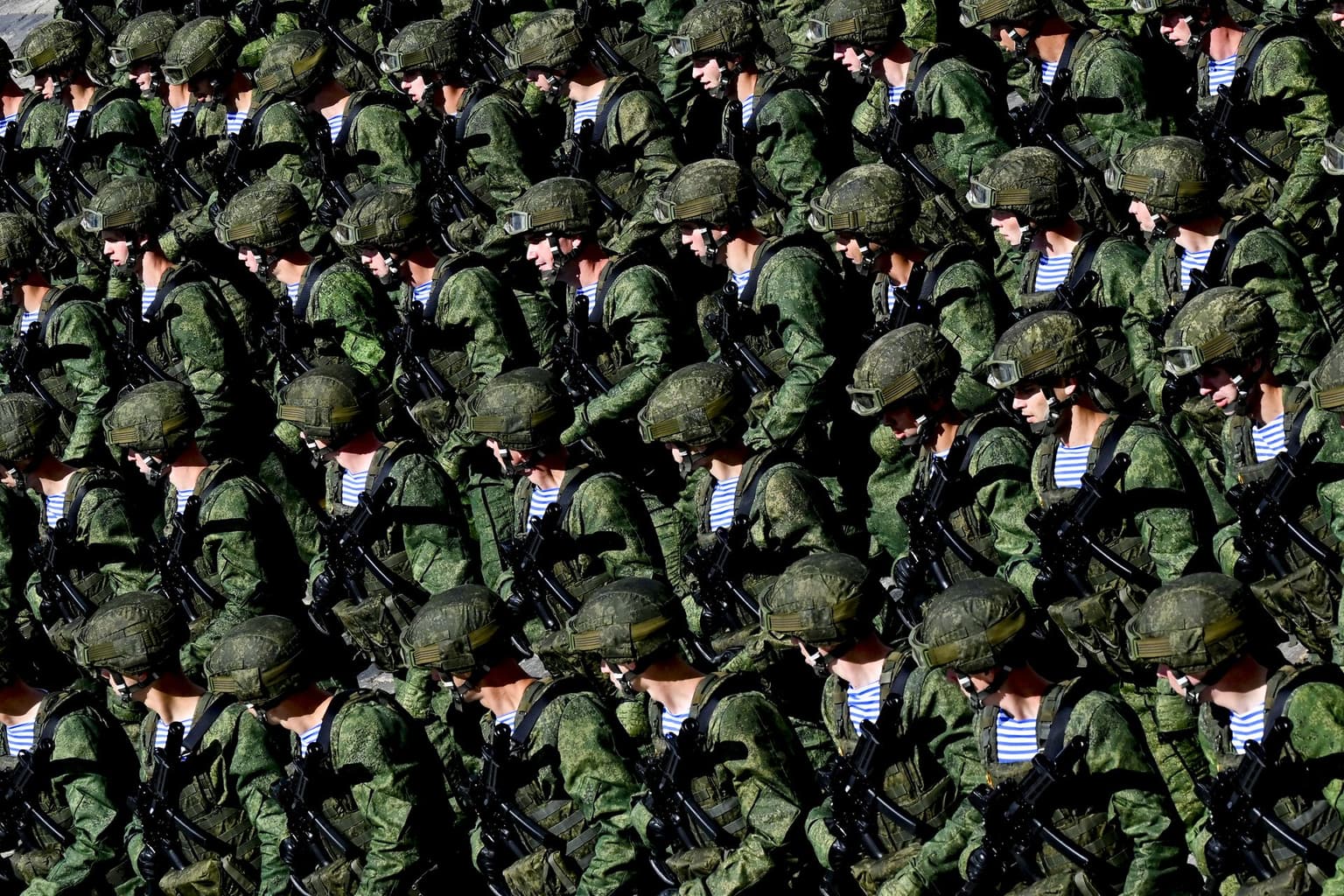
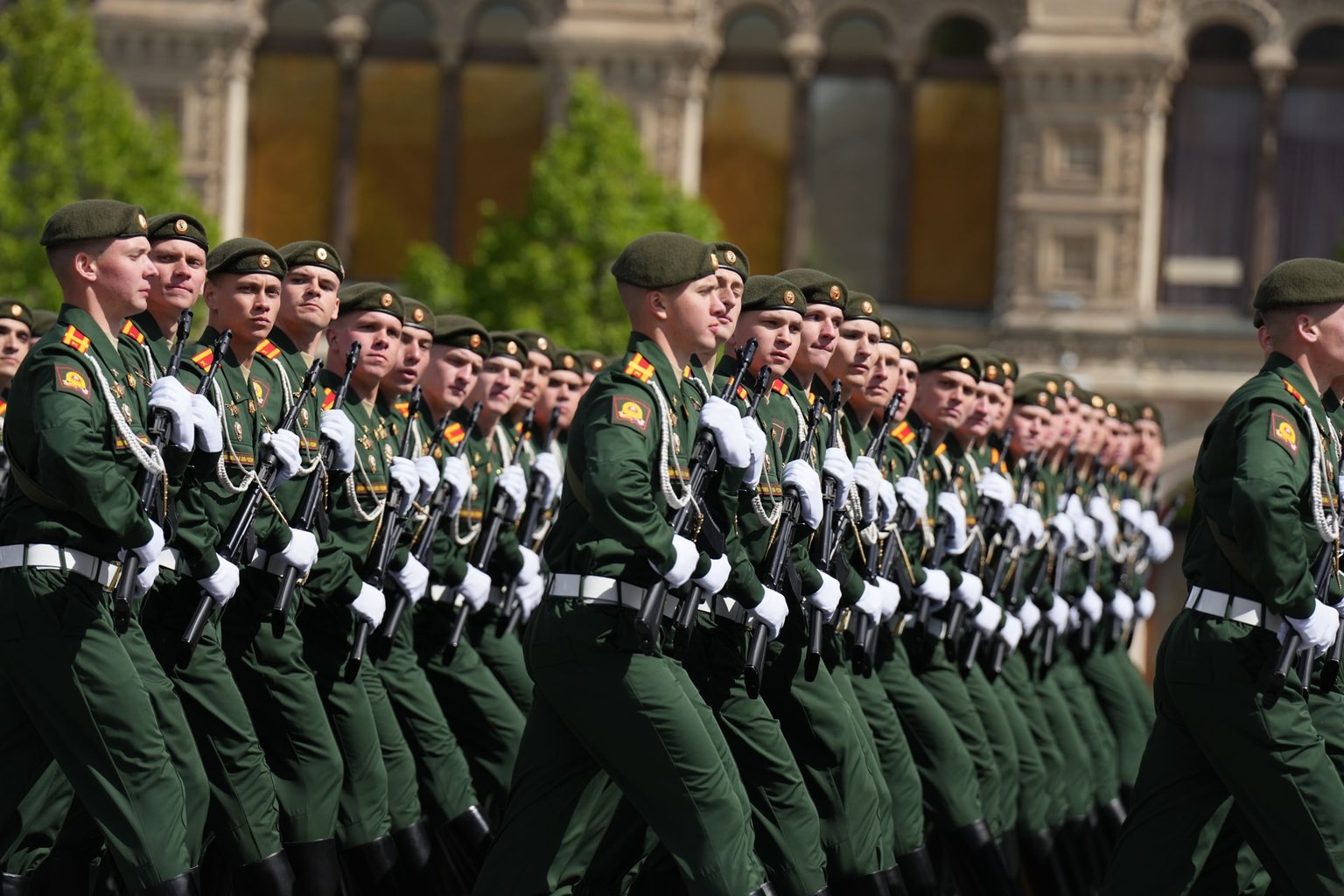
A military parade is held in the Red Square as part of the celebrations of the 80th anniversary of Victory Day, in Moscow, Russia on May 9, 2025. (Sefa Karacan/Anadolu via Getty Images)
 on Google
Liubov Tsybulska
Founder and current director of NGO "Join Ukraine"
When Russia announced a "partial" mobilization in the fall of 2022, its society experienced a genuine shock.
The queues at the Upper Lars border crossing into Georgia and the chaotic roundups of reservists are still fresh in public memory. The Russian authorities learned from that episode and shifted tactics toward a more concealed form of mobilization.
Several tools were deployed at once: mass recruitment from prisons, sending convicts to the front in exchange for pardons, and aggressive enlistment of "volunteers" through generous financial incentives — large signing bonuses, debt write-offs, promises of high salaries and a "better life," albeit often a short one.
This approach worked pretty well. Despite brutal "meat-grinder assault" tactics and heavy casualties, Russia's war machine managed to recruit at least as many people as it lost on the battlefield.
Between 2023 and 2025, Russia recruited more than 400,000 people annually for the war against Ukraine. That number has been sufficient to sustain offensive operations, even if not enough to give the Kremlin the decisive advantage needed for rapid advances and large-scale occupation.
If Moscow wants to maintain its current pace of offensive operations, it will need roughly the same number of recruits in 2026. Fewer volunteers would force a reduction in assault intensity. More would allow the army to continue fighting with little regard for casualties.
read also
 Alisa Yurchenko
 Kollen Post
 Asami Terajima
Can Russia recruit enough people?
The short answer is yes. Russia can announce another "partial" mobilization — selective, random, semi-coercive, whatever term it chooses — and pull hundreds of thousands into the army in a relatively short period.
Over the past four years, the state has prepared for this. New laws have made draft evasion far more difficult, penalties have increased, and digital registries of conscripts have been tightened. Police will not need to chase reservists: draft notices can now be issued electronically, and attempts to avoid them may lead to prison sentences — from which many will ultimately still be sent to war.
So yes, Russia has the capacity to mobilize people for continued aggression.

But the broader answer is more complex. The Kremlin will try to avoid an open mobilization. The lessons of fall 2022 were learned. Even an otherwise passive society experienced shock, and the political risks for the regime were real. A new mobilization might be technically smoother thanks to updated laws and better preparation, but Moscow still prefers not to risk it.
After all, why announce mobilization when, for four years, state propaganda has insisted that Russia is winning and that Ukrainian forces and "foreign mercenaries" are on the verge of collapse? As long as the war remains something seen on television, Russians will continue to support it and avoid openly challenging the regime.
Moreover, participation in the war has become part of a revised social contract: it is acceptable — even encouraged — if it is well paid. Few mourn these "volunteers." There is a tacit understanding that they went to war for money and must bear responsibility for their choice.

The Russian "volunteer": chasing fast money
Anyone who has spent time on Russian social media over the past three years (hopefully for research purposes) has seen the flood of contract recruitment ads. They are everywhere: banners, targeted posts, regional groups, federal channels. The message is simple: sign a contract with the Russian army.
The offer is generous. Millions of rubles as a signing bonus, additional payments, high monthly salaries, debt forgiveness, and preferential mortgages. For a security guard or shop assistant in a provincial town earning 40–60 thousand rubles a month ($500-800), war looks like a social elevator moving far faster than any civilian career.
Fast money attracts vulnerable groups. The average Russian citizen owes banks about 456,000 rubles ($6,000) — roughly seven times their monthly income. An offer of 210,000 rubles a month ($2,700) in the trenches can look less like a death sentence and more like a chance to pay off a mortgage or escape chronic poverty.
This financial "opportunity" comes with obvious costs. Beyond the risk of death, corruption in the armed forces is widespread, soldiers often have to cover basic unit needs from their own pay, and reports of inhumane treatment by commanders are common. But that is a separate story.
The Kremlin shifted much of the financial burden of recruitment onto regional authorities. Regions were given quotas, and most incentive payments were funded by local budgets. Signing bonuses rose sharply — like the price of bitcoin during a boom. In 2024 and early 2025, regions competed in generosity: Tatarstan, Samara, and the Yamalo-Nenets region offered more than 3 million rubles for signing a contract. Many others followed with payouts of 2–3 million ($26,000-39,000).
By late 2025, the bubble burst. Budget deficits — recorded in 67 regions — forced authorities to drastically cut payments. In Samara, the bonus dropped from 3.6 million rubles to 400,000 (from $47,000 USD to $5,200). Tatarstan followed suit, reducing payouts to the Kremlin's recommended minimum. Similar cuts occurred across much of the country.

How many will Russia mobilize in 2026?
This question is central not only for Ukraine's defense forces but also for international partners. Our team analyzed Russia's mobilization potential across demographic, political, and economic dimensions and identified five possible scenarios for 2026.
The most limited scenario would be a continuation of so-called hidden mobilization, amounting to about 200,000 recruits. With reduced regional payments, recruitment will likely fall below previous levels. The Kremlin will try to compensate: pressuring conscripts to sign contracts, offering deals to criminal suspects, expanding reservist training cycles, and finding other ways to quietly fill the ranks.
A second possibility would involve a renewed partial mobilization, bringing total additional forces to around 400,000. If battlefield losses rise or Moscow sees an opportunity to shift momentum, a new mobilization wave is possible. Digital registries could make it smoother than in 2022, drawing mainly from the provinces without disturbing Moscow and St. Petersburg. Politically risky, but plausible.
A more expansive scenario — around 700,000 personnel — would likely affect major cities and middle-class families, raising social tensions and straining the economy. Possible, but unlikely unless the situation becomes critical.
A large-scale mobilization of one million troops would be demographically feasible but economically and politically destabilizing. It would require a near-total war economy, border closures, rationing, and possibly asset seizures.
Finally, a total mobilization of up to five million people is essentially unrealistic. Maintaining such a force would exceed Russia's entire security budget.
It is often said that time favours Russia because Ukraine's resources are limited. In reality, economic losses are accelerating the pressure on Moscow as well. The Russian state may be emotionally indifferent to casualties, but it is not immune to economic constraints.
Russia enters 2026 with a military budget exceeding 7% of GDP. That is enormous, yet still insufficient to secure victory. Demographically, Russia still has manpower for large mobilization waves. But economic and political vulnerabilities are significant. A new mobilization would test the regime: is it ready to break its implicit social contract and turn a semi-voluntary war into a forced one? And are Russians ready to fight under compulsion rather than for money? These questions may be answered in the coming months.
The worst mistake would be to treat this analysis as grounds for complacency. Today, the only force capable of stopping Russian advances — and the Kremlin's broader ambitions, including toward EU countries — is Ukraine's defense forces, properly armed and supported.
The year 2026 offers a real chance for Ukraine and its Western partners to significantly weaken Russia. But this chance is not guaranteed. Inaction or delay will push the Kremlin to seek new funding sources, geopolitical alliances, and economic arrangements to sustain the war.
Editor’s note: The opinions expressed in the op-ed section are those of the authors and do not purport to reflect the views of the Kyiv Independent.
read also
Tim Zadorozhnyy Volodymyr Ivanyshyn
 Tim Zadorozhnyy