Russian threat will outlast Putin, Sweden's military intelligence chief says
 on Google
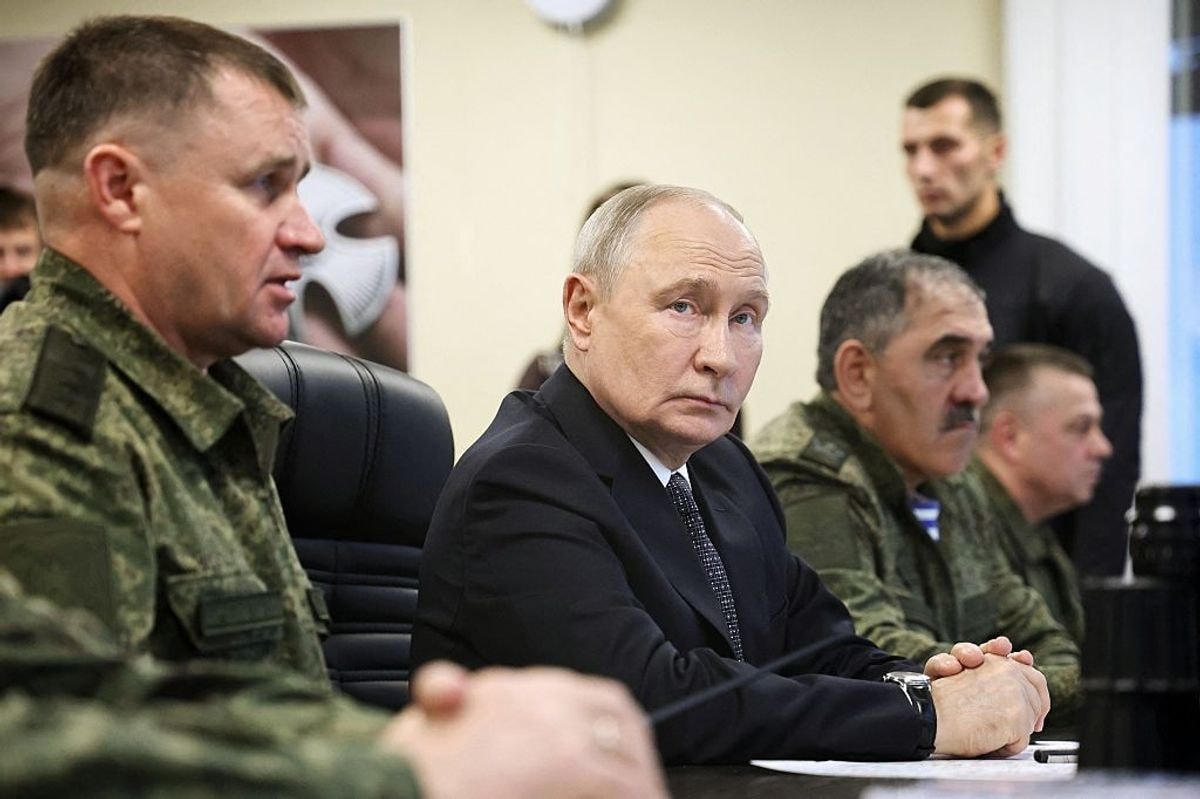
Russia is likely to remain a security threat long after President Vladimir Putin leaves office, Sweden's military intelligence chief said on June 30, describing Moscow's confrontation with the West as "deep, structural and enduring."
Thomas Nilsson, head of Sweden's Military Intelligence and Security Service (MUST), made the remarks in an interview with Bloomberg published on June 30.
"We don't see this crisis as a temporary one; Russia has chosen its path, and there is no way back," Nilsson said.
Nilsson also said Sweden saw no signs that Russia's political system or Vladimir Putin's grip on power were under immediate threat, despite economic strains caused by the war and Western sanctions.
"Political opposition has effectively been eliminated – through exile, imprisonment, or, in the worst cases, assassination," Nilsson said, adding that there was no political force capable of channeling public dissatisfaction into an alternative to the current regime.
The intelligence chief also said Russia was planning to expand its military presence along NATO's northeastern flank, stretching "from northern Finland all the way down." While many of those plans remain on paper as Moscow prioritizes its war against Ukraine, Sweden expects Russia to pursue them once it regains sufficient resources and military capacity.
Sweden joined NATO in March 2024 after abandoning decades of military non-alignment in response to Russia's full-scale invasion of Ukraine. Alongside neighboring Finland, Sweden has significantly strengthened the alliance's presence in the Baltic region.
Nilsson's comments came after Nordic media recently reported, based on satellite imagery, that Russia was expanding military infrastructure near the Finnish border. Moscow has previously said such deployments were a response to Finland's and Sweden's accession to NATO.
Russia has repeatedly criticized both countries' decision to join the alliance.
Sweden has remained one of Ukraine's key European partners since Russia's full-scale invasion. On June 18, Stockholm announced an additional $108 million in military aid through the Prioritized Ukraine Requirements List (PURL) initiative alongside additional assistance pledged by Belgium, Germany, and the Netherlands.