RFE/RL: Russian intelligence may receive data from Ukrainian surveillance cameras
 on Google
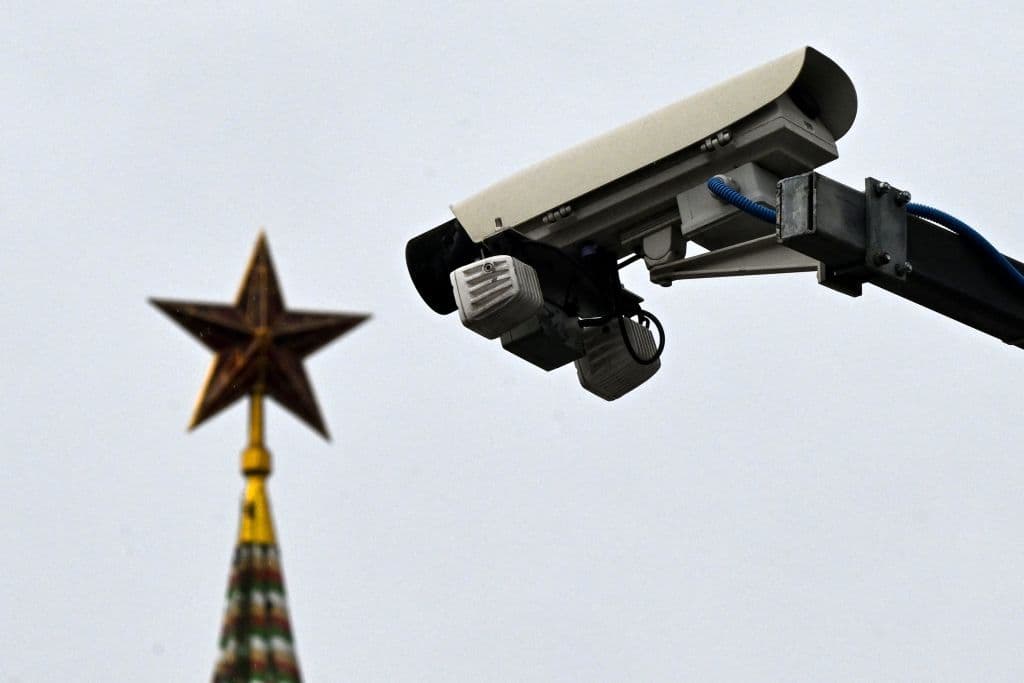
Russia's intelligence services may have been receiving video footage from thousands of Ukrainian surveillance cameras installed with a Russian software program, Radio Free Europe/Radio Liberty's Schemes project reported on Dec. 7.
Video cameras that use Russian TRASSIR software operate in Ukraine's public and private sectors, and are used by ordinary Ukrainians for personal security purposes. The TRASSIR video surveillance system not only records the movements of people and vehicles, but also recognizes faces and license plates.
A Schemes investigation found that footage from these cameras goes directly to servers in Moscow before its transmitted to consumers' phones or computers. According to Schemes, those servers in Moscow have ties to Russia's Federal Security Service (FSB).
Schemes received a tip from experts in the video surveillance field that TRASSIR cameras were routing video footage to Moscow servers. Investigators then carried out an experiment with analysts from the Computer Forensics Laboratory and the Digital Security Laboratory.
The experiment found that when TRASSIR cameras were connected to the internet, their data was transmitted to Russian servers.

"We can see that this camera is making requests to the subdomain of the website of the manufacturer of these cameras, TRASSIR — m30.ru.cloudtrassir.com," Natalia Onyshchenko, a web security specialist at the Digital Security Laboratory, told RFE/RL.
"We can see that this domain name corresponds to an IP address that is defined as a Russian IP address with a geolocation in Moscow."
The investigation identified several such IP addresses. A service that connects the IP addresses to a physical address showed that the servers are located in Moscow.
Investigators identified two companies that own these servers: the telecommunications company Digital Network, whose clients include Yandex, Russia's largest search engine, and VK, which owns the email service Mail.ru and the Russian social network Odnoklassniki.
Both companies have ties to the FSB and the Russian Interior Ministry.
The TRASSIR brand was created by the Russian company DSSL, which was founded 20 years ago by the Russian businessman Igor Oliynyk. TRASSIR cameras have been operating in Ukraine since at least 2011.
TRASSIR cameras have been installed in critical infrastructure facilities in Ukraine, including the Ukrainain Sea Port Authority, the Poltava city council, and the Chornobyl nuclear power plant.
Ukraine's State Special Communications Service told RFE/RL that it had examined TRASSIR equipment and software in 2019, but did not report its findings. In May 2022, the agency warned that TRASSIR/DSSL was cooperating with Russian federal ministries and security services.
The Security Service of Ukraine (SBU) also said it could not share details related to its counterintelligence activities.
According to Schemes, Ukraine began to abandon Russian software in 2022, following the full-scale invasion.
A representative from the Chornobyl plant told Schemes that the TRASSIR cameras were removed in 2023.