Ivan Marchuk, iconic Ukrainian artist, says he was scammed. He's now fighting for rights to his life's work
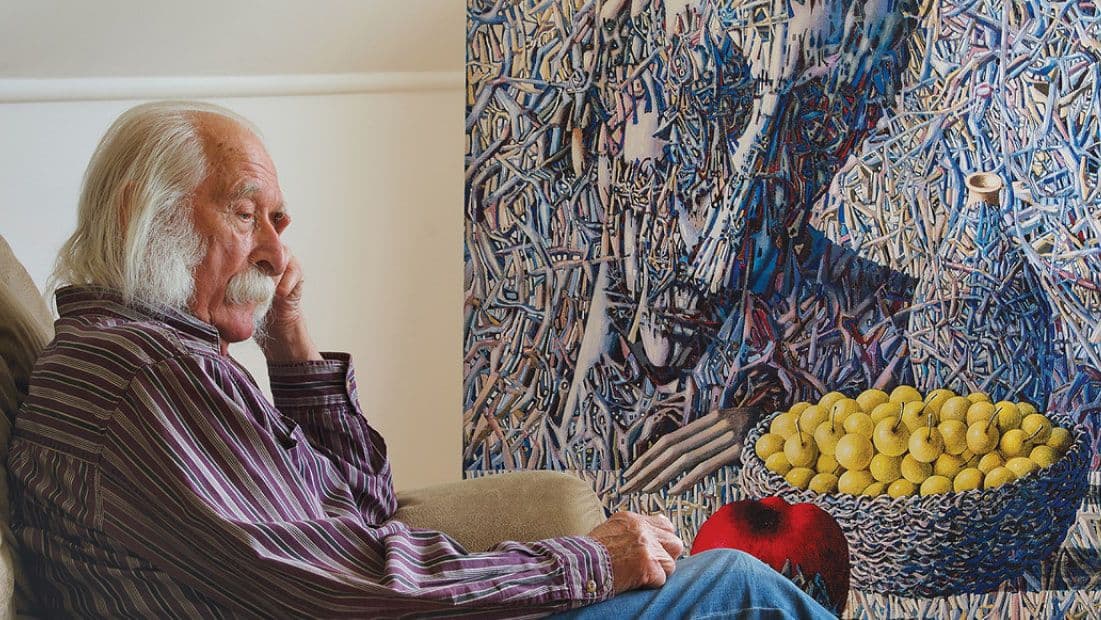
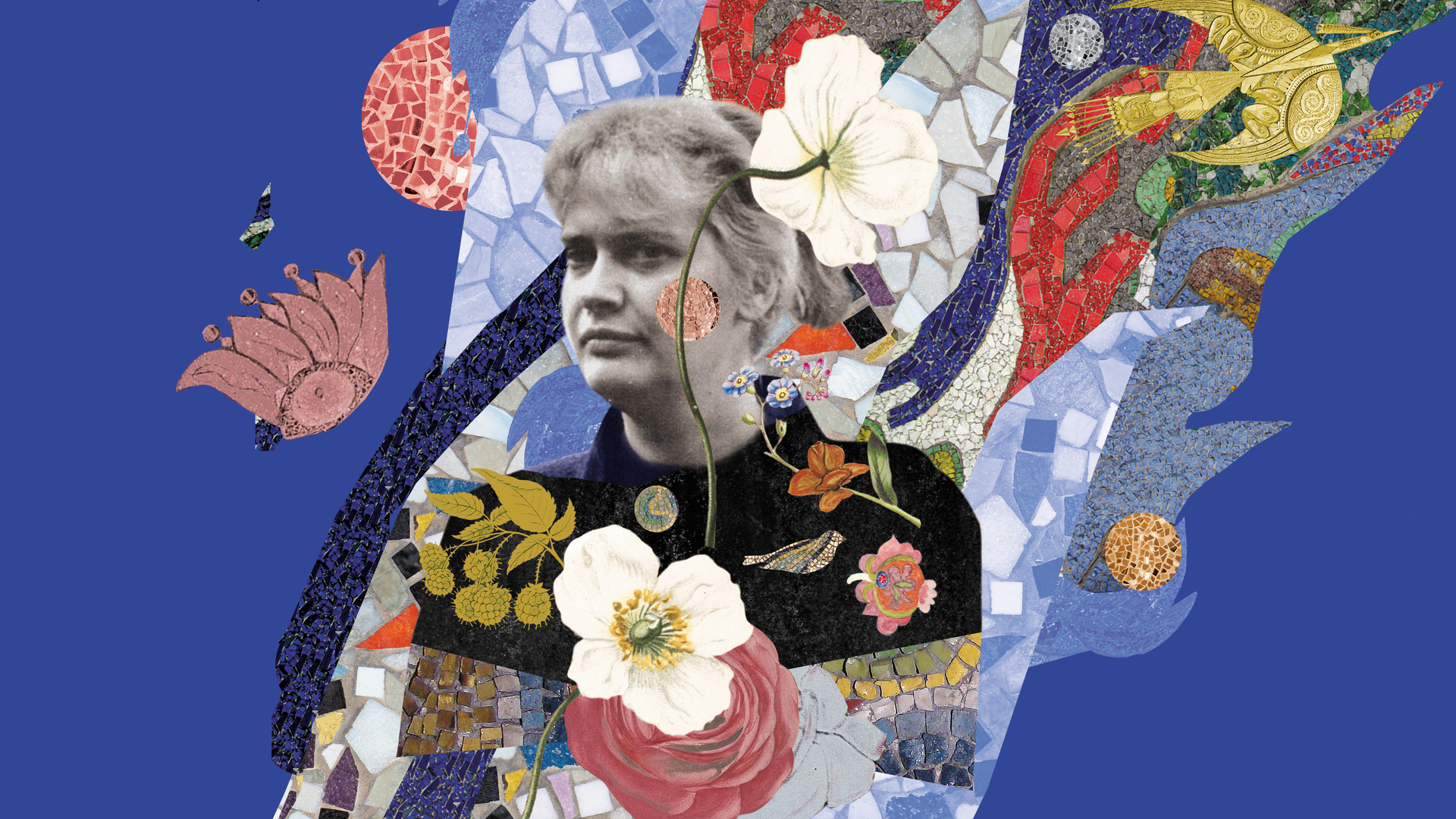
Ukrainian painter Ivan Marchuk, widely regarded as one of the country's most important living artists, is now fighting for the rights to his life’s work. (Ivan Marchuk)
 on Google
At nearly 90, the Ukrainian painter Ivan Marchuk — widely regarded as one of the country's most important living artists — has found himself fighting in court to maintain the full creative rights to his vast body of work.
Marchuk turned to the courts last year after he said that he was deceived into signing away some of the creative rights for a period of 100 years to three other people — all for Hr 10,000 ($228).
The process is still ongoing.
"He has not lost hope for a fair resolution of this story. He is grateful to all the kind people who truly support him, both privately and publicly," Tamara Strypko, Marchuk's longtime assistant, told the Kyiv Independent.
"At the same time, the situation is absolutely abnormal: a world-renowned artist is forced to prove that the copyrights to (more than 5,000) works created over 80 years of his creative life belong to him, and not to a group of fraudsters."
According to Marchuk, he was approached in 2020 by former Ukrainian lawmaker Mykhailo Apostol, who asked him to sign what was described as a nonbinding declaration of intent concerning the licensing of certain reproductions of his work. Apostol assured him that the document would carry no legal force without notarization.
At the time of the signing, Marchuk was suffering from bad eyesight after surgery and reportedly had trusted the word of an acquaintance the two men shared.

However, after reviewing the documents more closely with Strypko later, who had been present at the signing, Marchuk said they came to understand that the agreement was something else entirely.
Marchuk reportedly contacted Apostol and insisted that the former lawmaker cease any further action, stressing that he had no desire to transfer the rights of his artwork to anyone. Apostol, according to Marchuk, responded by assuring him that the issue was resolved.
"I was convinced that this shameful story ended the same day it began. But it didn't. Four years passed, and Tamara Strypko received a call from her winemaking partners, with whom I had officially concluded an agreement to use several images of my works on the labels of their products," Marchuk detailed in a March Facebook post.
"They informed her that a man they did not know at one of the establishments where they presented their products introduced himself as the owner of the exclusive copyright to the images of my paintings. That man turned out to be Mykhailo Apostol."
Marchuk told the Kyiv Independent that there was even a clause in the document related to his original work.
The clause "obliged me to 'provide access to original copies of any work…for the proper exercise' of their rights 'within a reasonable time necessary for this,' which they defined as 'no more than one calendar month from the moment of the first request.' Can you imagine what could happen to a work (or works) of art outside the artist's studio over the course of a month?" he said.
"I have always sought — and still seek — to exhibit my works, to give people the opportunity to enjoy art, rather than to make money from selling it."

Ukrainian artist Ivan Marchuk attends the opening of his solo exhibition, "Epic Reality," at the Palazzo della Cancelleria in Rome, Italy, on Feb. 10, 2025. (Yurii Hanchuk / Wikimedia)
After the episode involving the winemakers, Marchuk made several attempts to contact Apostol, all of which were unsuccessful.
Apostol has denied the allegations since the controversy entered the public spotlight.
Part of Apostol's effort to deflect mounting public criticism has been an effort to undermine Strypko's reputation, asserting in a March Facebook post that she alone managed all financial matters related to the sale of copies and reproductions, as well as agreements with winemakers and exhibitions connected to Marchuk's work.
"These amounts total tens of millions of hryvnias. I am convinced that no taxes are being paid and no oversight is taking place," he claimed. The post features an AI-generated image of a woman carrying money and legal documents through an art studio.
Apostol didn't respond to the Kyiv Independent's request for comment.
Amid the ongoing legal controversy, Marchuk has pushed back against those who suggest that he and Strypko lack some understanding of creative licensing, noting that with his permission, Ukrposhta, Ukraine's national postal service, has issued stamps and envelopes, and that the National Bank of Ukraine has minted coins based on his artwork.


However, the artist says neither creative licensing nor commercial profit have ever been his priority.
"I have always sought — and still seek — to exhibit my works, to give people the opportunity to enjoy art, rather than to make money from selling it," Marchuk told the Kyiv Independent.
"Today, when many art institutions around the world offer to organize my exhibitions, my first condition and reservation is that this must be a presentation project, not a commercial one — I have no intention of selling paintings. That is why I always choose state or municipal museums and galleries, rather than commercial venues."
Marchuk has accused Apostol and his associates of subjecting him to "pressure, humiliation and threats" throughout the legal battle, and of relying on the backing of high-ranking law enforcement officials. He added that they went so far as to petition the court to order a forensic psychiatric examination of him.
"Only during the court proceedings did it become clear that all the actions of the fraudsters had been carefully planned and thought out: they recorded telephone conversations and carried out — and continue to carry out — actions aimed at discrediting the artist and witnesses," Strypko said.
"They are now doing everything possible to delay the court process. It is assumed that they still hope to somehow influence the court or law enforcement agencies. One thing is clear: their calculation was to wait until the artist was no longer alive. Their greed gave them away."
The case, for many who have followed it, extends beyond the question of the nearly 90-year-old artist's personal dignity — it raises broader questions for Ukrainian cultural heritage itself.
"Ivan Marchuk is no longer just a person — he is a phenomenon, part of Ukraine's cultural code. Figures like this do not appear by chance. They are shaped over years — and that is precisely why they become the face of a country," Ukrainian artist Volodymyr Koziuk wrote in a post on Facebook.
During the Soviet era, Marchuk repeatedly faced pressure from Communist authorities for refusing to conform to the dictates of Socialist Realism.
In the decades since Ukraine gained independence, he emerged as one of the nation's most revered artists. He is widely seen as a cultural icon not only in Ukraine but also abroad.

Marchuk holds the title of People's Artist of Ukraine, one of the country's highest accolades for painters, and is a laureate of the National Shevchenko Prize, its most prestigious state award for the arts.
He is internationally recognized for pioneering an artistic technique known as pliontanism, which weaves together thousands of delicate, interlaced lines at varying angles, resulting in a distinctive interplay of color and light.
Longtime admirers of Marchuk's work credit Strypko with helping elevate his work on both the international and national levels.
"She is part of the very phenomenon of Marchuk. For years, she shaped his image, built the context, worked with the audience, the environment, and international presence. That is precisely why she has the full moral and professional right to influence how and in what form this image enters the public space," according to Koziuk.
Though the legal battle continues, Marchuk and Strypko hope it will serve as a broader lesson in how the state safeguards artists' rights, particularly when an artist's output is as vast as Marchuk's and merits treatment as cultural heritage of national significance.
"In civilized countries, legislation protects people in creative professions. Gifted individuals have a very different spiritual constitution. How can one create ideal worlds in visual art or music — worlds based on high aesthetics and harmony — without trusting those around them?" Strypko said.
"The state must protect this category of people from encroachments on their rights through proper legal regulations."
read also
 Valeria Radkevych
 Valeria Radkevych
 Kate Tsurkan