Not only walls — rebuilding a young generation's right to belong
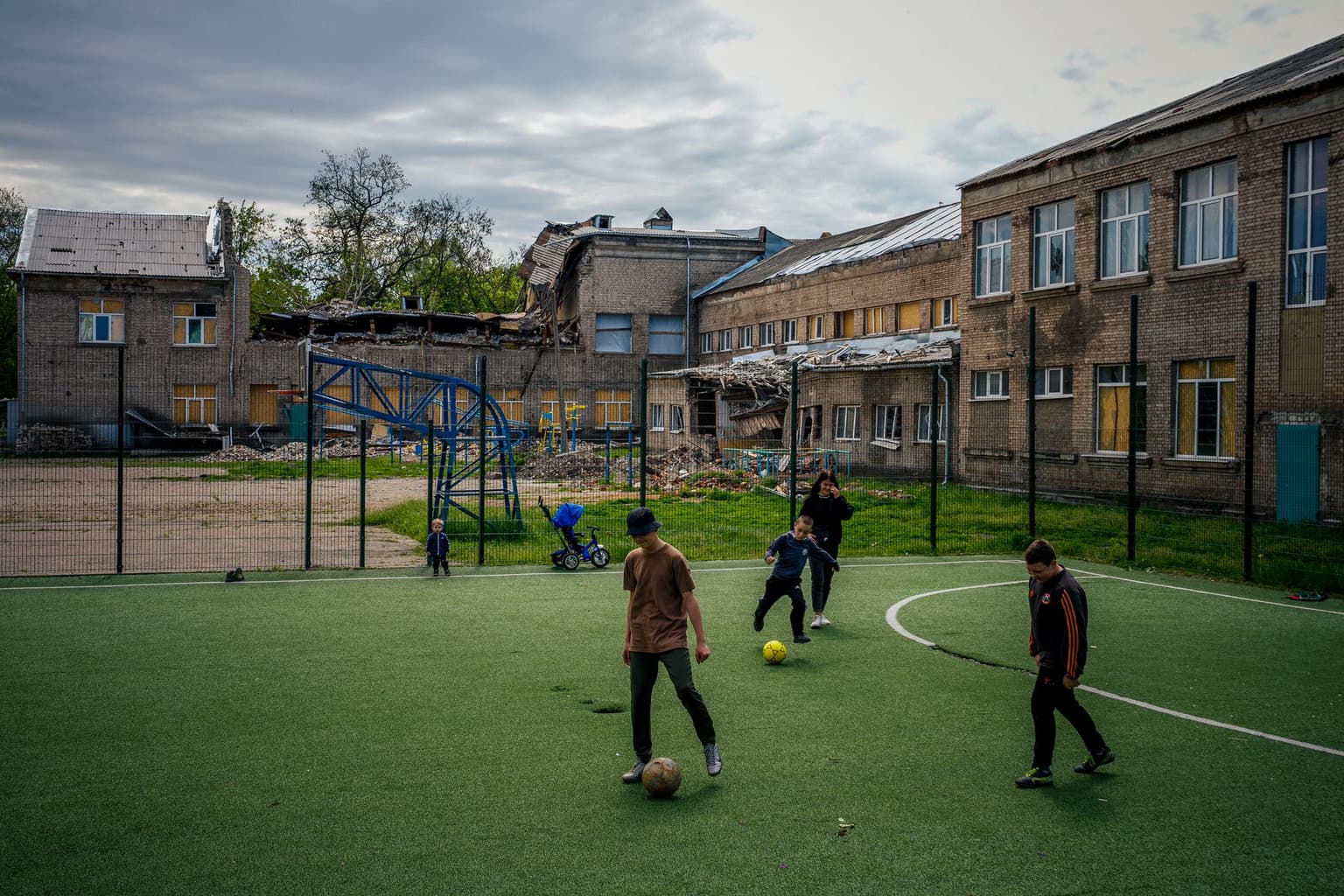
Children play soccer next to a damaged building following shelling in Kramatorsk, Donetsk Oblast, Ukraine, on May 6, 2023. (Dimitar Dilkoff / AFP / Getty Images)
 on Google
Iryna Ozymok
Ukrainian civic activist and urban development expert
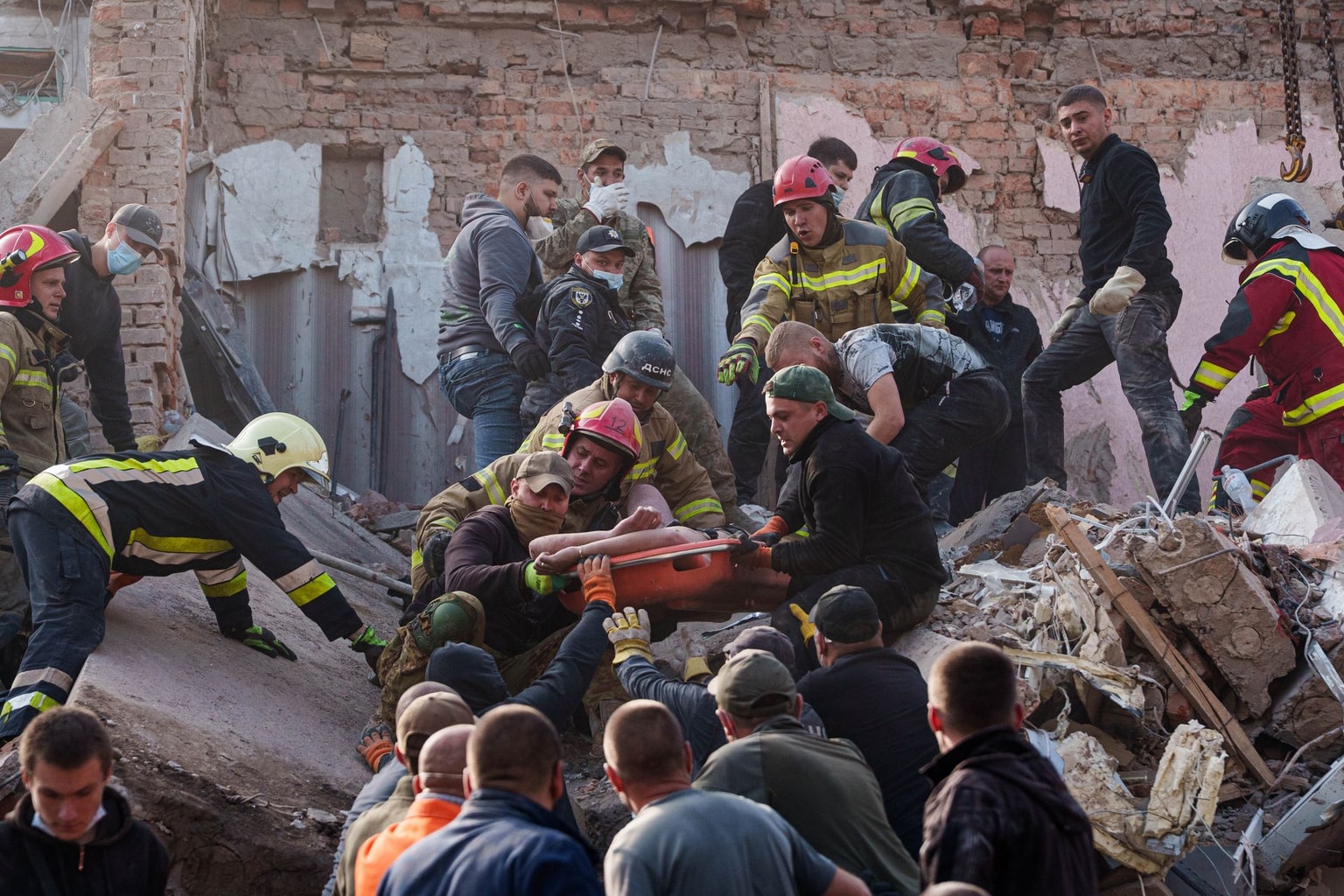
When a russian strike hit the building in Sumy where our teenagers met each week, I was sure we had lost them.
They were frightened; some could not stop shaking. They had felt the blast. We brought in psychologists without asking for anything in return. Less than two weeks later, the same teenagers found a new venue and finished the program.
I have returned to that moment many times since. The courage of those youngsters astonished me. They had found a place where their voice counted, and they were not willing to surrender it — not even to a missile.
For more than two years, I have run a non-formal urban education initiative, Urban Movement "City is Me", that teaches teenagers across Ukraine how their cities actually work — how a municipal budget is spent, how a local business sustains a neighborhood, what cultural heritage is for, and why a single public square can change the quality of a life.
We managed to build a community of more than 2,000 young people across over 50 cities and communities. Because what this war has taken from Ukrainian children is larger than what we usually count, as we count the damage we can see.
More than 340 educational facilities were damaged or destroyed in 2025 alone, pushing the total past 1,600 since February 2022. More than a third of Ukraine's children remain displaced, nearly 1.8 million of them as refugees abroad.
This school year, 4.6 million children inside Ukraine face barriers to education, close to a million study mainly online, and only one in three learns fully in person.
These numbers measure buildings and enrollment, yet they do not measure the right to belong somewhere, to take part in a community, to a real education, to childhood itself.

A child who has spent four years behind a screen, or in a borrowed classroom in another country, has lost not only lessons but the ordinary experience of being part of the tribe. We try to give that right back.
We have created a highly interactive three-month program that empowers young people to discover how their cities and communities work, and how they can help shape their future.
Participants explore essential urban systems, including water supply and waste management, as well as local industries and governance. They visit key facilities, meet with mayors and community leaders, and gain firsthand insight into how decisions are made and services are delivered.
But the most important part comes next: each team identifies a local challenge they care about and develops a solution of its own. In the coming months, we will be able to point to a growing map of initiatives proudly labeled "Implemented by Urban Movement teams"—evidence that young people are not just learning about their communities but actively improving them.
We are fond of calling young people "the future." It sounds generous. In practice, it is a way of postponing them — of treating teenagers as a resource that matures later, somewhere offstage.
They are not the future. They are citizens now, living in these cities now, with interests, needs, and firm opinions about how their towns should look.
When we surveyed them in 2024 about what they were missing, the answer was almost always the same: they lack places of their own — somewhere to gather safely, talk, learn, and simply spend time together.
We hesitated to include cities and communities close to the front line. The security risks for children made us question whether it was the right decision. But we understood these are the places where the program is needed most.
For many children, it is not only an opportunity to learn new skills and connect with peers, but also a rare chance to experience moments of normal childhood. In communities living under the constant shadow of war, such opportunities provide connection, hope, and a much-needed respite from the realities they face every day.
To help them find these missing places, we make their experiences as close to reality as possible, deliberately not making their experience easy.
A team that wants to build something has to do what adults do: request a meeting with the city council, persuade a local business to chip in, win over neighbors who would rather change nothing, and keep going after the first official says no. The point is that change is hard, and still possible.
Across the country, our teenagers have already left real marks on their cities.
In Vinnytsia, a team launched a tourist tram that doubles as a moving lesson in local history and strengthened how the community sees itself. In Lviv, girls planted a therapeutic garden beside a hospital. In Lutsk, the team restored a forgotten elephant statue that has become a small civic landmark and a symbol of connection.
In Zaporizhzhia, youth built a smoke-emitting "lung" installation that forced a public conversation about air pollution. None of these are decorations. Rather, their right to shape their cities in practice.
Along the way, they learn the things no online lesson delivers: teamwork, critical thinking, communication, how to run a project, and how to turn an idea into a thing that exists.
More than that, they stop seeing themselves as passengers. A teenager who has discovered that her argument can move a city council does not easily go back to waiting to be told what her city will look like. Around 27% of our participants are internally displaced, and for them, the program is a way to belong to a new community.
This is why young people cannot be filed under "the future" until the war is finished. A city can be rebuilt brick by brick and still lose the generation it was meant for, if that generation had no hand in the rebuilding and no reason to stay.
Editor's note: The opinions expressed in the op-ed section are those of the authors and do not purport to reflect the views of the Kyiv Independent.