New EU steel quotas are a crippling hit to Ukraine's industry
 on Google

Editor's note: The story has been updated with additional comments.
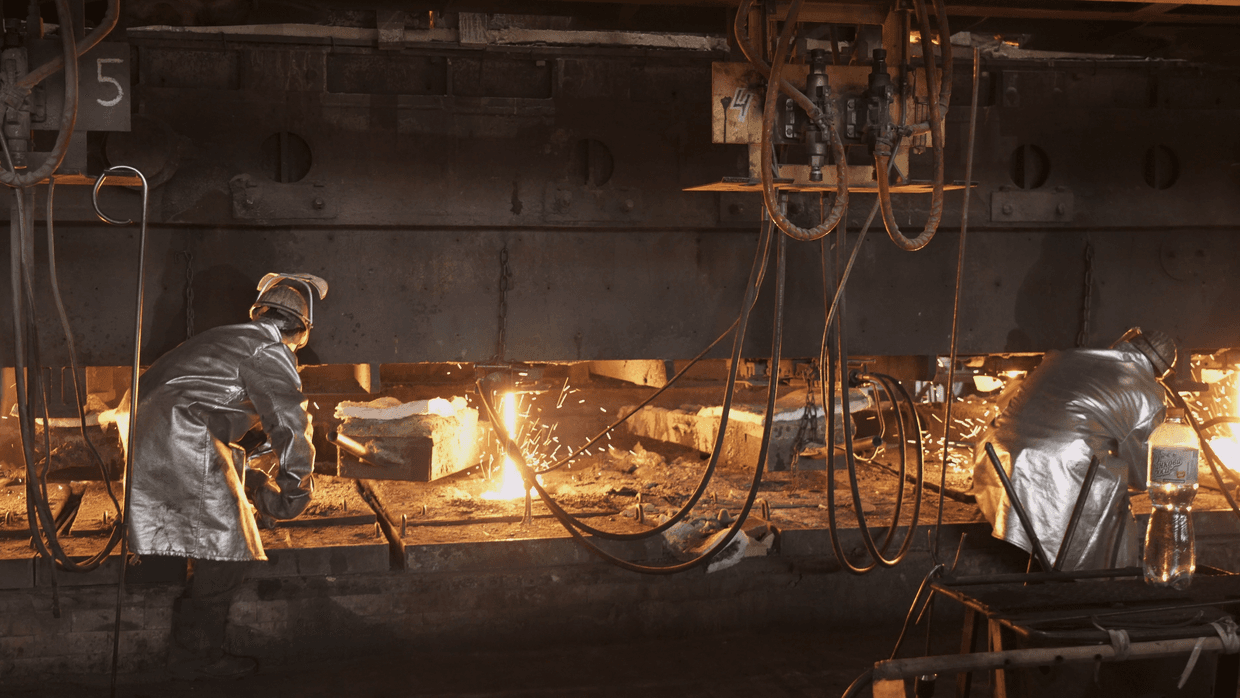
BRUSSELS, Belgium — Ukraine's tariff-free steel exports to the EU are set to be severely limited by new global quota allocations announced by the European Commission on June 30, potentially cutting shipments to the bloc by more than half compared to 2025.
The EU's new steel allocation, set to enter into force on July 1, was introduced in response to global steel overcapacity, which has been hurting EU producers. The measure aims to restrict tariff-free steel imports to 18.3 million metric tons per year, a 47% reduction.
The country-specific quotas the EU has allocated to Ukraine total only 1.05 million metric tons per year, accounting for less than half of Ukraine's 2024 steel trade. The restrictions have alarmed Ukraine's steel sector, which sees the EU market as its lifeline, with the bloc accounting for 79% of its total steel exports.
"The established quota volumes do not correspond either to the current needs of Ukrainian producers or to the objective of post-war recovery of Ukraine's industry," the press service for ArcellorMittal Kryvyi Rih, a steel producer, said in a statement to the Kyiv Independent.
"The assigned volumes do not provide sufficient capacity to maintain production at an appropriate level, preserve employment, or ensure competitiveness."
Anything imported over the quota threshold would be subject to a 50% tariff — an amount that war-hit Ukrainian metallurgy companies cannot afford.
The quotas would have "immense" consequences for Ukraine's economy and, therefore, for its ability to resist Russian aggression, Karin Karlsbro, a member of the European Parliament (MEP) and a critic of the new steel allocation, told the Kyiv Independent.
'No preferential treatment for Ukraine'
Many in Ukraine were under the impression that the country would be granted special status after the European Parliament and EU member states agreed to prevent it from getting caught in the crossfire. But after the quotas were published, Ukraine's steel sector did not see any beneficial status.
"We can understand in reality there is no preferential treatment for Ukraine," Oleksandr Kalenkov, President of Ukrmetallurgprom, a Ukrainian steel association, told the Kyiv Independent.
Ukraine is subject to the same policy as every other country with a free trade agreement with the EU, he said.
The EU allocated the quotas based on import volumes between 2022 and 2024 — the most challenging years for Ukraine's steel sector, as Russia's full-scale invasion brought some enterprises to a halt and blocked metal exports via the Black Sea for well over a year.
This system effectively locks Ukraine in "a war-depressed level" on the EU market and "limits the potential for further recovery," ArcelorMittal Kryvyi Rih said.
Ukraine exported 2.215 million metric tons of finished steel to the bloc in 2024, according to a report from the steel industry association Eurofer.
But in 2025, Ukraine's steel exports to the EU rose by 8% as the industry rebounded gradually and adapted to wartime conditions, according to a separate report by Eurofer.
"It would have been fairer for Ukraine if the European Commission had taken into account the years 2023-2025," Kalenkov said.
The last hope Ukraine's steel industry has is for Kyiv to continue negotiations with Brussels to push for more favorable conditions. The European Commission should review the impact of the quota in September, with the possibility for a better deal, said Kalenkov.
"Given that Ukraine does not pose a significant threat to the EU steel industry, further negotiations with the European Union aimed at preserving the historical conditions of access for Ukrainian steel products to the EU market remain one of the Ukrainian government's priorities," Ukraine's Economy Ministry press service told the Kyiv Independent.
But a senior EU official said the change will cover 70% of Ukraine's historic trade flows, leaving it proportionally better off than the average 47% worldwide reduction, yet still affecting 30% of Ukraine's current steel trade.
The reason they note a much higher number is that Ukraine can also tap into a second quota allocation, one that other countries can tap as well, which means Ukraine securing a sizeable share of it is far from certain.
Some of those other countries allowed to tap into that second quota allocation have larger and more competitive steel industries than Ukraine's, such as India and Turkey.
Hurting Ukraine's 'ability to finance its fight for existence'
Karlsbro, the MEP who led the original steel regulation, was critical of the Commission's quota allocation in comments sent to the Kyiv Independent.
"Free trade with the EU has served as an economic lifeline for Ukraine. Today's decision confirms our fears of the withdrawal of tariff-free access for Ukrainian steel," Karlsbro said.
The European lawmaker told the Kyiv Independent that she will meet with the Commission on July 2 to discuss the consequences for Ukraine, which she says will be "immense… for the Ukrainian steel industry, and the country's economy, ultimately affecting Ukraine's resilience and ability to finance its fight for existence."
For Karlsbro, the Commission's restrictions against Ukraine make it "even more important to provide Ukraine with a credible and clearly defined pathway towards full integration into the EU Single Market, removing all trade barriers."
However, some EU capitals might be quietly applauding the restrictions placed on Ukraine.
A Polish diplomatic source told the country's radio station RMF24 that Warsaw had campaigned to ensure Ukraine would be included in the EU's new trade restrictions.
According to a European Commission press release, a "significant number of the EU's FTA (free trade agreement) partners have agreed in principle to their tariff quota allocation."
The Kyiv Independent was unable to confirm whether Ukraine had agreed to its proposed allocation.
The EU's allocation of steel quotas is set to coincide with a similar change from the U.K. But the British announcement says its new restrictions will not apply to Ukraine.
Instead, the Ukrainian steel trade is underpinned by the U.K.-Ukraine trade agreement, which envisages 0% tariffs on Ukrainian steel from 2026.