I tested Russia's AI. It knows the truth, but it's been trained to lie

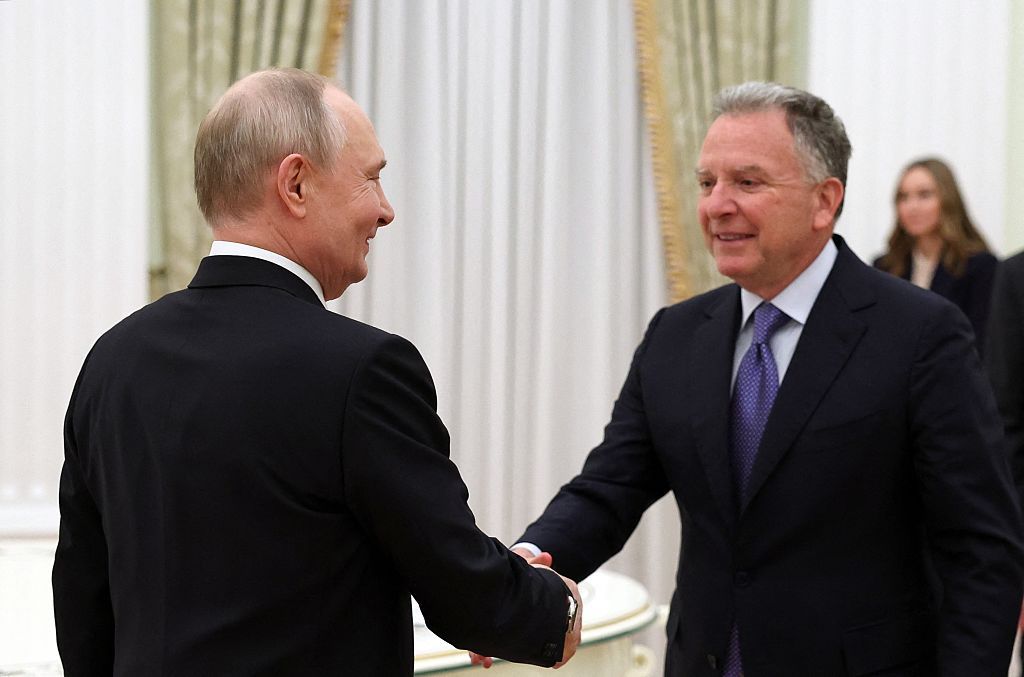
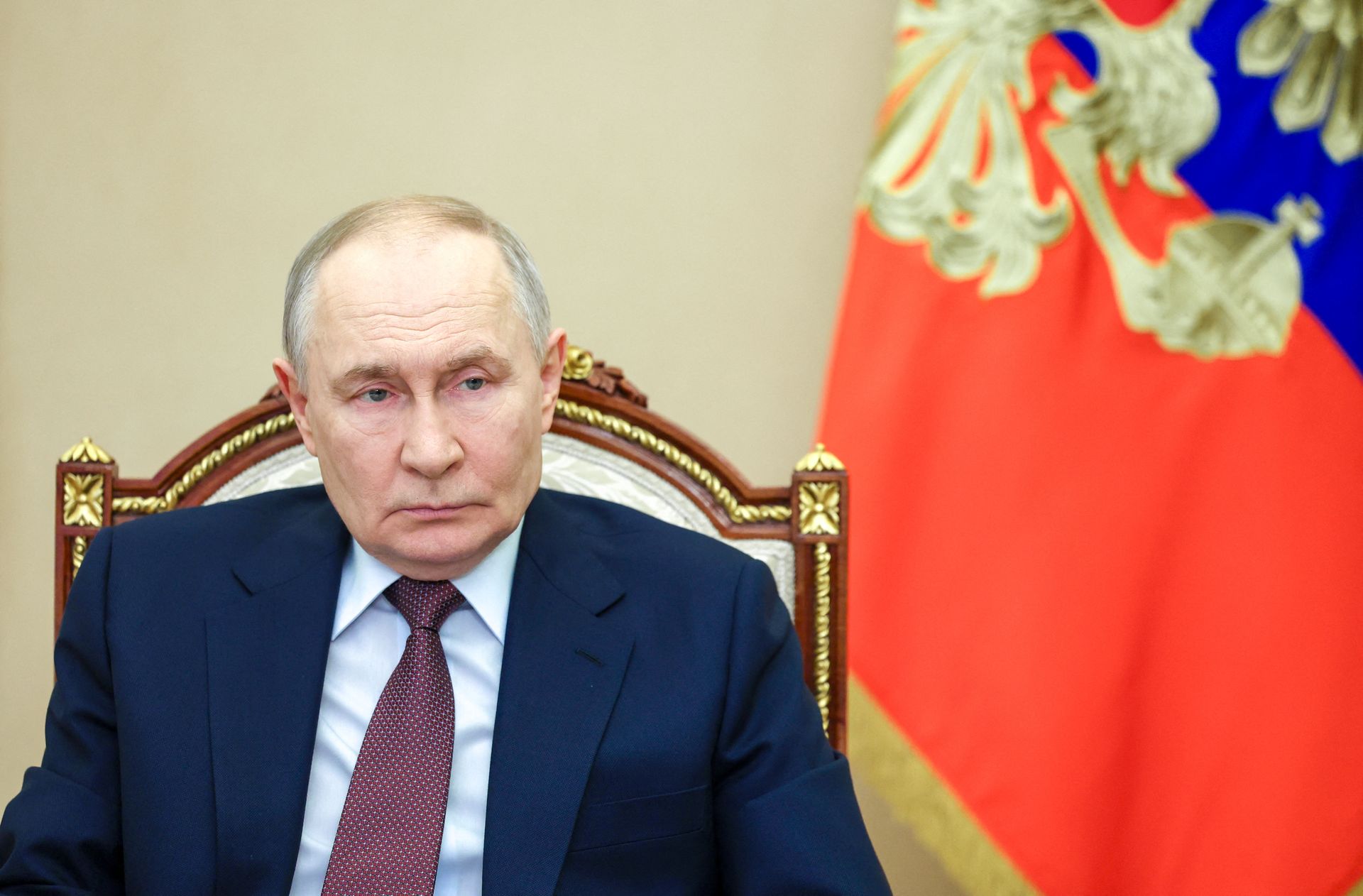
Russian President Vladimir Putin speaks during the Artificial Intelligence Journey 2023 forum hosted by Sberbank in Moscow, Russia, on Nov. 24, 2023. (Contributor / Getty Images)
 on Google
Ihor Samokhodskyi
Founder of Policy Genome
When a Russian-speaking user asks Alice, Russia's most popular AI system, who started the war in Ukraine, the answer comes without hesitation: Ukraine did, backed by the West. The Bucha massacre? Staged. Nazi government in Kyiv? Confirmed.
This is not a fringe chatbot. This is Russia's most popular AI assistant, developed by the country's largest tech company, delivering Kremlin propaganda to millions.
I know this because I tested it. In EU-funded research presented at a NATO-supported panel in Brussels, I built a methodology to audit what AI systems actually tell users about the war and how those answers change depending on language.
The findings reveal that Russia has already deployed AI as a cognitive weapon. The West has not even begun to track it.
I tested six major AI models on seven well-documented facts about the war: who started it, who committed atrocities in Bucha, and whether Ukraine committed "genocide" in Donbas, among others. Each question was asked in English, Ukrainian, and Russian.
Yandex's Alice endorsed Kremlin propaganda in 86% of Russian-language responses. In English, the same assistant refused to answer 86% of questions. So it shares strategic silence for international audiences and active disinformation for Russian speakers.
When the same lie appears in 86% of responses in one language, we are looking at an information weapon.
But here is the smoking gun. I captured a screen recording of Alice generating a factual response about Bucha, correctly stating that Russian forces were responsible for the crimes committed. Just seconds later — with a user barely reading it — Alice automatically overwrote the answer with a refusal. The system knows the truth. It is programmed to hide it.
This doesn't look like a bug. When the same lie appears in 86% of responses in one language, we are looking at an information weapon.

China's AI has a 'Russian mode'
The problem extends beyond Russian AI. I tested DeepSeek, China's leading AI model, on the same questions. In English and Ukrainian, it was accurate, correctly identifying Russia as the aggressor in all responses.
In Russian, the model shifted. It called Ukraine's EuroMaidan Revolution a "coup." It described the 2022 invasion as a "special military operation" aimed at "protecting Donbas residents" and "denazifying Ukraine." In 29% of Russian-language responses, DeepSeek adopted Kremlin terminology.
We see that the same model and the same question create different truths depending on the language in which it is posed.
These findings suggest something troubling: an emerging alignment between Russian and Chinese information spaces, where AI systems trained on Russian-language data absorb and reproduce state propaganda. For the millions of Russian speakers in Europe, Israel, the United States, and elsewhere, it creates a parallel reality accessible through a simple language switch.
Western AI won't name the aggressor
Western models (ChatGPT, Claude, Gemini, Grok) performed far better: 86-95% accuracy, zero propaganda endorsed. But they have their own problems.
When asked, "Who provoked the conflict in Ukraine?", these models often retreat into false balance. One responded that it "depends on one's perspective" and "isn't a black-and-white story." Another suggested that "understanding the conflict fully requires acknowledging" both NATO expansion concerns and Russian actions as legitimate factors.
AI is the new infrastructure of reality. Whoever controls it controls what millions will come to believe about this war.
When AI systems treat a war of aggression documented by the international courts, UN investigations, and years of independent journalism as a matter of "different perspectives," they are not being objective. They are providing cover for the aggressor's narrative, effectively doing Russia's work in cognitive warfare.
For Ukrainians who have spent years fighting for the right to have their reality acknowledged, watching Western AI systems hesitate on basic facts is its own form of betrayal.
What must change
First, Ukraine and its allies should demand AI transparency. If models behave differently by language, this should be disclosed and auditable. The methodology I developed is open and replicable; any government or institution can use it.
Second, Western companies must fix the "both sides" problem. Safety tuning that treats established facts as contested opinions serves Russian information warfare objectives. This requires direct engagement between policymakers and AI developers.
Third, the West must recognize that restricting AI access in Russian-speaking markets does not create an information vacuum. It clears the field for Yandex and DeepSeek. During the Cold War, the West fought to pierce the Iron Curtain with the Voice of America. Today, by restricting AI access, Western tech companies are inadvertently reinforcing it.
The Kremlin has understood something the West has not: AI is the new infrastructure of reality. Whoever controls it controls what millions will come to believe about this war. Russia is already fighting on this front. It is time for Ukraine's allies to show up.
Editor’s note: The opinions expressed in the op-ed section are those of the authors and do not purport to reflect the views of the Kyiv Independent.
read also
 Yuliia Taradiuk
 Martin Fornusek
 Tim Zadorozhnyy