Counterattacking through the kill zone, Ukrainian troops brace for new Russian offensives
While Kyiv claims counteroffensive success, Russian troops continue to seep through an increasingly blurry front line as a crucial year of fighting looms.
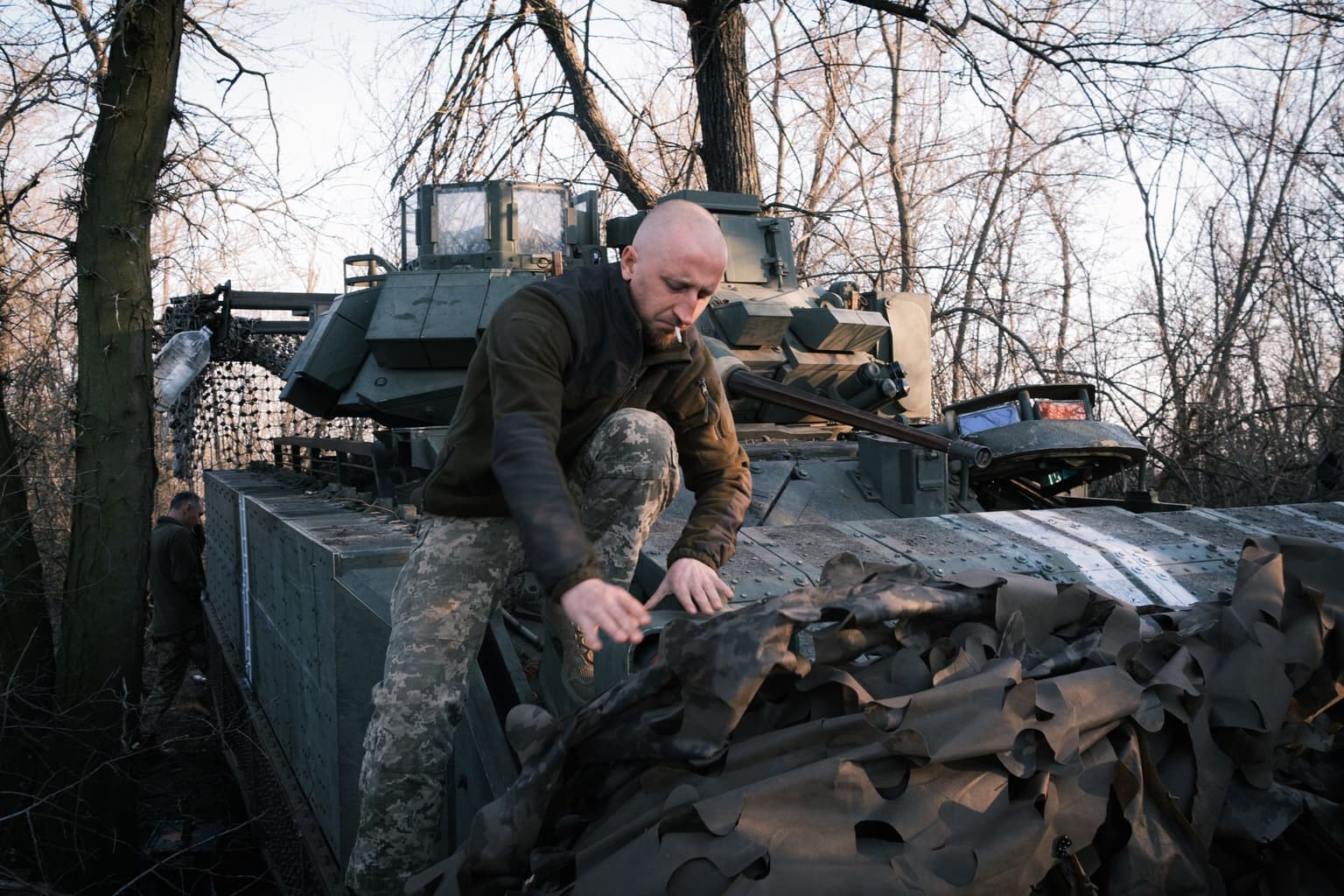
A Ukrainian crew member of the 225th Assault Regiment on a Bradley infantry vehicle near the front line in Zaporizhzhia Oblast, on March 14, 2026. (Francis Farrell / The Kyiv Independent)
 on Google
Editor’s Note: In accordance with the security protocols of the Ukrainian military, soldiers featured in this story are identified by first name and call sign only.
ZAPORIZHZHIA OBLAST – For tonight's clearing mission on the cold windy steppe of southern Ukraine, the munition of choice is the Spear.
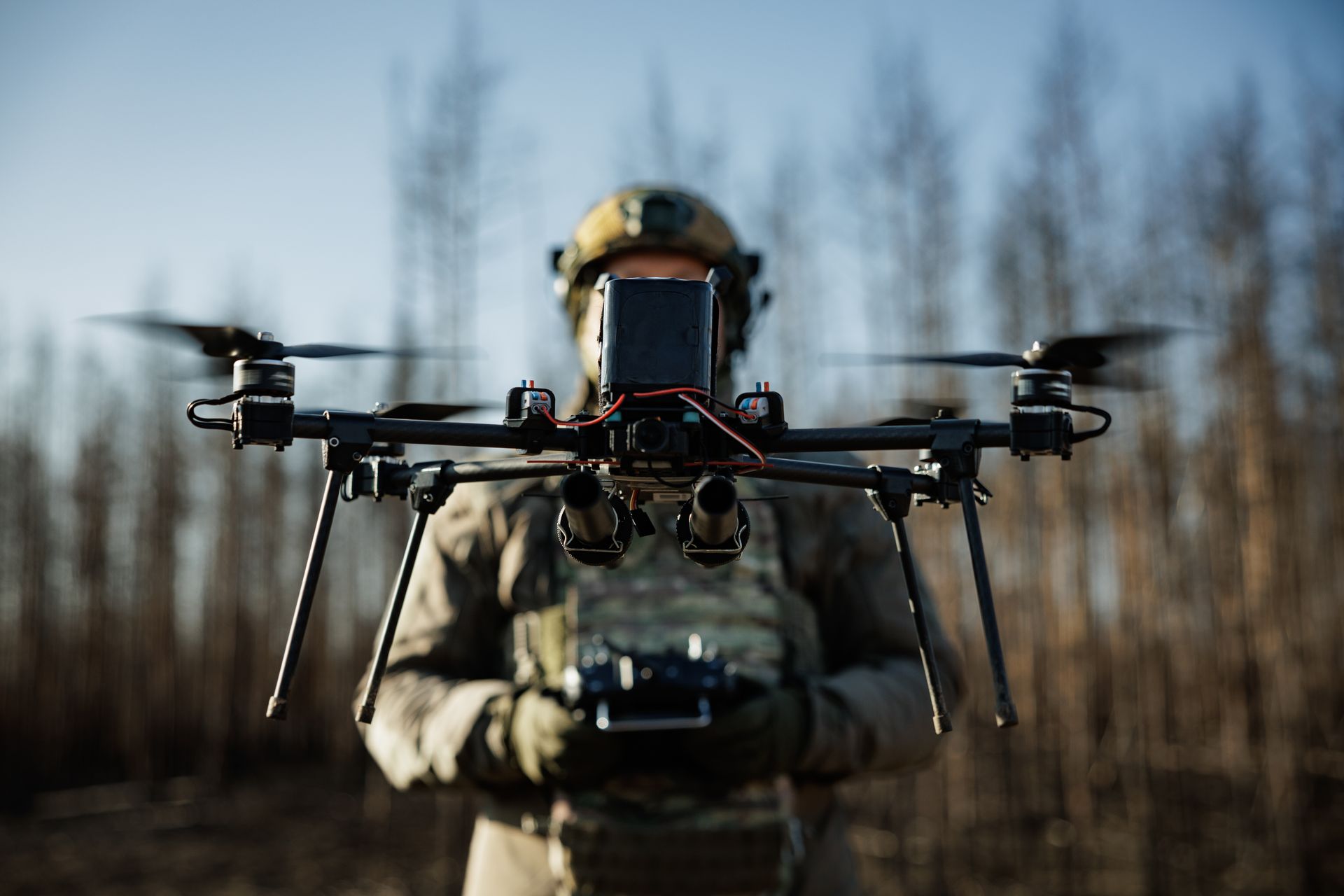
In a cramped dugout less than eight kilometers from Russian forces, Ukrainian soldiers prepare the bombs, taping wires and tail fins onto long tubes of black steel fitted with menacing iron spikes and filled with explosives.
A rudimentary, Mad Max-style weapon custom conceived for the runaway drone war; nothing out of the ordinary for Ukraine in 2026.
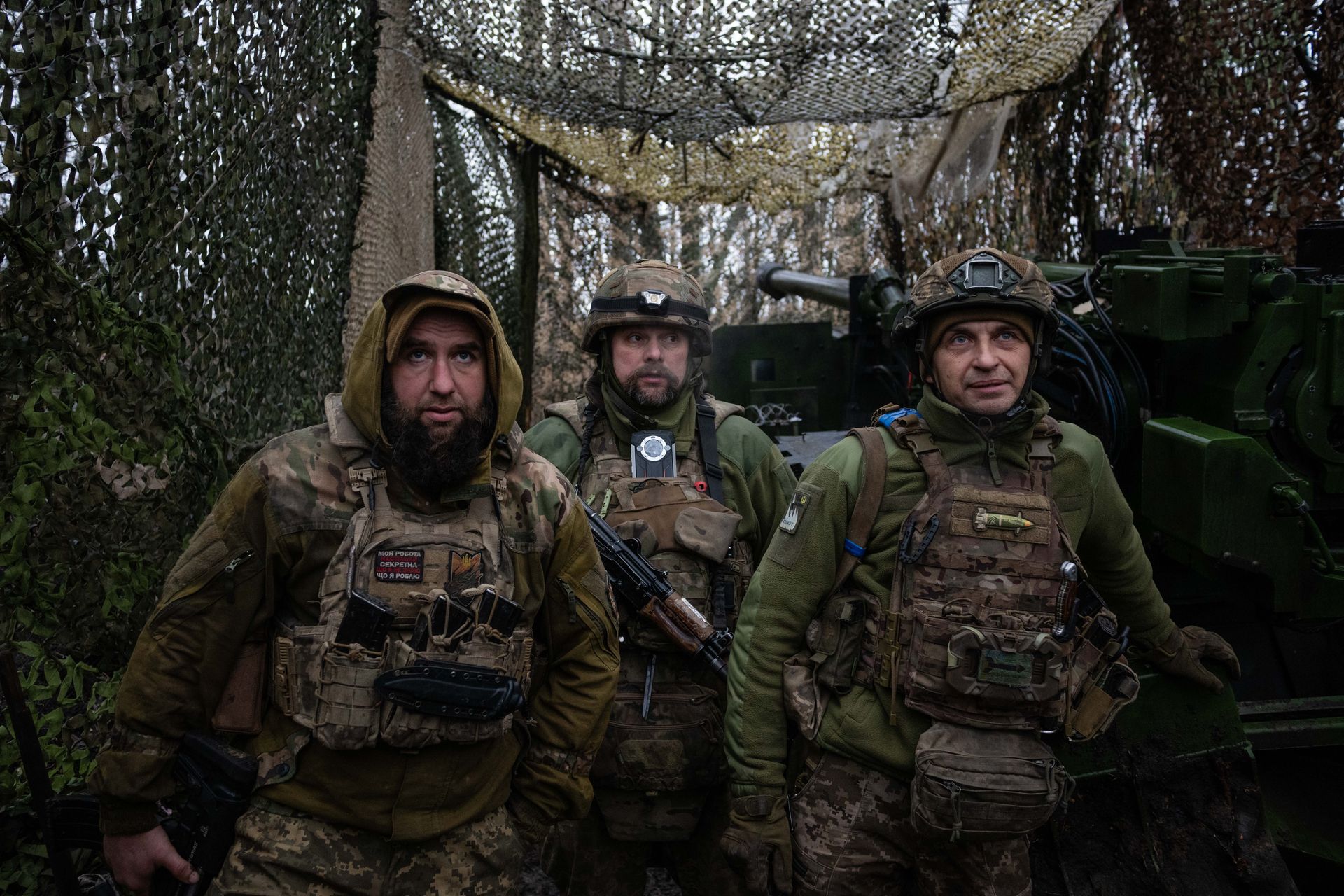
"Nothing would be left of us if these went off right now," drone pilot Oleksandr "Catcher" said with a dry smile.
Catcher, together with navigator Edvard "Timon" and sapper Maksym "Staryi" form a Vampire heavy bomber crew of the 423rd Separate Unmanned Systems Battalion of the Ground Forces, better known as the Scythian Griffins.

This night's shift is dedicated to targets in the village of Danylivka, where Russian soldiers have been holding out in basements for over a month.
"Basically, we do everything so they never feel comfortable in any shelter;" said Catcher, "that's our main task now."
After attaching the munition, the drone is ready to take off, but an alert makes the team retreat to cover, as a Russian fixed-wing drone has been detected in the air.
With an analog detector in the dugout and fresh information from the battalion's radio reconnaissance coming in 24/7, the team only leaves the shelter when a safe window opens in the endless storm of different Russian drones above.


Once the all clear is given, the Vampire finally takes to the night sky.
When clearing buildings in the age of drones, most munitions simply don't have the power to penetrate solid cover.
The Spear, a custom design of the battalion's workshop, solves that problem by punching through cover first, and only then detonating the ten-kilogram explosive charge inside. Perfect for clearing enemy shelters without putting lives at risk on the ground.
Since February, Ukrainian forces have retaken the initiative on the southern front line, counterattacking through the eastern reaches of Zaporizhzhia and Dnipropetrovsk oblasts, where Russia made the fastest gains in the closing months of 2025.
Kyiv has claimed over 480 square kilometers liberated, with the month of February declared the first since 2023 when Ukraine took back more of its territory than it lost.
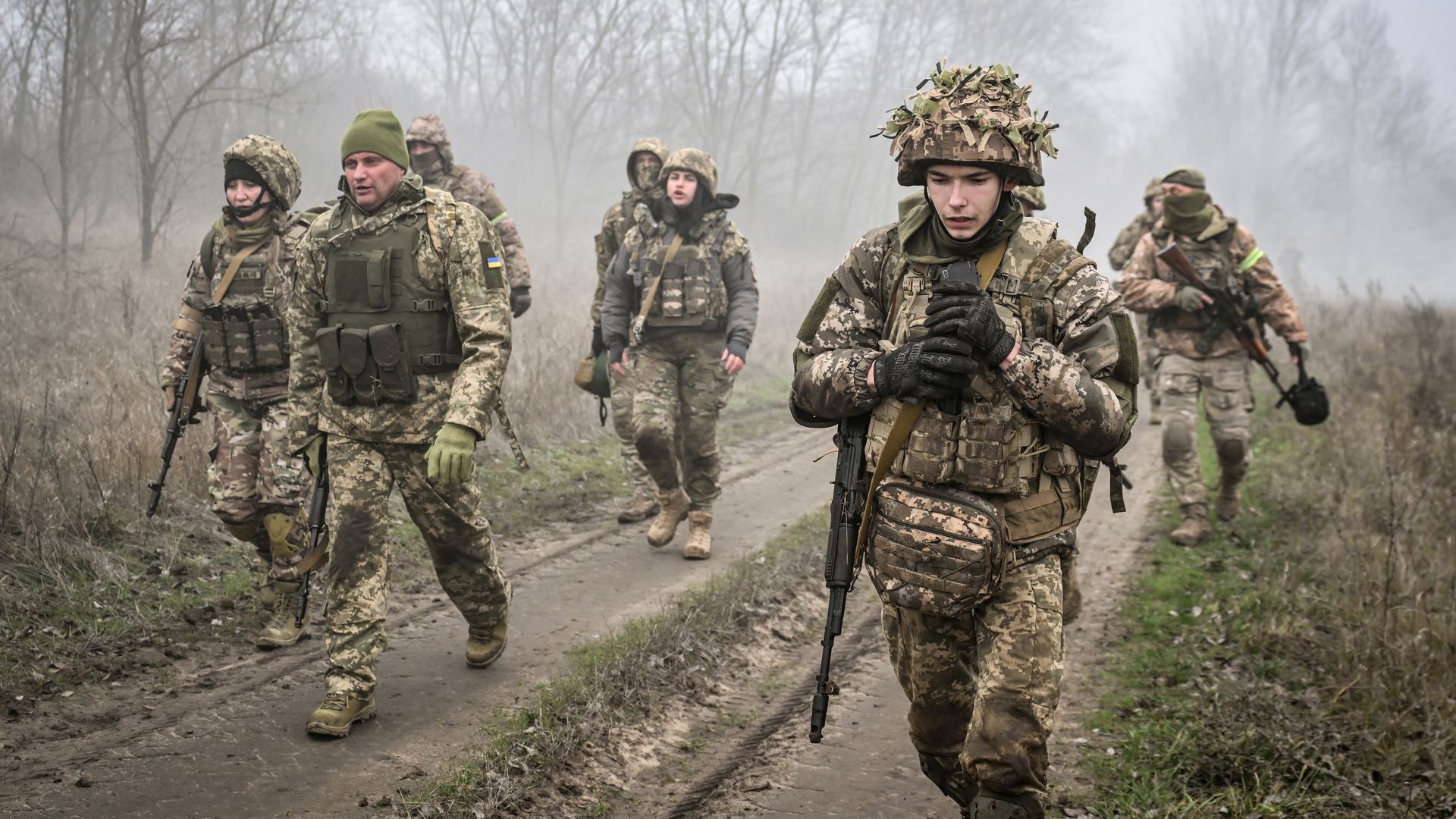
On the ground though, the reality is murkier, as the traditional understanding of a front line melts into a contested "gray zone," increasingly wide and deep, and infested with more and more drones from both sides with each passing month.
"I wouldn’t call it a counteroffensive, because a counteroffensive is when they move back and we move forward," said Vitalii Chekan, commander of the Scythian Griffins, to the Kyiv Independent, "but they’re not moving anywhere."
Based in Zaporizhzhia Oblast since long before it became one of the war's main hotspots, the battalion has now played a key support role to the assaulting units on the ground.

Unlike the 2023 Ukrainian counteroffensive, which came at the dawn of the first-person view (FPV) drone era and back when Kyiv still had plenty of motivated manpower at its disposal, the attacks of 2026 have seen the unmanned component of an assault truly come into its own.
"We constantly work with assault units and fully support them from the air," said Cheban.
"We conduct reconnaissance, strikes, accompany them from above with drones, keep hitting and hitting, and only then do the assault teams push in."
Now, Kyiv claims to have the initiative, but Russian efforts to advance and infiltrate haven't stopped either.
"The Russians are always probing for weak spots, like water," said Catcher.
"If they see there's no Ukrainian defense in a certain area, they can push in and get some depth."

Art of the attack
Hidden deep inside a treeline, further back from the front line, two metal monsters have been waiting long for their chance to stalk the wild fields.
In the spring of 2026, the U.S.-made Bradley infantry fighting vehicle harks back to a paradigm of warfare that existed as recently as three years ago, but is now gone forever.
First delivered to Ukraine in advance of the 2023 summer counteroffensive not far from these lands, the Bradleys were praised by Ukrainian soldiers for their superior protection.
These machines belong to the 225th Assault Regiment, one of the largest units among the Assault Forces set up by Ukrainian Commander-in-Chief Oleksandr Syrskyi last year.
The unit, still the size of a battalion at the time, played a key role in the initial breakthrough across the Russian border into Kursk Oblast in 2024, later repeating the effort in a smaller raid into Belgorod Oblast.

Now, the unit is holding back Russian forces around the city of Huliaipole, once the home of anarchist Ukrainian warlord Nestor Makhno.
Falling to Russian forces in January, the sector west of Huliaipole is a key weak spot in Ukraine's defense of Zaporizhzhia Oblast, guarding the left flank of the entire southern front line.
One of the two Bradleys here — beaten up but far from broken — has been through both campaigns, now arriving in the south to be ready for any counterattacks.
The FPV threat has made the front line especially deadly for armor over the past year, but when the need arises to deliver and evacuate infantry, the extra protection of the Bradley still comes in handy.
"We are still working right at the contact zone every time we go out," said Bradley commander Vitalii "Tokha."
"Drones were flying before... mentally, it doesn't make a difference. The most important thing is not to wind yourself up about it, you just have to arrive, carry out the mission, and return. It's war, nobody is safe."

As much as the war has come to be dominated by drones every step of the way, clearing and holding territory still requires boots on the ground.
While some of the assault forces, like the scandal-ridden 425th Assault Regiment — or Skelia — have been kept back from the front line to focus on large-scale assaults, the 225th has been tasked with defending.
On the ground, the rank and file of the 225th are no super soldiers, but simple Ukrainian mobilized men who chose to do their duty.
At a base nearby, two infantrymen rest after returning from a month together in the gray zone north of Huliaipole.
Describing his last rotation over February, mobilized Kyiv native Oleksandr "Arkan" recalls the confusion of a blurred front line with a deliberate, focused gaze.
"They had a marked route, they had to get in and hold a certain point, but it felt like they were just coming from everywhere," he said.
"When the drone operator or commander says there might be movement, you figure out if it’s a friendly group behind you, or if there’s movement ahead. It takes about a week to get your bearings, because at first, you don’t know where anything might pop up."

Since their formation and expansion, Ukraine's assault regiments have come under criticism for their high losses, especially when carrying out costly attacks that don't serve a clear operational purpose.
Battalion commander Ivan Kozin was dismissive of such arguments.
"Whatever people say, we invest a lot of time and training into every soldier, and all our instructors came from the trenches," said Kozin, "We don't take anyone from the streets ourselves, we do what we can with those that are assigned to us.
"We teach them how to prepare positions, how to use weapons, and how to survive. It's in our interest for our personnel to live, to gain experience, and to continue carrying out missions."
For Arkan, the only way to survive in the gruelling reality of the modern battlefield is through unrelenting mental focus and fortitude.
"I always switch modes," he said, "when we go out, honestly, I try not to think about my family, because it distracts me a bit.
"We have a task: get in, hold the position, complete the mission, and get out alive."

Too close for comfort
As the Vampire team prepares for its second flight of the night, new orders come in over comms.
Instead of their planned target in Danylivka, they are told to strike a house in an even closer village.
Glowing white in the thermal cameras trained upon him from above, a soldier was spotted running chaotically from house to house.
Having checked with any and all Ukrainian units nearby, the command is confident the soldier is Russian: an infiltrating straggler who has managed to trickle deep into the back end of the gray zone, even in an area where the enemy has the initiative.
When carried out in numbers, this kind of penetration could cause all kinds of problems for the Ukrainian defense, putting drone times like this one at risk of a direct firefight.
"The difficulty is that there's no longer that clear line of separation like there was even a couple years ago," said Catcher.

On occasion, Russian and Ukrainian positions in the gray zone were so close, he recalled, that sometimes his team would deliver a care package to their own infantry on one spot, and then drop bombs on Russian forces just 20 meters away.
This Russian soldier, disoriented and all alone, has made it too far for his own good.
Staryi and Timon arm and attach another Spear, and before long, the Vampire is in the air, making a short flight to the target.
The bomb lands a direct hit, and the explosion is spectacular: with it, an almost certain confirmed kill, at the cost of another village house lost to Russia's war.
A fiber optic FPV drone — now in greater abundance in the Ukrainian military — is sent to confirm the kill.
"Of course I'm happy when I destroy the enemy," remarked Catcher.
"They signed contracts and came to a foreign land to kill, so I have no qualms about killing the killer."

Meanwhile though, the Vampire's return flight has hit a snag. Just as the drone approaches the position, Russia launches a mass attack of Shahed-type drones against Ukraine.
With the increased threat posed by the upgraded Shaheds, Ukraine is forced to turn on powerful spoofing devices to divert the drones from their targets.
The Vampire's satellite connections drop out one by one, as does the video feed, while the remote thinks the drone is in Peru. Without stable navigation, the drone cannot smoothly land.
On the screen of the drone detector, a new video feed is intercepted, this time looking not at the gray fields, but at the black night sky.
In the distance, a triangle silhouette grows bigger in the sea of sky and static. A Russian Shahed-type drone, seen in the eyes of its hunter, a Ukrainian interceptor.
"Pure cinema," Catcher said through gritted teeth as he continued to try and land his own drone.
Despite attempts to request higher command pause the spoofing just for a minute, the strategic importance of repelling the mass attack comes first, and the Vampire is lost.

Eyes in the sky
The two Russian soldiers already look out of breath by the time the drones train their cameras on them.
Running through a lightly wooded area, they are as exposed as can be under the early spring sun, but without any new foliage to take cover behind.
By the time the first FPV closes in, only one of them is still carrying his rifle. In a last ditch-attempt to shoot down the drone, he throws the weapon to his comrade, who opens fire at his unmanned attacker.
The explosion is a near miss, visibly wounding one of the Russian soldiers, but giving them just enough time to find cover. Deep inside the Ukrainian kill zone, their survival is likely to be temporary.

This bunker — a battalion-level command post of the 225th Assault Regiment — works as the eyes and brain of the Ukrainian force guarding the Haichul River, and with it, the gateway to the rest of Zaporizhzhia Oblast.
Opposite the dozens of monitors, an intercepted Russian map printed on the wall shows plans for its March offensive, a deep punch west through Ukrainian lines that never materialized.
Here, having stopped Russia's immediate surge beyond Huliaipole, the unit's attention is squarely focused on running a stable defense as the spring campaign heats up.
"The situation is stable, but the quantity of the enemy remains a problem," said Kozin.
"A whole Russian army is attacking us, three assault regiments, a brigade, marines, and a tank regiment. We aren't the biggest unit but we are trying to hold them."

Deploying to Huliaipole in November, the 225th was forced to put aside its attacking focus and stabilize a Ukrainian defense languishing in a state of near collapse.
This part of the front line had, until last autumn, had not been a primary axis of Russian attack, and was defended by poorly-equipped and equally poorly-motivated brigades of the Territorial Defense Forces.
"They don't have positions, they don't have people, there is no cooperation to speak of," said Kozin of the Territorial Defense brigades in his sector.
"When they decide to set up a position and hold it, then I can agree that they are fighting. But they are not, and if they are, they flee or hide at first contact."
Going into spring and summer, where Russia is expected to continue a focus on infiltration, the stability of the front line will depend greatly on Ukraine's ability to maintain its own kill zone by protecting its drone teams.
"Our biggest problems start when our drone teams are spotted and come under fire," said officer Albert "Dante."
"When they are forced to repair or change positions, that's when the enemy starts assaulting more. When all our drone teams are working, the enemy can't achieve anything, they take massive losses, 95% of them are destroyed on their way to the zero line."


On the drone feed, another Russian soldier is spotted: alone, but walking with a calm sense of purpose.
He sticks to the treeline — too thick to be penetrated even by a skilled FPV pilot — and waits for the perfect moment. Dashing out of the bushes, he jumps into a trench, and follows it to a large concrete pillbox: an old Ukrainian fortification, now providing cover for the aggressor.
The 225th's pilots follow him every step of the way, but having taken shelter inside the bunker's thick concrete walls, the soldier is safe, for now.
Widening the gap
Far from the drone-infested gray zone, in a warm and comfortable room, the next chapter of the drone war in the south is being written.
Just below a shelf lined with toy robots and spaceships, a modest array of monitors spreads out across a desk. On it, crystal clear vision of the fields of Zaporizhzhia from the camera of a Vampire drone on a sunset flight.

The Scythian Griffins are testing a new modification to the Vampire: a Starlink module, allowing the pilot to fly the drone from anywhere in Ukraine, without a care for radio connection or GPS spoofing.
If all goes to plan, the soldiers sitting here with remotes in hand will never have to make the dangerous trip to positions or fly their drone from a dugout ever again.
Used by Ukrainian forces since the very outset, Elon Musk's Starlink internet terminals have been proven to be by far the superior communications technology in the war.
Musk's decision to turn off Russia's access to the technology in February, commanders said, came at just the right time to help Ukrainian forces go on the attack in the south.
Overseeing the test are the calm and wondrous eyes of deputy company commander Volodymyr "Agronom," a farmer from Mykolaiv in civilian life.

A fan of the works of Asimov, Agronom speaks of a future vision of totally unmanned warfare brought closer with every new solution on the battlefield of today.
"The future — the next stage of the war, which could be a real game changer — will be fully autonomous systems operating without human involvement," he said.
"At most, a person will arrive in some vehicle and launch a cassette of drones, or a drone will be launched every ten minutes, and it will just fly, circle, and destroy everything it sees. In this way, we could extend the kill zone however we want — 50 kilometers."
Agronom acknowledges that the battles ahead will be difficult, and in a much nearer future, that his men could be defending Zaporizhzhia itself.
But on the backdrop of Ukraine's deeper existential struggle, little can faze the forward-looking commander.
"Everything will be fine; we don’t really have any set plans," he said with almost zen-like calm.
"The more of them that come, the more we will kill. In that sense, we’re not falling into euphoria or despair. It’s just a routine process that goes on day and night."
Note from the author:
Hi, this is Francis Farrell, cheers for reading this article. It was great to get back to the front lines with my colleague Nick Allard to bring you this report. With the world distracted by new wars and Russian drones making visiting front line areas more and more dangerous, less and less reporting can be found coming straight from the battlefield in Western media. We here at the Kyiv Independent understand that the front line remains the most important factor in any end of war scenario, and that is why we commit to continuing to report from there. Please consider supporting our reporting.