Why must Ukraine's justice system adapt to a traumatized society?
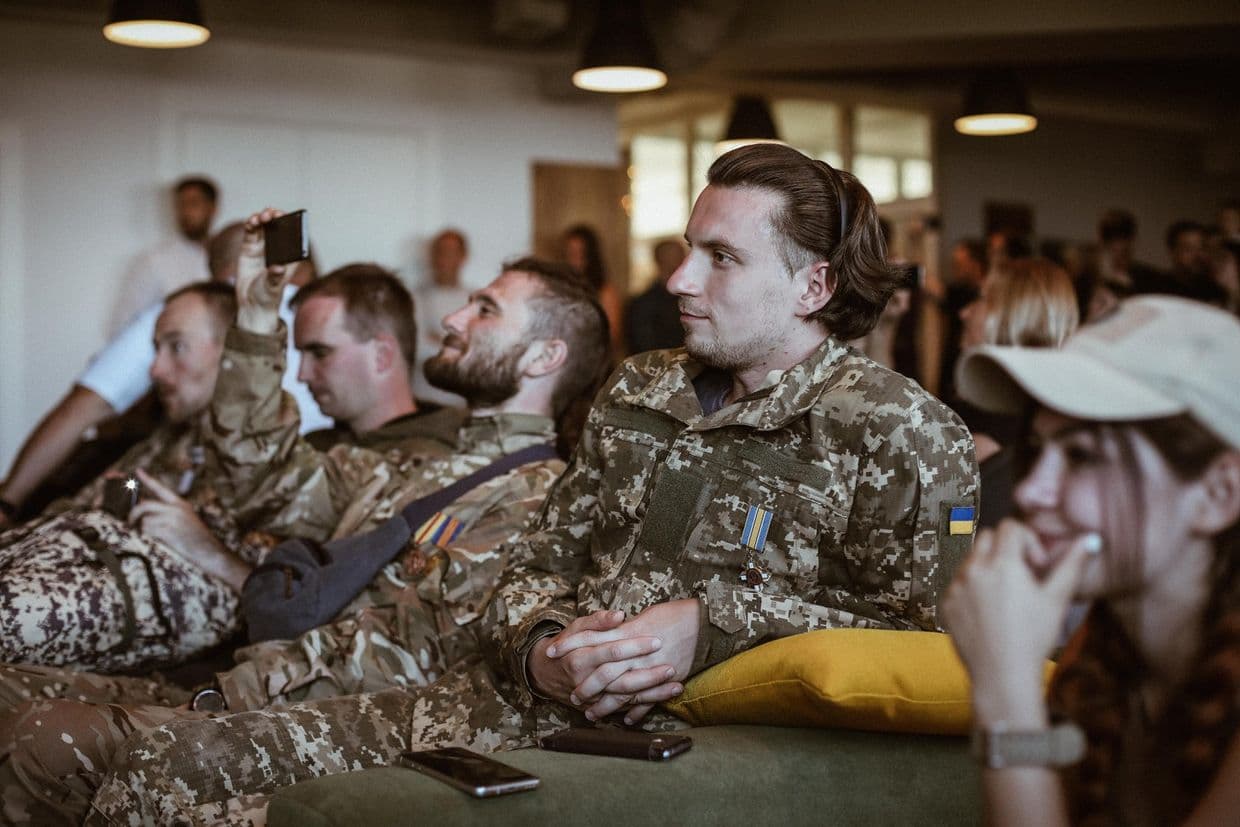
Ukrainian Veterans at Veteran Hub, an NGO supporting Ukrainian soldiers, war veterans, and their families in Kyiv, Ukraine in an undated photo. (Veteran Hub / Facebook)
 on Google
Kseniia Tkachuk
Expert in Rule of Law and Justice
Ukraine is rebuilding courts, laws, and institutions while the war continues. At the same time, it faces the vital task of helping its people rebuild their lives.
Our European integration debate is rightly obsessed with the rule of law, independent courts, predictable procedures, and public trust. Yet one factor is still treated as "soft" and therefore optional. It is war trauma. In a country where trauma is at mass‑scale, ignoring it does not make justice tougher. It makes justice less just.
The influence of the war comes home in bodies that hurt, in sleep that never returns, in nerves that interpret ordinary day-to-day conflict as a threat. When people affected end up in police stations and courtrooms, the justice system faces a choice to punish without considering the symptoms of war or to understand and reduce future harm by connecting people with rehabilitation.
The World Health Organization's Europe office reports that, in an October 2024 health needs assessment, 68% of Ukrainians said their health had declined compared to the pre‑war period.
The most prevalent issues were mental health concerns (46%), followed by mental health disorders (41%) and neurological disorders (39%). These numbers clearly mirror the human environment in which Ukrainian judges now deliver justice, every day.
Trauma is a predictor of risk. Chronic stress and post‑traumatic reactions commonly manifest as sleep disruption, irritability, anger, and harmful substance use.
Combat exposure can amplify hypervigilance and impulsive "fight" responses. Physical trauma matters too: medical research links traumatic brain injury to impaired impulse control and elevated risk of impulsive aggression. If courts ignore these drivers, the system will keep cycling people through short punishments that fail to address root causes, reduce future harm, or deliver justice.
War also reshapes behaviour through material pressure.
The Fifth Rapid Damage and Needs Assessment (RDNA5), prepared jointly by the World Bank Group, the European Commission, the United Nations, and the Government of Ukraine, estimates direct damage at $195.1 billion and socioeconomic losses at $666.7 billion as of Dec. 31, 2025, with recovery and reconstruction needs of $587.7 billion over 10 years.

Economic shock, displacement, disability, and disrupted services erode the "buffers" that usually keep people stable, such as their work, income, housing, routine health care, and reliable social support.
When those buffers fail, courts become a default crisis system, which is slow and often ineffective at preventing recurrence. Veterans return to this environment with an additional layer of combat trauma. And in this case, there is a defined need — courts should be able to connect accountability with treatment when service‑related trauma plausibly drives offending risk.
Ukraine is currently drafting a comprehensive Veteran Code intended to consolidate state policy toward those who served.
Throughout this process, our team at L.E.A.D. Foundation — including experts in the rule of law, legal affairs, and justice, as well as psychologists and lawyers — has been actively involved. Together with our partners, we submitted recommendations developed over several years for a judicial rehabilitation procedure that establishes a veteran's right to rehabilitation and support while involved in the justice system.
Furthermore, it gives the courts a tool to connect justice-system-involved veterans with the support they already have the right to (psychological, medical, social, and other services).
The state mobilized citizens for combat, and the long-term consequences of that service are documented and predictable. When trauma contributes to unlawful conduct, courts need a legal mechanism to assess that connection and respond proportionately.
As drafting continues, we advocate for these provisions to stay in the final Code.
The next step is to establish a clear pathway for consistent judicial application. This rehabilitation procedure would begin with the identification of a veteran, followed by an early needs assessment and psychological screening.
Eligibility should be strictly limited to lower-level offences, with explicit exclusions for serious violence or other grave crimes. Participation remains voluntary and requires both legal counsel and informed consent. Upon approval, the court oversees an individual plan that balances accountability with treatment, supported by periodic judicial reviews of progress.
Successful completion of the procedure may constitute a statutory ground for exemption from criminal liability. If the procedure is not completed, the case shall be considered under the general rules of criminal proceedings.
EU accession does not require Ukraine to copy‑paste institutions. It requires Ukraine to meet rule‑of‑law standards, such as effective, independent, high‑quality justice that protects rights in practice. The European Commission's 2025 Ukraine report reiterates that an effective judiciary and respect for fundamental rights are of "paramount importance."
Trauma-informed and therapeutic justice are part of that credibility. Ukraine has a rare opportunity, as it rebuilds and integrates into Europe, to design a justice system that reflects our reality.
A fair wartime system recognises trauma, assigns responsibility, and reduces future harm, thereby enabling recovery to become a judicial outcome.
The war will end, and trauma will remain. Ukraine can either let trauma quietly corrode justice and society or build a system that is both fair and fit for the people it serves.
Editor's note: The opinions expressed in the op-ed section are those of the authors and do not purport to reflect the views of the Kyiv Independent.