Who is Dan Driscoll, 'JD Vance's man' leading talks with Ukraine
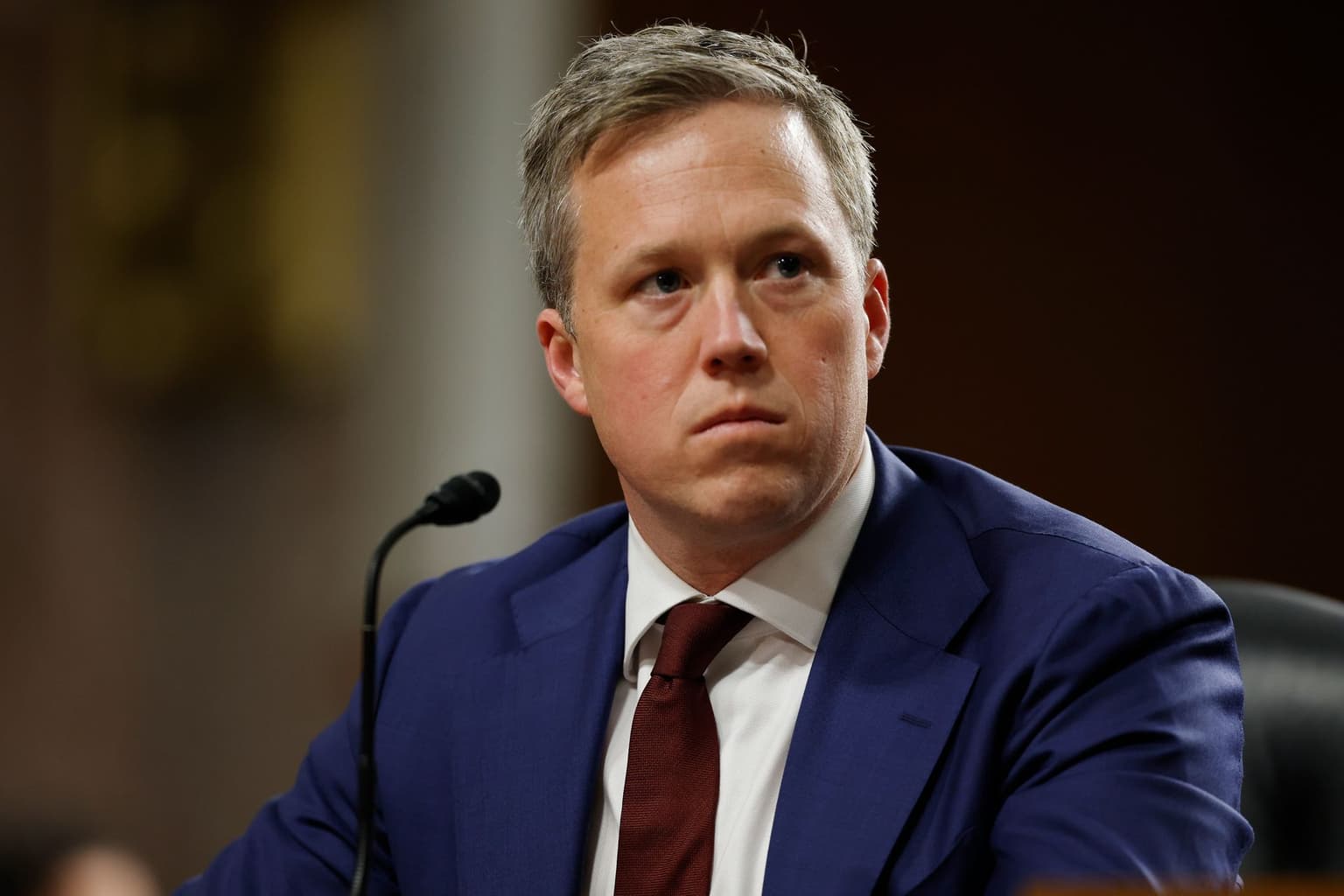
Daniel Driscoll, then-U.S. President Donald Trump’s nominee to be secretary of the U.S. Army, speaks during a Senate Armed Services Committee confirmation hearing on Capitol Hill in Washington, D.C., US, on Jan. 30, 2025. (Anna Moneymaker / Getty Images)
 on Google
Dan Driscoll, the U.S. army secretary known as an ardent advocate of military modernization, was thrust into an unexpected role as Washington's leading negotiator in Ukraine.
His trip to Kyiv last month, which was expected to focus on technology cooperation, instead saw him present Ukraine with a U.S.-Russia-drafted peace plan that imposed punishing conditions on Kyiv.
Despite having no prior diplomatic experience, the 39-year-old Pentagon official remains a key figure in the ongoing talks as Ukraine pushes for a better deal.
In Ukraine, Driscoll is still mostly an unfamiliar figure, known mainly for his close ties to U.S. Vice President JD Vance — the leading figure of the administration’s camp skeptical of continued support for Kyiv.
Arta Moeini, the managing director of U.S. Operations at the Institute for Peace & Diplomacy, nevertheless argues that Driscoll is not antagonistic toward Ukraine.
"He's not ideological… he's a pragmatist," Moeini adds, describing the ex-army officer as somebody Trump simply trusts to get the job in Ukraine done.
Trump's unlikely envoy
Driscoll's recent weeks were marked by frantic diplomacy, with a flurry of meetings with President Volodymyr Zelensky, Ukrainian ministers, and other officials in Kyiv in late November.
The army secretary then joined consultations with Ukrainian and European officials in Geneva on Nov. 23 to revise the controversial peace plan, before holding talks with Russian representatives in Abu Dhabi.

Though timing remains unclear, Ukraine said it is expecting to host Driscoll again soon, as Trump announced that the army secretary will continue to lead the negotiations with the Ukrainian side.
But despite the smiles and handshakes in front of cameras during his last trip to Kyiv, multiple media reports suggest that the talks were anything but warm.
In a briefing with Western diplomats, Driscoll reportedly delivered a grim overview of the state of war, warning that Russia is building up a powerful missile arsenal.
According to NBC News, the U.S. official also told his Ukrainian counterparts that they face an imminent defeat at the hands of Russia and would be better off accepting the unfavorable peace deal.
“He is known as a pragmatist, he's a veteran, and he is a doer. And that's why the White House really likes him.”
Although U.S. Secretary of State Marco Rubio denied the story, it has nevertheless sparked backlash from Ukrainian observers, who doubt whether Driscoll accurately assessed the situation.
Oleksiy Melnyk, the co-director of the Foreign Relations and International Security Programs at the Razumkov Center in Kyiv, asks whether Driscoll's military background as a first lieutenant allows him to "make assessments on the strategic level."
"If you don't have a proper objective picture of the subject that you're dealing with, the possibility of finding a proper solution is rather low," the expert added, noting that while Ukraine faces a difficult situation at the front, it is not critical.
At the same time, Melnyk notes, Driscoll's messaging may simply indicate that he is trying to please Trump, who was aggressively pushing Ukraine to accept the deal.
Driscoll's spokesperson has not responded to the Kyiv Independent's request for comment.
'Drone guy'
Born into a military family in North Carolina, Driscoll spent over three years in the Army – which included a deployment in Iraq – before working as a businessman and a lawyer.
A Yale graduate, he maintains a close relationship with his former classmate, Vance, which some say became a key factor in his political rise.
In January, Driscoll was made the youngest U.S. army secretary, a civilian Pentagon role responsible for administrative matters of the armed branch. His popularity quickly grew within the administration.
"He is known as a pragmatist, he's a veteran, and he is a doer. And that's why the White House really likes him," Moeini said.
Much of his Pentagon tenure is defined by his push to modernize the U.S. military — a goal he frequently frames through lessons drawn from the Russia-Ukraine war. This focus earned him the nickname "drone guy" from Trump.

During a Senate hearing in June, Driscoll referred to Ukraine as the "Silicon Valley of warfare," saying the country stands at the front of the new military revolution.
The official also named drones the "future of warfare" and spoke admirably about Ukraine's Operation Spiderweb, highlighting that "a couple hundred thousand dollars worth of drones… took out almost $10 billion worth of equipment in Russia."
But Driscoll’s ascent is not driven solely by his push for military modernization — it is also fueled by personal connections to top White House players. As Moeini notes, the army secretary now has "a direct line to both the vice president and Trump."
JD Vance's man
In an unexpected twist, the youngest army secretary has been tasked with helping broker an end to a war the Trump administration has struggled to resolve for the past 10 months.
"The rise of Driscoll has been meteoric," says Volodymyr Dubovyk, head of Odesa National University's Center for International Studies, adding that it is unusual for an army secretary "to be so heavily and suddenly involved" in the peace process.
Driscoll's lack of experience in diplomacy and proximity to Vance has given Ukrainian observers some pause.
"Driscoll seems to be JD Vance's man," Ukrainian lawmaker Oleksandr Merezhko told the Kyiv Independent. "I don’t expect much from him because he doesn't seem to have a diplomatic background."

Vance is viewed in Ukraine as part of the U.S. administration’s more hardline, Ukraine-skeptical wing, and he was a key backer of the controversial peace plan Driscoll delivered.
With Keith Kellogg – Trump’s special envoy in Kyiv who was advocating for continued U.S. support – stepping down soon, Melnyk and Merezhko suggested that Driscoll might become his successor.
But the army secretary’s new role might also be part of a bigger play in Washington.
Pointing to Driscoll's closeness to Vance, Dubovyk argues that the secretary’s appointment should be seen through the prism of a "power struggle within the administration" and "in the context of people positioning themselves for the 2028 elections."
Driscoll's new role in the spotlight fueled speculation about his rise to the top positions, including to the seat of controversy-mired Defense Secretary Pete Hegseth.
Moeini disputed the rumors, saying that the two Pentagon officials "are very much aligned." However, Dubovyk believes that Hegseth must feel "quite uneasy” about his subordinate’s sudden and speedy rise.
Note from the author:
Hi, this is Martin Fornusek.
I hope you enjoyed this article. In our team, we believe fact-based and truthful reporting should be available to all — that's why we don't use a paywall.
If you'd like to help us provide you with more in-depth coverage of Ukraine's struggle against Russian aggression and other topics, please consider joining the Kyiv Independent community.